Every week, our production floor handles inquiries from US distributors asking the same question: “What should I charge for this machine?” shockwave therapy machine procurement 1 Without clear pricing data, you risk underselling your products or pricing yourself out of the market entirely.
To determine average US retail prices for shockwave therapy machines, research marketplace listings on platforms like Bimedis, analyze competitor pricing by technology tier (radial $2,000-$15,000, focused $15,000-$40,000+), calculate your landed costs from China, add your target margin of 40-60%, and adjust based on features and brand positioning.
This guide walks you through the exact process our team uses when helping distributors set competitive US retail prices. We cover market research, profit margin calculations, feature-based pricing, and technology tier adjustments.
How do I research current US retail price benchmarks for shockwave therapy machines?
When we ship machines to our US partners, they often struggle to find reliable pricing data. The shockwave therapy market lacks transparency, and prices vary wildly across different sales channels.
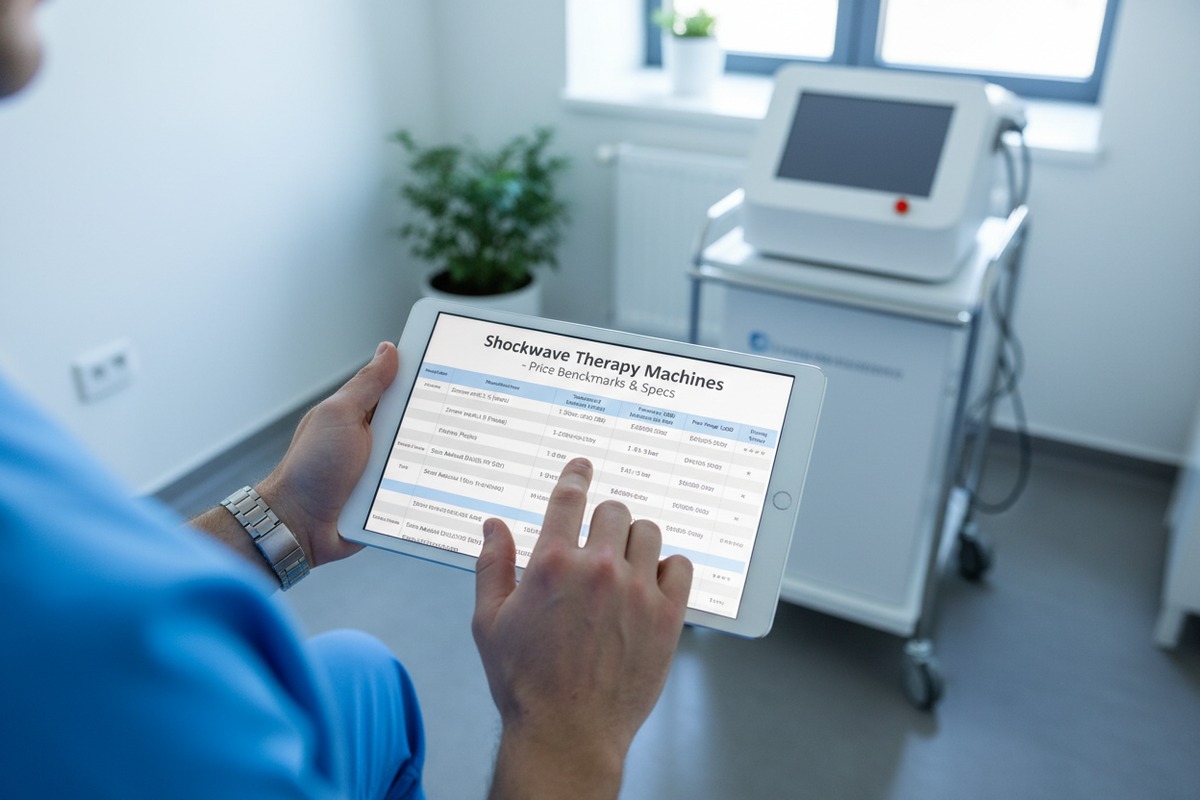
Research current US retail price benchmarks by scanning online medical equipment marketplaces like Bimedis (average $10,531 across 51 listings), checking direct supplier websites such as US MedRehab, analyzing competitor product pages, and requesting quotes from multiple distributors to establish a realistic price range for each technology tier.
Start with Online Medical Equipment Marketplaces
Bimedis 2 serves as an excellent starting point for pricing research. This platform aggregates listings from sellers worldwide, giving you a snapshot of real market prices. Current data shows 51 shockwave therapy products ranging from $450 to $62,705, with an average price of $10,531.
However, these prices include both new and used equipment. You must filter results carefully. Used machines from 2021-2024 often sell at significant discounts, while new high-end devices like the MTS OrthoGold 100 command premium prices.
Check Direct Supplier Pricing
US-based medical equipment suppliers provide another valuable data source. For example, US MedRehab lists the Chattanooga Intelect shockwave system at approximately $16,709, marked down from $17,500. These prices reflect what end-users actually pay in the US market.
Create a spreadsheet tracking prices from at least five different suppliers. Note the model, features, and whether the price includes accessories or training.
Price Benchmark Table by Source Type
| Source Type | Price Range | Average | Best For |
|---|---|---|---|
| Online Marketplaces (Bimedis) | $450 – $62,705 | $10,531 | Market overview |
| Direct Suppliers (US MedRehab) | $12,000 – $20,000 | $16,709 | Realistic retail benchmarks |
| Manufacturer Direct | $15,000 – $40,000+ | $25,000 | Premium positioning data |
| Used Equipment Dealers | $450 – $8,000 | $3,500 | Budget tier reference |
Analyze Competitor Product Pages
Visit websites of established shockwave therapy brands selling in the US. Many do not list prices publicly, but you can request quotes. Compare the features they highlight and the value propositions they emphasize.
Our engineering team often reverse-engineers competitor positioning to help distributors understand where their private-labeled machines fit in the market.
How can I calculate my target profit margins based on my import costs from China?
During our export consultations, we help distributors run these exact calculations. The numbers must work before you commit to any order quantity. Poor margin planning kills businesses faster than any other mistake.
Calculate your target profit margins by adding all landed costs (product cost, shipping, customs duties of 7.5-25%, insurance, and compliance fees), then applying a markup of 2x to 3x for retail pricing. Most successful US distributors achieve 40-60% gross margins on mid-range shockwave therapy machines imported from China.

Break Down Your Landed Cost Components
Your true cost extends far beyond the FOB price we quote you. You must account for every expense between our factory and your warehouse.
Shipping costs vary by method. Air freight runs higher but gets products to market faster. Sea freight takes longer but dramatically reduces per-unit shipping costs for larger orders.
Customs duties 3 for medical devices entering the US typically range from 7.5% to 25% depending on classification. Hire a customs broker to determine the exact rate for your specific product.
Landed Cost Calculation Example
| Cost Component | Amount (Example) | Percentage of Total |
|---|---|---|
| FOB Factory Price | $3,500 | 58.3% |
| International Shipping | $400 | 6.7% |
| Customs Duties (15%) | $525 | 8.8% |
| Insurance | $75 | 1.3% |
| Customs Brokerage | $150 | 2.5% |
| US Inland Freight | $200 | 3.3% |
| FDA Registration Fees | $350 | 5.8% |
| Quality Inspection | $100 | 1.7% |
| Contingency (5%) | $175 | 2.9% |
| Total Landed Cost | $5,475 | 100% |
Apply Your Target Markup
Once you know your landed cost, apply your markup strategy. For shockwave therapy machines, successful distributors typically use these approaches:
- Cost-plus pricing: Add a fixed percentage (100-200%) to your landed cost Cost-plus pricing 4
- Market-based pricing: Set prices at or slightly below competitor levels
- Value-based pricing: Price based on perceived value and unique features
Our experience shows that mid-range machines with landed costs around $5,000-$6,000 retail successfully at $12,000-$15,000 in the US market. This delivers healthy margins while remaining competitive.
Factor in Hidden Costs
Do not forget ongoing expenses that eat into margins. These include warranty claims, customer support, marketing, and potential returns. Budget at least 10-15% of your retail price for these costs.
Our R&D team constantly analyzes which features US clinics value most. Premium pricing requires premium features, but not all upgrades deliver equal return on investment. Smart feature selection separates profitable products from market failures.
Justify premium retail pricing by including advanced features such as adjustable energy levels (0.5-5.0 bar), multiple pre-set treatment protocols, touchscreen interfaces, interchangeable applicator heads, FDA-relevant documentation, comprehensive warranty packages, and professional training programs that differentiate your offering from budget competitors.
Clinical Performance Features That Command Higher Prices
US clinics pay more for machines that deliver better treatment outcomes. Energy output range matters significantly—machines offering 0.5 to 5.0 bar adjustable pressure serve more treatment applications than limited-range alternatives.
Frequency adjustment capabilities allow practitioners to customize treatments. Machines offering 1-22 Hz frequency ranges provide greater versatility than fixed-frequency units.
Penetration depth determines which conditions the machine can treat effectively. Radial waves penetrate 3-4 cm for superficial conditions, while focused waves reach 6-12 cm for deeper tissue problems.
Premium Feature Value Analysis
| Feature Category | Basic Tier | Premium Tier | Price Impact |
|---|---|---|---|
| Energy Range | 1.0-3.0 bar | 0.5-5.0 bar | +$2,000-3,000 |
| Treatment Protocols | 5-10 presets | 50+ protocols | +$1,500-2,500 |
| Display Type | LCD basic | 10"+ touchscreen | +$800-1,500 |
| Applicator Heads | 2 included | 5+ specialized heads | +$2,000-4,000 |
| Warranty | 1 year parts | 3 years comprehensive | +$1,000-2,000 |
| Training | Manual only | Video + certification | +$500-1,500 |
User Experience Features
Touchscreen interfaces with intuitive navigation reduce training time and minimize user errors. Our production team has found that clinics willingly pay $1,000-$2,000 more for machines with modern, smartphone-like interfaces.
Quiet operation matters in clinical environments. Premium compressors running below 60 decibels create better patient experiences than louder budget alternatives.
Ergonomic handpiece design reduces practitioner fatigue during long treatment sessions. Lightweight applicators with comfortable grips justify higher prices for high-volume practices.
Compliance and Support Features
FDA establishment registration 5 and device listing documentation reassures US buyers about regulatory compliance. While shockwave machines may not require full FDA clearance for all uses, proper documentation demonstrates professionalism.
Extended warranties signal confidence in product quality. Offering 2-3 year comprehensive coverage instead of basic 1-year parts warranty supports premium positioning.
Training programs add tremendous value. We can help you create video tutorials, user certification programs, and clinical protocol guides that differentiate your brand from importers selling commodity products.
How do I adjust my US retail pricing based on the different technology tiers available from my supplier?
When clients visit our Guangzhou facility, we walk them through our complete product range. Each technology tier serves different market segments. Pricing must align with both the technology level and the target customer's expectations.
Adjust US retail pricing by technology tier using these benchmarks: basic radial machines ($3,000-$8,000 retail), mid-range radial with advanced features ($8,000-$15,000), professional focused devices ($15,000-$25,000), and premium combined radial-focused systems ($25,000-$40,000+), with each tier targeting specific buyer segments from home users to specialized medical facilities.
Understanding Technology Tier Differences
Radial shockwave technology 6 uses pneumatic pressure to generate waves that spread outward from the applicator surface. These machines cost less to manufacture and suit general physiotherapy applications 7. They penetrate 3-4 cm, making them ideal for superficial musculoskeletal conditions.
Focused shockwave technology 8 uses electromagnetic or piezoelectric generators to concentrate energy at a specific depth. These machines cost significantly more but deliver therapeutic doses to deeper tissues—up to 12 cm penetration. They serve specialized applications including orthopedics and urology.
Combined systems offer both radial and focused capabilities in one unit. They command the highest prices but provide maximum versatility for multidisciplinary practices.
Technology Tier Pricing Matrix
| Technology Tier | Your Import Cost | Recommended Retail | Target Margin | Target Customer |
|---|---|---|---|---|
| Entry Radial | $1,200-$2,500 | $3,000-$6,000 | 60-70% | Home use, small clinics |
| Mid-Range Radial | $2,500-$5,000 | $8,000-$15,000 | 50-60% | Physical therapy practices |
| Professional Focused | $6,000-$10,000 | $15,000-$25,000 | 45-55% | Sports medicine, orthopedics |
| Premium Combined | $10,000-$18,000 | $25,000-$40,000+ | 40-50% | Hospitals, specialty clinics |
Match Pricing to Buyer Segments
Entry-level buyers prioritize affordability over features. They accept basic displays, limited protocols, and shorter warranties. Price sensitivity runs high in this segment.
Mid-range buyers balance cost with capability. They want reliable machines with solid feature sets and reasonable warranties. This segment offers the best margin opportunities for most distributors.
Professional buyers focus on clinical outcomes and durability. They accept higher prices for proven performance, comprehensive support, and features that improve treatment efficiency.
Premium buyers require the best available technology regardless of cost. They expect white-glove service, extensive training, and rapid technical support.
Session Economics by Tier
Help your customers understand ROI when positioning different tiers. A $15,000 mid-range machine paying for itself through $125 treatment sessions requires 120 sessions to break even. At 5 sessions per week, that is only 24 weeks—less than six months.
Higher-tier machines with more capabilities can justify higher session fees. A focused shockwave device supporting specialized treatments commands $200-$500 per session in some US markets.
This ROI story helps clinics justify larger investments. We provide our distributors with ROI calculators they can share with their customers.
Conclusion
Setting the right US retail price for your shockwave therapy machines requires systematic research, careful cost analysis, and strategic positioning. Start with marketplace benchmarks, calculate your true landed costs, select features that justify your target price point, and match your pricing to the appropriate technology tier. With proper planning, you can build a profitable shockwave therapy distribution business in the competitive US market.
Footnotes
1. Provides a comprehensive guide for purchasing shockwave therapy machines, covering key considerations and device types. ↩︎
2. Official website for Bimedis, an online marketplace for new and used medical equipment. ↩︎
3. Provides official FDA guidance on importing medical devices into the US, including customs requirements. ↩︎
4. Reference 4. ↩︎
5. Official FDA resource detailing the requirements for establishment registration and device listing for medical devices. ↩︎
6. Reference 6. ↩︎
7. Provides an evidence-based guide on the clinical benefits and applications of shockwave therapy in physiotherapy. ↩︎
8. Reference 7. ↩︎

 English
  Español de México
  Deutsch
  Français
  العربية
  Русский