

When finalizing production schedules for large clinic orders, we often notice that chains with strict procurement protocols 1 experience far fewer post-delivery issues than those buying on impulse.
To create standardized SOPs for purchasing pressotherapy machines, you must establish a four-phase framework: needs assessment involving clinical staff, rigorous vendor evaluation focusing on medical certifications (CE/ISO), strict protocol drafting for machine settings and safety, and a chain-wide implementation plan with quarterly compliance audits.
Below, we break down the specific components you need to include in your Standard Operating Procedures (SOPs) to ensure quality, branding, logistics, and technical stability.
How can I build a quality control checklist into my pressotherapy machine procurement SOP?
We have observed that clients who integrate specific inspection points into their contracts catch 99% of potential issues before the equipment ever leaves our factory floor.
You can build a quality control checklist by defining three critical inspection categories in your SOP: visual verification of materials and assembly, functional testing of pressure calibration (0-240 mmHg) and mode sequencing, and electrical safety checks according to IEC standards to ensure every unit performs identically.
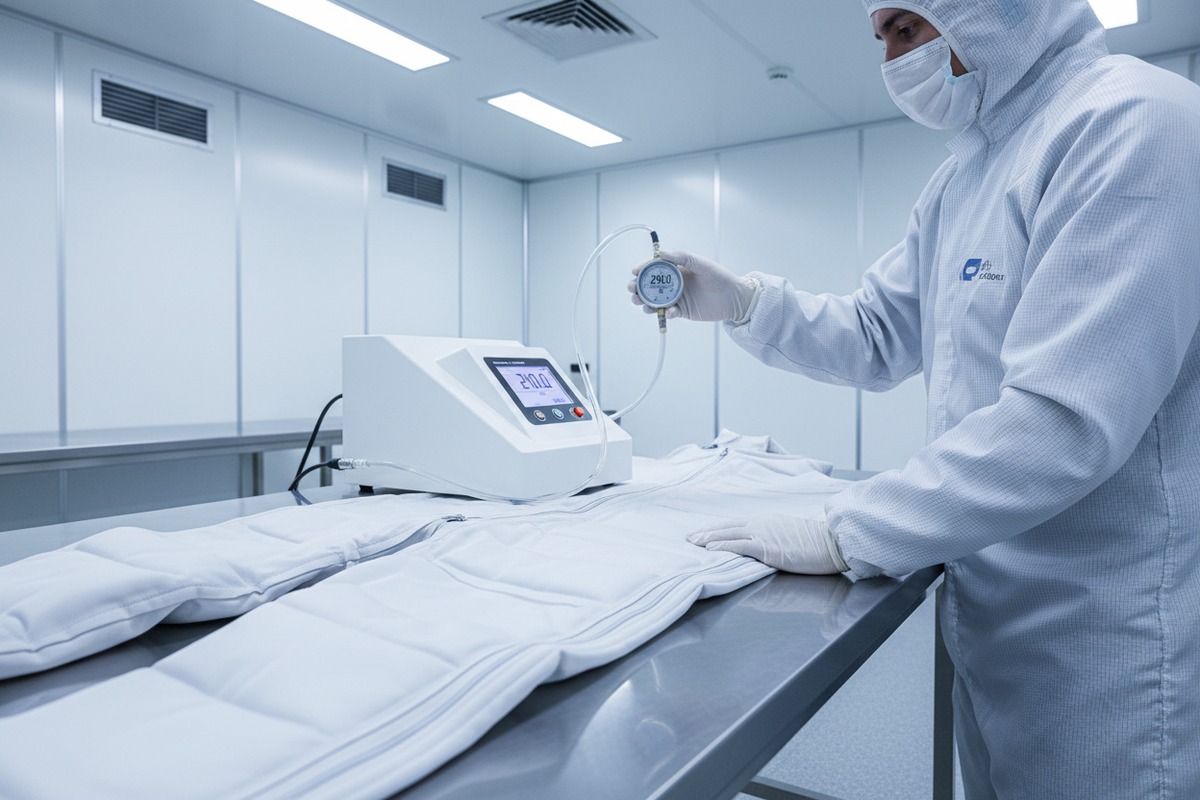
Creating a robust Quality Control (QC) checklist is not just about ticking boxes; it is about defining the "Acceptance Criteria" that your supplier must meet. quality control checklist 2 In our experience, vague requests lead to variable results. Your SOP must be specific about what constitutes a "pass" and what constitutes a "fail." This section of your SOP serves as the gatekeeper, ensuring that substandard equipment never enters your supply chain 3.
Defining Visual and Structural Standards
The first layer of your checklist deals with physical attributes. A standardized SOP should require a detailed inspection of the chassis and accessories. This includes checking for uniform gaps between plastic panels, ensuring that the control unit sits flat on a table without wobbling, and verifying that the connection ports for the air hoses are secure. Loose ports are a common failure point in high-volume clinics. Your SOP should mandate that connectors lock firmly with a distinct "click" and do not detach under tension.
Functional Performance Verification
The core of pressotherapy is precise air pressure 4. Your checklist must include a functional test where the machine is run at maximum pressure (typically around 200-240 mmHg) for at least 30 minutes. This "burn-in" test reveals leaks in the internal valves or the suit itself. If the pressure drops significantly during a hold cycle, the unit fails.
Additionally, verify the timer accuracy. If a treatment is set for 30 minutes, the machine must stop exactly at 30 minutes. We recommend using a stopwatch during the pre-shipment inspection (PSI) for a random sample size (e.g., 10% of the order).
Table 1: Essential QC Inspection Points for Pressotherapy
| Inspection Category | Specific Checkpoint | Acceptance Criteria |
|---|---|---|
| Visual | Chassis Assembly | No gaps >1mm; no scratches or glue residue. |
| Functional | Pressure Output | Output matches display within ±5% tolerance. |
| Functional | Air Leakage | No audible hissing; pressure holds stable for >10s. |
| Safety | Emergency Stop | Machine vents all air immediately upon activation. |
| Accessories | Sleeve Integrity | Seams are double-welded; zippers move smoothly. |
By embedding these specific criteria into your purchase order and SOP, you force the supplier to align with your quality standards before shipping.
What steps should I follow in my SOP to ensure my private-label branding is consistent across every machine?
When we customize casings for our long-term partners, the most successful projects always start with a clear "Golden Sample" approval process that eliminates ambiguity.
To ensure consistent private-label branding, your SOP should mandate the submission of vector-based design files (AI/EPS), require a signed-off physical "Golden Sample" before mass production, and include a visual guide specifying exact logo placement, pantone colors, and screen startup interface designs for every batch.
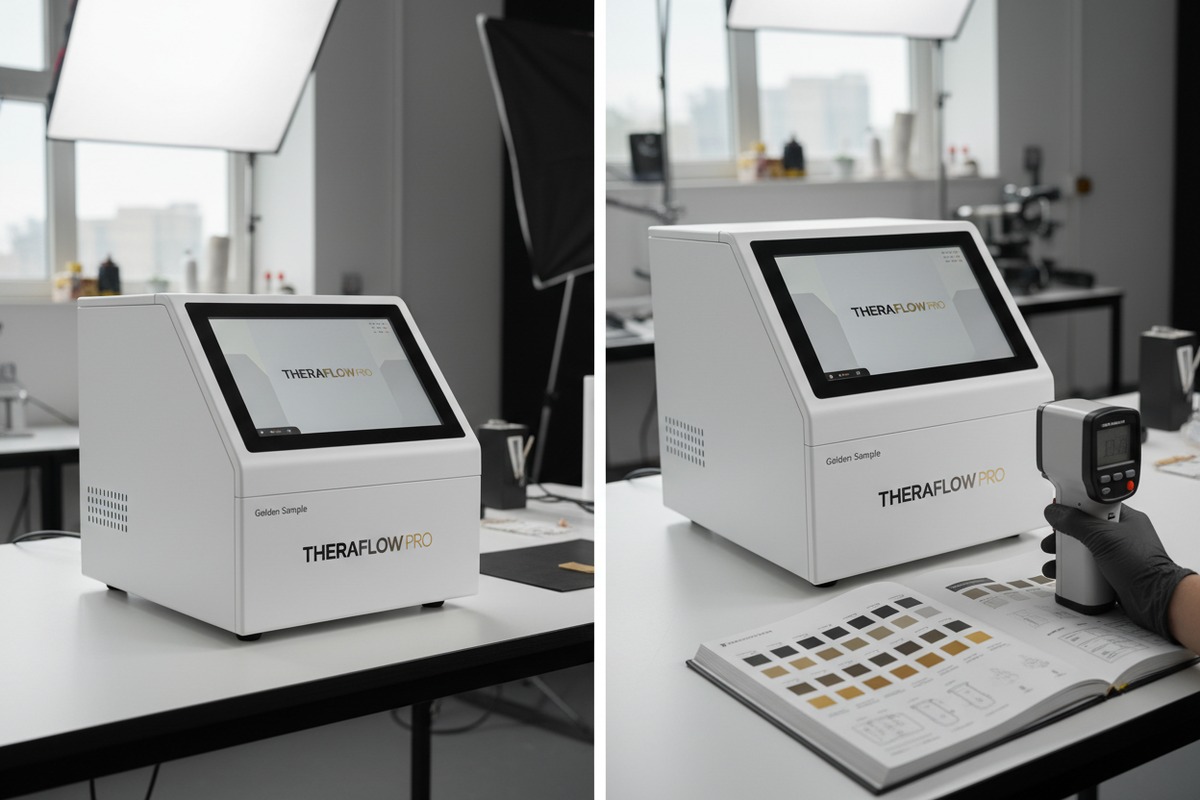
Inconsistent branding dilutes the professional image of a clinic chain. If one clinic has machines with a matte white finish and another has a glossy off-white finish, customers notice. Your SOP for branding must be technical and precise, treating the brand elements as engineering specifications rather than artistic suggestions.
Standardizing Digital Assets
The first step in your SOP is to control the input. Never send a JPEG or PNG file to a factory for printing. Your SOP must state that only vector files (AI, CDR, or EPS) are to be used. These files allow us to scale logos without pixelation. Furthermore, you must specify colors using the Pantone Matching System (PMS) 5. "Dark Blue" is subjective; "Pantone 289 C" is a universal standard. Your SOP should require the supplier to confirm the Pantone code before painting or printing begins.
The "Golden Sample" Protocol
Before you authorize the production of 50 or 100 units, you must approve a "Golden Sample." This is the master unit that all future production will be measured against. Your SOP should include a step where this sample is photographed from all angles and, if possible, shipped to your HQ for physical sign-off. Once approved, this sample becomes the binding standard.
Software Branding Consistency
Modern pressotherapy machines often have touchscreen interfaces. Your branding SOP must extend to the software. This includes the startup screen (loading your logo), the color scheme of the menu, and even the language settings. We have seen cases where the default language reverted to Chinese because the software version was not locked in the SOP. Ensure your SOP specifies the firmware version that contains your custom assets.
Table 2: Branding Consistency Checklist
| Branding Element | Requirement | verification Method |
|---|---|---|
| Logo Placement | Centered, 5cm from top edge | Calipers/Ruler measure on sample. |
| Color Accuracy | Pantone Match (e.g., PMS 021C) | Comparison with Pantone chip under daylight. |
| Software Interface | Boot-up Logo displays for 3s | Video proof during QC. |
| Serial Numbers | Format: YEAR-BATCH-UNIT (e.g., 24-01-005) | Visual check of rear label. |
| User Manual | Custom cover and English text | PDF proof reading before print. |
How do I standardize my door-to-door logistics process to avoid shipping delays and damaged packaging?
Our logistics team spends hours fixing documentation errors for clients who lack a standardized shipping protocol, often causing avoidable weeks of customs detention.
Standardize your logistics SOP by selecting the correct Incoterms (preferably DDP for simplicity), mandating palletized packaging with corner guards to prevent crush damage, and requiring draft review of all customs documents (HS codes, commercial invoices) at least seven days prior to the vessel departure date.

Shipping heavy beauty equipment requires more than just a tracking number. Damages during transit and customs delays are the two biggest threats to your rollout schedule. A comprehensive logistics SOP mitigates these risks by dictating how the product is packed and how the paperwork is handled.
Packaging Specifications for Protection
Beauty machines are fragile. Your SOP must explicitly ban "loose carton" shipping for bulk orders. Demand palletization. This means the cartons are stacked on a pallet, shrink-wrapped, and strapped. This prevents individual boxes from being thrown around during transfer. Additionally, specify "double-walled corrugated cardboard" (5-ply or 7-ply) for the outer boxes. We also recommend requiring internal foam density of at least EPE 20kg/m³ to absorb shocks.
Streamlining Customs Documentation
Delays usually happen because the paperwork doesn't match the cargo. Your SOP should require a "Pre-Shipment Document Audit." This involves checking the Commercial Invoice, Packing List, and Bill of Lading. The Harmonized System (HS) code 6 is critical. For pressotherapy, using the correct medical or massage device code (often under 9019) is vital to avoid fines. Your SOP should ensure the description on the invoice matches exactly what is on the box labels.
Managing Door-to-Door Expectations
If you are using a Door-to-Door (DDP) service 7, your SOP needs to define the "Last Mile." Does the delivery truck have a liftgate? Most clinic locations do not have a loading dock. If your SOP doesn't specify "Liftgate Delivery Required," the driver may arrive and refuse to unload the pallets, causing redelivery fees. Define these access requirements upfront in your logistics profile.
Table 3: Logistics and Packaging Standards
| Logistics Component | Standard Requirement | Reason |
|---|---|---|
| Packing Method | Palletized + Shrink Wrap + Straps | Prevents carton loss and crush damage. |
| Box Material | 7-Ply Corrugated Cardboard | withstands stacking pressure. |
| Incoterms | DDP (Delivered Duty Paid) | Supplier handles risk until delivery at clinic. |
| Documentation | HS Code Verification | Prevents customs re-classification delays. |
| Delivery Mode | Liftgate Truck Service | Essential for clinics without loading docks. |
What technical performance benchmarks should I include in my SOP to guarantee product stability for my clinic chains?
Our R&D department rigorously stress-tests components because we know that inconsistent pressure or pump failures can disrupt clinic operations and damage patient trust.
Your SOP should include performance benchmarks for Mean Time Between Failures (MTBF) of the air pump, a pressure accuracy tolerance of ±5 mmHg, maximum continuous runtime capabilities (e.g., 8 hours), and noise level limits (under 60dB) to guarantee a stable, quiet, and effective treatment environment.

For a clinic chain, a machine that turns on is not enough; it must perform identically to the machine in the next town. Technical benchmarks in your SOP provide a quantitative way to measure reliability and performance stability over time.
Establishing Operational Limits
Your SOP must define the machine's duty cycle. Low-end home units need a break every 30 minutes to cool down. Commercial units for clinics should handle "Continuous Operation." Your benchmark should state that the machine must be able to run for 4-8 hours continuously without overheating or shutting down. This ensures that during peak hours, your staff doesn't have to cancel appointments because the machine needs a break.
Pressure Accuracy and Consistency
The therapeutic effect of pressotherapy depends on precise pressure. If the screen says 40 mmHg (for lymph drainage) but the machine delivers 60 mmHg, it could cause pain or damage capillaries. Your SOP should state a tolerance level, typically ±10% or ±5 mmHg. This benchmark allows you to test machines periodically. If a machine drifts outside this range, the SOP triggers a recalibration or maintenance ticket.
Noise Levels and Patient Experience
The environment is part of the treatment. A noisy air pump ruins the relaxation aspect of pressotherapy. Set a benchmark for noise emission, measured in decibels (dB) 8. A standard professional benchmark is <60dB at a distance of 1 meter. By including this in your SOP, you ensure that new batches of machines don't come with cheaper, louder pumps that would disturb your clinic's ambiance.
Maintenance Metrics
Include a benchmark for air bladder durability. The suit sleeves are consumables, but they should last a minimum number of cycles. A common benchmark is 3,000 to 5,000 cycles before replacement is needed. This helps you forecast inventory needs for spare parts and prevents unexpected shortages.
Conclusion
Creating standardized SOPs for pressotherapy procurement requires a holistic approach that covers quality control, branding consistency, logistics, and technical stability. By implementing these detailed protocols, you protect your investment and ensure a uniform, high-quality patient experience across all your clinic locations.
Footnotes
1. Replaced HTTP 404 GSA link with the current Federal Acquisition Regulation (FAR) homepage on GSA.gov, which outlines government procurement policies and procedures. ↩︎
2. Replaced HTTP 403 ISO link with a relevant ISO 9001 self-assessment checklist from BSI, an authoritative certification body for quality management systems. ↩︎
3. Provides a comprehensive definition and overview of supply chain management principles. ↩︎
4. Replaced HTTP 404 NIST link with the current NIST page on Pressure/Vacuum Calibrations, which details their research and standards for precise pressure measurement. ↩︎
5. Replaced HTTP 404 Pantone link with the Wikipedia page for Pantone, which provides a comprehensive and authoritative overview of the Pantone Matching System (PMS). ↩︎
6. Official source for the Harmonized System, an international product nomenclature for trade. ↩︎
7. Provides an overview of Incoterms rules, including Delivered Duty Paid (DDP). ↩︎
8. Provides a definition and explanation of decibels as a unit of sound measurement. ↩︎

 English
 Español de México
 Deutsch
 Français
 العربية
 Русский
