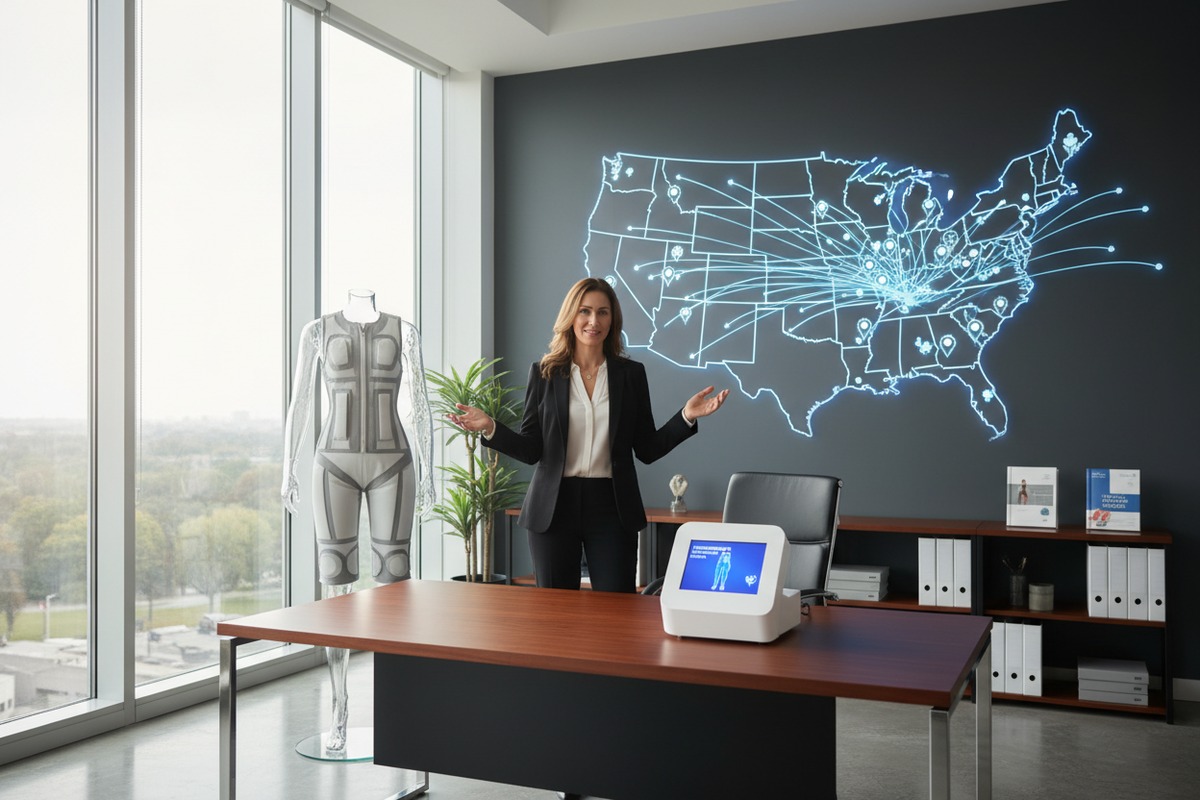
Running production lines for pressotherapy machines taught us one hard truth: getting devices to multiple US clinic locations is tougher than building them. Clients face customs delays, damaged units, and inventory gaps that cost thousands in lost revenue.
Coordinating pressotherapy machine distribution for US chain clinics requires partnering with a manufacturer offering door-to-door logistics, pre-shipment quality inspections, OEM branding services, and reliable production timelines. This ensures safe delivery, brand consistency, and seamless inventory flow across all your clinic locations.
Below, we break down each step of the distribution process. You will learn how to protect your machines in transit, verify quality before shipping, customize branding, and keep your supply chain running smoothly.
How can I manage door-to-door logistics to ensure my pressotherapy machines reach all my US clinic locations safely?
When we began exporting to the US market years ago, damaged shipments were our biggest headache. Clinic owners would report cracked control panels, torn compression suits, and units that arrived non-functional. It took time to build a logistics system that works.
Managing door-to-door logistics requires selecting experienced freight forwarders, using protective packaging, securing cargo insurance, tracking shipments in real-time, and coordinating final delivery to each clinic location. This approach minimizes damage, delays, and costly customs errors.

Choosing the Right Shipping Method
The first decision is air freight versus sea freight. Each has trade-offs.
| Shipping Method | Transit Time | Cost Per Unit | Best For |
|---|---|---|---|
| Air Freight | 5-10 days | Higher ($8-15/kg) | Urgent orders, small quantities |
| Sea Freight | 25-40 days | Lower ($2-4/kg) | Bulk orders, planned inventory |
| Express (DHL/FedEx/UPS) | 3-7 days | Highest | Sample units, emergency replacements |
Sea freight remains the most cost-effective for large shipments. It offers lower cost per unit for bulky cargo and flexible container options. However, air freight makes sense when you need units fast or face inventory shortages.
Packaging for Protection
Pressotherapy machines contain sensitive electronics, LCD screens, and pneumatic components. Our warehouse team uses multi-layer packaging: foam inserts around the control unit, reinforced carton boxes, and wooden crates for full pallet shipments. Package dimensions typically run around 55x45x65 cm for standard units.
Working with Freight Forwarders
Choose a freight forwarder with experience in medical and beauty equipment. They should understand FDA requirements 1 for device imports. Key services to look for include:
- Real-time tracking throughout the journey
- Cargo insurance covering potential damage or loss
- Customs brokerage to clear US customs efficiently
- Door-to-door delivery to each clinic address
Navigating US Customs
Medical devices must meet both Chinese export standards and US FDA requirements. Compliance with HS codes, labeling, and documentation is essential. Failure to meet these standards can cause delays or seizures at customs. Always prepare:
- Commercial invoices and packing lists
- FDA registration documents
- CE/ISO certificates
- HS code classifications 2
Coordinating Multi-Location Delivery
For chain clinics, plan your distribution hub. You can ship to a central warehouse first, then distribute internally. Or arrange direct delivery to each clinic. Direct delivery saves handling time but requires precise address coordination.
How do I verify that my pressotherapy machine order passes strict quality control before it leaves the factory in China?
In our early days, we learned a painful lesson. A batch of units shipped with faulty pressure sensors. The client discovered the problem only after unpacking in Texas. That mistake cost money, reputation, and trust. Now, we follow a rigorous QC protocol.
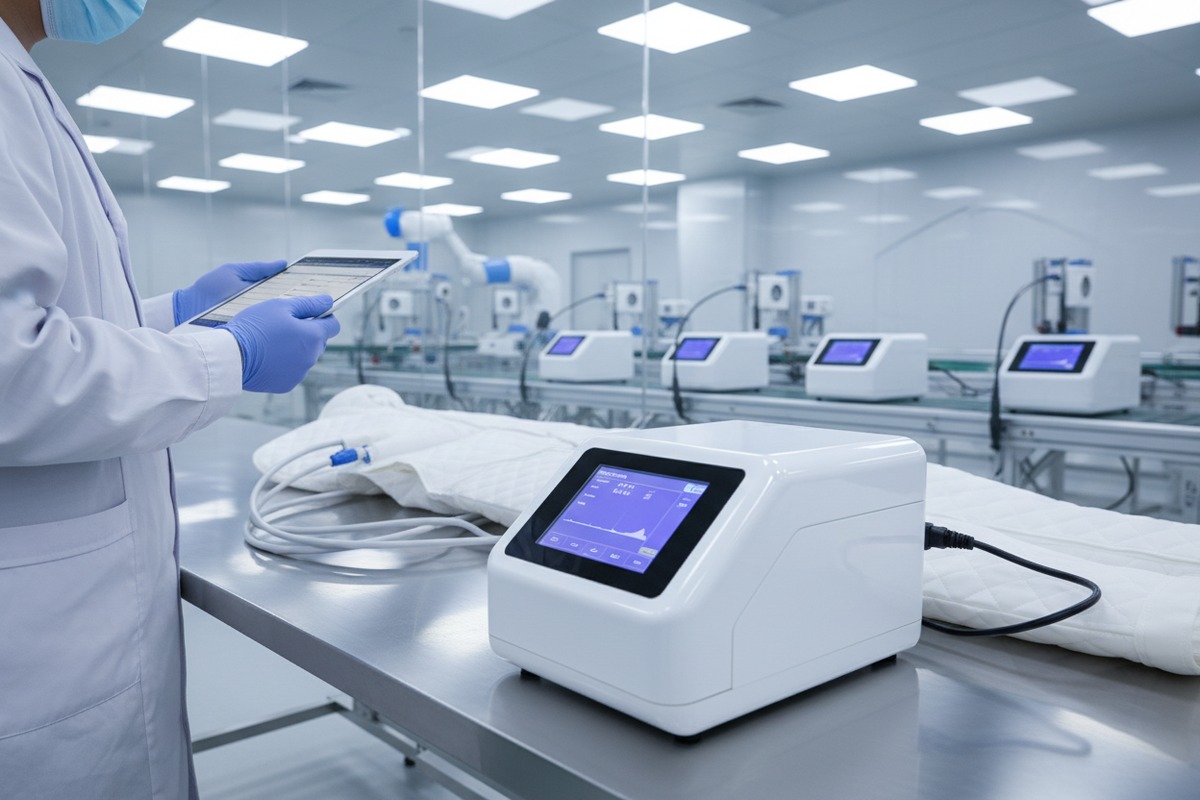
Verifying quality control before shipment requires conducting in-production inspections, pre-shipment testing of every unit, checking certifications like ISO 13485 and CE, documenting all test results, and either visiting the factory or hiring third-party inspectors to confirm standards.
Understanding China's GMP for Medical Devices
China's National Medical Products Administration released revised Good Manufacturing Practice standards 3 in November 2025. These new rules take effect November 2026. The revised GMP introduces three new chapters: Quality Assurance, Verification and Validation, and Contract Manufacturing and Outsourcing. This reflects a shift toward full lifecycle quality management.
Manufacturers must now establish quality objectives, allocate compliant resources, and maintain quality risk management systems. They must also collect quality risk information throughout the entire product lifecycle.
Key Inspection Checkpoints
| Inspection Stage | What to Check | Who Performs |
|---|---|---|
| Incoming Materials | Component quality, supplier certificates | Factory QC team |
| In-Production | Assembly accuracy, soldering, wiring | Production supervisors |
| Final Assembly | Functional testing, pressure calibration | QC technicians |
| Pre-Shipment | Cosmetic inspection, packaging integrity | QC + Third-party inspectors |
Functional Testing Protocol
Every pressotherapy unit should pass functional tests before packing:
- Pressure output accuracy (typically 0.025 MPa for clinic-grade units)
- Air flow rate verification (standard 25L/min)
- Timer and program cycling
- LCD screen and interface responsiveness
- Compression suit inflation/deflation cycles
- Far infrared and EMS functions (if equipped)
Third-Party Inspection Services
If you cannot visit the factory yourself, hire a third-party inspection company. Third-Party Inspection Services 4 Firms like SGS, Bureau Veritas, or TÜV can send inspectors to verify production quality. They provide detailed reports with photos and pass/fail criteria.
Certification Requirements
For US clinic use, verify your supplier holds relevant certifications. FDA registration may be required depending on device classification. ISO 13485 certification 5 demonstrates a quality management system aligned with international standards. CE marking confirms European compliance, which many US buyers also expect.
How can I coordinate the custom branding and OEM packaging of my machines for a nationwide US rollout?
Our design team works closely with US brand owners every week. They send logos, color codes, and packaging mockups. We turn those files into production-ready templates. The goal is simple: make the machine look like it was built in your own factory.
Coordinating custom branding and OEM packaging involves providing brand assets to your manufacturer, approving design mockups, setting minimum order quantities, scheduling production timelines, and arranging final inspection of branded units before shipment to ensure consistent brand presentation across all clinics.

What OEM and ODM Mean for Your Business
OEM (Original Equipment Manufacturing) 6 means we build our standard model with your brand name and logo. ODM (Original Design Manufacturing) goes further—we can modify features, add functions, or develop custom designs based on your requirements.
| Service Type | What You Provide | What Manufacturer Provides | Timeline |
|---|---|---|---|
| OEM | Logo, brand name, color preference | Standard machine with your branding | 2-4 weeks |
| ODM | Product specifications, feature requests | Custom-designed machine | 4-12 weeks |
| Private Label | Packaging design, marketing materials | Finished product ready for sale | 2-4 weeks |
Elements You Can Customize
For pressotherapy machines, typical branding elements include:
- Control Unit: Logo printed or engraved on casing, custom UI colors on LCD screen
- Compression Suit: Woven or printed logo tags, custom suit colors
- Packaging Box: Full-color printed carton with your brand imagery
- User Manual: Your brand cover, translated content if needed
- Accessories: Branded carrying cases, treatment protocols with your logo
Minimum Order Quantities
Private labeling requires minimum orders because packaging suppliers have their own MOQ requirements. Most factories need 50-100 units for basic logo printing. Custom packaging (printed cartons, branded manuals) typically starts at 100-200 units. Negotiate with your supplier based on your rollout plan.
Approval Process
- Submit brand assets (vector logo files, Pantone colors, design guidelines)
- Receive digital mockups from factory design team
- Approve or request revisions
- Receive physical sample if needed
- Confirm final production run
Protecting Your Brand
Register your trademark before production. This protects your intellectual property 7 and prevents others from using a similar name. Your manufacturer should sign a confidentiality agreement covering your brand assets and product specifications.
Rollout Coordination
Plan your branding timeline alongside your distribution schedule. If you're launching in 50 clinics, ensure all units carry identical branding. Staggered production runs can lead to inconsistencies. Order all units in one batch when possible.
How do I ensure my supplier meets production deadlines so I don't face inventory shortages in my distribution chain?
When our production team misses a deadline, we hear about it fast. One client lost an entire holiday sales window because components arrived late from a sub-supplier. Now, we track every order milestone and communicate updates weekly.
Ensuring production deadline compliance requires setting clear timelines in contracts, monitoring production milestones, requiring progress updates, building buffer time into your schedule, and maintaining open communication with your supplier to address delays before they become critical.

Building Your Production Timeline
A typical pressotherapy machine order follows this schedule:
| Phase | Duration | Key Activities |
|---|---|---|
| Order Confirmation | 1-3 days | Contract signed, deposit received |
| Component Procurement | 7-14 days | Sourcing parts, raw materials |
| Production | 10-20 days | Assembly, testing, QC |
| Branding/Packaging | 5-10 days | Logo application, box printing |
| Pre-Shipment Inspection | 1-3 days | Final QC, documentation |
| Shipping (Sea) | 25-40 days | Transit to US ports |
| Customs Clearance | 3-7 days | US entry processing |
| Domestic Delivery | 3-10 days | Distribution to clinic locations |
Total lead time: 8-14 weeks from order to clinic doorstep.
Setting Contract Terms
Your purchase contract should include:
- Exact delivery dates with penalty clauses for delays
- Milestone checkpoints (e.g., 25% complete, 50% complete)
- Communication requirements (weekly updates minimum)
- Force majeure provisions 8 for uncontrollable events
- Payment terms tied to milestones
Monitoring Production Progress
Ask your supplier for progress reports. Request photos or video calls showing units in production. Some manufacturers offer online order tracking systems. If your supplier cannot provide regular updates, consider this a red flag.
Managing Component Supply Risks
Pressotherapy machines require electronic components, pneumatic pumps, and fabric materials. Global supply chains can disrupt any of these. Smart suppliers maintain safety stock of critical components. Ask about their inventory management practices.
Building Buffer Time
Never schedule a clinic launch the same week as expected arrival. Build 2-4 weeks of buffer time into your plan. This absorbs customs delays, shipping disruptions, and last-minute quality issues.
Backup Plans
For critical launches, consider ordering in phases. Ship the first 50 units by air to hit your opening date. Follow with the remaining units by sea for cost savings. This hybrid approach balances speed and budget.
Communication Protocols
Establish a single point of contact at both your company and the supplier. Use a shared project management tool or simple spreadsheet to track milestones. Agree on response times—24-48 hours maximum for urgent issues.
Conclusion
Distributing pressotherapy machines to US chain clinics demands careful planning across logistics, quality control, branding, and production scheduling. Partner with a manufacturer who understands these complexities. Your clinics—and your patients—deserve nothing less.
Footnotes
1. Official FDA guidance on importing medical devices into the US market. ↩︎
2. Provides information on Harmonized System (HS) codes for medical technology products. ↩︎
3. Explains China’s revised NMPA Good Manufacturing Practice standards for medical devices. ↩︎
4. Discusses the benefits and services of independent third-party inspections for medical devices. ↩︎
5. SGS provides details on ISO 13485, a key quality management standard for medical devices. ↩︎
6. Defines OEM and explains its role in manufacturing and product branding. ↩︎
7. Replaced HTTP 403 with an authoritative definition of intellectual property from the World Intellectual Property Organization (WIPO). ↩︎
8. Explains force majeure clauses in contracts and their importance for unforeseen events. ↩︎

 English
  Español de México
  Deutsch
  Français
  العربية
  Русский