

Buying medical-grade aesthetics equipment without physically visiting the facility can feel like a gamble ISO 13485 compliance documents 1. We frequently invite international clients to view our Guangzhou production lines virtually, proving that distance does not have to compromise your quality assurance process 2.
To conduct a remote video factory audit for pressotherapy machines, you must define a strict scope that includes live pressure calibration testing, internal component inspection, and verification of ISO 13485 compliance documents. Use high-definition video streaming to witness real-time assembly, spot-check raw material inventory, and validate the precise functionality of air compression cycles.
Here is how you can use digital tools to verify the quality of your next shipment from China.
What specific quality control checkpoints should I demand to see during a live video audit?
Our quality control team understands that a blurry camera feed hides defects, so we always encourage clients to direct the camera operator personally air compression cycles 3. We have found that focusing on the pneumatic connections reveals the most about overall build quality.
During the live video audit, demand to see the internal tubing connections for leaks, the soldering quality on the main control board, and the 48-hour aging test logs. You must also request a “bubble test” on the air output valves to ensure the airtightness of the system under maximum pressure.
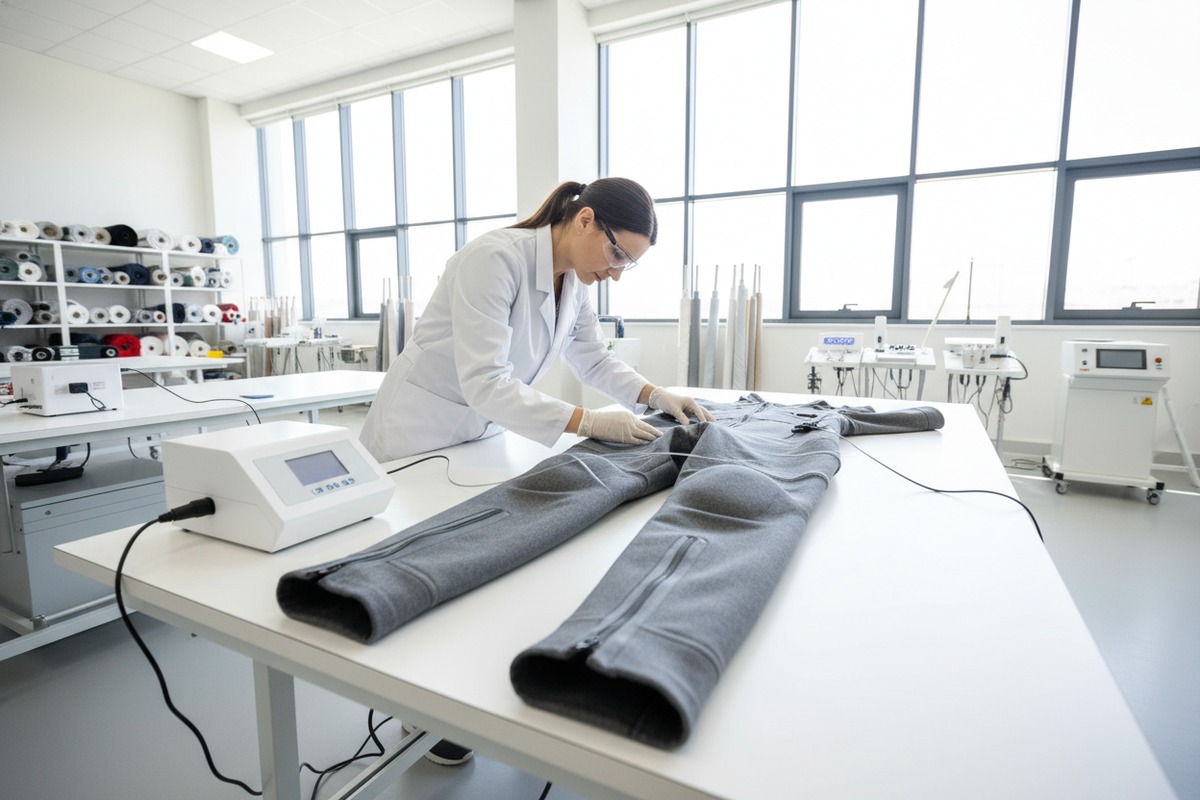
Inspecting the Pneumatic System Integrity
The heart of any pressotherapy machine is its pneumatic system 4. If the air pump or the internal tubing fails, the machine is useless. When you are on a video call, you cannot feel the air pressure, but you can see the evidence of it Pantone color card 5. You need to ask the factory staff to open the casing of a unit that is currently on the production line.
Do not settle for a unit they have "prepared" for you on a table. Ask them to pick a random unit from the assembly belt. Once the casing is open, look at the tubing. In professional machines like our sleek white tabletop models, the tubing should be organized, secured with proper clamps, and free of kinks. If you see a "spaghetti" mess of wires and tubes, it indicates poor engineering discipline.
The Soap Water Test
You should ask the operator to perform a leak test live on camera. This is often called the "soap water test." The operator applies a soapy solution to the connection points where the tubes meet the solenoid valves 6. If there is a leak, bubbles will form immediately.
This test is standard in rigorous manufacturing environments. If the factory hesitates to do this live, it is a red flag. A high-quality system will hold pressure without leaking air into the chassis. This is critical because internal leaks lead to weak compression on the client's body and noisy operation.
Visualizing Electronic Assembly Standards
Beyond the air system, the electronics control the sequence of the lymphatic drainage. Ask the camera operator to zoom in on the Printed Circuit Board (PCB) 7. You do not need to be an electrical engineer to spot bad work.
Look for "cold solder joints," which look dull or lumpy, rather than shiny and smooth. Check that the cables connecting the screen to the board are glued or secured so they do not vibrate loose during shipping.
Checklist for Video Inspection
Below is a breakdown of what you should check and what standard you should expect.
| Component | What to Ask for on Video | Acceptable Standard |
|---|---|---|
| Air Pump | Close-up of the pump label and mounting. | Pump is mounted on shock-absorbing rubber dampers (reduces noise). |
| Tubing | Zoom in on connection points. | Zip-ties or clamps on every connection; no loose tubes. |
| Control Unit | View of the seams of the plastic casing. | No gaps greater than 1mm; matte white finish is uniform. |
| Air Suit | Live inflation of a leg cuff. | Cuff inflates fully without hissing sounds; fabric seams do not stretch excessively. |
How do I verify the internal engineering and pressure consistency of these pressotherapy machines remotely?
We often set up a digital manometer 8 next to the machine during video calls to prove that our output matches the screen reading. Our engineers know that consistent pressure is the only way to ensure effective lymphatic drainage treatment 9.
To verify engineering consistency, request a live demonstration where the machine is connected to an external digital pressure gauge. Ask the operator to cycle through low, medium, and high settings (e.g., 20mmHg to 200mmHg) to confirm the external gauge reading matches the machine’s digital display within a ±10% tolerance.
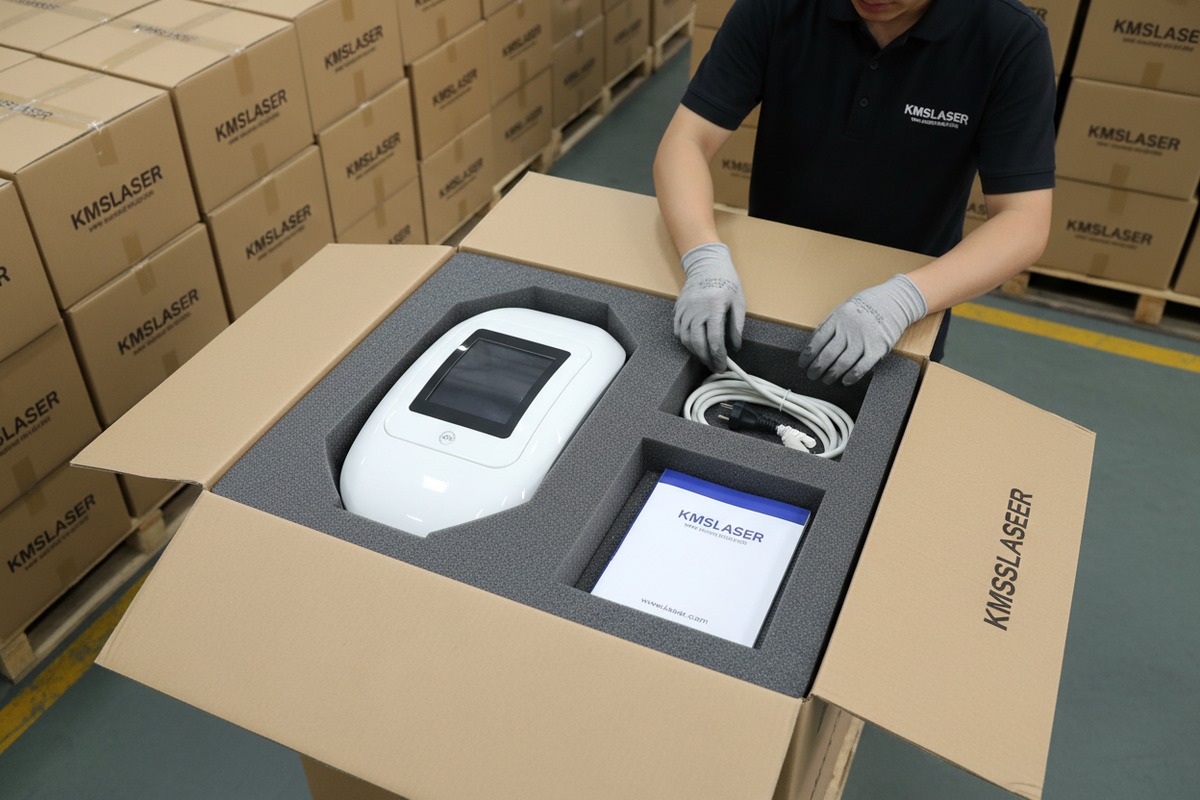
The Importance of External Validation
The digital screen on the pressotherapy machine might say "120 mmHg," but that does not mean the suit is actually receiving that much pressure. Software can be programmed to display whatever number the user wants to see. To verify the truth, you need an independent reference point.
During your video audit, insist that the factory connects a standalone, calibrated pressure gauge to one of the air outputs. This is a non-negotiable step for professional buyers. Watch the needle or the digital readout on the external gauge as they increase the power on the machine.
Testing the "Slanted" Design Air Flow
Many professional units, like the ones with the slanted control faces we design, use specific algorithms to wave pressure up the legs. You need to verify this sequence.
Ask the operator to attach the air suit (leg or arm cuffs) and run a full program. While you cannot feel the squeeze, you can watch the inflation pattern. The chambers should inflate in a strict order: foot, then calf, then knee, then thigh.
If the machine inflates all chambers at once when it should be doing a "wave" pattern, the internal solenoid valves are not being controlled correctly. This is a common engineering failure in cheap units.
Auditory Checks via Video
Audio is just as important as video. Pressotherapy machines should be quiet enough to use in a relaxing spa environment. Cheap air pumps rattle and vibrate efficiently.
Ask the operator to:
- Turn off other background machinery.
- Run the machine at maximum power.
- Place the microphone near the unit.
You should hear a low hum, not a loud clattering sound. If the video call audio cuts out or distorts when the machine turns on, it might be too loud. You can also ask them to place a glass of water on top of the console. If the water ripples violently, the internal engineering lacks proper vibration dampening.
Pressure Specification Verification
Use this table to benchmark the performance you observe during the call.
| Pressure Level | Target Output (mmHg) | Tolerance | What to Watch For |
|---|---|---|---|
| Low (Lymphatic) | 20 – 40 mmHg | ± 5 mmHg | Gentle inflation, very quiet pump operation. |
| Medium (Circulation) | 80 – 120 mmHg | ± 10 mmHg | Firm inflation, suit fabric tightens visibly. |
| High (Sports Massage) | 180 – 240 mmHg | ± 15 mmHg | Rapid inflation, pump working hard but stable. |
Can I inspect the factory's OEM capabilities and my private-label packaging standards via video?
When we collaborate on custom orders, we walk our partners through the design room to show them material swatches and logo placement options before production begins. This visual confirmation prevents the disaster of receiving 500 units with the wrong logo size.
Yes, you can inspect OEM and packaging standards by requesting a live measurement of the logo placement and a demonstration of the packaging foam density. Ask the operator to hold a Pantone color card against the machine casing and perform a drop test with a packed sample to verify protection levels.

Verifying Brand Assets Live
Getting your logo right is critical for your brand image. A JPEG proof sent via email is not the same as seeing the physical print on the machine.
In the video call, ask the factory to take a ruler and measure the logo on a sample unit. Does the size match your tech pack? Check the alignment. If your logo is supposed to be in the center of the slanted front panel, make sure it isn't drifting to the left or right.
Also, check the color. Cameras can distort colors, so the best way to verify paint or plastic color is by comparison. Ask the operator to hold a physical Pantone book next to the machine casing. If you ordered "Matte White," compare it against a standard white sheet of paper to check for yellowing or grey tints.
Packaging Durability Checks
Your machines have to survive the journey from China to the US, and then to your local salons. Packaging acts as the insurance policy.
Do not just look at the outside of the box. Ask them to unpack a unit entirely.
- Foam Quality: Ask the operator to press their thumb hard into the foam. High-density foam (EPE) will resist the pressure. Cheap Styrofoam (EPS) will crumble or dent easily. You want EPE foam for heavy beauty machines.
- Accessory Organization: Pressotherapy machines come with many parts (suits, tubes, power cords). Check if there is a dedicated compartment for the suit. If the suit is just stuffed into a plastic bag on top of the machine, it looks unprofessional to your end customer.
The "Shake" Test
Ask the operator to close the box, tape it up, and shake it. If you hear items shifting inside, the packaging is loose. The product should be suspended firmly in the foam.
OEM/ODM Verification Checklist
| Item | Inspection Method | Red Flag Warning |
|---|---|---|
| Logo Printing | Ruler measurement on screen. | Logo peels off when scratched with a fingernail. |
| User Manual | Flip through pages on camera. | Bad English translations or thin, cheap paper. |
| Power Plug | Close-up of the plug pins. | Wrong plug type for your country (e.g., EU plug for US market). |
| Carton Box | Visual check of cardboard thickness. | Single-wall cardboard (should be double-wall/5-ply). |
What evidence of production capacity and lead time reliability should I look for during my virtual visit?
Our production managers always keep the schedule whiteboard visible during video tours to show clients that their order slot is real and planned. We know that empty promises about delivery dates are the biggest frustration for import businesses.
To verify capacity and lead time, verify the presence of active production lines with workers currently assembling units, and request to see the raw material warehouse. Look for stockpiles of specific components like air pumps and plastic casings, and check the visible production whiteboard for current order dates and daily output targets.
Spotting a "Ghost" Factory
A common scam in the industry is the "Ghost Factory." This is where a trading company rents a showroom or a small workshop for a day to pretend they are a big manufacturer.
To avoid this, ask to see the "boring" parts of the factory.
- The Warehouse: A real factory has a massive inventory of raw materials. Ask to see the corner where they keep the unpainted plastic casings or the boxes of air pumps. If the warehouse is empty, they are buying components just-in-time, which causes delays.
- The Workers: Are the workers moving with purpose? Do they know what they are doing? In a staged audit, actors often look confused or stand around doing nothing. In a real factory, the assembly line has a rhythm.
The Production Whiteboard
Every factory floor has a management board. This is usually a whiteboard or a digital screen that lists the orders for the week.
Ask the camera operator to walk up to this board. You might not read Chinese, but you can see dates and numbers.
- Does the board look used and erased frequently?
- Are there dates listed for the current month?
- Can you see your order number (or a placeholder for it) in the queue?
If the board is pristine or empty, the factory might not be active.
Validating Lead Times with Inventory
If the supplier promises a 15-day lead time, they must have the raw materials in stock today.
Ask specifically: "Show me the stock of the white control unit shells." If they have 500 shells sitting in boxes, they can assemble quickly. If they have zero stock, they have to order the plastic, wait for injection molding, paint it, and then assemble. That takes 40 days, not 15.
Capacity Indicators
| Area to Inspect | What indicates High Capacity? | What indicates Low/Fake Capacity? |
|---|---|---|
| Assembly Line | Multiple lines running; conveyor belts moving. | Dark lights in half the room; stationary belts. |
| Testing Area | Many machines plugged in for aging tests (24-48 hours). | Only one or two demo units being tested. |
| Shipping Dock | Pallets wrapped and labeled for other countries. | Empty loading bay; no boxes ready for pickup. |
Conclusion
Conducting a remote video audit for pressotherapy machines requires a shift from passive watching to active directing. By focusing on critical checkpoints like the pneumatic "bubble test," external pressure gauge validation, and raw material inventory, you can uncover the true quality and capacity of your supplier. This process minimizes the risks of international trade and ensures that the equipment arriving at your warehouse meets the high standards your customers expect.
Footnotes
1. Provides information on the ISO 13485 standard for medical devices. ↩︎
2. Explains the systematic process of quality assurance in manufacturing. ↩︎
3. Explains how pneumatic compression therapy and its cycles work. ↩︎
4. Details the use and components of pneumatic systems in healthcare applications. ↩︎
5. Introduces the Pantone Color System for consistent color communication across industries. ↩︎
6. Describes the vital role and applications of solenoid valves in medical devices. ↩︎
7. Provides a comprehensive overview of the manufacturing process for printed circuit boards. ↩︎
8. Defines a digital manometer and its key uses, including medical applications. ↩︎
9. Explains what lymphatic drainage massage is and its health benefits. ↩︎

 English
  Español de México
  Deutsch
  Français
  العربية
  Русский