
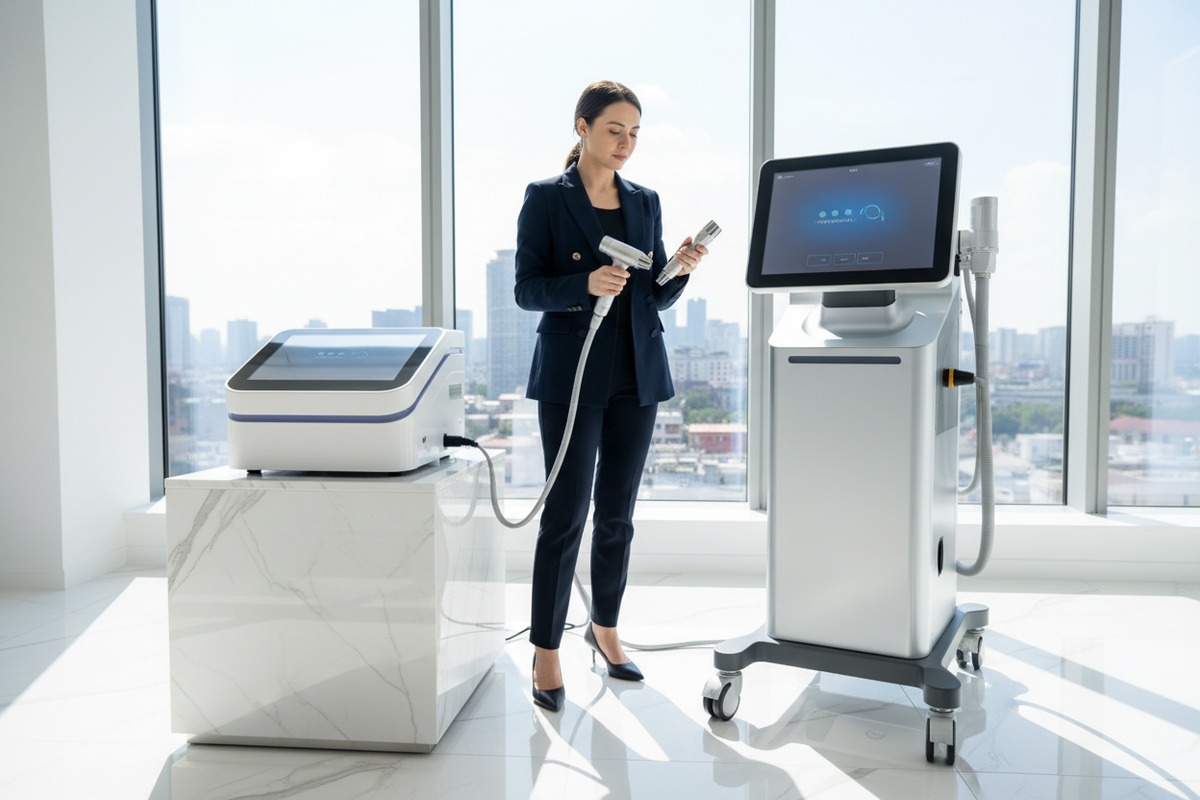
When our engineering team first started developing shockwave therapy devices, we quickly learned that buyers face a confusing choice. Pneumatic ballistic and electromagnetic systems look similar on the outside. Yet they work very differently inside. The wrong choice can hurt your brand reputation, drain your budget, and frustrate your customers.
Compare pneumatic ballistic and electromagnetic shockwave therapy by examining wave generation mechanisms, penetration depth, clinical applications, maintenance costs, customization options, and logistics. Pneumatic systems suit superficial treatments and cost less. Electromagnetic systems target deep lesions with focused precision but require higher investment.
This guide breaks down the key differences. We will cover clinical performance, maintenance, customization, and shipping logistics. By the end, you will know exactly which technology fits your brand strategy.
How do I determine which shockwave technology offers the best clinical performance for my brand's reputation?
Our R&D team has tested both pneumatic and electromagnetic systems extensively over the past decade. We have seen brands succeed with either technology. But success depends on matching the device to your target market. Choosing the wrong system can lead to customer complaints and damage your reputation.
Pneumatic ballistic shockwave therapy delivers radial pressure waves ideal for superficial musculoskeletal conditions. Electromagnetic shockwave therapy generates focused waves that penetrate deeper for calcified deposits and bone lesions. Choose pneumatic for high-volume sports rehab clinics. Choose electromagnetic for specialized orthopedic practices.

Understanding the Core Physics
Pneumatic ballistic devices 1 use compressed air to accelerate a metal projectile. This projectile strikes an applicator tip. The impact creates radial pressure waves that spread outward from the skin surface. Energy is highest at the contact point. It fades quickly with depth.
Electromagnetic devices 2 work differently. An electromagnetic coil generates a rapid magnetic pulse. This pulse creates a focused acoustic wave. The wave converges at a specific focal point deep within tissue. Peak energy arrives at the target zone, not the surface.
Penetration Depth Comparison
This is where clinical outcomes diverge significantly.
| Parameter | Pneumatic Ballistic | Electromagnetic Focused |
|---|---|---|
| Wave Type | Radial, dispersing | Focused, converging |
| Maximum Penetration | 3-5 cm effective | 12+ cm to focal point |
| Peak Energy Location | Skin surface | Deep focal zone |
| Pressure | Up to 6 bar | 0.09-0.18 mJ/mm² EFD |
| Pulse Rise Time | Slower | Rapid 10ns |
Pneumatic systems excel for conditions within 3-5 cm of the skin. Think plantar fasciitis 3, tennis elbow, and trigger points. Electromagnetic systems reach much deeper. They target calcific tendonitis, deep bone lesions, and even erectile dysfunction protocols 4.
Clinical Evidence and Outcomes
Recent 2025 randomized controlled trials 5 show interesting patterns. For superficial tendinopathies, both technologies produce similar outcomes. A 2014 study found no significant difference for patellar tendinopathy. However, 2025 RCTs showed electromagnetic therapy had slight advantages for tennis elbow pain relief.
For deep conditions, electromagnetic therapy shows clearer benefits. Calcific shoulder deposits 6 respond better to focused waves. The precise focal zone breaks down calcium deposits more effectively than dispersed radial waves.
Matching Technology to Your Market
Here is what we tell our brand partners. If your customers run sports medicine clinics or rehabilitation centers, pneumatic systems make sense. These clinics treat high volumes of superficial conditions. Sessions run faster. No anesthesia is needed. Technicians can operate the devices without physician oversight because they are FDA Class I 7.
If your customers are orthopedic specialists or urology clinics, electromagnetic systems fit better. These providers treat fewer patients but charge premium prices. They need deep penetration and precise targeting. FDA Class II classification 8 means physician involvement, but this matches their practice model anyway.
What are the maintenance and lifespan differences I should expect when importing these two types of systems?
From our production floor experience, we know maintenance costs catch many importers off guard. The initial purchase price tells only part of the story. Our service team tracks warranty claims and repair requests across thousands of units. This data reveals clear patterns between the two technologies.
Pneumatic ballistic systems have more mechanical wear components, requiring regular compressor maintenance and projectile replacement every 1-3 million shots. Electromagnetic systems have fewer moving parts, offering quieter operation and potentially lower long-term maintenance. However, electromagnetic water buffers and coils may need specialized servicing.

Mechanical Wear Patterns
Pneumatic devices rely on moving parts. The compressor runs constantly during treatment. The projectile strikes the applicator thousands of times per session. Over time, these components wear down.
Typical pneumatic maintenance includes:
- Compressor oil changes
- Air filter replacement
- Projectile replacement
- Applicator tip inspection
- O-ring and seal replacement
Electromagnetic systems have fewer mechanical components. No compressor means no compressor maintenance. The electromagnetic coil generates waves without physical impact. However, these systems are not maintenance-free.
Typical electromagnetic maintenance includes:
- Water buffer inspection and fluid changes
- Coil integrity testing
- Gel coupling system checks
- Software updates
- Focal zone calibration
Lifespan Expectations
| Component | Pneumatic System | Electromagnetic System |
|---|---|---|
| Main Unit Lifespan | 7-10 years | 10-15 years |
| Applicator/Handpiece | 1-3 million shots | 3-5 million pulses |
| Consumables Cost | Moderate (projectiles, seals) | Lower (gel, water buffer) |
| Annual Service | Required | Recommended |
| Noise Level | Higher (compressor) | Quieter operation |
Real-World Maintenance Costs
When we quote maintenance packages to our brand partners, pneumatic systems typically run 8-12% of the initial purchase price annually. Electromagnetic systems run 5-8% annually. However, electromagnetic repairs often require specialized technicians. Parts may cost more when replacement is needed.
For importers, this means different support strategies. Pneumatic devices need readily available spare parts. Stock extra projectiles, seals, and applicator tips. Your customers will need them.
Electromagnetic devices need technical support access. Partner with service centers in your market. Or train your own technicians on coil testing and water buffer protocols.
Planning Your Import Strategy
We recommend building maintenance costs into your pricing model from day one. Many importers focus only on unit cost. Then they face angry customers when devices need service.
For pneumatic systems, include a starter maintenance kit with each unit. Package extra projectiles, seals, and filters. This reduces support calls and builds customer loyalty.
For electromagnetic systems, offer extended warranty packages. Include remote diagnostic support. Your customers will pay premium prices. They expect premium service.
Can I customize the internal engineering and external design for both pneumatic and electromagnetic models?
Our ODM team fields customization requests daily. Brand owners want devices that stand out. They want their logo on the outside. But they also want engineering that matches their market needs. The good news is both technologies allow significant customization. The approaches differ based on core physics.
Both pneumatic and electromagnetic shockwave devices support extensive customization. External design changes include chassis colors, control panels, branding, and handpiece ergonomics. Internal engineering options include pulse frequency ranges, pressure settings, treatment protocols, and software interfaces. Pneumatic systems offer easier hardware modifications while electromagnetic systems provide more sophisticated software customization.

External Design Customization
The chassis and exterior design offer the most visible customization opportunities. Our design team regularly produces custom versions for brand partners.
Common external customizations include:
- Chassis color matching to brand guidelines
- Logo placement and backlit branding
- Control panel layout and button design
- Handpiece grip ergonomics and colors
- Display screen size and interface design
- Accessory storage integration
- Cart and mobility options
Both pneumatic and electromagnetic platforms accept these modifications equally well. The external shell is independent of the wave generation mechanism inside.
Internal Engineering Options
This is where the two technologies diverge significantly.
| Customization Area | Pneumatic Options | Electromagnetic Options |
|---|---|---|
| Pressure Range | Easy to modify (1-6 bar typical) | Fixed by coil design |
| Pulse Frequency | 1-22 Hz common range | 1-8 Hz typical |
| Energy Output | Adjustable via compressor settings | Software-controlled EFD |
| Treatment Protocols | Firmware programming | Advanced software protocols |
| Applicator Types | Multiple tip designs available | Focal depth varies by applicator |
| Diagnostic Features | Basic session tracking | Real-time imaging integration |
Pneumatic systems allow more hardware-level modifications. Our engineers can adjust compressor specifications, pressure regulators, and projectile designs. This changes the treatment characteristics directly.
Electromagnetic systems offer sophisticated software customization. The coil design is more fixed. But treatment protocols, energy delivery patterns, and user interfaces can be extensively programmed. High-end systems support integration with diagnostic imaging for real-time targeting.
Protocol Development
Many brand owners want proprietary treatment protocols. This differentiates their products in crowded markets.
For pneumatic devices, protocols typically specify:
- Pressure levels for different conditions
- Pulse counts per treatment zone
- Frequency settings for various tissue types
- Treatment timing and session intervals
For electromagnetic devices, protocols can include:
- Energy flux density settings by condition
- Focal depth targeting parameters
- Pulse wave patterns and sequences
- Integration with imaging guidance
Our software team can program custom protocols into device firmware. This creates genuine differentiation. Your devices deliver treatments your competitors cannot replicate.
Minimum Order Quantities
Customization requires tooling changes and development time. We structure our MOQ requirements accordingly.
Basic branding (logo, colors): 50-100 units minimum
Control panel redesign: 100-200 units minimum
Handpiece modifications: 200-300 units minimum
Protocol development: 300-500 units minimum
Full custom engineering: 500+ units negotiable
These thresholds let smaller brands access customization. Larger partners get volume pricing on fully bespoke designs.
How will the physical build of these different technologies impact my shipping costs and import logistics?
Our logistics team ships shockwave devices to over 40 countries. We have learned that device weight and dimensions directly impact your landed cost. Many importers calculate unit price and forget freight costs. This mistake erodes margins quickly. Understanding physical differences between pneumatic and electromagnetic systems helps you plan realistic budgets.
Pneumatic ballistic devices typically weigh 15-35 kg with built-in compressors, requiring sturdy packaging and higher shipping costs per unit. Electromagnetic devices weigh 8-25 kg without compressors, offering easier handling and lower freight rates. Both systems need cushioned packaging to protect sensitive components. Plan for 15-25% of FOB price for door-to-door shipping on either technology.

Weight and Dimension Comparison
The compressor inside pneumatic devices adds significant weight. Electromagnetic coils are lighter by comparison.
| Physical Specification | Pneumatic Ballistic | Electromagnetic Focused |
|---|---|---|
| Main Unit Weight | 15-35 kg | 8-25 kg |
| Typical Dimensions | 45x35x40 cm | 40x30x35 cm |
| Packaged Weight | 25-50 kg | 15-35 kg |
| Packaged Dimensions | 60x50x55 cm | 55x45x50 cm |
| Volumetric Weight | Higher | Lower |
| Fragility Level | Medium | Medium-High |
Shipping Cost Calculations
Freight companies charge by actual weight or volumetric weight, whichever is higher. Pneumatic devices often exceed volumetric thresholds due to compressor bulk. This increases costs.
For a typical sea freight shipment of 100 units:
- Pneumatic systems: approximately $120-180 per unit for door-to-door
- Electromagnetic systems: approximately $80-140 per unit for door-to-door
Air freight multiplies these differences. If you need urgent delivery, electromagnetic systems save significant money per unit.
Packaging Requirements
Both technologies need protective packaging. But the requirements differ slightly.
Pneumatic devices need:
- Reinforced corners for compressor weight
- Anti-vibration foam for compressor mounting
- Secure handpiece compartments
- Pressure relief consideration for air systems
Electromagnetic devices need:
- Precision padding for coil assemblies
- Moisture barriers for water buffer systems
- Gentle handling indicators
- Temperature control for certain components
Our packaging team designs custom solutions for both. We use drop-test certified materials. This reduces damage claims during transit.
Import Documentation
Regulatory classification affects customs clearance. Pneumatic devices as FDA Class I face simpler import requirements in the United States. Electromagnetic devices as FDA Class II may require additional documentation.
Prepare these documents for either technology:
- Commercial invoice with detailed specifications
- Packing list with serial numbers
- Certificate of origin
- FDA establishment registration
- Product listing numbers
- Safety certifications (CE, ISO)
Our export team prepares complete documentation packages. This speeds customs clearance and prevents costly delays.
Total Landed Cost Planning
Smart importers calculate total landed cost before committing. Here is a framework we share with brand partners:
FOB Unit Price: Base device cost
- Freight: 15-25% of FOB
- Insurance: 0.5-1% of value
- Customs Duty: 0-5% depending on country
- Brokerage Fees: $150-500 per shipment
- Local Delivery: Variable by location
= Total Landed Cost
For pneumatic devices priced at $8,000 FOB, expect $9,500-10,500 landed.
For electromagnetic devices priced at $30,000 FOB, expect $35,000-38,000 landed.
Build these costs into your wholesale pricing from the start.
Conclusion
Choosing between pneumatic ballistic and electromagnetic shockwave therapy requires matching technology to your market needs. Consider clinical applications, maintenance requirements, customization potential, and logistics costs. Both technologies serve valid purposes when properly positioned for your brand strategy.
Footnotes
1. Provides a clear explanation of pneumatic shockwave therapy, its mechanism, and how it differs from true shockwaves. ↩︎
2. Explains the mechanism and applications of electromagnetic shockwave therapy, including its generation using an electric coil and magnetic field. ↩︎
3. Authoritative Mayo Clinic source explaining plantar fasciitis and its various treatments, including extracorporeal shockwave therapy. ↩︎
4. Provides clinical guidelines and evidence for low-intensity shockwave therapy in treating erectile dysfunction. ↩︎
5. Wikipedia provides a comprehensive overview of randomized controlled trials in medical research. ↩︎
6. Discusses shockwave therapy as an effective treatment for calcific tendonitis. ↩︎
7. Explains the classification of FDA Class I medical devices and their regulatory controls. ↩︎
8. Describes FDA Class II medical devices, their risks, and regulatory requirements. ↩︎
9. Official recommendations from the International Society for Medical Shockwave Treatment. ↩︎

 English
  Español de México
  Deutsch
  Français
  العربية
  Русский