

In our Guangzhou production facility, we often see buyers struggle with stacks of clinical reports that seem too good to be true third-party certifications 1. Choosing a machine based on vague data often leads to poor salon results and lost revenue. pressotherapy machines 2
To compare pressotherapy clinical data, verify report authenticity through third-party certifications, focus on specific metrics like limb circumference reduction and edema levels, and ensure protocols match your salon’s goals. High-quality data should show consistent results across 5-10 sessions, proving the machine’s efficacy for lymphatic drainage.
Understanding these data points is the only way to protect your investment and ensure your clients see the slimming results they pay for.
How can I verify the authenticity of the clinical trial reports provided by my pressotherapy machine supplier?
When we export our air compression systems to the United States, we know that savvy purchasing managers look past the glossy brochures manual lymphatic drainage (MLD) 3. Many suppliers simply copy data from high-end European brands and claim it as their own.
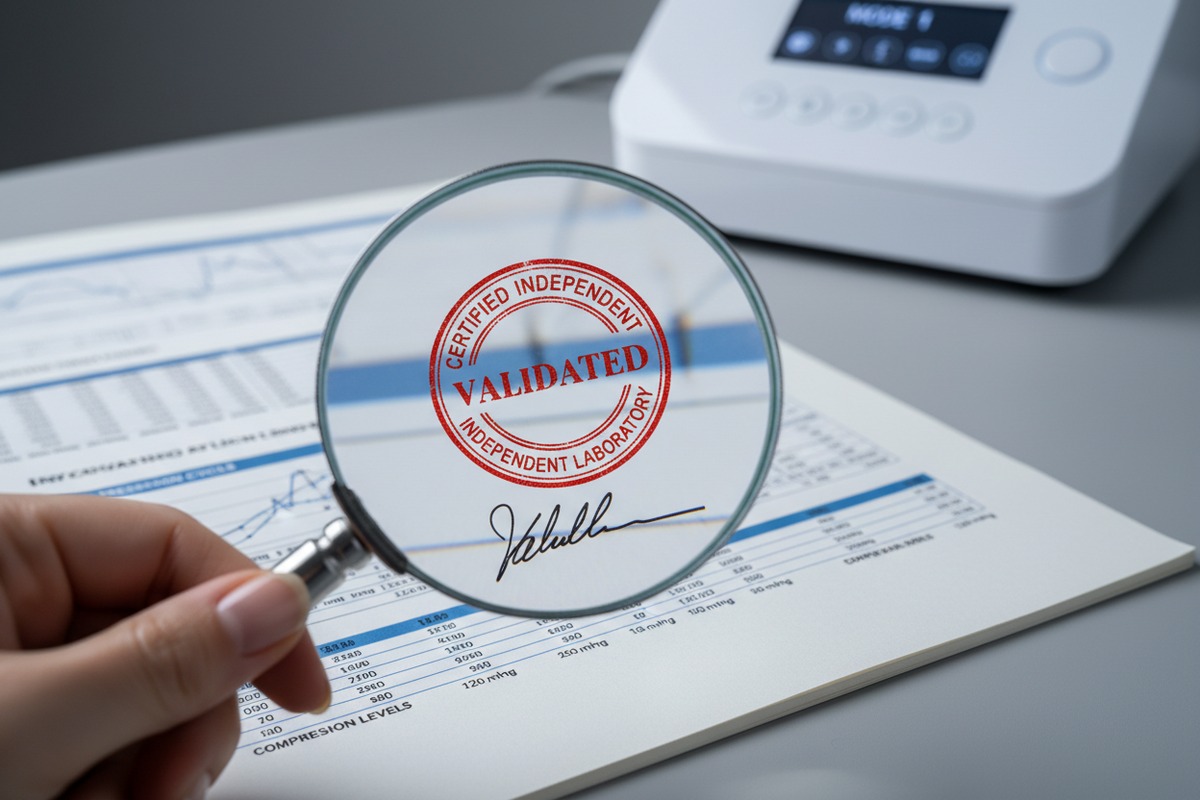
Verify clinical report authenticity by checking for independent third-party lab stamps, cross-referencing patient case studies with machine serial numbers, and requesting raw data logs. Genuine reports include detailed participant demographics, specific pressure settings used (20-120 mmHg), and clearly defined, measurable outcomes like volume reduction.
Look for Independent Validation
Real clinical data does not just come from the manufacturer’s internal marketing team ultrasound cavitation session 4. In our experience, the most reliable reports are those conducted by independent medical institutions or certified testing labs. Look for a stamp or a signature from a third-party clinical investigator. If the report lacks a formal header from a hospital or a university, treat it with caution. Authentic reports will also list the specific software version and hardware model used during the trial. If the report is ten years old but the machine was released last year, the data is likely falsified.
Scrutinize the Methodology
A robust clinical study must have a clear methodology. This includes the number of participants, their age range, and their baseline health conditions. If a supplier provides a "study" that only includes three people, the results are not statistically significant. We recommend looking for trials with at least 30 to 50 subjects. Furthermore, the report should specify the treatment parameters. Did they use 80 mmHg or 120 mmHg? Was the cycle peristaltic or sequential? Without these details, you cannot replicate the results in your own salon.
The Red Flags of Faked Data
In our years of manufacturing, we have identified several red flags. Be wary of reports that show "perfect" results for every single patient. Human bodies vary, and honest clinical data reflects that. Also, check for "borrowed" images. You can use Google Lens to see if the "before and after" photos in the report belong to a different brand.
| Feature | Authentic Clinical Report | Suspicious/Fake Report |
|---|---|---|
| Issuer | Independent Lab or Hospital | Internal Marketing Dept |
| Participant Count | 30+ Subjects | Unspecified or <5 |
| Parameters | Detailed (Pressure, Time, Mode) | Vague ("Standard setting") |
| Images | High-res, original, consistent | Stock photos or watermarked |
| Certifications | Matches ISO/CE/FDA records | No verifiable tracking number |
Which specific lymphatic drainage metrics should I prioritize when comparing different pressotherapy models?
During the R&D phase of our latest pressotherapy line, we focused heavily on pressure gradient precision. We found that most buyers only look at "maximum pressure," but that is actually the wrong metric to prioritize.
Prioritize metrics such as the number of air chambers (20-48), gradient pressure accuracy, and session-over-session circumference reduction. Effective machines demonstrate measurable fluid drainage through pre-and-post limb volume calculations and improved skin elasticity grades using standardized scales like the Nurnberger-Muller cellulite scale.
Chamber Count and Pressure Distribution
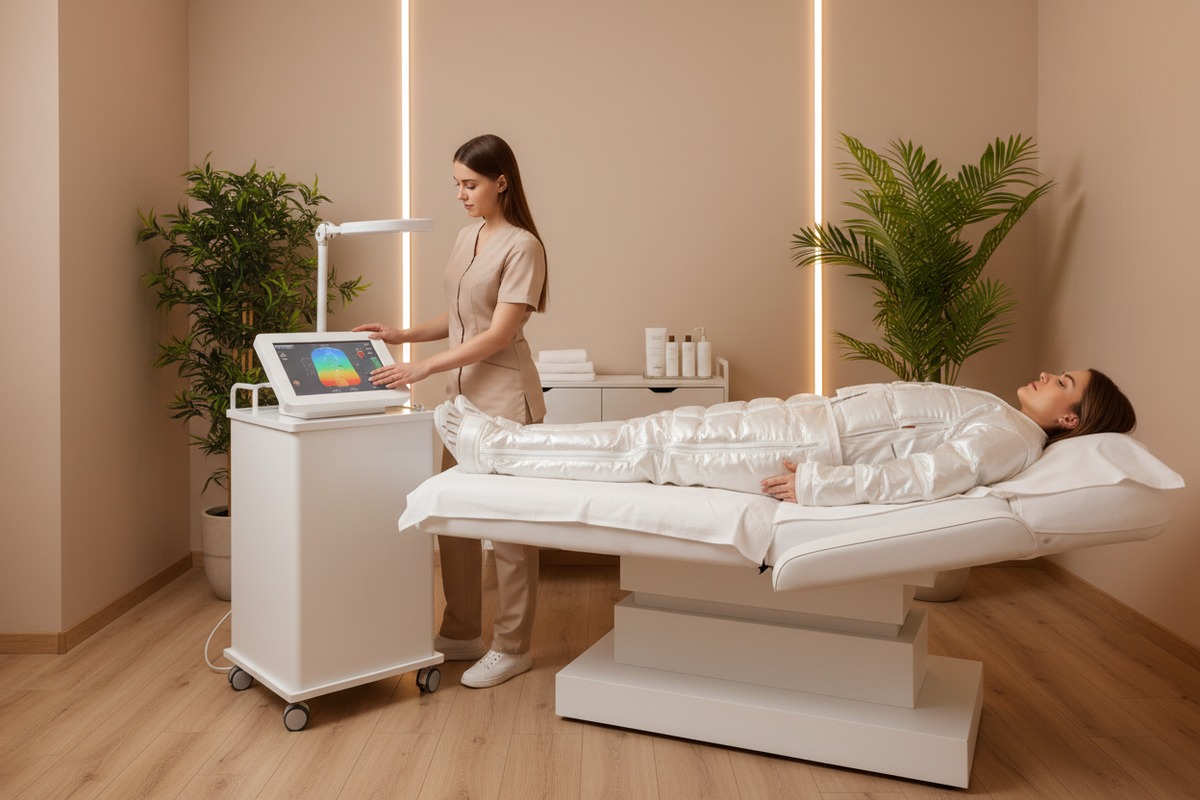
The number of air chambers in the suit is a critical metric. A machine with only 4 or 8 chambers provides a very blunt massage that can actually trap fluid in the joints. In our high-end models, we use 24 or even 48 chambers. This allows for a "wave-like" motion that mimics manual lymphatic drainage 5 (MLD). When comparing data, look for the "gradient pressure" capability. This means the pressure is highest at the ankles and gradually decreases as it moves toward the heart. If a machine cannot provide this gradient, it is not performing true lymphatic drainage.
Volume and Circumference Reduction
The most direct metric for body contouring is the reduction in limb volume. This is usually measured in milliliters using water displacement or via tape measurements at specific points on the thigh and calf. Good clinical data will show a reduction of 1.5cm to 3cm in circumference after a single session for clients with heavy edema. However, for body contouring, you should look for "cumulative reduction" data over a 10-session period.
Cellulite Grading and Skin Texture
Pressotherapy is often marketed for cellulite reduction. To verify this, look for data that uses the Nurnberger-Muller scale 6. This scale grades cellulite from Stage 0 (smooth) to Stage 3 (visible dimpling when standing and lying down). If a manufacturer claims their machine "cures" cellulite, they should provide data showing a shift from Stage 3 to Stage 1. This is usually achieved through improved blood circulation and the removal of interstitial fluid that causes skin to look "bumpy."
| Metric | Why It Matters | Target Value |
|---|---|---|
| Chamber Count | Precision of fluid movement | 24 – 48 Chambers |
| Pressure Range | Versatility for different issues | 20 – 120 mmHg |
| Cycle Speed | Efficiency of the treatment | 30-45 Minute sessions |
| Circumference Loss | Proof of fluid drainage | 1-3cm per session (edema) |
How do I ensure the clinical data translates into the long-term results my salon clients demand?
We often tell our B2B partners that the first session sells the treatment, but the tenth session sells the membership. If the clinical data only shows immediate results, your clients might be disappointed when the "water weight" returns.
Ensure long-term results by matching manufacturer protocols with your local demographic and combining treatments. Look for data spanning at least 10 sessions that tracks both immediate fluid loss and sustained improvements in skin texture, as pressotherapy works best when paired with cryolipolysis or cavitation.
Analyzing "Sustained" vs. "Temporary" Results
Most pressotherapy data focuses on the immediate "lightness" a patient feels. While this is great for customer satisfaction, you need to look for studies that follow up with patients 30 days after their last session. If the data shows that the volume reduction disappeared within 48 hours, then the machine is only providing temporary edema relief. For long-term contouring, the data should demonstrate an improvement in the "metabolic rate" of the treated area, often evidenced by better skin tone and less frequent swelling.
The Power of Combination Therapy
In our own testing, we have found that pressotherapy is a "force multiplier." When you look at clinical data, specifically ask for "combination studies." This is data that shows how the machine performs when used immediately after a fat-freezing (cryolipolysis 7) or ultrasound cavitation session. These treatments break down fat cells, but the body needs help flushing the debris through the lymphatic system. Data showing a 20-30% increase in fat-loss efficacy when pressotherapy is added is a strong indicator of a high-performance machine.
Consistency Across Different Body Types
Salon clients come in all shapes and sizes. A machine that only works on thin patients with minor bloating is not versatile. Look for clinical trials that include "overweight" or "sedentary" categories. If the data shows that the machine can successfully reduce heavy leg syndrome in older patients as well as tone the abdomen of younger patients, you can be confident that the machine will perform well across your entire client base.
| Treatment Type | Immediate Result | Long-Term Result (10+ Sessions) |
|---|---|---|
| Standalone Drainage | 1-2 lbs water loss | Reduced cellulite appearance |
| Post-Cryolipolysis | Reduced inflammation | Faster fat metabolism/clearance |
| Post-Cavitation | Immediate toxin flush | More defined body contours |
Will my custom OEM design changes impact the validity of the manufacturer’s original clinical data?
As a manufacturer that offers extensive OEM and ODM services, we frequently navigate this issue. A client might want a different fabric for the suit or a different arrangement of the air hoses to match their brand’s aesthetic.
Custom OEM changes like garment material or chamber layout can invalidate original clinical data if they alter pressure distribution. Minor aesthetic tweaks to the control unit housing typically do not, but any modification to the air delivery system requires new validation to ensure safety and efficacy.
Aesthetic vs. Functional Changes
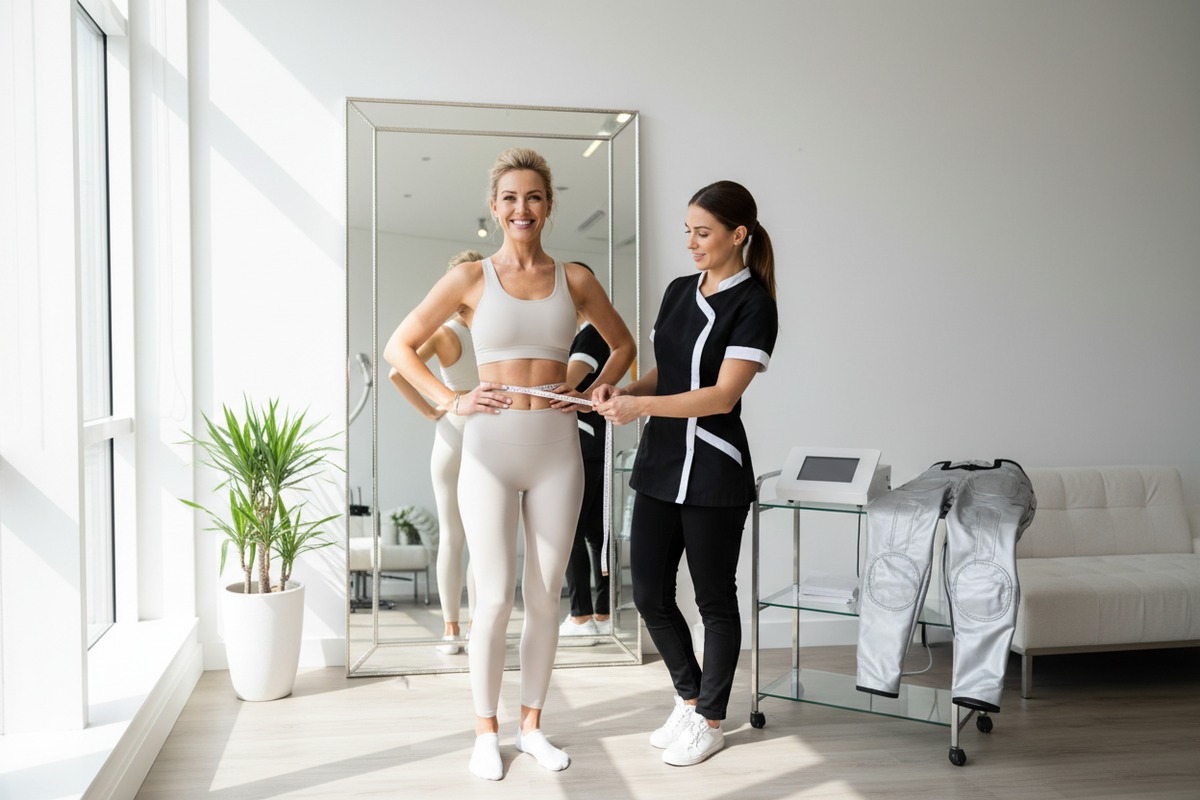
When you ask us to put your logo on the machine or change the color of the plastic casing, the internal technology remains the same. In these cases, the manufacturer’s original clinical data is still 100% valid. However, if you decide to change the "compression suit" material from a standard medical-grade nylon to a thicker, less flexible fabric, the way the air pressure is transmitted to the skin changes. This could mean the 80 mmHg setting on the screen no longer delivers 80 mmHg to the patient’s leg.
The Risk of Chamber Modification
Some brand owners want to reduce the number of chambers to lower the cost of the machine. This is a functional change. If the original clinical trial was performed on a 24-chamber machine, you cannot use that data to market a 16-chamber version. The fluid dynamics will be completely different. At our factory, we always advise clients that if they want to market specific clinical results, they must stick to the hardware configurations used in those trials.
Software and Algorithm Adjustments
The software controls how the chambers inflate—the timing, the hold, and the release. If you request a custom "slimming program" that isn't part of the standard tested protocols, you are essentially entering unvalidated territory. We recommend using the manufacturer's pre-set, clinically-tested modes as the "core" of your machine and adding custom modes as secondary options. This allows you to still leverage the original data for your primary marketing claims while offering something unique to your brand.
Conclusion
Choosing the right pressotherapy machine requires a deep dive into data authenticity and technical specs. By focusing on verified metrics and understanding how OEM changes impact performance, you can confidently invest in a machine that delivers real results.
Footnotes
1. Authoritative government source (.gov) directly addressing third-party certification programs for compliance. ↩︎
2. Provides a comprehensive overview of pressotherapy, its benefits, and how it works. ↩︎
3. Defines MLD as a manual technique to encourage natural lymph drainage. ↩︎
4. Authoritative health information source providing details on ultrasonic cavitation. ↩︎
5. Explains the lymphatic system’s function in fluid balance and immune response. ↩︎
6. Describes a four-point grading scale for cellulite, used for visual and physical assessment. ↩︎
7. Explains cryolipolysis as a nonsurgical fat reduction procedure using cold temperatures. ↩︎

 English
 Español de México
 Deutsch
 Français
 العربية
 Русский
