Every week, our production floor in Guangzhou ships dozens of shockwave therapy machines 1 to US clinics. Yet we constantly hear from clients frustrated by unpredictable delays and missed sales opportunities.
To shorten transit for shockwave therapy machines from China, prioritize West Coast ports like Los Angeles or Seattle for ocean shipping, which typically reduces transit by 10-20 days compared to East Coast options. Match the port to your inland destination to minimize total door-to-door time.
Choosing the right US port is not just about ocean distance. It involves customs efficiency, inland trucking, congestion patterns, and your specific business location. Let me walk you through the key decisions that will get your equipment to customers faster.
Which West Coast port should I prioritize to reduce the shipping time for my shockwave therapy machines?
When we load containers at our Shenzhen facility, the destination port determines whether your machines arrive in 15 days or 40 days. This single decision can make or break your inventory planning.
Los Angeles/Long Beach should be your first choice for the fastest ocean transit from China, averaging 12-18 days from Shenzhen. Seattle-Tacoma offers 15-20 day transit with less congestion. Oakland provides a balanced option at 13-19 days with efficient Bay Area access.

Understanding West Coast Transit Times
The Pacific Ocean is your shortest path from China to America. Our shipping records show consistent patterns that help you plan better. West Coast ports 2 cut your waiting time significantly compared to routing through Panama Canal to the East Coast.
Here is a breakdown of what we see from our regular shipments:
| Port | Transit from Shenzhen | Transit from Shanghai | Best For |
|---|---|---|---|
| Los Angeles/Long Beach | 12-18 days | 15-20 days | Nationwide distribution, highest vessel frequency |
| Seattle-Tacoma 3 | 15-20 days | 18-22 days | Pacific Northwest, Midwest via rail |
| Oakland | 13-19 days | 16-21 days | Northern California, Nevada |
Why Los Angeles Dominates
Los Angeles and Long Beach 4 together handle about 40% of all US imports from Asia. This means more direct sailings and more schedule options. When we book freight for clients, LA usually has three to five weekly departures from major Chinese ports.
The high volume creates competition among carriers. You get better rates and more flexibility. However, this popularity also brings congestion risk during peak seasons.
When Seattle Makes More Sense
Our clients in Washington, Oregon, and the northern Midwest often save total transit time by choosing Seattle-Tacoma. The ocean journey takes two to three days longer. But trucking from Seattle to Minneapolis is much faster than trucking from LA.
Seattle also handles fewer containers overall. This means your shockwave machines clear customs faster. We have seen one-day turnaround at Seattle versus three to four days at LA during busy periods.
Oakland as Your Middle Ground
For clients in the San Francisco Bay Area, Oakland eliminates extra trucking entirely. The port is smaller and less congested. Our machines typically clear customs within 48 hours here.
The drawback is fewer direct sailings. Sometimes your cargo needs transshipment, adding two to three days. Check with your freight forwarder about direct service availability.
How can I choose a port that avoids congestion and keeps my beauty machine inventory moving?
Our quality control team works hard to ensure your shockwave machines leave our factory perfect. But those efforts mean nothing if your cargo sits at a congested port for weeks.
To avoid port congestion, monitor real-time vessel schedules and dwell times before booking. Seattle-Tacoma and Savannah consistently show lower congestion than Los Angeles. Avoid peak shipping seasons from August to October, and consider splitting shipments across multiple ports.

Reading Congestion Signals
Port congestion 5 is not random. It follows predictable patterns that you can plan around. We track these factors for our US-bound shipments:
| Congestion Factor | Impact | How to Monitor |
|---|---|---|
| Peak retail season (Aug-Oct) | Adds 5-10 days at LA | Book 3 months ahead |
| Labor negotiations | Unpredictable delays | Follow ILWU news |
| Chinese holidays (Feb, Oct) | Pre-holiday surge | Ship 4 weeks before |
| Weather events | 2-5 day delays | Track hurricane season for Gulf |
Real-Time Tracking Tools
Several free tools help you check port conditions before committing to a route. MarineTraffic 6 shows vessel positions. The Port of Los Angeles publishes daily container dwell statistics. Your freight forwarder should provide current berth waiting times.
When we see LA dwell times exceeding five days, we recommend Seattle or Oakland to our clients. This simple check can save you a week of waiting.
Diversification Strategy
Smart importers never rely on a single port. We advise splitting your orders across two or three entry points. If you order 100 shockwave machines quarterly, send 50 through LA and 50 through Seattle.
This approach protects your inventory flow. When one port faces disruption, you still receive half your order on time. The extra logistics cost is minimal compared to stockout losses.
Seasonal Planning Calendar
Our production team schedules manufacturing around US port patterns. We encourage clients to do the same with their orders:
- January-February: Avoid shipping during Chinese New Year
- March-July: Best window for port efficiency
- August-October: Peak retail shipping creates backlogs
- November-December: Holiday cargo clears, conditions improve
Planning your orders around these patterns ensures faster delivery. We can adjust production schedules to hit optimal shipping windows.
What are the best US ports for seamless inland logistics when importing my private-label equipment?
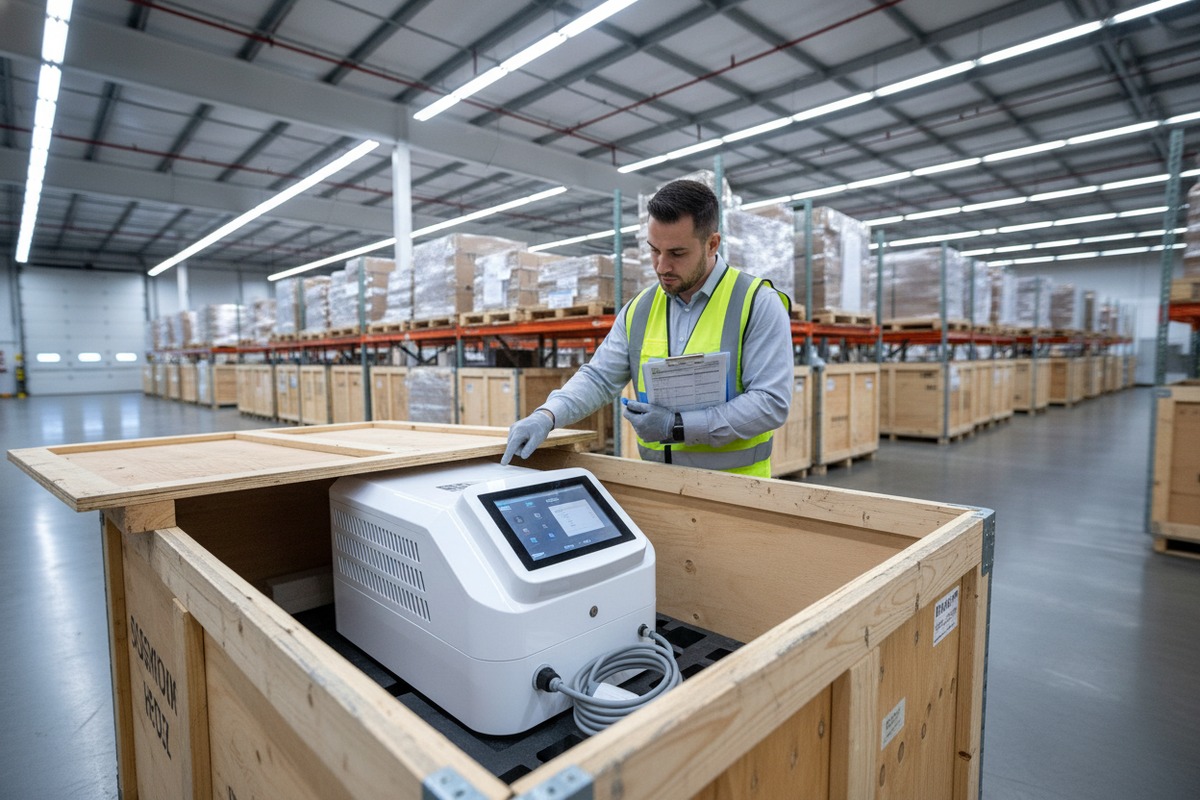
At our factory, we package every private-label shockwave machine to survive ocean shipping. But inland trucking often causes more damage than the sea journey. Choosing ports with efficient ground connections matters enormously.
For seamless inland logistics, match your port to your warehouse location. Los Angeles offers the best rail connections to anywhere in the US. Houston serves the South and Central regions efficiently. Savannah provides fast truck access throughout the Southeast with minimal congestion.
Port-to-Warehouse Distance Calculations
The ocean journey is only part of your total transit time. Inland transportation can add one to seven days depending on your port choice. Here is what we recommend based on final destination:
| Your Warehouse Location | Best Port Choice | Estimated Inland Transit |
|---|---|---|
| California, Nevada, Arizona | Los Angeles or Oakland | 1-2 days truck |
| Washington, Oregon, Montana | Seattle-Tacoma | 1-2 days truck |
| Texas, Oklahoma, Louisiana | Houston | 1-3 days truck |
| Georgia, Florida, Carolinas | Savannah | 1-3 days truck |
| New York, New Jersey, PA | Newark or rail from LA | 1-2 days truck or 5-6 days rail |
| Illinois, Ohio, Midwest | LA via rail or Seattle | 4-6 days rail |
Rail Versus Truck Decisions
For destinations more than 500 miles from port, rail usually makes sense. Los Angeles has the most developed intermodal rail network 7. Trains depart daily for Chicago, Dallas, Memphis, and other major hubs.
Rail transit takes longer than trucking but costs less. For non-urgent inventory replenishment, rail from LA to Chicago saves significant money. For urgent orders, direct trucking from a closer port may justify higher costs.
Handling Requirements for Shockwave Machines
Our shockwave therapy devices weigh between 11 and 35 kilograms. They contain sensitive electronics and precision-engineered components. Proper handling during inland transit prevents costly damage claims.
We recommend ports with modern container handling equipment. Oakland and Seattle have invested heavily in gentle cargo systems. Some older terminals at LA still use equipment that causes more vibration.
Your freight forwarder should specify handling requirements on all documentation. Mark packages with orientation arrows and "Fragile – Medical Equipment" labels. This reduces mishandling during transfers between ship, yard, and truck.
Customs Broker Location Considerations
Your customs broker should have staff at your chosen port. Clearance goes faster when brokers can physically visit customs offices. Many delays occur because brokers must handle issues remotely.
For medical devices like shockwave therapy machines, FDA clearance 8 adds complexity. Brokers experienced with medical equipment at your chosen port will navigate this faster. Ask your broker about their specific port expertise before finalizing routes.
How do I determine if an East Coast or West Coast port is more efficient for my specific delivery address?
We often see clients default to West Coast shipping without analyzing their actual needs. Sometimes East Coast ports save total time despite longer ocean transit.
For East Coast destinations like New York or Florida, compare total transit: West Coast ocean plus inland versus East Coast ocean direct. If your warehouse is within 300 miles of Savannah or Newark, East Coast routing often saves 2-4 days total despite adding 15-20 days ocean time.
The Total Transit Equation
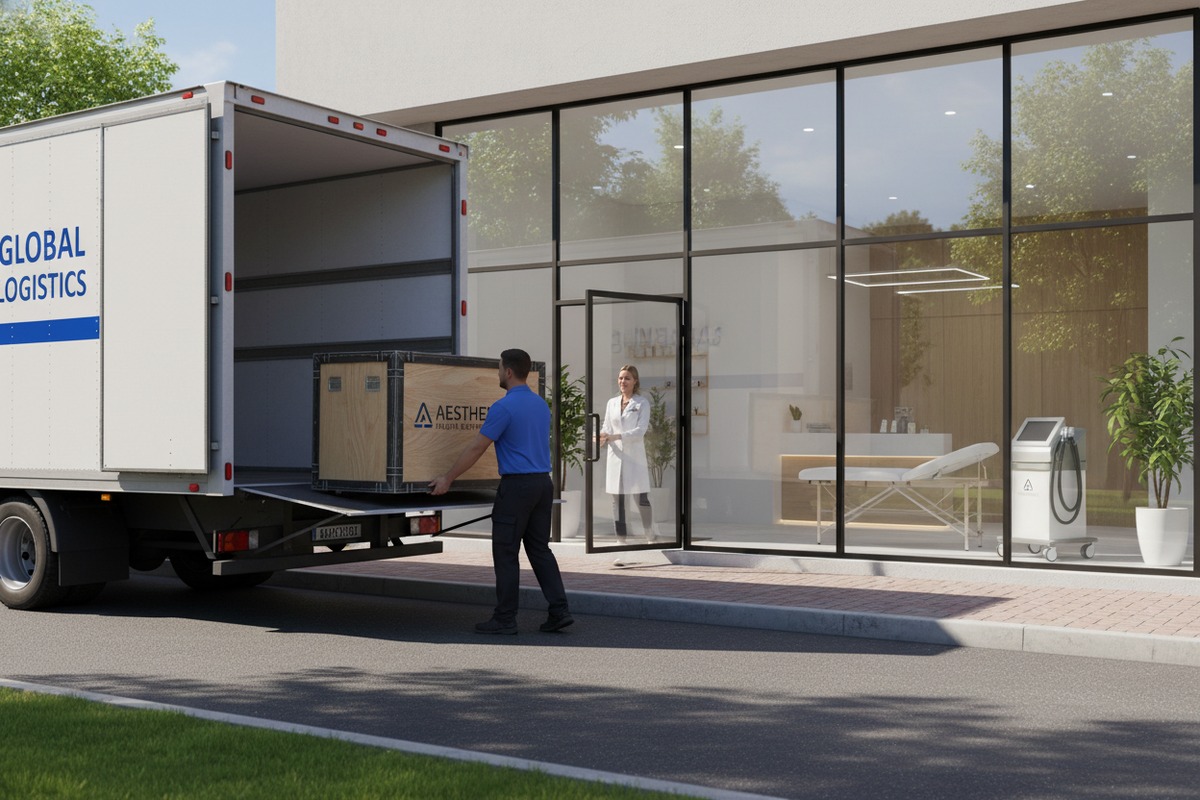
Ocean transit time is not your only variable. You must calculate door-to-door time including customs, drayage, and inland transport. Here is a realistic comparison for a New York destination:
| Route Option | Ocean Transit | Customs | Inland | Total Door-to-Door |
|---|---|---|---|---|
| Shenzhen → LA → NYC (truck) | 15 days | 2 days | 5 days | 22 days |
| Shenzhen → LA → NYC (rail) | 15 days | 2 days | 6 days | 23 days |
| Shenzhen → Newark direct | 35 days | 1 day | 1 day | 37 days |
| Shanghai → Savannah → NYC | 32 days | 1 day | 2 days | 35 days |
For this example, West Coast routing saves 12-15 days. But the calculation changes for closer East Coast destinations.
When East Coast Wins
If your warehouse is in Georgia, South Carolina, or Florida, Savannah often beats LA routing. The math looks different:
- Shenzhen → LA → Atlanta: 15 + 2 + 4 = 21 days
- Shenzhen → Savannah → Atlanta: 30 + 1 + 1 = 32 days
West Coast still wins here. But consider cost differences. Rail from LA to Atlanta costs more than short trucking from Savannah. For low-margin products, East Coast may make financial sense despite slower delivery.
Hybrid Approaches
Some of our larger clients use hybrid strategies. They stock fast-moving SKUs via West Coast for speed. Slow-moving inventory ships East Coast for cost savings.
This approach requires more sophisticated inventory management. But it optimizes both cash flow and customer satisfaction. We can coordinate split shipments from our factory to support this strategy.
Your Decision Framework
Ask these questions to determine your best port:
- Where is your warehouse or main distribution point?
- How urgent is typical inventory replenishment?
- What is your tolerance for transit time variability?
- How price-sensitive is your supply chain?
For most shockwave therapy machine importers, West Coast routing delivers the best combination of speed and reliability. East Coast makes sense only for buyers located in the Southeast with flexible timing requirements.
Conclusion
Choosing the right US port for your shockwave therapy machines requires balancing ocean transit, congestion risk, inland logistics, and your specific location. West Coast ports generally offer the fastest total delivery, but smart routing decisions depend on your unique supply chain needs.
Footnotes
1. Provides an overview of extracorporeal shockwave therapy, its uses, and FDA approval for certain conditions. ↩︎
2. Wikipedia page for Port of Los Angeles, a major West Coast port, detailing its operations and significance. ↩︎
3. Official website for The Northwest Seaport Alliance, detailing the combined operations of Seattle and Tacoma ports. ↩︎
4. Official statistics page for the Port of Los Angeles, including container volume and market share. ↩︎
5. Defines port congestion, its causes, and impacts on shipping and supply chains. ↩︎
6. Official website for MarineTraffic, a global provider of real-time vessel tracking information. ↩︎
7. Provides information on freight rail intermodal transportation in the US, its benefits, and network. ↩︎
8. Official FDA page explaining the process for medical device clearance and approval. ↩︎

 English
  Español de México
  Deutsch
  Français
  العربية
  Русский