When we invite distributors to our Guangzhou showroom, the first question they often ask isn’t about the software—it is about power delicate lymphatic drainage 1. They want to know if the machine squeezes hard enough. However, we have seen too many salon owners return machines because their clients complained of pain rather than seeing results industrial-grade solenoid valves 2. High pressure without control is a liability, not a feature. In our R&D lab, we focus on balancing power with precision to prevent this exact issue.
The ideal pressure range for a professional beauty salon machine is typically between 20 mmHg and 260 mmHg. This wide spectrum allows technicians to perform delicate lymphatic drainage at low levels while reserving higher pressures for deep cellulite treatments, ensuring both client safety and visible body contouring results.
Let’s break down the technical specifications you actually need to look for to keep your clients happy and your appointment book full.
What is the optimal pressure range I need to ensure both safety and results for my salon customers?
Our engineering team spends months calibrating air pumps to ensure they deliver exact force, because we know the human lymphatic system 3 is far more delicate than most people realize. If you apply too much force too quickly, you risk collapsing the very vessels you are trying to drain, leading to adverse effects rather than the slimming results your clients pay for high-frequency welded TPU material 4.
For optimal safety and efficacy, you need a machine capable of delivering precise low pressure (20–40 mmHg) for lymph flow and moderate pressure (80–120 mmHg) for muscle relief. Avoiding machines that only offer high-intensity squeezing prevents tissue trauma and ensures a comfortable, result-driven experience for every client body type.

Understanding the Physiology of Pressure
When analyzing specifications for your salon, it is crucial to understand that "more" is not always "better." The lymphatic system sits just beneath the skin. It does not require deep tissue force to activate. In fact, clinical data 5 suggests that effective lymphatic drainage occurs at very low pressures.
If your machine starts at a minimum of 100 mmHg, you are already too high for true drainage. You are compressing the lymph vessels shut rather than pumping fluid through them. This is why we equip our professional units with a broad range. You need the flexibility to treat a petite client with sensitive skin differently than a bodybuilder seeking muscle recovery.
The Zones of Treatment
Different treatment goals require distinct pressure zones. A "one-size-fits-all" pressure setting is the fastest way to lose repeat business. We categorize pressure into three distinct functional zones for salon operators:
- Drainage Zone: This is the lowest setting. It mimics the gentle touch of a manual therapist.
- Slimming & Contouring Zone: This is the mid-range. It targets subcutaneous fat and cellulite.
- Sports & Recovery Zone: This is the higher end, used for lactic acid flushing 6 and deep muscle compression.
Recommended Pressure Settings Table
To help you standardize your salon protocols, here is a breakdown of the pressure ranges we recommend based on specific treatment goals.
| Treatment Goal | Optimal Pressure Range (mmHg) | Air Chamber Mode | Session Duration |
|---|---|---|---|
| Lymphatic Drainage | 20 – 40 mmHg | Wave (Peristaltic) | 30 – 45 mins |
| Water Retention/Edema | 40 – 60 mmHg | Wave or Squeeze | 30 – 40 mins |
| Cellulite Reduction | 60 – 90 mmHg | Squeeze (Sequential) | 20 – 30 mins |
| Deep Muscle Relief | 90 – 140 mmHg | Full Compression | 15 – 20 mins |
| Heavy Body Shaping | 120 – 180 mmHg | Intense Squeeze | 20 – 30 mins |
Safety Mechanisms
High pressure carries risks. When we export to the US market, we ensure our systems have an emergency stop function 7 and automatic pressure release valves. If a client feels a cramp or panic, the pressure must drop to zero instantly. A machine that goes up to 260 mmHg or higher must have these safety protocols. Without them, you risk liability for bruising or circulation damage.
How can I customize the pressure settings on my private-label pressotherapy machines to meet specific market demands?
When we collaborate with US brands on OEM projects, we often find that standard factory settings do not align with the fast-paced American salon culture. Original Equipment Manufacturer 8 You need machines that fit your specific business model, whether that is rapid 20-minute express treatments or luxurious hour-long spas. We modify the software logic to match your brand's philosophy.
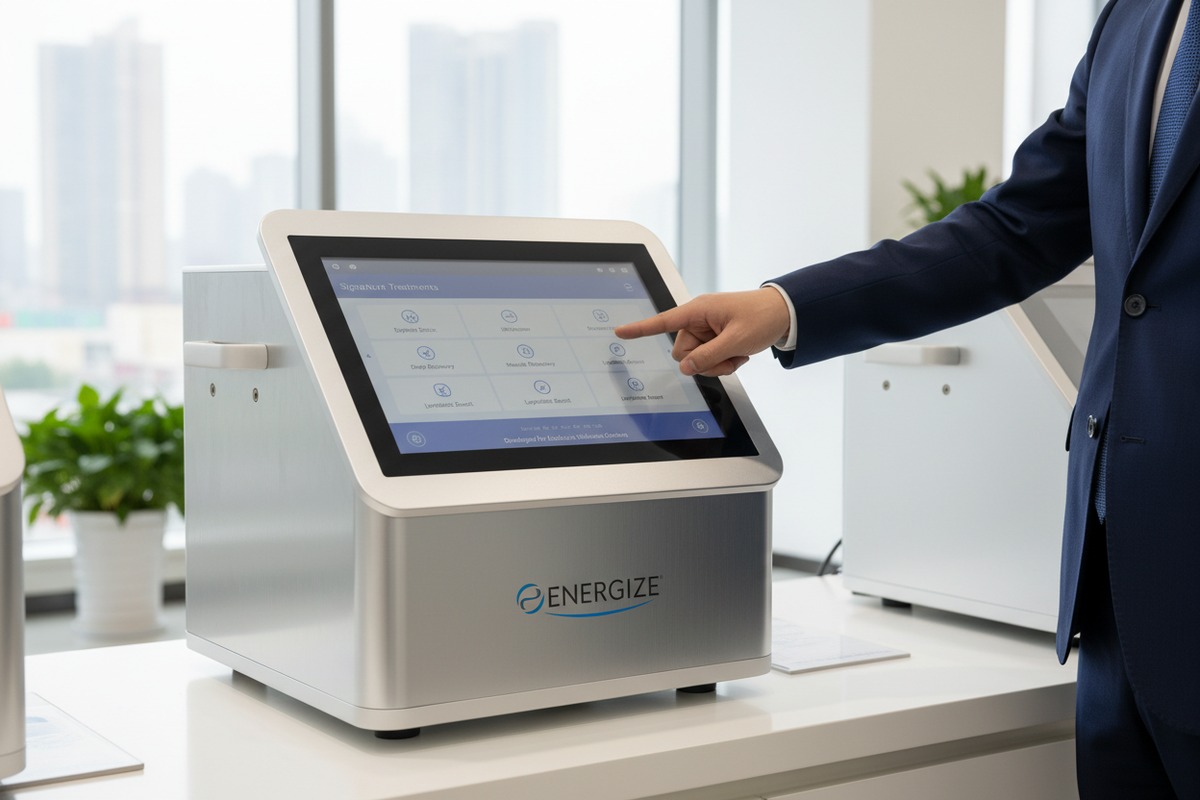
Customizing pressure settings involves programming the machine's mainboard to offer pre-set "Signature Treatments" and adjustable zone controls. This allows your brand to market exclusive therapies, limit maximum pressure for junior staff safety, and tailor the interface to match local preferences for intensity and speed.
Software-Level Customization
The most powerful customization happens inside the machine. For our private-label partners, we often rewrite the software interface. Standard machines might just show "Mode A, B, C." This is confusing for staff and unappealing to clients.
We can rename these modes to match your menu. For example, instead of "Mode A," the screen can display "Detox Protocol." Instead of manually adjusting pressure every time, we can program a preset where "Legs" are set to 60 mmHg and "Abdomen" to 80 mmHg automatically. This standardization ensures that a client gets the exact same experience at your New York location as they do in your Miami branch.
Zone-Specific Control
A key customization feature for the US market is independent zone control. Many generic machines inflate the whole suit to a single pressure. This is problematic if a client has varicose veins in their calves but needs heavy compression on their thighs for cellulite.
We customize the hardware to allow you to turn off specific chambers or adjust their pressure individually. If a client has a contraindication in the foot area, you can set the foot pressure to 0 while keeping the rest of the leg at 100 mmHg. This capability elevates your brand from a basic service provider to a medical-grade aesthetic center.
Customization Options Checklist
When you are discussing private labeling with a supplier, use this table to see what level of customization they can offer.
| Feature | Standard Generic Model | Private Label Customization | Benefit to Salon |
|---|---|---|---|
| Interface Language | English/Chinese | Custom English/Spanish/French | Easier staff training |
| Pressure Limits | Fixed 0-200 mmHg | Lockable max limits (e.g., max 120) | Prevents staff error/injury |
| Program Names | Mode 1, 2, 3 | "Slim," "Sport," "Relax" | Better marketing alignment |
| Startup Screen | Generic Logo | Your Brand Logo | Professional brand image |
| Chamber Control | All on/off | Individual chamber toggles | Treats clients with specific injuries |
The Business Case for Custom Settings
Customizing pressure settings is not just about mechanics; it is about protecting your revenue. By locking the pressure range in the software, you prevent junior estheticians from accidentally hurting a client with maximum power. You create a foolproof system where the "Start" button delivers a safe, consistent, and effective treatment every single time. This consistency builds the trust required to sell high-ticket package deals.
What quality control standards should I look for to ensure the machine maintains stable pressure during long-term use?
We constantly test competitors' units in our facility, and the most common failure we see is pressure fade—where a machine set to 100 mmHg only delivers 60 mmHg after a few months of use. This happens when manufacturers cut corners on internal components. To avoid downtime in your salon, you need to look beneath the plastic casing.
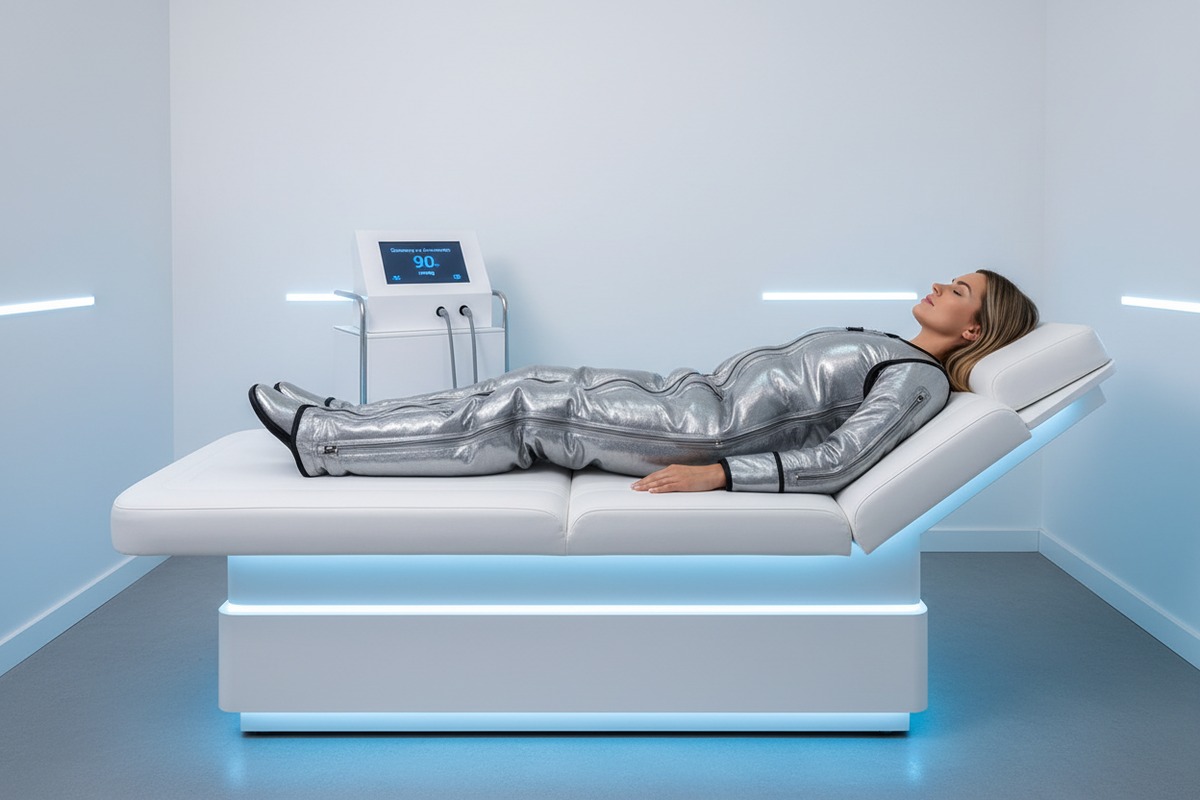
To ensure long-term pressure stability, look for machines using industrial-grade solenoid valves rather than basic plastic check valves, and high-flow air pumps rated for continuous commercial use. Additionally, verify that the air suit uses high-frequency welded TPU material to prevent microscopic leaks that cause pressure drops over time.
The Heart of the System: The Air Pump
The compressor is the engine of your pressotherapy machine. In cheaper home-use units, manufacturers use small diaphragm pumps similar to those in fish tanks. These overheat quickly and lose compression power after 20 minutes of continuous use.
For a busy salon, you need a heavy-duty piston pump or a dual-pump system. This ensures that even if you have back-to-back clients for 8 hours, the pressure in the last session is just as strong as the first. When sourcing, ask your supplier about the "Litres Per Minute" (LPM) airflow. A professional grade machine should offer high airflow to inflate the suit quickly, maintaining the rhythm of the treatment.
Solenoid Valves vs. Mechanical Valves
This is a technical detail that makes a huge difference. Stable pressure relies on the valves that open and close the air flow to different chambers.
- Mechanical Valves: Cheap, prone to sticking, and inaccurate. They often result in "fluttering" pressure.
- Solenoid Valves: Electronic, precise, and durable. They snap open and shut instantly, allowing for exact pressure maintenance and complex wave patterns.
The Suit Material Matters
You might think pressure stability is only about the main machine, but the suit is equally important. If the suit leaks, the machine works harder to compensate, leading to pump burnout.
- Nylon/PVC: Common in cheap models. It is stiff, cracks over time, and stitches can stretch, causing air leaks.
- TPU (Thermoplastic Polyurethane): The gold standard. It is flexible, durable, and usually high-frequency welded rather than sewn. Welding creates an airtight seal that does not degrade, ensuring the pressure you set is the pressure the client feels.
Quality Control Indicators
Use this guide to vet suppliers. If they cannot answer these questions, their quality control may be lacking.
| Component | Low-End Standard | High-End Salon Standard | Why It Matters |
|---|---|---|---|
| Air Pump Type | Single Diaphragm | Dual Piston / Heavy Duty | consistent pressure all day |
| Valve System | Rotary / Mechanical | Electronic Solenoid | Precision and complex modes |
| Suit Sealing | Sewn seams | High-Frequency Welding | Prevents air leaks |
| Aging Test | 12-24 hours | 72+ hours continuous | Ensures early failures are caught |
| Certification | None / Fake CE | CE, RoHS, ISO 13485 9 | Safety and legal compliance |
Testing Protocols
Before we ship a container to the US, every machine undergoes a 72-hour aging test where it runs continuously. We also perform a "load test" using a dummy limb to verify that the sensors inside the machine are reading the pressure correctly. If the screen says 100 mmHg, but our external gauge says 80 mmHg, that machine fails. You should demand this level of validation report from your supplier.
Will choosing a machine with a higher maximum pressure range improve my brand's competitiveness in the US market?
In our discussions with US buyers at trade shows, there is often a belief that "stronger is better" to justify high treatment prices. However, we have found that the most successful salon chains do not compete on brute force; they compete on sophistication and comfort. A machine that hurts your client will not build your brand, no matter how high the specs look on paper.
While a higher maximum pressure range (up to 240-260 mmHg) offers versatility for treating larger clients or athletes, brand competitiveness is better driven by chamber count (24+ zones), intelligent pressure modulation, and treatment comfort. Superior results come from precise, wave-like coverage rather than painful, static compression.

The "More is Better" Trap
Marketing a machine solely on "high pressure" is a short-term strategy. If you advertise "The Strongest Squeeze in Town," you attract a niche audience but alienate the majority of clients seeking relaxation and wellness. Furthermore, operating at maximum pressure (300 mmHg+) significantly increases the wear and tear on your equipment, leading to faster depreciation and higher repair costs.
The true competitive advantage in the US market today is Precision. A machine with 24 overlapping air chambers can create a seamless, flowing massage that feels like human hands. A machine with only 8 chambers, even at high pressure, feels like a blood pressure cuff tightening awkwardly. The 24-chamber experience is what allows you to charge premium prices.
Versatility Over Intensity
Your competitiveness comes from the ability to say "Yes" to every client.
- Can you treat a post-liposuction client? Only if your machine has precise low-pressure control.
- Can you treat a pro football player? Only if your machine has high-pressure capability.
Therefore, the range matters more than the maximum. A machine that spans 20–260 mmHg covers 99% of potential clients. A machine that does 100–350 mmHg might be "stronger," but it is useless for the delicate post-op market, which is a huge revenue stream in the US.
ROI and Client Retention
Consider the Return on Investment (ROI). Painful treatments lead to bad reviews. Comfortable, effective treatments lead to word-of-mouth referrals.
- Scenario A: High pressure, low precision (8 chambers). Client feels pinched, leaves with red marks. Result: No return visit.
- Scenario B: Adjustable pressure, high precision (24 chambers). Client falls asleep during drainage, wakes up feeling lighter. Result: Buys a 10-session package.
Feature Comparison for Competitiveness
| Feature | Competitive Advantage | Why It Wins Customers |
|---|---|---|
| Chamber Count | 24 Overlapping Chambers | No gaps in treatment; smooth, luxurious feel |
| Pressure Range | Wide (20-260 mmHg) | Treats everything from edema to muscle knots |
| Noise Level | Silent Operation | Maintains a spa-like atmosphere |
| Suit Design | Adjustable sizes (Zippers/Velcro) | Fits all body types comfortably (inclusive) |
| Control System | Touch Screen + Remote | High-tech perception and ease of use |
By focusing on these aspects, your brand positions itself as a provider of advanced, medical-grade aesthetic solutions, rather than just a gym offering a mechanical squeeze.
Conclusion
Choosing the right pressotherapy machine is not about finding the highest number on a spec sheet. It is about balancing safety, versatility, and durability. A range of 20–260 mmHg, combined with high-quality components like solenoid valves and TPU suits, gives you the flexibility to treat delicate lymphatic issues and stubborn cellulite alike. By prioritizing precision and customization over brute force, you protect your clients and secure your salon's reputation as a leader in professional body contouring.
Footnotes
1. Explains the medical procedure of lymphatic drainage and its benefits. ↩︎
2. Explains the role of solenoid valves in ensuring precise and stable fluid control in medical devices. ↩︎
3. Original URL returned HTTP 405; replaced with authoritative NIH source. ↩︎
4. Describes the properties and benefits of TPU material for medical applications, including airtight seals. ↩︎
5. Supports the claim about effective lymphatic drainage pressure with clinical insights. ↩︎
6. Details how pressotherapy aids in the removal of lactic acid for sports recovery. ↩︎
7. Highlights the importance and design principles of emergency stop devices in medical equipment. ↩︎
8. Original URL returned HTTP 404; replaced with authoritative Wikipedia definition. ↩︎
9. Original URL returned HTTP 405; replaced with authoritative Wikipedia overview. ↩︎

 English
  Español de México
  Deutsch
  Français
  العربية
  Русский