
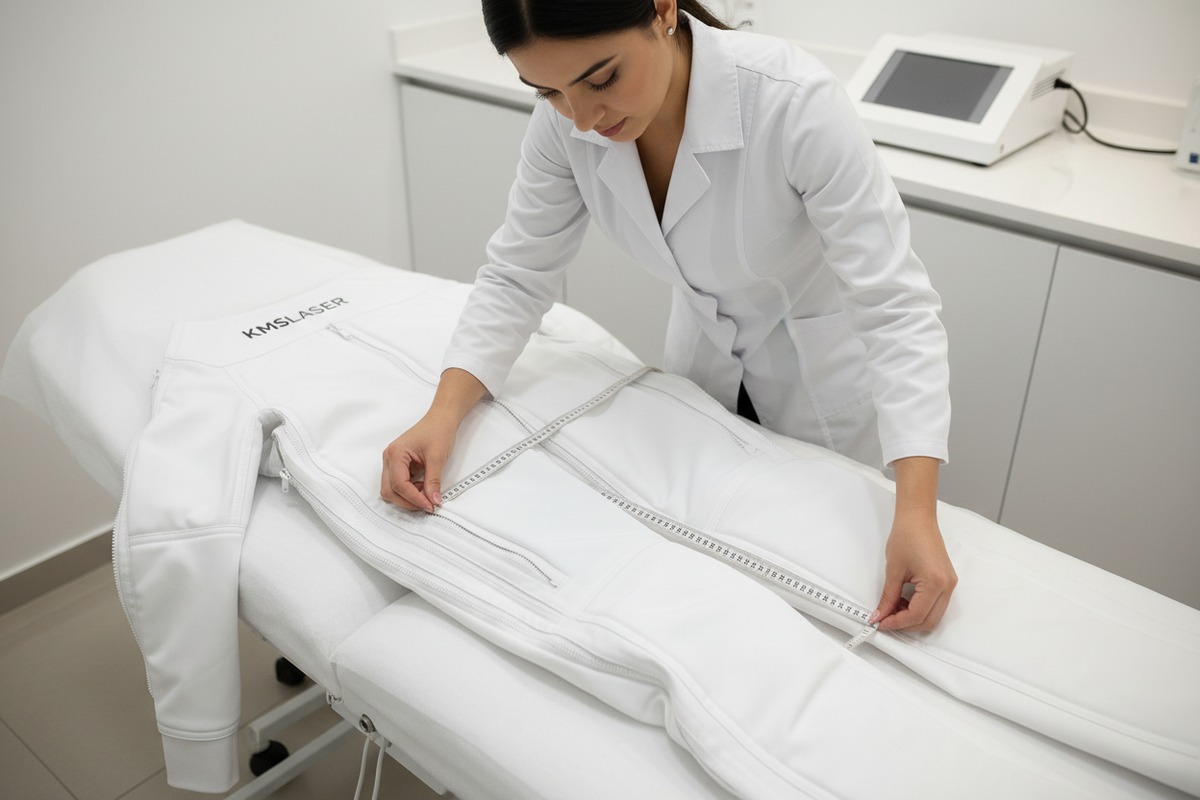
When our engineering team analyzes feedback from the South American market, we frequently encounter a specific recurring issue: standard global suit sizes often fail to accommodate the unique anthropometric curves 1 of clients in Brazil, Colombia, and Argentina. We have seen firsthand how ill-fitting garments can compromise the results of a high-end lymphatic drainage treatment 2, turning a relaxing session into a constrictive and uncomfortable experience. If the suit does not align with the client’s body shape, even the most advanced compressor cannot deliver the intended therapeutic pressure.
To choose the right pressotherapy suit sizes for South American body types, you must prioritize systems offering XL to XXL dimensions with thigh circumferences exceeding 70cm and hip measurements up to 120cm. It is essential to select machines with modular, multi-chamber suits featuring expandable zippers or velcro extenders to accommodate wider hip-to-waist ratios and shorter limb lengths common in this demographic.
The following guide details exactly how we calculate these dimensions and calibrate our machines to ensure consistent performance across diverse body shapes.
How do I choose the right pressotherapy suit dimensions for my South American customer base?
In our years of exporting to Latin America, we have adjusted our standard size charts significantly to align with local requirements peristaltic compression wave 3. We know that a "one-size-fits-all" approach leads to zipper failure and uneven pressure distribution, which frustrates salon owners and disappoints end-users.
To choose the right dimensions, analyze your specific demographic data and select suits with wider hip and thigh profiles, typically requiring adjustable circumferences of 110-130cm for the hips. Ensure the leg length is proportionate to an average height of 158-162cm, preventing excess material from bunching at the ankles and disrupting the peristaltic compression wave.
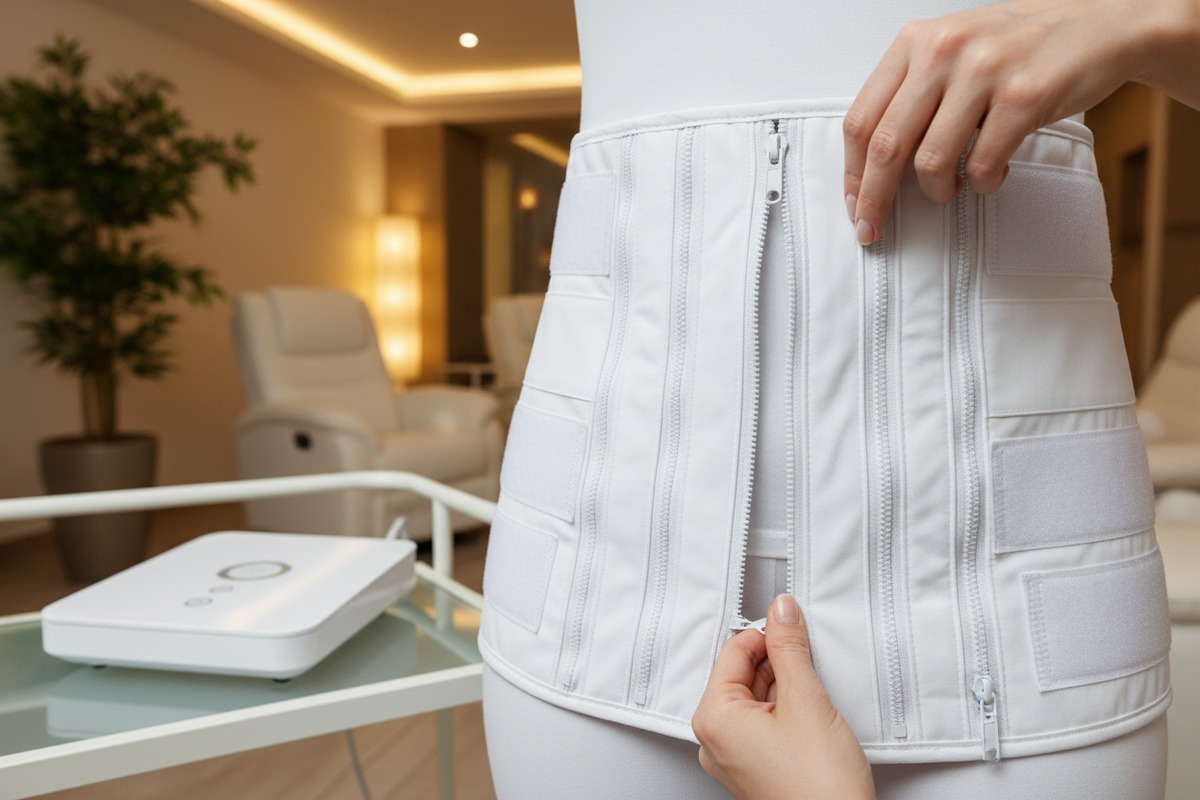
When selecting suit dimensions for the South American market, you are not just looking for "bigger" sizes; you are looking for specific proportional adjustments biocompatibility check 4. From our manufacturing perspective, the standard Asian or European fit tends to be more linear. In contrast, the South American profile often requires a significant differential between the waist and the hips.
Understanding Key Anthropometric Variances
The primary challenge lies in the lower body metrics. Standard suits often have a thigh circumference of roughly 60cm to 65cm. However, for the Brazilian and Colombian markets, we recommend specifying a maximum thigh circumference of at least 75cm to 85cm. If the suit is too tight before inflation, it restricts initial lymph flow and can cause bruising. If it is too loose, the machine wastes the first 10 seconds of the cycle just inflating the air gap, reducing the effective treatment time.
The Importance of Modular Adjustability
We strongly advise against single-piece suits (like a jumpsuit) for this region. Modular systems—where the boots, thigh pieces, and abdominal belts are separate—allow for much better customization. For example, a client may need a medium leg length but an extra-large hip dimension. A modular design allows the operator to mix and match components to achieve the perfect snug fit required for effective drainage.
Below is a comparison of standard global specifications versus the modified specifications we typically recommend for South American distribution.
Table 1: Standard vs. South American Suit Specification Guide
| Measurement Zone | Standard Global Spec (cm) | Recommended South American Spec (cm) | Why It Matters |
|---|---|---|---|
| Thigh Circumference | 60 – 65 | 75 – 90 | Prevents constriction on muscular or curvier thighs. |
| Hip Circumference | 95 – 105 | 110 – 130 | Accommodates wider pelvic structure and gluteal volume. |
| Leg Length (Inseam) | 75 – 82 | 70 – 78 | Avoids bunching at the ankle which blocks lymphatic return. |
| Waist Circumference | 80 – 90 | 90 – 110 | Accounts for metabolic variations and abdominal focus. |
| Expansion Method | Single Zipper | Triple Zipper Row + Velcro | Allows one suit to fit sizes M through XXL effectively. |
By adhering to these modified dimensions, you ensure that the pressure chambers overlap correctly. If a suit is too long, the knee chamber sits on the shin, and the thigh chamber sits on the knee. This misalignment renders the "milking" action of the pressotherapy ineffective.
Can I customize the suit sizes with my OEM manufacturer to fit specific body proportions?
When we collaborate with brand owners on new product development, one of the first questions we ask is about their target region because customization is entirely possible and often necessary. We understand that investing in custom molds or patterns feels risky, but for the South American market, off-the-rack solutions often fall short.
Yes, you can customize suit sizes with your OEM manufacturer by providing specific anthropometric data points such as thigh circumference and inseam length to create tailored patterns. Most manufacturers can adjust fabric cutting templates and add modular extension zippers (expanders) to standard designs, provided you meet the Minimum Order Quantity (MOQ) for production.
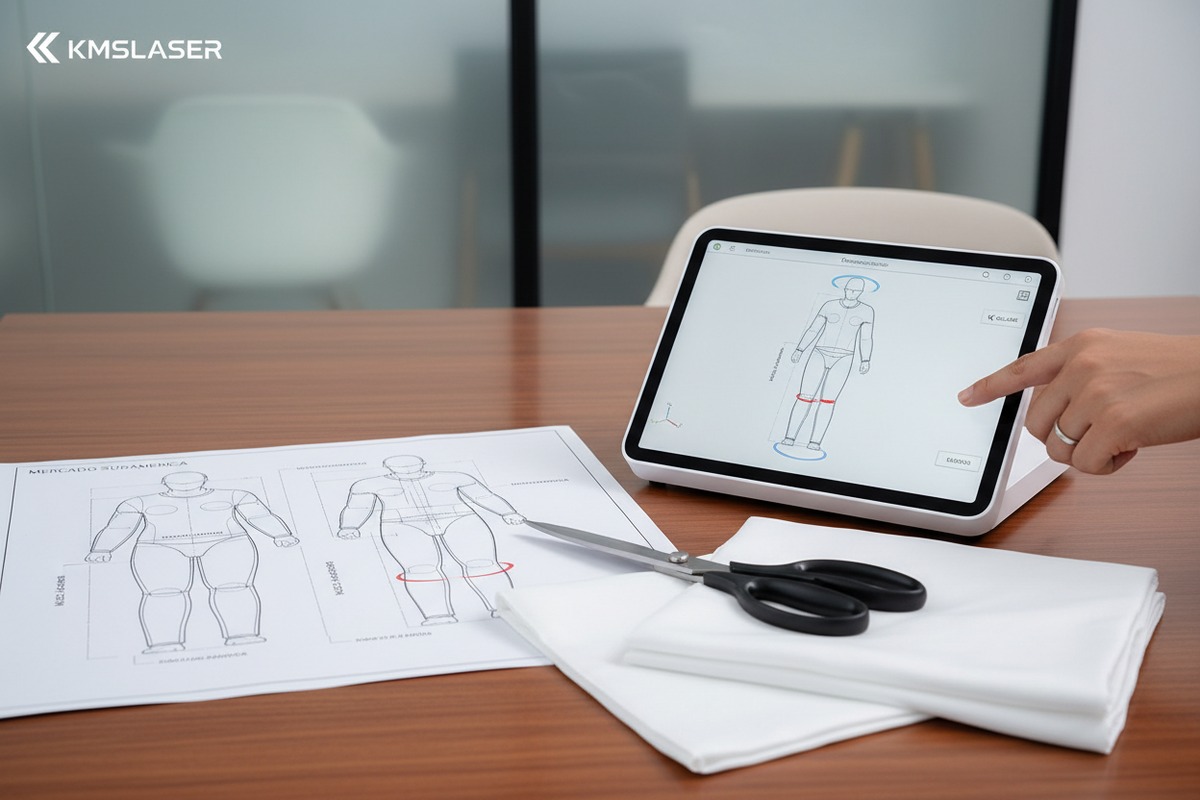
Customizing suit sizes is a standard part of our OEM (Original Equipment Manufacturer) service, but it requires clear technical communication. OEM manufacturer 5 It is not enough to simply ask for "larger sizes." We need to define exactly where the size needs to increase.
The Customization Process
When you approach us for custom sizes, the process typically involves three stages:
- Data Analysis: You provide the average measurements of your client base.
- Pattern Grading: Our textile engineers adjust the CAD patterns 6. For South American markets, we usually increase the curvature of the hip panel and widen the upper thigh section without necessarily lengthening the leg.
- Prototyping: We produce a sample unit. This is crucial because materials behave differently under pressure. A fabric that looks big enough flat on a table might constrict when inflated to 120 mmHg.
Extenders vs. New Patterns
There are two ways to approach this: Structural Customization and Add-on Customization.
- Structural Customization involves cutting the fabric to new dimensions. This usually requires a higher MOQ (often 50-100 sets) because we have to reset our cutting machines and sewing lines.
- Add-on Customization involves creating "extenders" or "expanders." These are strips of matching fabric with zippers on both sides that zip into the main suit to add 10-15cm of circumference. This is a cost-effective strategy for distributors who want to cater to sizes L through XXXL without stocking three distinct suit inventories.
Table 2: Customization Options and Requirements
| Customization Type | Description | Typical MOQ | Cost Impact | Best For |
|---|---|---|---|---|
| Zipper Extenders | Removable strips to widen circumference. | Low (10+ sets) | Low | Startups & varied clientele. |
| Pattern Resizing | Altering the base dimensions of the suit leg/arm. | Medium (50+ sets) | Medium | Established brands. |
| Chamber Layout | Changing the number or shape of air chambers. | High (100+ sets) | High | Specialized medical clinics. |
| Velcro Adjusters | Replacing fixed zippers with adjustable velcro. | Medium (50+ sets) | Low-Medium | High-volume spas. |
We often recommend starting with high-quality zipper extenders. They allow you to market your device as "inclusive" and "adjustable" immediately without the heavy upfront investment of a fully custom fabric run.
How do I ensure that larger pressotherapy suits maintain consistent pressure and durability?
Our technical team frequently tests competitive machines, and we notice a common failure point: when a standard pump tries to inflate an oversized suit, the pressure drops significantly. It is a simple physics problem that many buyers overlook until they receive complaints about "weak" treatments.
To ensure consistent pressure and durability in larger suits, you must verify that the machine's air pump capacity exceeds 25 liters per minute and that the material utilizes high-denier, double-layered TPU (Thermoplastic Polyurethane). Larger internal volumes require powerful compressors to reach therapeutic pressure levels (up to 120mmHg) quickly, preventing cycle lag and uneven inflation.
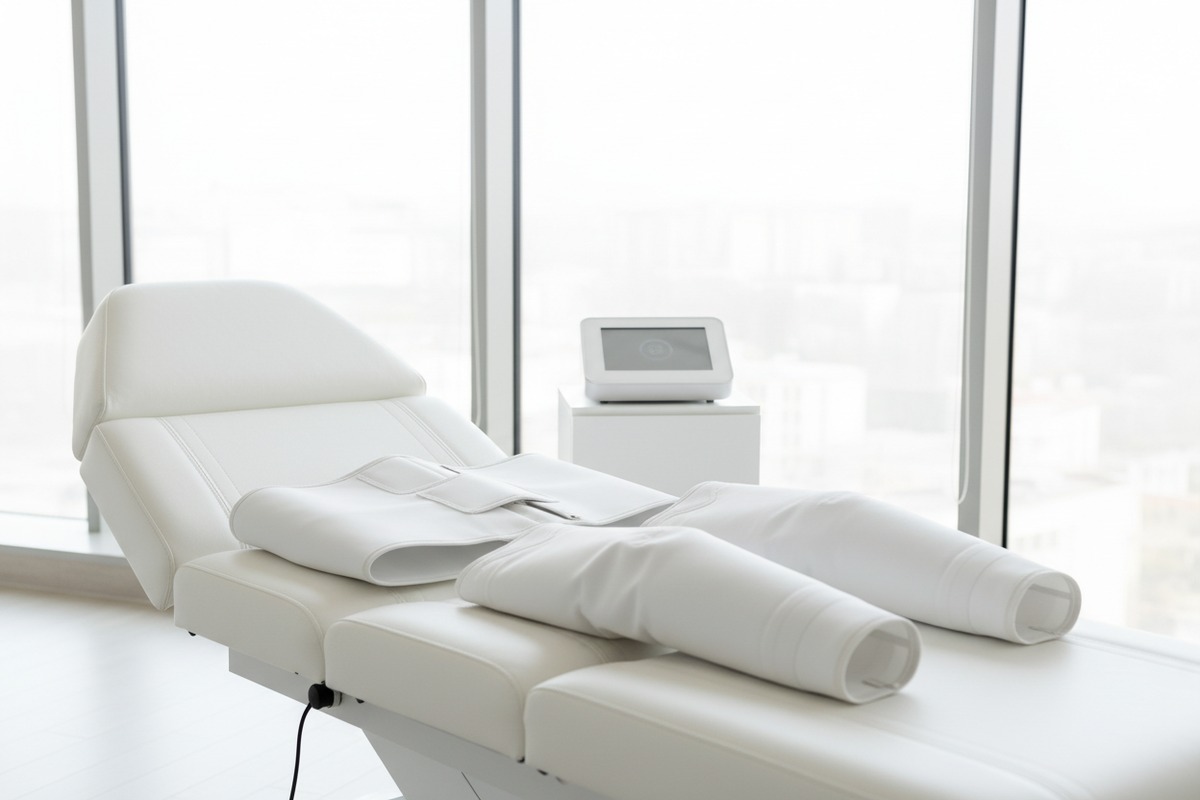
Scaling up the size of a pressotherapy suit introduces engineering challenges regarding pneumatics and material stress. If you increase the surface area of the suit, you increase the volume of air required to achieve the same pressure (measured in mmHg or Pascal).
Pump Capacity and Air Flow
For a standard-sized person, a basic single-pump system might suffice. However, for the larger volumes required by South American sizing specifications, a weak pump will result in a slow inflation time. By the time the last chamber inflates, the first chamber may have already started to lose pressure if the valves are not high-quality.
We recommend ensuring your machine uses a dual-pump system or a high-flow industrial pump capable of at least 25-30 L/min. This ensures that even with a 120cm hip circumference, the suit reaches the target pressure within the designated 4-8 second interval.
Material Durability and Burst Strength
Pressure acts perpendicular to the surface. In larger suits, the total force exerted on the seams is higher. We have seen single-layer nylon suits rip at the seams when used on larger clients at high pressure.
- Material: We insist on 420D or 600D Nylon combined with TPU (Thermoplastic Polyurethane 7). TPU is superior to PVC because it is more elastic, resistant to skin oils, and does not crack over time.
- Seam Welding: For larger sizes, we use High-Frequency (HF) welding 8 rather than traditional sewing for the air chambers. HF welding fuses the material at a molecular level, creating a bond that is stronger than the material itself.
Table 3: Technical Requirements for Large-Volume Suits
| Feature | Standard Requirement | Large Suit Requirement | Reason for Upgrade |
|---|---|---|---|
| Pump Air Flow | 15 – 20 L/min | > 25 L/min | To fill larger volume rapidly and maintain cycle rhythm. |
| Max Pressure | 180 mmHg | 200 – 240 mmHg | Larger surface areas absorb more pressure; overhead is needed. |
| Material Denier | 210D Nylon/PU | 420D Nylon/TPU | Higher tensile strength to prevent bursting at seams. |
| Air Channels | 4 – 5 per limb | 6 – 8 per limb | Better granular control over larger surface areas. |
| Valve Type | Standard Solenoid | High-Speed Solenoid | Prevents air backflow during the hold phase of the cycle. |
By specifying these components, you ensure that the "Large" setting on your machine actually feels like a deep tissue massage, rather than a light squeeze.
What quality control steps should I require for my custom-sized pressotherapy suits?
We know that receiving a shipment of defective electronics is a nightmare for a Purchasing Manager. However, with pressotherapy, the defect often isn't in the electronics but in the "soft goods"—the suits. Leakage is the number one enemy of performance.
You should require specific quality control steps including a 24-hour air retention test for every chamber, high-pressure seam stress testing at 1.5x the max operating pressure, and cycle testing of zippers and velcro fasteners. Additionally, mandate a biocompatibility check for the inner fabric layer to ensure it withstands sweat and cleaning agents without degradation.

When you order custom sizes for the South American market, you are altering the standard tested geometry of the product. This means standard QC protocols are not enough; you need rigorous, size-specific testing.
The Air Retention Test (The Golden Standard)
In our factory, we do not just spot-check. We require a 100% inflation test. Every single chamber of every suit is inflated to a set pressure (e.g., 100 mmHg) and left for a specific duration. If the pressure drops by more than 5 mmHg, it indicates a micro-leak in the HF weld or the valve connection. air retention test 9 For custom larger sizes, this is critical because the larger surface area creates more opportunities for micro-leaks.
Zipper and Velcro Stress Testing
The mechanical stress on zippers in South American sizes is significantly higher because the fit is often snugger around the hips.
- Zipper Burst Test: We use a machine to pull the zippers apart horizontally to ensure the teeth do not separate under pressure.
- Velcro Cycle Test: High-quality Velcro must maintain its grip strength after 1,000+ open-close cycles. Low-quality Velcro fuzzes up and loses grip, causing the suit to pop open mid-treatment—a disaster for a professional spa.
Valve and Hose Connection Integrity
For larger suits, the air hoses are often longer. We check the connection points between the TPU hose and the suit socket. These must be reinforced. We often recommend a "click-lock" mechanism rather than a simple friction fit, as the higher pressure required for larger legs can literally blow the tubes off the connector if they are not secured.
Pre-Shipment Inspection (PSI) Checklist
When you hire a third-party inspector or ask for our internal report, ensure these specific points are covered:
- Dimensional Accuracy: Do the thigh and hip measurements match the custom spec ±1cm?
- Symmetry Check: Are the left and right legs identical in length and width?
- Visual Seam Inspection: Are there any bubbles or burns in the HF welding lines?
- Smell Test: High-quality TPU should be odorless. Strong chemical smells indicate cheap PVC or improper curing.
Conclusion
Choosing the right pressotherapy suit sizes for South American markets requires moving beyond standard sizing to embrace wider hip dimensions (110cm+), modular designs, and high-denier materials. By specifying powerful pumps (>25L/min) and rigorous pressure-retention QC, you ensure your equipment delivers effective, durable, and comfortable treatments for every client body type.
Footnotes
1. Defines anthropometric measurements and their use in assessing health and growth. ↩︎
2. Replaced HTTP 405 with an authoritative Mayo Clinic page on lymphedema diagnosis and treatment, including manual lymph drainage. ↩︎
3. Describes the wave-like motion of pressure in pressotherapy and its effect. ↩︎
4. Defines biocompatibility and outlines screening methods and regulatory importance for materials. ↩︎
5. Explains the definition and role of an Original Equipment Manufacturer in various industries. ↩︎
6. Describes how computer-aided design software is used for textile and garment patterns. ↩︎
7. Details the key properties, processing, and applications of Thermoplastic Polyurethane (TPU). ↩︎
8. Explains the process of high-frequency welding for joining thermoplastic materials. ↩︎
9. Replaced HTTP unknown with an ISO standard for an ‘aerosol bacterial retention test’ for air-inlet filters, a specific and authoritative example of an air retention test in a medical context. ↩︎

 English
  Español de México
  Deutsch
  Français
  العربية
  Русский