
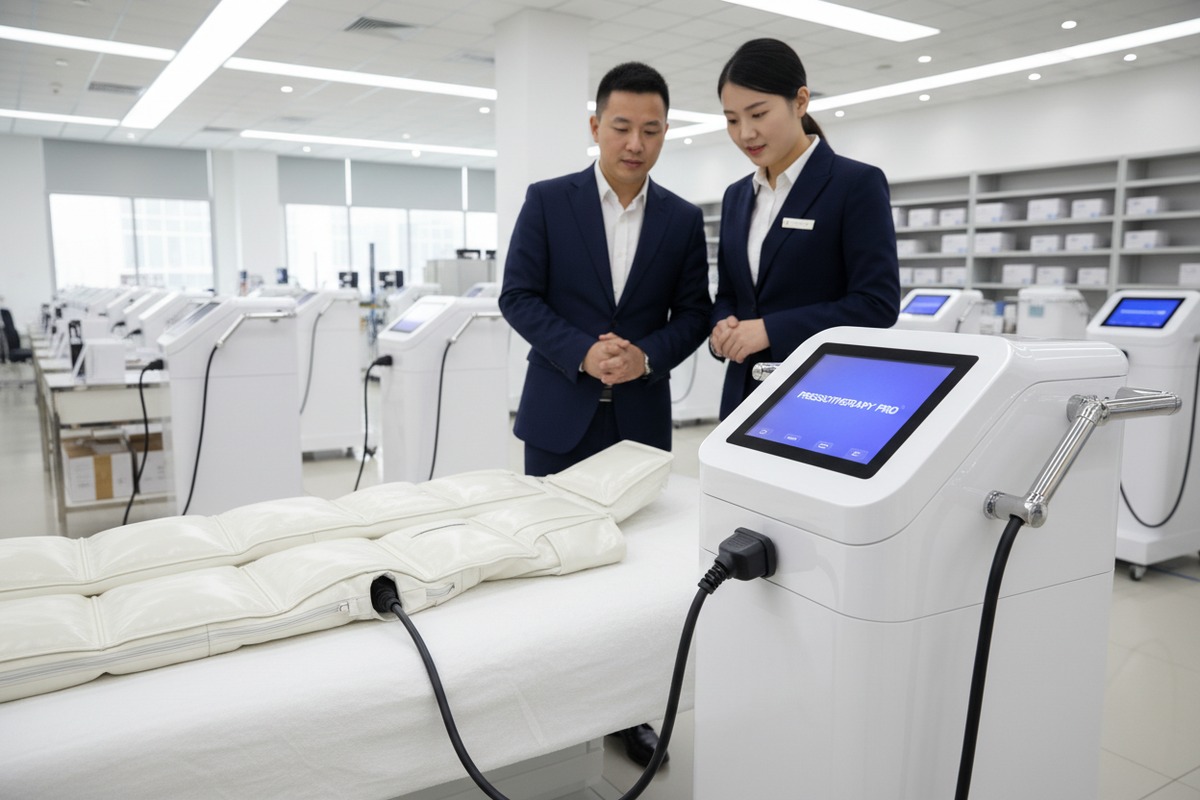
When our production team ships pressotherapy machines to European clients, voltage and plug mismatches rank among the top causes of delays and returns. Buyers often assume that because China uses 220V, everything will work seamlessly in Europe. That assumption can lead to expensive re-work and frustrated customers.
To choose the right European power plugs and voltage for pressotherapy machines from China, verify that your machine supports 220-240V at 50Hz, request a CEE 7/7 plug for continental Europe or Type G for the UK, and confirm CE marking for electrical safety compliance before shipment.
This guide will walk you through each step. You will learn how voltage standards 1 compare between China and Europe, which plug types work in specific countries, and how to verify everything before your order leaves the factory.
How do I ensure the voltage and frequency of my pressotherapy machine match European standards?
Voltage mismatch is a silent killer for imported beauty equipment. Our engineering team has seen machines fail within days because buyers did not check the input specifications. This problem is entirely preventable with proper due diligence.
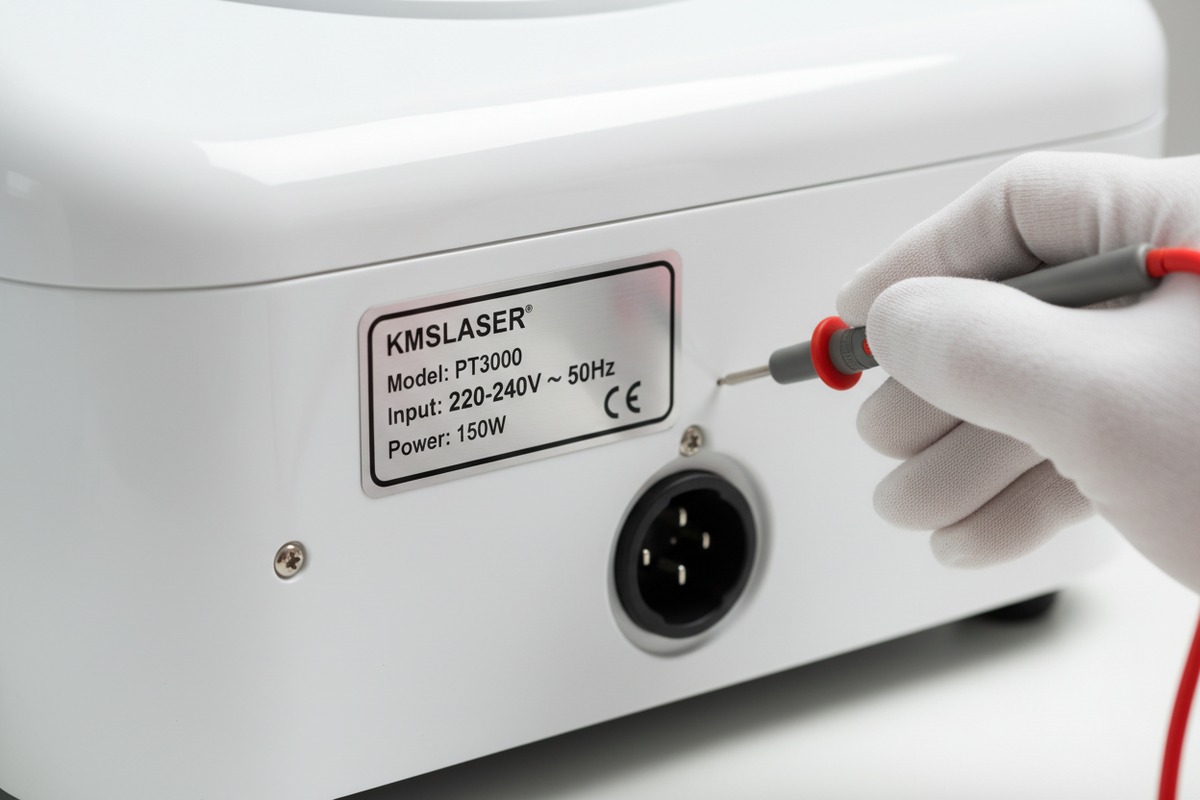
To ensure voltage and frequency compatibility, check that your pressotherapy machine's power label shows 220-240V and 50Hz input range. Most quality machines from China already meet these specs since China operates at 220V/50Hz, which closely matches Europe's 230V/50Hz standard.
Understanding the Voltage Match Between China and Europe
The good news is that voltage compatibility 2 between China and Europe is straightforward. China operates at 220V with a frequency of 50Hz. Europe uses 230V at 50Hz. This slight 10V difference falls within acceptable tolerance ranges for most electrical equipment.
According to IEC 60038 3, the harmonized European standard allows for a voltage range of 216-253V. Chinese equipment rated for 220V typically works perfectly within this range. However, you must verify this on your specific machine.
What to Check on the Power Label
Every pressotherapy machine should have a rating plate or label near the power inlet. Look for these key specifications:
| Specification | Acceptable Range for Europe | What to Avoid |
|---|---|---|
| Input Voltage | 220-240V or 100-240V (universal) | Single voltage 110V or 120V |
| Frequency | 50Hz or 50-60Hz | 60Hz only |
| Power Rating | Should match your circuit capacity | Exceeds 16A at 230V (3680W) |
Universal Input vs. Single-Voltage Machines
Many modern pressotherapy machines feature universal input power supplies 4 rated at 100-240V and 50-60Hz. These are ideal for international distribution. When our factory configures machines for global markets, we often specify universal power supplies to maximize flexibility.
However, some budget machines use single-voltage transformers. If your machine shows only "220V" on the label, it should still work in Europe. But if it shows "110V" or "120V," you will need a voltage converter, which adds cost and potential failure points.
Why Frequency Matters for Motor-Driven Equipment
Pressotherapy machines use air compressors or pumps 5 to create compression sequences. These components often contain motors that can be sensitive to frequency variations. While 50Hz is standard in both China and Europe, some older or specialized equipment might be designed for 60Hz operation.
Running a 60Hz motor on 50Hz power causes it to spin slower and draw more current. This leads to overheating and premature failure. Always verify that your machine supports 50Hz operation.
Which specific European power plug should I request for my imported beauty equipment?
Selecting the wrong plug type is one of the most common mistakes buyers make. In our experience exporting to France, Germany, and the UK, we have learned that each market has distinct requirements. A plug that works in Berlin will not fit a socket in London.
For continental Europe, request the CEE 7/7 plug, which is compatible with both Type E (French) and Type F (Schuko/German) sockets. For the UK and Ireland, specify Type G. For Italy, consider Type L. This approach covers approximately 90% of European destinations.

The CEE 7/7: Europe's Most Versatile Plug
The CEE 7/7 plug 6 is the most practical choice for continental Europe. It was specifically designed to bridge the differences between German and French electrical standards. This hybrid plug features both side earthing clips for Schuko sockets and a female receptacle for French grounding pins.
When we configure pressotherapy machines for the European market, the CEE 7/7 is our default recommendation. It works in Germany, France, Belgium, Netherlands, Spain, Portugal, Austria, and many other continental countries.
European Plug Types by Country
| Plug Type | Countries | Grounded | Max Current | Best For |
|---|---|---|---|---|
| CEE 7/7 (Type E+F) | Germany, France, Belgium, Netherlands, Spain, Portugal, Austria, Poland | Yes | 16A | Continental Europe |
| Type G | UK, Ireland, Malta, Cyprus | Yes | 13A | British Isles |
| Type L | Italy | Yes | 10A or 16A | Italy only |
| Type C (Europlug) | Most of Europe | No | 2.5A | Low-power devices only |
| Type J | Switzerland | Yes | 10A | Switzerland only |
Why Type C Is Not Suitable for Pressotherapy Machines
The Europlug (Type C) 7 is ungrounded and rated for only 2.5A. Pressotherapy machines typically draw 300-1000W of power, which translates to 1.3-4.3A at 230V. While this falls within the Europlug's rating, the lack of grounding creates a safety concern.
Medical and aesthetic equipment should always use grounded plugs. The CEE 7/7 provides this grounding through either side clips or a female contact, depending on the socket type.
Regional Considerations for Specific Markets
The UK market requires Type G plugs 8 exclusively. These feature three rectangular pins and include a built-in fuse. When our team prepares orders for UK distributors, we specify Type G power cords with 13A fuses.
Italy presents a unique challenge. Italian Type L sockets 9 come in two sizes: 10A and 16A. The 16A version accepts larger pins. For high-power pressotherapy systems, always request the 16A Type L plug.
Requesting the Right Configuration from Your Supplier
When placing your order, be specific about your requirements. Send your supplier a clear specification that includes:
- Target country or countries
- Plug type (e.g., "CEE 7/7 for Germany and France")
- Power cord length (typically 1.5-2.5 meters)
- Any certification requirements (CE, VDE, etc.)
At our facility, we maintain stock of pre-certified power cords with various plug types. This allows us to configure machines for different markets without delays.
Can my Chinese supplier customize the power cord and internal components for my European brand?
Many buyers underestimate what their Chinese supplier can actually deliver. When we work with European brands, customization extends far beyond slapping a different plug on a standard cord. The question is whether your supplier has the capability and willingness to do it right.
Yes, reputable Chinese suppliers can fully customize power systems for European markets, including factory-fitted regional plugs, CE-compliant internal wiring, IEC 60320 modular inlets for cord flexibility, and proper documentation for customs clearance.

Types of Power System Customization
There are several levels of customization you can request from your supplier. Understanding these options helps you make the right choice for your business model.
| Customization Level | What It Includes | Best For | Lead Time Impact |
|---|---|---|---|
| Plug Swap Only | Different plug on standard cord | Single-market distribution | Minimal |
| Complete Cord Replacement | Region-specific cord with certifications | Quality-focused brands | 1-2 weeks |
| Modular Inlet Design | IEC 60320 C14 inlet, swappable cords | Multi-market distribution | Standard |
| Full Electrical Redesign | Internal wiring, transformers, fuses | Specialized requirements | 4-6 weeks |
The IEC 60320 Solution for Multi-Market Flexibility
When we design pressotherapy machines for export-focused clients, we often recommend building in an IEC 60320 C14 inlet. This is the same three-pronged rectangular inlet you see on computers and professional equipment.
The C14 inlet accepts C13 connectors, which are universally available with various national plug types. This design allows you to ship machines with different power cords for different markets without modifying the machine itself.
Common cord configurations include:
- CEE 7/7 to C13 for continental Europe
- BS 1363 (Type G) to C13 for UK
- Type L to C13 for Italy
- SEV 1011 to C13 for Switzerland
CE Marking and Internal Compliance
For medical and aesthetic equipment sold in Europe, CE marking is mandatory. This requires compliance with several directives, including the Low Voltage Directive (LVD) and Electromagnetic Compatibility (EMC) directive.
Your supplier should be able to provide:
- Technical documentation showing compliance with IEC 60601-1 for medical electrical equipment
- Test reports for electrical safety and EMC
- Declaration of Conformity with EU regulations
- Properly labeled products with CE marking
When our quality team prepares machines for European certification, we ensure all internal wiring meets European standards, grounding is properly implemented, and safety features comply with IEC requirements.
Verifying Your Supplier's Capabilities
Not all suppliers can deliver genuine European-compliant products. Some warning signs to watch for include:
- Reluctance to provide test reports
- Generic CE marks without notified body numbers (for Class IIa devices)
- Inability to specify which standards they follow
- Using consumer-grade components in medical equipment
Ask your supplier these questions before ordering:
- What IEC standards does this equipment comply with?
- Can you provide EMC and LVD test reports?
- Which notified body certified your CE mark (if applicable)?
- What certifications do your power cords carry (VDE, HAR, etc.)?
Warranty Considerations for Customized Products
When your supplier customizes power components, clarify warranty coverage. At our company, we provide specific warranty terms for electrical components used with European voltage configurations.
Key warranty questions include:
- Does the warranty cover power supply failures in European conditions?
- What is the claims process for international customers?
- Are replacement power cords available for European markets?
How do I verify that the electrical configuration is correct before my order leaves the factory?
The moment your pressotherapy machines leave the factory, correcting electrical problems becomes expensive and time-consuming. Our pre-shipment inspection process catches issues before they become your problem. Every buyer should implement similar verification steps.
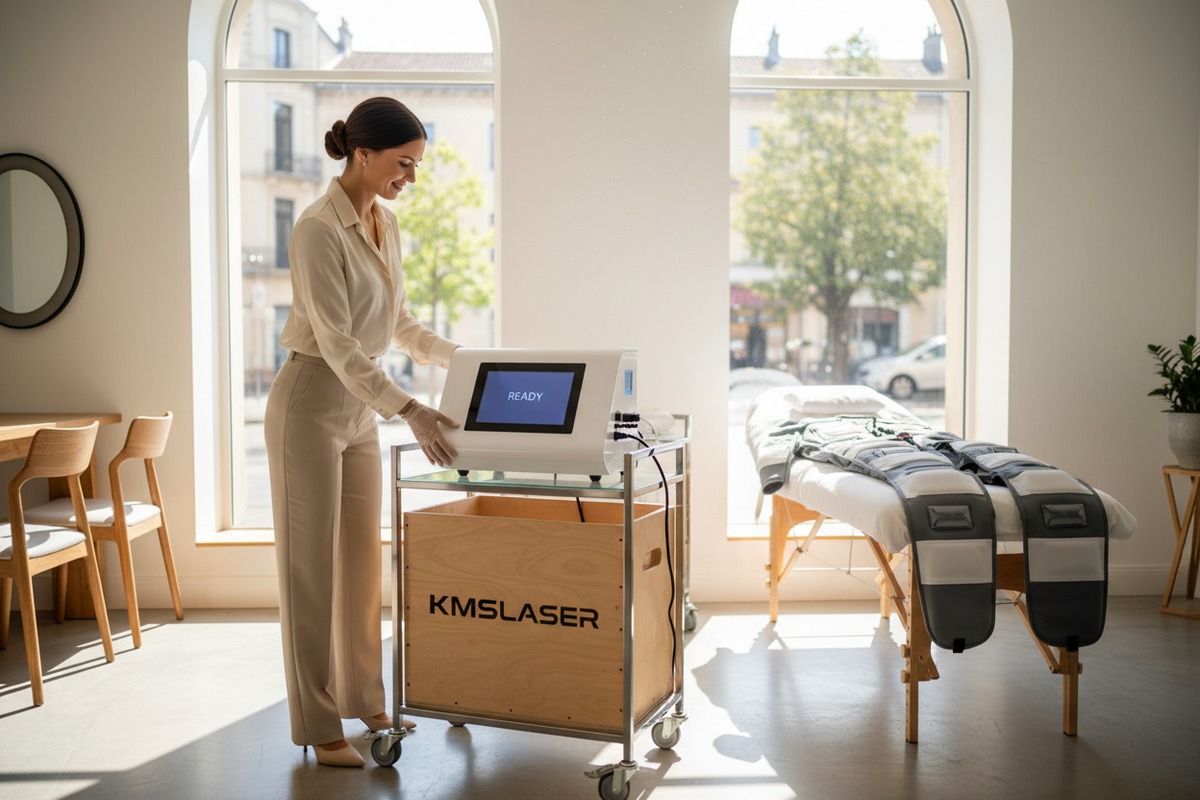
To verify electrical configuration before shipment, conduct a pre-shipment inspection that includes visual check of plug type and labeling, voltage testing with a multimeter, ground continuity test, review of CE documentation and test reports, and functional testing under load.
Essential Pre-Shipment Verification Steps
Before any machine ships from our facility, we run through a comprehensive electrical verification checklist. You should require your supplier to perform these same checks—or hire a third-party inspection service to verify on your behalf.
Visual Inspection Checklist
Start with a thorough visual examination of all electrical components:
| Component | What to Check | Accept/Reject Criteria |
|---|---|---|
| Power Cord | Plug type matches order specification | Reject if wrong plug type |
| Power Cord | No damage, proper strain relief | Reject if damaged |
| Rating Label | Voltage and frequency match requirements | Reject if incompatible |
| CE Mark | Properly formatted, correct size (min. 5mm) | Reject if missing or incorrect |
| Inlet (if applicable) | Correct type (C14, etc.) | Reject if wrong type |
| Cord Length | Meets specification (typically 1.5-2.5m) | Reject if too short |
Electrical Testing Procedures
Beyond visual inspection, actual electrical testing confirms functionality and safety:
Voltage Compatibility Test:
Connect the machine to a power source matching European voltage (230V/50Hz if possible, or use a variac to simulate). Measure input voltage and verify the machine operates normally.
Ground Continuity Test:
Using a multimeter set to continuity mode, verify that the ground pin on the plug connects through to the machine's chassis or ground terminal. Resistance should be less than 0.1 ohms.
Insulation Resistance Test:
Measure insulation resistance between live conductors and ground. For medical equipment, this should exceed 2 megohms per IEC 60601-1.
Functional Test Under Load:
Operate all machine functions while monitoring power consumption. Verify that current draw matches specifications and no unusual heating occurs.
Documentation Review
Request and review these documents before approving shipment:
- Test Reports: LVD and EMC test reports from an accredited laboratory
- Declaration of Conformity: Manufacturer's declaration listing applicable standards
- Technical File Summary: Overview of design verification and compliance evidence
- Cord Certifications: VDE, HAR, or equivalent approval marks on power cords
Third-Party Inspection Services
If you cannot inspect machines yourself, hire a professional inspection company. Many services operate throughout China and offer electrical-specific inspections.
When briefing your inspector, provide:
- Complete electrical specifications (voltage, plug type, certifications)
- Photographs of correct configuration
- Specific test procedures to perform
- Accept/reject criteria
Creating a Verification Protocol
Document your verification requirements in a formal protocol that becomes part of your purchase agreement. This protects both you and your supplier by establishing clear expectations.
Sample protocol elements:
| Stage | Verification Activity | Responsible Party | Pass Criteria |
|---|---|---|---|
| Production | Component inspection | Supplier QC | Correct components installed |
| Pre-shipment | Visual inspection | Supplier QC or 3rd party | Checklist complete, no defects |
| Pre-shipment | Electrical testing | Supplier QC or 3rd party | All tests pass |
| Pre-shipment | Documentation review | Buyer | Complete package received |
| Receipt | Incoming inspection | Buyer | Sample testing confirms specs |
What to Do If Problems Are Found
If inspection reveals issues, address them immediately before shipment:
- Minor labeling issues: Supplier corrects and re-inspects
- Wrong plug type: Supplier replaces power cords
- Electrical test failures: Unit quarantined, root cause analysis required
- Documentation gaps: Supplier provides missing documents
Never accept shipment of electrically non-compliant equipment. The cost of returns, re-certification, or worse—customer safety incidents—far exceeds any delay from addressing problems at the factory.
Conclusion
Getting European power plugs and voltage right requires attention to detail, but it is entirely manageable. Verify voltage compatibility, specify the correct plug type for your target markets, work with capable suppliers, and inspect everything before shipment. These steps protect your business and your customers.
Footnotes
1. Provides a comprehensive overview of mains electricity voltage and frequency standards by country. ↩︎
2. Discusses Europe’s 220-240V/50Hz standard and voltage converter needs for compatibility. ↩︎
3. Official IEC standard defining nominal electricity supply voltages for AC/DC systems. ↩︎
4. Defines universal input power supplies as accepting wide AC voltage ranges (85-264V, 50/60Hz). ↩︎
5. Explains the working principle of air compressors, including types and components. ↩︎
6. Details the CEE 7/7 plug, its design to bridge E and F standards, and compatibility. ↩︎
7. Describes the ungrounded Europlug (Type C), its two-pin design, and low-power applications. ↩︎
8. Explains Type G plugs, their three rectangular pins, built-in fuse, and UK usage. ↩︎
9. Details Italian Type L sockets, including their two sizes (10A and 16A) and pin configurations. ↩︎

 English
 Español de México
 Deutsch
 Français
 العربية
 Русский
