Sourcing the right pressotherapy machine from Europe is tricky. Our production team fields questions every week from brand owners confused about chamber counts. Too few chambers limit performance. Too many add cost you may not need.
For sports recovery applications, 4 chambers suit basic relaxation and portability. 6 chambers provide balanced coverage for general athletes with mild edema. 8 chambers deliver precise sequential compression, better mimicking natural lymphatic drainage for high-performance athletes needing advanced targeted recovery.
In this guide, I will walk you through each chamber configuration. You will learn how they impact results, fit high-end brand positioning, and how to verify quality when sourcing from OEM suppliers 1. Let’s dive in.
How do 4, 6, and 8 chambers actually impact the recovery results for my sports clients?
Our engineers have spent years testing different chamber configurations. The difference between 4 and 8 chambers is not just a number on the spec sheet. It changes how your clients feel after every session.
Chamber count directly affects sequential compression precision and pressure gradient smoothness. Higher counts (6-8+) create overlapping compression zones that better mimic natural lymphatic drainage, accelerating lactic acid removal, reducing muscle fatigue, and improving overall circulation more effectively than 4-chamber systems.
How Sequential Compression Works
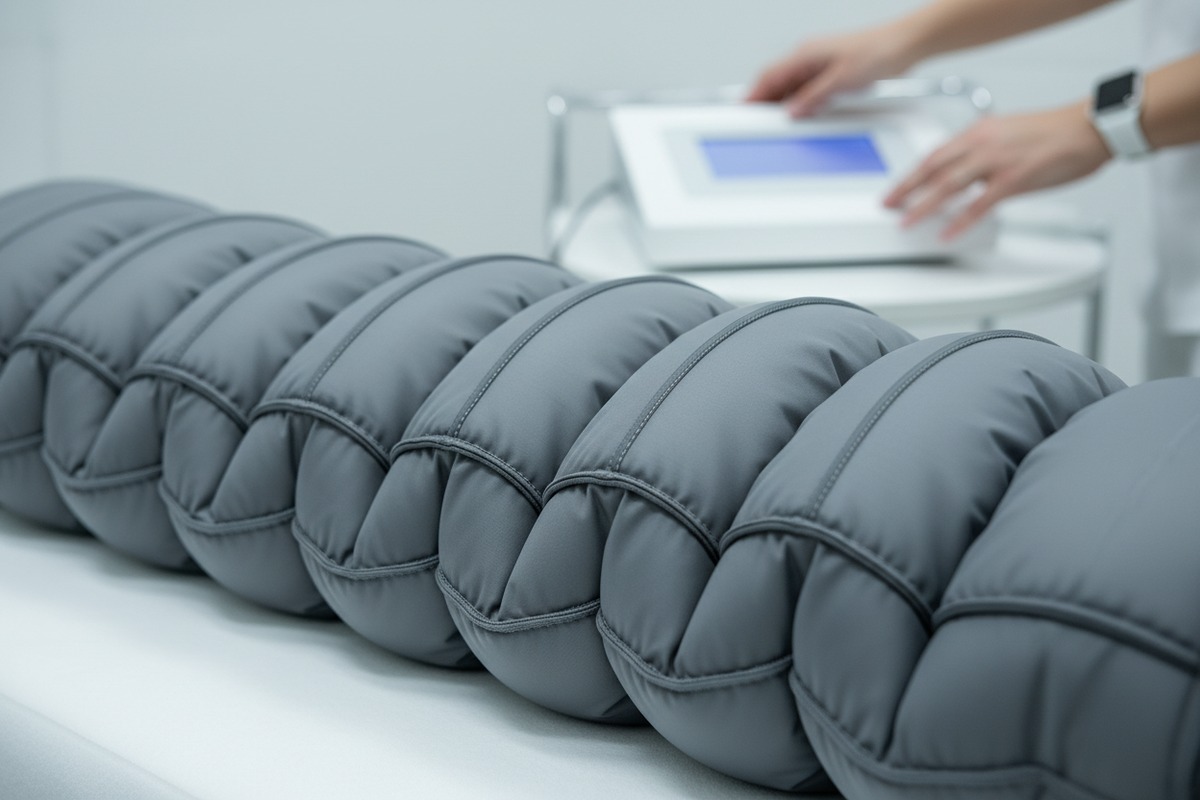
Pressotherapy uses air chambers that inflate and deflate in sequence. This creates a wave-like massage from your feet toward your heart. Each chamber controls one zone of pressure.
With 4 chambers, you get 4 distinct pressure zones. The gaps between zones are larger. With 8 chambers, you get 8 smaller zones. The pressure flows more smoothly.
The Science Behind Chamber Count
Sequential pneumatic compression 2 promotes venous return and lymphatic drainage. This movement stimulates blood flow, helps drain fluids, reduces heavy legs, and accelerates muscle recovery after exercise.
When we calibrate our pressotherapy units, we observe that 8-chamber systems produce more consistent pressure gradients. Athletes report less residual soreness and faster perceived recovery.
Real-World Performance Differences
| Chamber Count | Best For | Coverage Quality | Pressure Smoothness | Portability |
|---|---|---|---|---|
| 4 Chambers | Basic relaxation, home use, budget-conscious buyers | Adequate for single limb | Noticeable gaps between zones | Excellent—compact, lightweight |
| 6 Chambers | General sports recovery, mild edema, amateur athletes | Good leg coverage | Smooth with minor gaps | Very good—still portable |
| 8 Chambers | High-performance athletes, professional clinics, post-injury rehab | Excellent full-leg coverage | Very smooth, overlapping zones | Good—slightly larger units |
Why Overlapping Matters
Advanced 8-chamber cuffs often use an overlapping system. This prevents lymphatic retraction during the procedure. Without overlap, fluid can flow backward when pressure releases. Overlapping chambers maintain constant forward pressure.
The gradient function affects the safety and effectiveness of treatments, especially for people at risk of oedema. Our R&D team prioritizes this feature in every 8-chamber model we develop.
Treatment Duration and Results
For most wellness goals and tired legs, 3–5 sessions per week of 15–30 minutes work well. After training, 20–30 minutes within 1–3 hours afterwards with moderate pressure delivers the best results.
Athletes using 8-chamber systems consistently report lighter legs and less fatigue the next day. The key is regular use—consistency matters more than a single intensive session.
Which chamber configuration should I choose to match my brand's high-end market positioning?
When we design machines for premium European distributors, chamber count is just one factor. High-end positioning requires the complete package—technology, aesthetics, certifications, and user experience.
For high-end brand positioning, 8-chamber systems with advanced features like programmable gradients, multiple compressors, and CE Medical IIa certification establish premium credibility. Luxury spa brands also value sleek control unit design, quiet operation, modular cuff options, and sophisticated user interfaces.

What Defines Premium in Pressotherapy
Luxury spa brands focus on attention to detail, sensory experience, and exceptional technology behind each treatment. Your pressotherapy machine must deliver both visible results and deeply immersive experiences.
In our experience exporting to the US and European markets, premium buyers expect:
- Medical-grade certifications (CE Medical IIa, ISO 13485 4)
- Multiple pre-set and programmable modes
- Quiet compressor operation
- Premium garment materials
- Intuitive touchscreen interfaces
Single vs. Multi-Compressor Systems
This is a critical distinction. One compressor is cheaper but can create uneven pressure. Two or more compressors ensure proper gradient distribution but raise costs 2-3x.
| Feature | Single Compressor | Dual Compressor |
|---|---|---|
| Price Point | Budget to mid-range | High-end |
| Pressure Evenness | Can be inconsistent | Consistent across all chambers |
| Gradient Control | Basic | Advanced programmable gradients |
| Noise Level | Often louder | Generally quieter |
| Target Market | Home users, budget clinics | Luxury spas, sports medicine centers |
For high-end positioning, dual compressor systems are worth the investment. They command higher retail prices and attract discerning buyers.
Certification Requirements for Premium Markets
Medical devices in Europe must carry CE certification 5 indicating compliance with EU safety, health, and environmental protection requirements. For the US market, FDA approval 6 ensures the machine is safe and effective for its intended use.
Our manufacturing facility holds ISO 13485 and MDSAP certifications. These credentials matter when your brand serves luxury spas, professional sports teams, or medical rehabilitation centers.
Design Aesthetics and User Experience
Premium buyers judge equipment on first impression. The control unit should feature clean lines, quality materials, and an intuitive interface. Our LCD screens use high-resolution displays with clear iconography.
Garment quality is equally important. Premium cuffs use durable, easy-to-clean, and potentially anti-bacterial fabrics. Multi-user environments like sports teams require robust materials that withstand frequent sanitization.
Smart Technology Integration
Top-tier pressotherapy systems now offer app integration for tracking recovery sessions. Some provide personalized program recommendations based on training load. Coaches and physios can monitor sessions remotely.
These features differentiate premium products from commodity machines. They justify higher price points and create ongoing customer engagement.
Can I customize the chamber count and air pressure settings for my OEM pressotherapy project?
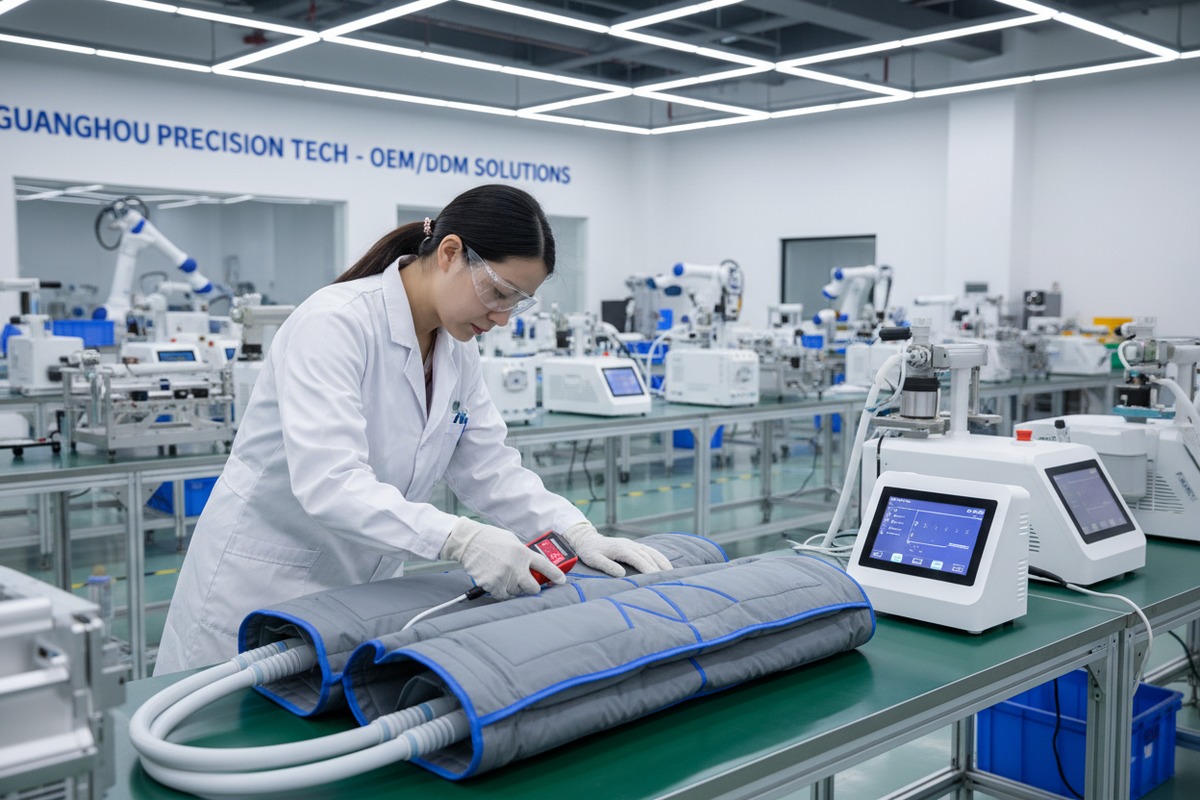
In our production facility, customization is standard practice. We work with European and American brands to develop machines that match their exact specifications. Chamber count and pressure settings are fully configurable.
Yes, reputable OEM pressotherapy manufacturers offer full customization of chamber counts, pressure ranges (typically 30–250 mmHg), massage programs, control unit design, and garment configurations. Work with suppliers who demonstrate engineering capability, hold proper certifications, and provide detailed development timelines.
What Can Be Customized
When we work on OEM projects, clients typically customize:
- Chamber count: 4, 6, 8, or modular options
- Pressure range: Low (30 mmHg) for gentle therapy to high (250 mmHg) for sports
- Programs: Custom massage sequences, treatment durations, gradient settings
- Control unit: Branding, interface design, screen type, housing color
- Cuff configurations: Legs, arms, abdomen, hip belt, shorts for aesthetic applications
Typical Customization Process
| Phase | Duration | Activities |
|---|---|---|
| Initial Consultation | 1-2 weeks | Requirements gathering, feasibility review |
| Design & Engineering | 4-6 weeks | Technical specifications, prototype design |
| Prototype Development | 6-8 weeks | First unit production, internal testing |
| Client Review | 2-3 weeks | Sample evaluation, refinement requests |
| Certification | 8-12 weeks | CE marking, FDA submission if needed |
| Production | 4-6 weeks | Mass manufacturing, quality control |
Pressure Settings for Different Applications
Pressure customization matters because different users need different intensities. Studies show both high and low pressure effectively reduce limb volume in patients with circulation issues. But sports applications typically benefit from higher pressures.
- Gentle lymphatic (Vodder-style): 30-60 mmHg
- General wellness: 60-100 mmHg
- Sports recovery: 100-180 mmHg
- Intensive athletic use: 180-250 mmHg
Our control boards allow therapists to set each chamber's pressure individually. This precision enables customized treatments for each patient.
Modular Cuff Systems
Forward-thinking brands request modular cuff options. Instead of full-body suits only, offer interchangeable cuffs for:
- Lower limbs (full leg)
- Upper limbs (arms)
- Abdominal and hip belt
- Short shorts for hips, buttocks, and thighs
This flexibility attracts professional users who need targeted treatments for specific body areas.
Private Labeling Requirements
For brand owners importing from China, private labeling includes:
- Custom logo on control unit and cuffs
- Branded packaging and user manuals
- Localized language interfaces
- Compliance documentation under your brand
We handle the technical documentation required for market entry. This includes CE technical files, FDA 510(k) submissions, and user manual translations.
Minimum Order Quantities
OEM customization typically requires minimum order commitments. For basic branding (logo, packaging), MOQs may start at 50-100 units. For technical customization (new chamber configuration, custom programming), expect MOQs of 200-500 units.
Discuss volume commitments early. This helps both parties plan engineering resources and production schedules efficiently.
How do I verify the durability of the internal valves when sourcing 8-chamber machines from China?
This question comes up in almost every call with serious buyers. Internal valve quality separates machines that last from machines that fail. Our quality control process addresses this directly at the component level.
To verify valve durability, request cycle testing data (minimum 10,000 hours lifespan), inspect valve supplier certifications, conduct factory audits, demand pre-shipment pressure leak tests, and negotiate warranty terms covering valve components. Reputable Chinese manufacturers will provide documentation for each verification step.
Why Valve Quality Matters
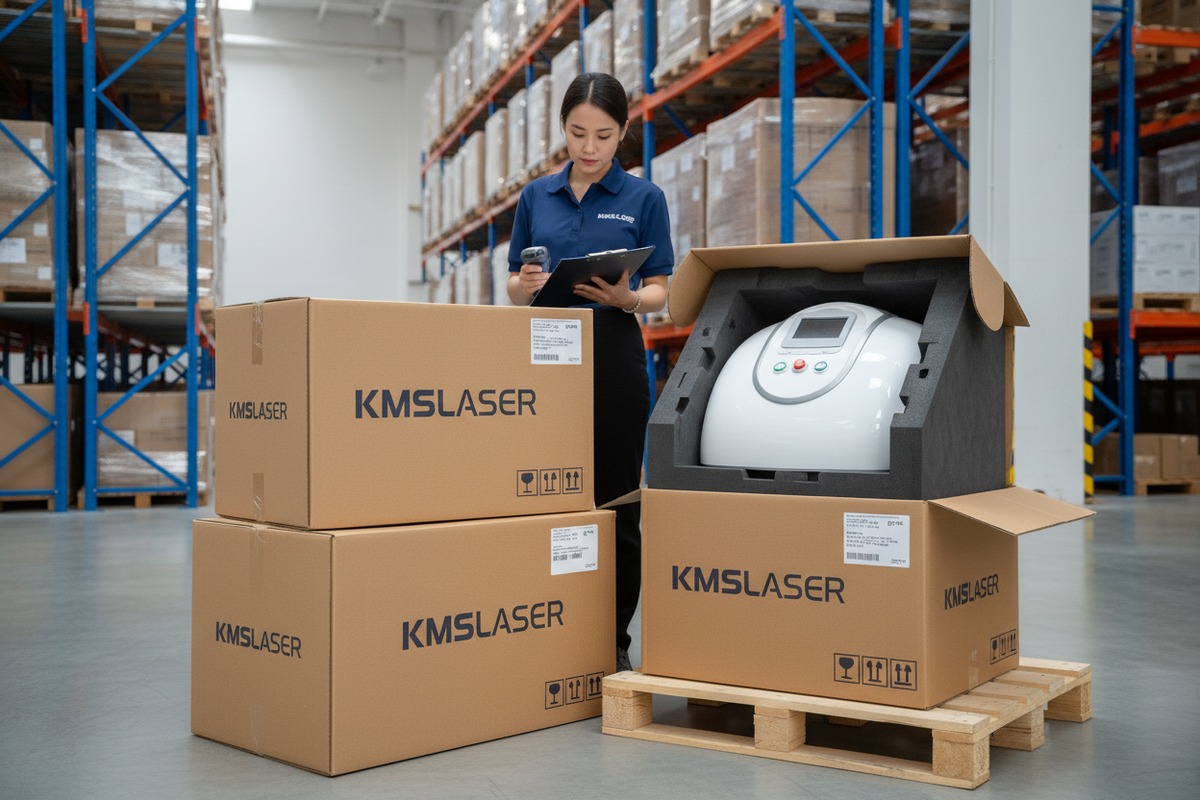
The valve system is the heart of any pressotherapy machine. Valves control air flow to each chamber. They open and close thousands of times per session. Poor valves leak air, create uneven pressure, and fail prematurely.
In 8-chamber systems, you have more valves—meaning more potential failure points. Rigorous testing 7 becomes even more critical.
Key Durability Metrics
| Metric | Acceptable Standard | Premium Standard |
|---|---|---|
| Valve Lifespan | 5,000+ hours | 10,000+ hours |
| Pressure Consistency | ±10% across chambers | ±5% across chambers |
| Leak Rate | <0.5% pressure loss per minute | <0.2% pressure loss per minute |
| Operating Temperature | 5-40°C | 0-45°C |
| Humidity Tolerance | 30-80% RH | 20-90% RH |
Our pumps reach lifespans up to 10,000 hours. This matches or exceeds European competitors at more competitive price points.
Factory Audit Checklist
When visiting or auditing a Chinese manufacturer, verify:
- Component sourcing documentation: Where do valves come from? What certifications do valve suppliers hold?
- Incoming inspection records: How are valves tested before assembly?
- In-process quality controls: What checks occur during production?
- Final testing protocols: How is each finished unit validated?
- Traceability systems: Can defects be traced back to specific component batches?
Testing Methods to Request
Ask your supplier to perform or document:
- Cycle endurance testing: Running valves through millions of open-close cycles under accelerated conditions
- Pressure leak testing: Measuring air loss across all chambers under sustained pressure
- Temperature stress testing: Operating machines at extreme temperature limits
- Humidity chamber testing: Simulating high-moisture environments
Detailed test reports should accompany every shipment. We provide pressure testing data 8 for each unit before export.
Pre-Shipment Inspection Protocol
For each production batch:
- Visual inspection of valve assemblies
- Individual pressure test of all 8 chambers
- Full treatment cycle test (30-minute continuous operation)
- Leak detection using pressure decay method
- Function test of all programs and settings
Document all test results photographically. Include serial numbers for traceability.
Warranty Considerations
Negotiate warranty terms that specifically cover internal components:
- Valve warranty period: Minimum 12 months, premium 24 months
- Coverage scope: Parts and labor, or parts only?
- Response time: What is the replacement lead time?
- Spare parts availability: Will components remain available for 3-5 years?
We maintain spare parts inventory for all active models. This ensures long-term serviceability for our distribution partners.
Red Flags During Sourcing
Avoid suppliers who:
- Cannot provide cycle test documentation
- Refuse factory audits or video inspections
- Offer no warranty on pneumatic components
- Cannot name their valve component suppliers
- Have no ISO 13485 or equivalent quality management certification
Quality suppliers welcome scrutiny. Transparency builds trust and long-term partnerships.
Conclusion
Choosing between 4, 6, or 8 chambers depends on your market, clients, and brand positioning. Match chamber count to athlete needs. Prioritize quality certifications. Verify valve durability before committing to any supplier. The right pressotherapy machine will serve your brand for years.
Footnotes
1. Explains the role and functions of OEM medical device manufacturers in the industry. ↩︎
2. Provides scientific evidence on the effects and benefits of sequential pneumatic compression therapy. ↩︎
3. Replaced HTTP 405 with a working, authoritative page from Cedars-Sinai on lymphatic drainage massage, as the original Cleveland Clinic link was still problematic. ↩︎
4. Describes the international standard for quality management systems specific to medical device manufacturing. ↩︎
5. Details the requirements and process for obtaining CE marking for medical devices in Europe. ↩︎
6. Replaced HTTP unknown with a working, authoritative page from the official FDA website providing an overview of medical device regulation. ↩︎
7. Highlights the critical importance of comprehensive testing to ensure medical device safety and effectiveness. ↩︎
8. Explains how pressure data is used to evaluate and optimize the functionality of medical devices. ↩︎

 English
  Español de México
  Deutsch
  Français
  العربية
  Русский