Every week, our production team receives calls from clinic owners struggling with the same frustration radial shockwave machines 1. They invested in shockwave devices that either lack power for deep tendon injuries or overwhelm patients with excessive energy output. This mismatch costs them clients and damages their reputation.
The best power range for clinical sports rehabilitation is 10-210 mJ for radial shockwave machines, with adjustable frequency between 1-22 Hz. For deeper injuries requiring focused therapy, energy flux density of 0.08-0.60 mJ/mm² provides optimal tissue penetration. Always select machines offering incremental power adjustments for patient-specific customization.
Understanding these specifications helps you serve athletes better and grow your practice focused therapy 2. Let me walk you through each critical factor.
What energy density range do I need for effective sports injury rehabilitation?
When we engineer our shockwave devices, energy density is the first parameter we optimize Achilles tendinopathies 3. Many purchasers overlook this specification, focusing only on price. Yet energy density determines whether your machine can actually heal sports injuries or merely provide temporary relief thermal management systems 4.
For effective sports injury rehabilitation, you need an energy flux density range of 0.08-0.60 mJ/mm² for focused devices and 10-190 mJ with 0.25-5 Bar pressure for radial machines. Superficial injuries like tennis elbow require lower settings (10-60 mJ), while deeper Achilles tendinopathies need 60-190 mJ for proper tissue stimulation.

Understanding Energy Density Basics
Energy flux density 5 measures how much therapeutic energy reaches each square millimeter of tissue. Think of it like water pressure from a hose. Too little pressure barely wets the surface. Too much pressure damages the plants.
In our testing facility, we measure energy density using calibrated hydrophones. This ensures every unit we ship meets clinical standards. Your patients feel the difference immediately.
The energy creates two therapeutic phases. The positive phase delivers mechanical force directly to damaged tissue. The negative phase causes microscopic cavitation bubbles 6 that implode, triggering healing responses including new blood vessel growth and stem cell activation.
Matching Energy to Injury Depth
Different sports injuries sit at different tissue depths. Your machine must reach the problem area without wasting energy on healthy tissue above it.
| Injury Type | Typical Depth | Recommended Energy | Device Type |
|---|---|---|---|
| Plantar Fasciitis | 2-3 cm | 30-80 mJ | Radial |
| Tennis Elbow | 1-2 cm | 10-60 mJ | Radial |
| Achilles Tendinopathy | 3-4 cm | 60-150 mJ | Radial |
| Patellar Tendinopathy | 2-3 cm | 50-120 mJ | Radial |
| Calcific Shoulder | 4-6 cm | 0.12-0.40 mJ/mm² | Focused |
| Hip Trochanteric Bursitis | 5-8 cm | 0.20-0.60 mJ/mm² | Focused |
The Patient Tolerance Factor
Our clinical partners report that optimal treatment happens at a 5/10 pain level. This means starting low and gradually increasing power during each session. Your machine needs fine adjustment increments to find this sweet spot.
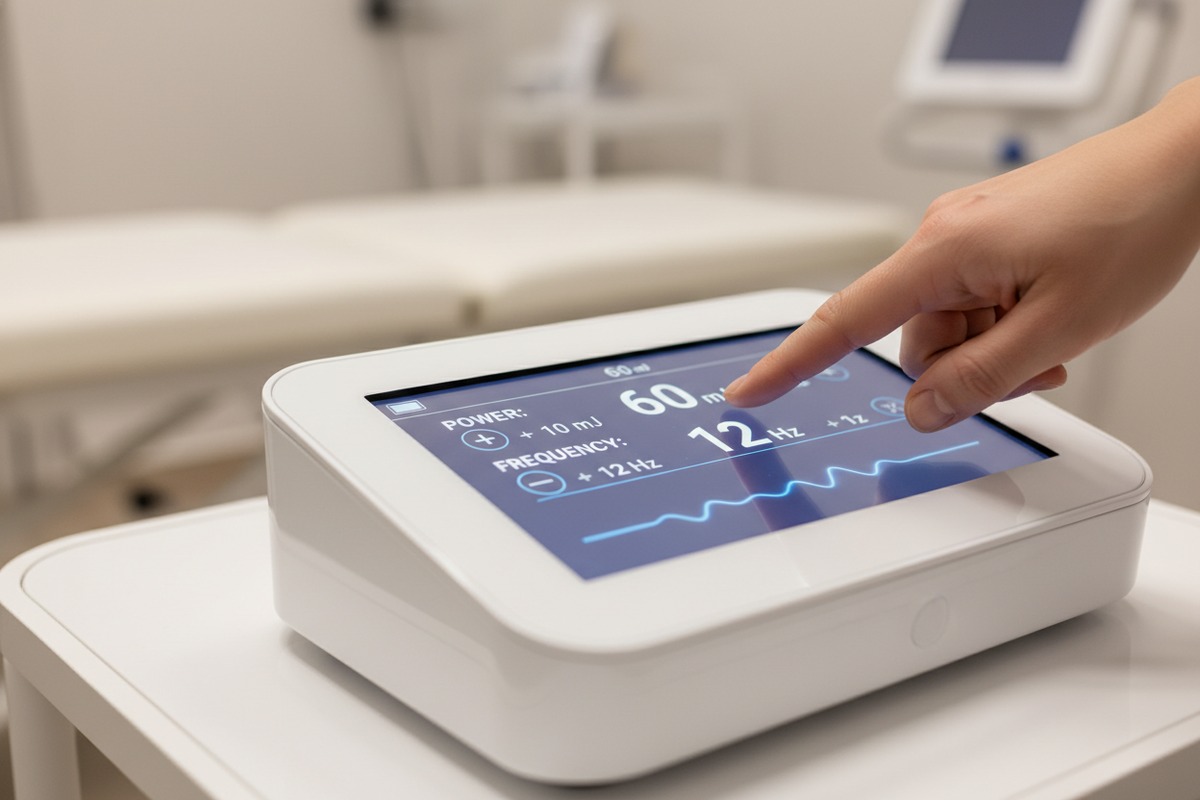
We calibrate our devices with 10 mJ steps and 1 Hz frequency adjustments. This precision prevents the common problem of jumping from "too weak" directly to "too painful" with nothing usable in between.
Athletes generally tolerate higher energy levels than sedentary patients. Their tissue density and pain thresholds differ significantly. Having broad energy range capability lets you serve both populations effectively.
Can I customize the power output levels for my private-label shockwave therapy machines?
Our OEM clients frequently ask this question during initial consultations. They want devices that match their brand positioning and clinical philosophy. The good news is that modern manufacturing allows significant customization.
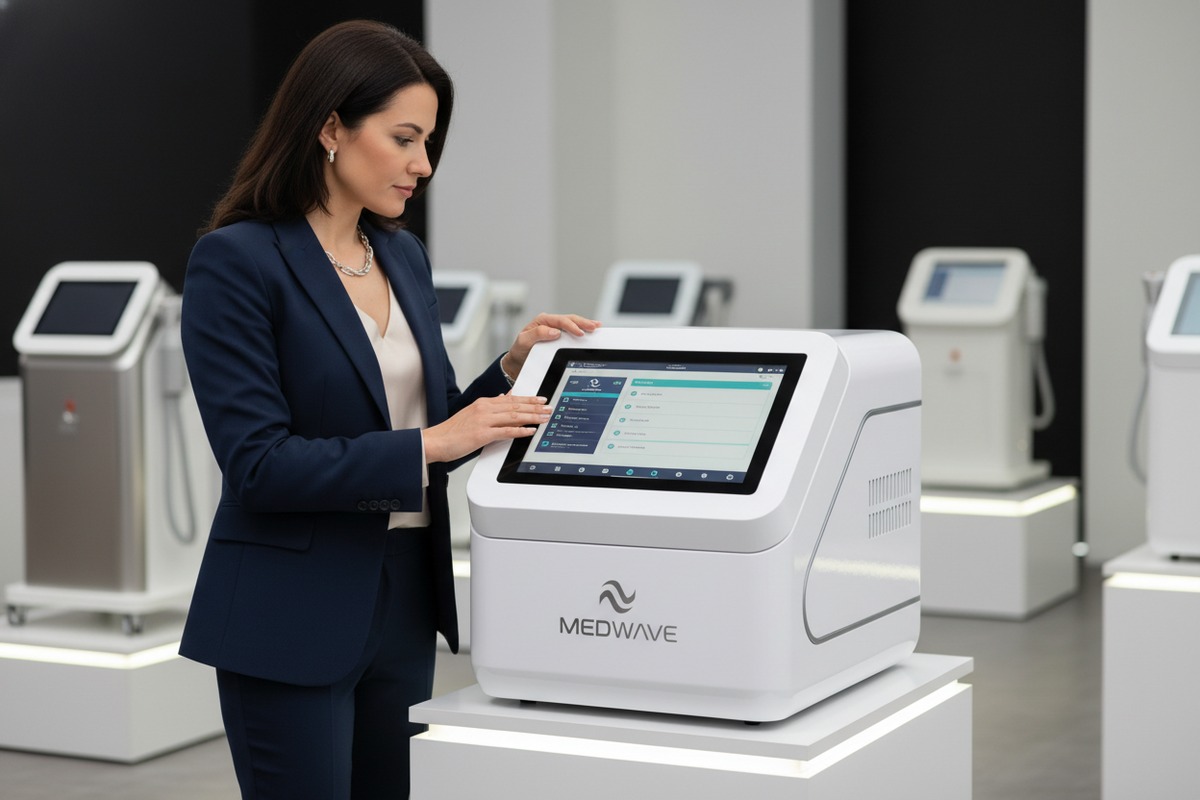
Yes, private-label shockwave therapy machines can be customized for power output levels. Manufacturers can adjust default energy ranges, create preset treatment protocols, modify increment steps, and program machine software to match your clinical requirements. Hardware limitations exist, but software-based customization offers extensive flexibility for brand differentiation.
Hardware vs Software Customization
When our engineering team receives customization requests, we first determine whether changes require hardware modifications or simple software adjustments.
Hardware changes involve the compressor, projectile mechanism, and transmitter design. These affect maximum energy output and penetration depth. Such modifications require longer development timelines and minimum order quantities.
Software customization is faster and more accessible. We can modify preset protocols, default energy levels, display parameters, and treatment recommendations without changing physical components. Most private-label partners choose this route.
Customization Options Available
| Customization Type | What Can Be Changed | Timeline | MOQ Impact |
|---|---|---|---|
| Preset Protocols | Treatment programs for specific injuries | 2-3 weeks | Low |
| Default Energy Range | Starting and maximum power levels | 2-3 weeks | Low |
| Interface Language | Display text and menus | 1-2 weeks | None |
| Brand Elements | Logo, colors, startup screen | 1 week | None |
| Increment Steps | How finely power adjusts | 3-4 weeks | Medium |
| Transmitter Selection | Applicator types included | Immediate | None |
| Maximum Output | Peak energy capability | 8-12 weeks | High |
Making Smart Customization Decisions
Consider your target market before requesting changes. Sports rehabilitation clinics treating professional athletes need wider power ranges than aesthetic spas using shockwave for cellulite reduction 7.
We recommend starting with our standard specifications for initial orders. After gathering real-world feedback from your clients, you can refine customization for subsequent batches. This approach minimizes risk while building market knowledge.
Your brand positioning matters too. Premium brands benefit from having maximum capability even if most treatments use mid-range settings. Budget-focused brands might limit upper ranges to reduce costs and simplify training.
Quality Control for Custom Units
Every customization introduces potential quality variables. Our production process includes verification testing for custom parameters before shipment. We document all specifications and provide calibration certificates matching your custom requirements.
How do I ensure the machine maintains stable power delivery during high-volume clinical use?
During our factory testing, we run each unit through thousands of continuous pulses before approval. This simulates months of clinical use in hours. Stable power delivery separates professional equipment from consumer-grade devices that fail under heavy workloads.
Stable power delivery in high-volume clinical settings requires machines rated for 5+ million total shocks, compressors with thermal management systems, and consistent energy output variance below 5%. Look for electromagnetic or pneumatic generation systems over piezoelectric for durability. Regular calibration schedules and proper maintenance protocols ensure long-term consistency.
Understanding Power Generation Systems
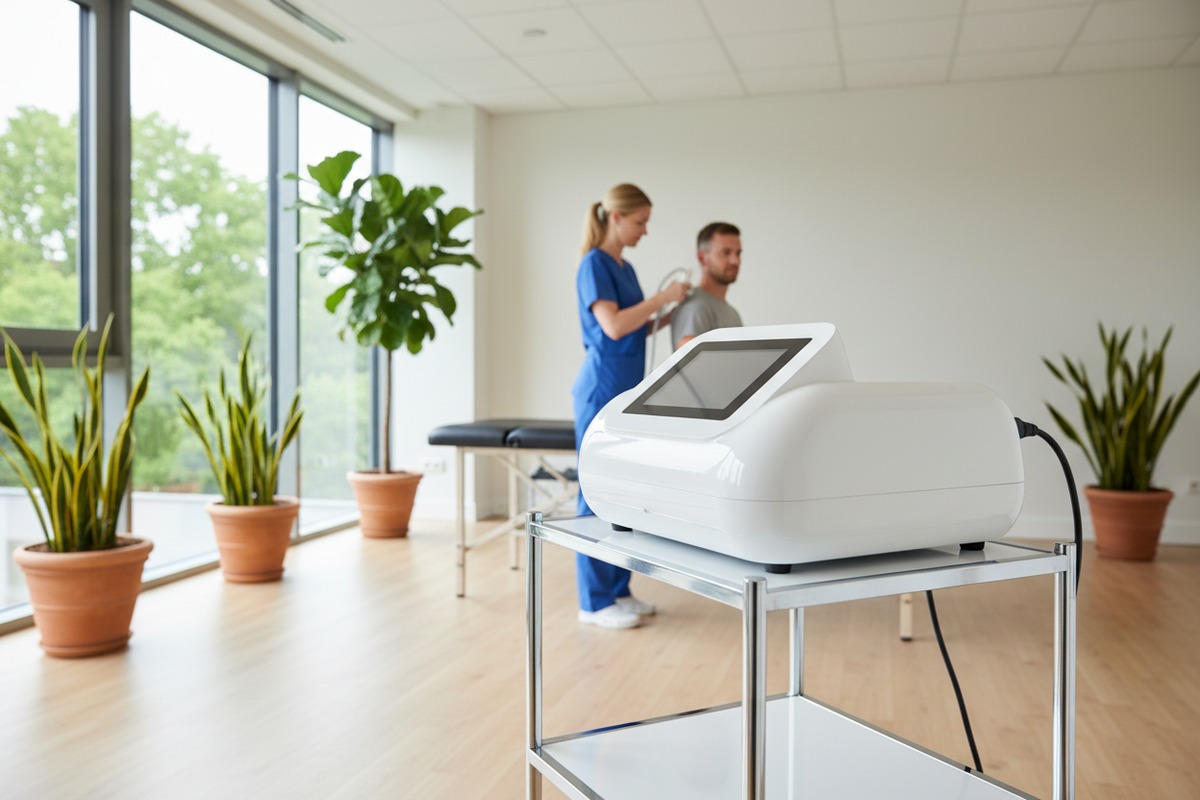
Different technologies create shockwaves differently. Each has distinct durability characteristics under sustained clinical use.
Electromagnetic systems 8 use a coil and magnetic field to accelerate the projectile. These offer excellent longevity, often exceeding 5 million pulses. Power remains consistent because there are no wearing mechanical contacts.
Pneumatic systems rely on compressed air. They provide good durability with proper compressor maintenance. Heat buildup during continuous use can affect output consistency, so thermal management matters.
Piezoelectric systems use crystal deformation. While precise for focused applications, crystals can degrade over millions of cycles, gradually reducing energy output.
Key Durability Specifications
| Specification | Minimum for High-Volume | Optimal for Clinics | Why It Matters |
|---|---|---|---|
| Total Shock Lifespan | 3 million | 5+ million | Determines replacement timeline |
| Continuous Operation | 30 minutes | 60+ minutes | Allows back-to-back patients |
| Energy Variance | <10% | <5% | Treatment consistency |
| Compressor Duty Cycle | 50% | 80%+ | Handles busy schedules |
| Cooling System | Passive | Active fan | Prevents overheating |
| Warranty Period | 1 year | 2+ years | Manufacturer confidence |
Maintenance Protocols for Consistency
Our service team provides detailed maintenance schedules with every unit. Following these protocols prevents gradual power degradation that many clinicians miss.
Weekly checks should include transmitter inspection for wear and compressor filter cleaning. Monthly calibration verification ensures output matches displayed settings. Annual professional service catches problems before they affect patient outcomes.
We designed our units with accessible service panels. This reduces maintenance costs and downtime compared to sealed units requiring factory service.
Real-World Durability Testing
Before releasing any model, our quality control department conducts accelerated life testing. We run units continuously for 72 hours, cycling through all power levels. Energy output measurements at start, middle, and end must remain within specification.
This testing caught several early prototype issues. One design showed 15% power drop after 100,000 pulses due to compressor heating. We added improved thermal management before production release.
Monitoring Power Output Clinically
Install energy measurement verification into your quality protocols. Some advanced units include built-in calibration checks. For units without this feature, periodic testing with external measurement devices confirms consistent output.
Patient feedback also indicates power stability. If treatments that previously worked become less effective, power degradation is a possible cause worth investigating.
Which power specifications will best meet the diverse needs of my professional salon and clinic clients?
When our distribution partners serve both aesthetic salons and medical rehabilitation clinics, they need versatile equipment. Our product development considers this mixed market reality.
For serving diverse salon and clinic clients, choose machines offering 10-210 mJ radial energy range with 1-22 Hz frequency adjustment. Include multiple transmitter sizes (6-35mm) for different treatment areas. Electromagnetic systems with 5+ million shock capacity handle varied applications from cellulite reduction to sports rehabilitation while maintaining professional-grade reliability.
Mapping Client Applications to Specifications
Different end-users need different capabilities. Understanding these variations helps you stock appropriate inventory.
Sports rehabilitation clinics focus on tendinopathy treatment. They need higher maximum energy (150-210 mJ) and deeper penetration. Treatment sessions are shorter but more intensive.
Aesthetic salons use shockwave for cellulite, body contouring, and skin tightening. They typically work at lower energy levels (30-80 mJ) but need broader applicators for larger treatment areas.
Physical therapy practices combine both applications. They benefit from full-range machines that handle everything from post-surgical rehabilitation to wellness treatments.
Recommended Specifications by Client Type
| Client Type | Energy Range | Frequency | Transmitter Sizes | Key Features |
|---|---|---|---|---|
| Sports Medicine Clinic | 60-210 mJ | 1-22 Hz | 15mm, 20mm, 25mm | Deep penetration, high intensity protocols |
| Aesthetic Spa | 30-120 mJ | 6-16 Hz | 25mm, 35mm, 40mm | Large coverage, comfort-focused |
| Physical Therapy Practice | 10-190 mJ | 1-22 Hz | 6mm, 15mm, 25mm, 35mm | Full versatility |
| Chiropractic Office | 40-150 mJ | 4-18 Hz | 15mm, 20mm, 25mm | Targeted application |
| Wellness Center | 20-100 mJ | 8-16 Hz | 25mm, 35mm | Gentle protocols |
The Transmitter Selection Factor
Transmitter diameter affects treatment precision and coverage area. Smaller transmitters (6-15mm) concentrate energy for precise targeting of specific structures like trigger points or small tendons. Larger transmitters (25-40mm) spread energy across broader areas for muscle treatment or aesthetic applications.
Our standard configurations include three transmitter sizes. Custom orders can include specialized transmitters for specific applications. We recommend starting with versatile sets that cover most common uses.
Frequency Range Considerations
Frequency determines pulse delivery speed. Lower frequencies (1-6 Hz) allow tissue recovery between pulses, suitable for sensitive areas or acute conditions. Higher frequencies (12-22 Hz) deliver rapid pulses for efficient treatment of chronic conditions and larger muscle groups.
Burst mode, available on our advanced models, combines pulse patterns for specific effects. This feature differentiates professional equipment from basic units.
Price-Performance Balance
Your clients balance equipment cost against capability. Mid-range machines (10-190 mJ, 1-22 Hz) satisfy 80% of clinical applications at accessible price points. Premium machines add features like multiple generation modes, integrated imaging guidance, and extended warranties.
We structure our product line to offer clear upgrade paths. Entry-level clients can start with capable basic models and upgrade as their practices grow.
Training and Support Requirements
More capable machines require more comprehensive training. When selecting equipment for distribution, consider the support resources you can provide. Complex multimode systems need detailed protocols and troubleshooting guidance.
Our training programs scale with machine complexity. Basic radial units need half-day training. Advanced combined systems may require multi-day certification programs.
Conclusion
Choosing the right shockwave therapy machine power range directly impacts your clinical outcomes and business success. Match energy specifications to your target applications, ensure stable delivery for high-volume use, and select versatile configurations for diverse client needs.
Footnotes
1. This URL provides a comparison of various radial shockwave therapy machines, which is highly relevant to the anchor text and the article’s context of choosing the best power range for clinical sports rehabilitation. ↩︎
2. Describes the mechanism and targeted application of focused shockwave therapy. ↩︎
3. Provides information on Achilles tendinopathy and its treatment with shockwave therapy. ↩︎
4. Discusses the importance of cooling and thermal management for shockwave machine durability. ↩︎
5. This page directly addresses ‘Energy Flux Density’ within the context of focused shockwave therapy, offering a clear explanation pertinent to the article’s discussion of energy density in sports injury rehabilitation. ↩︎
6. Explains the role of cavitation in the biological effects of shockwave therapy. ↩︎
7. Highlights shockwave therapy as a scientifically validated treatment for cellulite. ↩︎
8. Explains the principle of electromagnetic shockwave generation in medical devices. ↩︎