
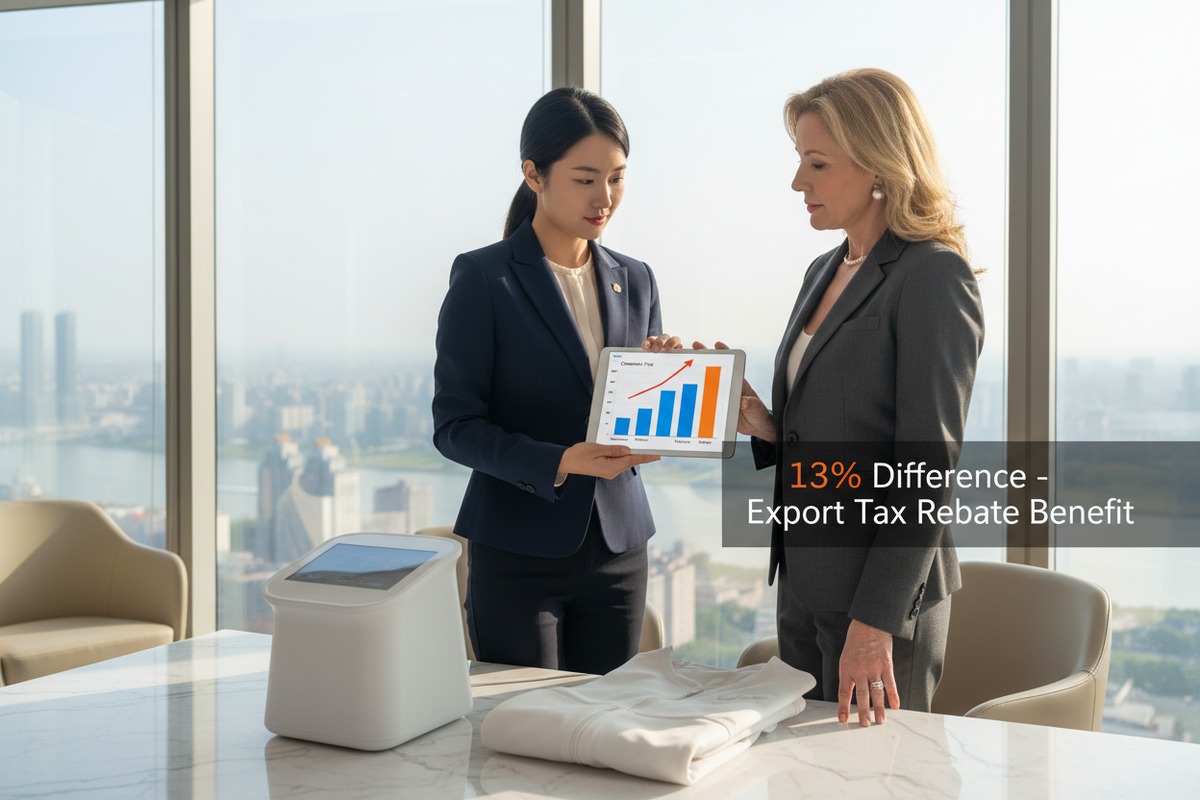
We often see clients confused by the price gap between domestic Chinese quotes and export prices China export tax rebate 1. Understanding how our factory manages these tax incentives is the secret to your savings.
China’s export tax rebate typically reduces pressotherapy machine quotes by 9% to 13%. Manufacturers subtract this VAT refund from their production costs, allowing them to offer lower FOB prices to international buyers compared to domestic prices that include a non-refundable 13% VAT.
This mechanism is the backbone of competitive Chinese pricing General Taxpayer status 2. Let's explore how these financial levers affect your bottom line.
How much of the export tax rebate will be reflected in my final pressotherapy machine quote?
When we calculate your invoice in our Guangzhou office, we account for the Value-Added Tax (VAT) 3 we get back from the government. This refund directly offsets our material costs.
Most pressotherapy machines qualify for a 13% rebate on the VAT paid during production. Exporters typically pass 50% to 100% of this benefit to the buyer, resulting in a final quote that is significantly lower than the standard domestic Chinese price.
The Mechanics of the 13% Rebate
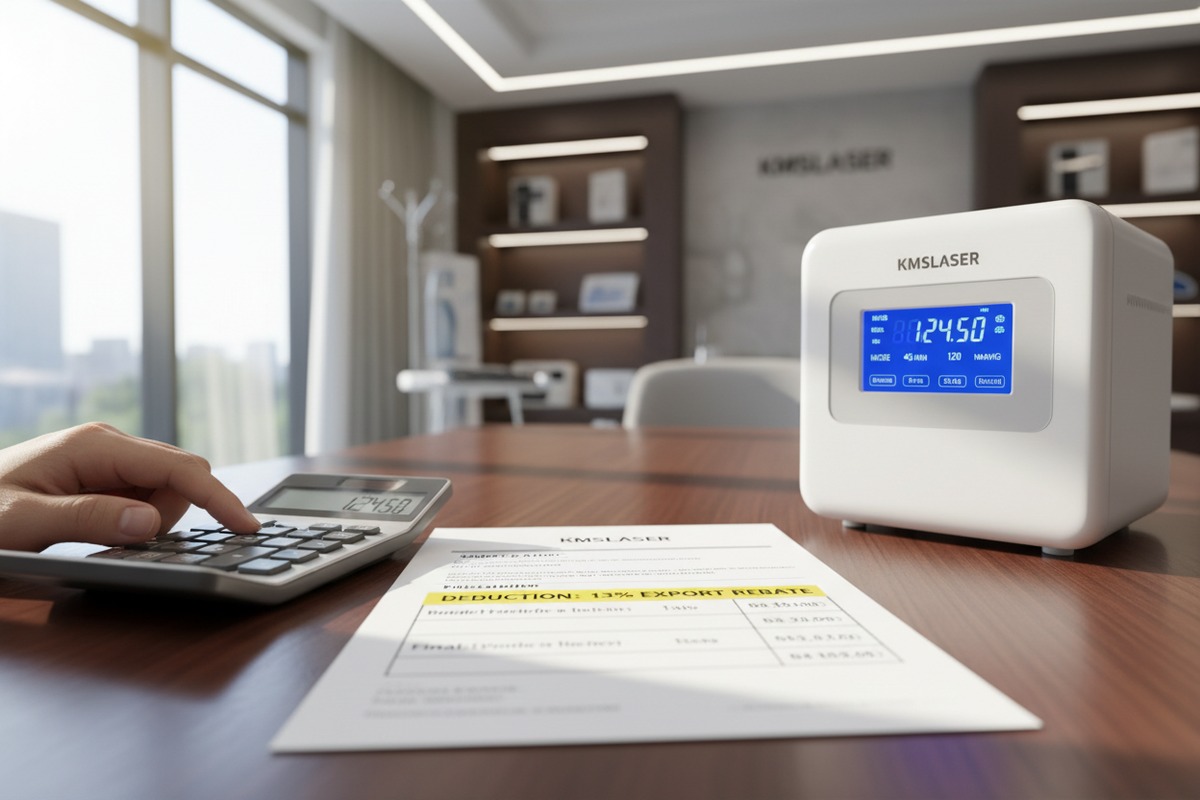
In our production line, we purchase components like air pumps, sensors, and high-grade fabrics. Each of these domestic purchases includes a 13% VAT. When we export a finished pressotherapy machine 4, the Chinese government allows us to claim back a significant portion of that tax. This is known as the "Exempt, Credit, Refund" system.
For the purchasing manager, this means the "export price" is not just the domestic price minus the tax. It is a strategic calculation. We essentially treat the tax rebate as a subsidy that lowers our internal cost of goods sold (COGS). For a machine that costs $500 to manufacture, a 13% rebate can provide nearly $65 in "hidden" margin, which we can then use to lower your price to stay competitive against local distributors in the US or Europe.
HS Codes and Rebate Percentages
The specific amount reflected in your quote depends heavily on the Harmonized System (HS) code 5 used during customs declaration. While pressotherapy machines are pneumatic compression devices 6, they are often categorized under medical or electrotherapy equipment.
| Category | Typical HS Code | Estimated Rebate Rate |
|---|---|---|
| Medical Instruments | 9018.90 | 13% |
| Electro-therapy Apparatus | 9019.10 | 13% |
| Massage Apparatus | 9019.10 | 13% |
| Specialized Electronic Parts | 8543.70 | 9% – 13% |
As shown in the table above, most of our professional-grade machines fall into the 13% bracket. If a supplier uses an incorrect code, they might only receive 9% or even 0%, which explains why some quotes suddenly jump up during the final negotiation phase.
Transparency in Pricing
We believe in full transparency. When you see a "Free On Board" (FOB) price, that number already incorporates the anticipated tax refund. Free On Board (FOB) price 7 If the rebate rate were to drop tomorrow, we would have to raise the FOB price immediately to cover the loss of that government refund. This is why price validity periods on our quotes are usually limited to 30 days.
Can I leverage these tax incentives to lower my total landed cost for bulk imports?
While shipping our latest full-body compression suits to North America, we noticed many buyers overlook how bulk volume impacts tax efficiency. Larger orders allow us to streamline the paperwork.
To lower landed costs, negotiate a "rebate-sharing" price for bulk orders. By increasing volume, you reduce the manufacturer’s administrative burden per unit, making them more likely to pass the full 13% tax incentive directly into your unit discount.
Strategic Bulk Purchasing
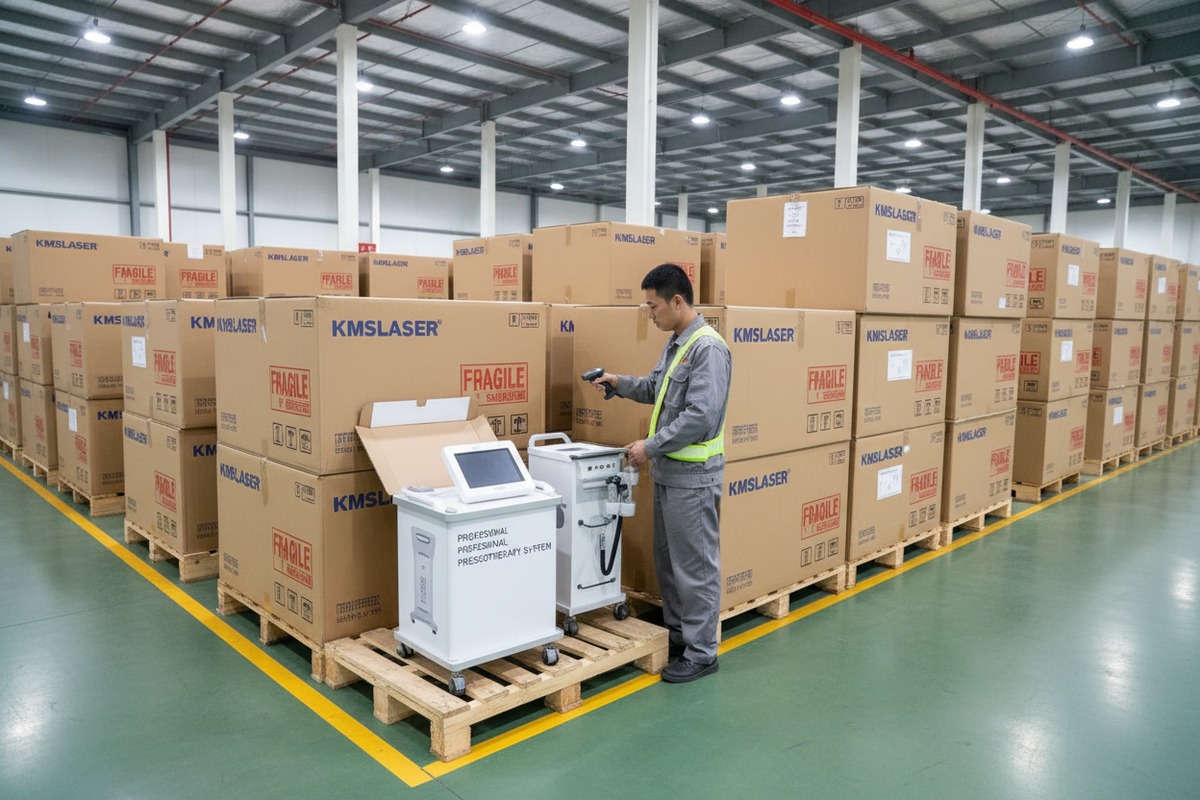
In our experience, purchasing 50 units versus 5 units changes the tax dynamics. For a small order, the administrative cost of filing for the VAT refund—which involves customs declarations, bank reconciliation, and monthly tax filings—is high relative to the profit. When Elizabeth or other purchasing managers buy in bulk, those fixed administrative costs are spread thin. This allows us to be more aggressive with our pricing.
When we handle large-scale OEM projects, we can sometimes offer a price that is even lower than our standard export list. This is because we can plan our raw material purchases (like the specialized air chambers) in a way that maximizes our VAT input credits, which in turn maximizes the final rebate we receive.
Factoring Rebates into Landed Cost
Landed cost 8 includes the machine price, shipping, duties, and local taxes. While we cannot control US import duties (Section 301 tariffs), we can use the rebate to help you absorb those costs.
| Cost Component | Small Order (5 units) | Bulk Order (50 units) |
|---|---|---|
| Factory Unit Cost | $600 | $600 |
| Tax Rebate Benefit | -$40 (partial pass) | -$78 (full pass) |
| Packaging/Labor | $50 | $35 |
| Total FOB Unit Price | $610 | $557 |
By leveraging the full 13% rebate on bulk orders, the unit price drops by nearly 9%. This "tax-efficient" pricing can often offset a significant portion of the shipping fees, making your total landed cost much more manageable for your distribution network.
Payment Terms and Rebate Timing
The government takes 2-3 months to process our rebate. Suppliers with strong cash flow, like us, can afford to give you the discount upfront. However, if you are looking for open account (OA) payments, the tax rebate becomes even more critical. We use the anticipated rebate as collateral of sorts to maintain our liquidity while we wait for your payment. This is why reliable suppliers who are "General Taxpayers" are much better partners for Elizabeth’s business model than small trading stalls.
How do changes in China’s rebate policies impact my long-term pricing and profit margins?
We closely monitor the Ministry of Finance updates to ensure our pricing remains stable for our long-term partners. Recent cuts in other sectors serve as a vital warning for medical exports.
China is currently reducing or canceling rebates for "overcapacity" sectors. If medical equipment follows this trend, expect pressotherapy machine prices to rise by 5% to 10% as manufacturers lose the tax cushion they currently use to subsidize exports.
The Shift from 2024 to 2026
Since late 2024, the Chinese government has started pulling back on rebates for products like batteries and solar panels. This is a move to ease global trade tensions and move away from "low-price" competition. While pressotherapy machines (HS 9018.90) have stayed at 13% as of early 2026, the trend is clear. The government wants us to focus on quality and innovation rather than relying on tax subsidies to win orders.
If the rebate for electromechanical medical devices drops from 13% to 9%, our costs will effectively rise by 4%. For Elizabeth, who maintains tight margins for her US salon clients, this could mean an overnight price hike. We recommend that brand owners keep a close eye on these policy shifts.
Historical Context of Rebate Adjustments
Looking back at the 2018-2019 period, the government actually increased rebates to 16% for many items to counter the effects of the US-China trade war. This allowed us to keep prices stable even as tariffs rose. Now, the pendulum is swinging back.
| Year | Event | Impact on Pressotherapy Pricing |
|---|---|---|
| 2018-2019 | Trade War Relief | Prices remained stable despite 25% US tariffs. |
| 2020-2023 | COVID-19 Stability | Rebates held at 13% to support global supply chains. |
| 2024-2025 | "Overcapacity" Cuts | Initial cuts to batteries/PV; pricing pressure begins. |
| 2026 (Est.) | High-Value Focus | Potential for medical rebate reductions to 9% or 0%. |
Strategic Stockpiling for Brand Owners
For our mid-to-large-scale distributors, we suggest "locking in" prices before these adjustments hit. When a rebate cut is announced, there is usually a 1-2 month grace period. This often triggers a surge in demand—much like the 30-40% price surge we saw in the solar industry in early 2026. If you have the warehouse capacity, increasing your inventory before a confirmed tax change can save you tens of thousands of dollars in the long run.
In our production planning, we always try to warn our regular partners about these rumors. Being proactive allows you to maintain your retail price points in the US market even when the manufacturing landscape in China shifts.
Why do some manufacturers offer more competitive pricing based on their tax rebate eligibility?
Not every factory we compete with operates on the same level of tax compliance. This difference often explains why one quote might seem much lower than another for a similar air compression system.
Competitive pricing often stems from "General Taxpayer" status, which allows factories to claim the full 13% rebate. Smaller workshops lacking this status cannot reclaim VAT, forcing them to either use lower-quality parts or sacrifice service to match the prices of larger manufacturers.

General Taxpayers vs. Small-Scale Taxpayers
In China, companies are divided into "General Taxpayers" and "Small-Scale Taxpayers." At our facility, we are General Taxpayers. This means we can issue and receive VAT invoices. When we buy premium components for our pressotherapy machines, we pay the tax and get it back later upon export.
Small-scale workshops, often located in industrial outskirts, cannot do this. They might pay only a 1% or 3% tax, but they get 0% back when they export. Consequently, their "starting cost" is actually higher than ours. To beat our price, they have to cut corners—using noisier air pumps, thinner sleeve fabrics, or skipping the intensive 48-hour pressure testing that we perform.
The Risk of "Underground" Exports
Sometimes, you might encounter a supplier that offers an extremely low price by avoiding the official export channel entirely. They might use "buy-out" export declarations where they don't claim the rebate but also don't pay the proper taxes. This is a huge risk for Elizabeth. If the Chinese customs or the US border authorities flag these shipments, your goods could be seized, or your brand could be blacklisted for "grey market" activities.
Working with a tax-compliant manufacturer ensures that:
- The goods are legally declared with the correct HS code.
- The quality is consistent because we can afford the best raw materials.
- The pricing is stable because it is based on legitimate financial models.
Compliance Equals Reliability
For a purchasing manager at a mid-to-large brand, the "cheapest" price is rarely the best value. A supplier that handles its tax rebates professionally is a supplier that likely handles its quality control and delivery schedules professionally. Our team provides full supply chain support, and that includes ensuring all tax documentation is perfect so that your order arrives on time and without legal hiccups.
By choosing a partner who maximizes their 13% rebate through legal and efficient means, you are essentially getting a government-subsidized high-quality product. That is the ultimate way to stay ahead of the competition in the American and European beauty markets.
Conclusion
Export tax rebates are the engine behind the affordability of Chinese pressotherapy machines. By partnering with a compliant, high-end manufacturer, you can leverage these 13% tax incentives to secure premium equipment at unbeatable prices.
Footnotes
1. Explains China’s export tax rebate system and its purpose. ↩︎
2. Clarifies the tax classification for Chinese businesses and its impact on rebates. ↩︎
3. Defines Value-Added Tax, a key component of the rebate system. ↩︎
4. Authoritative health source providing a comprehensive explanation of pressotherapy and how the machine works. ↩︎
5. Highly authoritative government (.gov) source explaining the Harmonized System (HS) codes. ↩︎
6. Describes the medical device category pressotherapy machines belong to. ↩︎
7. Defines the international shipping term FOB used in export pricing. ↩︎
8. Explains the comprehensive cost of importing goods. ↩︎

 English
  Español de México
  Deutsch
  Français
  العربية
  Русский