
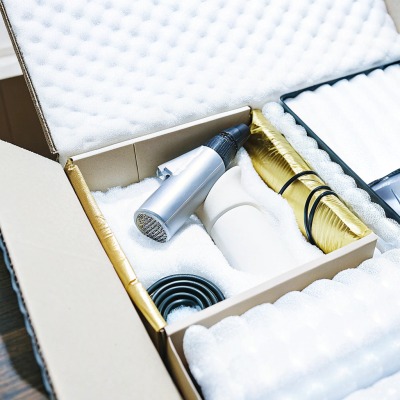
When we prepare our medical devices for export, receiving a damaged return due to poor transit handling is our worst nightmare. medical devices for export 1 Protecting high-value electronics requires more than just a cardboard box.
To ensure compliance, you must verify that suppliers use ISTA-certified testing protocols and multi-layered protection systems. This includes electrostatic shielding, custom-molded EPE foam cushioning, and high-strength double-walled corrugated outer cartons that meet ISO 11607 standards for maintaining device integrity during complex international logistics chains.
Here is exactly how you can audit your supplier’s packaging strategy to prevent costly damages.
What specific packaging materials provide the best protection for my shockwave therapy machines?
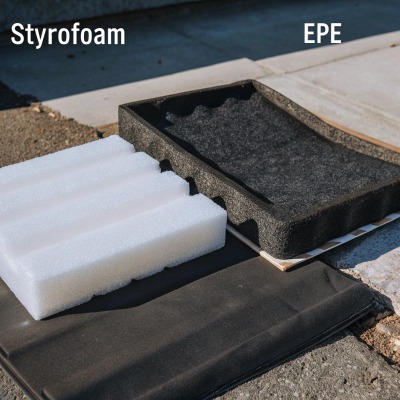
In our production facility, we see how standard Styrofoam cracks under pressure, risking the sensitive touchscreens on our shockwave units. standard Styrofoam cracks under pressure 2 Using the wrong internal cushioning is the primary cause of transit damage.
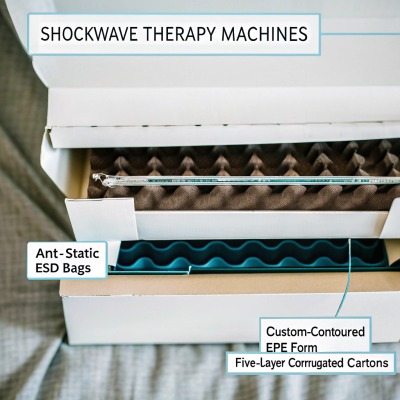
The best protection comes from a three-layer system: an anti-static ESD bag for the electronics, high-density custom-contoured EPE foam to absorb shock without cracking, and a rigid, five-layer corrugated fiberboard outer carton that resists crushing forces and moisture penetration during sea freight.
The Importance of Layering
When importing delicate medical equipment like shockwave therapy machines shockwave therapy machines 3, relying on a single layer of protection is a recipe for disaster. The device features a blue casing and a sensitive touchscreen display showing anatomical diagrams. If a heavy object falls on the box during shipping, or if the box is dropped, that screen is the first thing to break.
We strongly advise focusing on the "Internal Suspension" method. The machine should not touch the outer walls of the box. Instead, it must "float" inside a protective shell.
Primary Layer: Electrostatic Discharge (ESD) Protection
The first line of defense is not against impact, but against electricity. Friction during transport generates static.
- ESD Shielding Bags: The main unit must be wrapped in a metallized anti-static bag. This protects the high-voltage circuitry and the touchscreen controller from electrostatic discharge.
- Desiccants: We always place silica gel packets inside this layer to control humidity, especially for shipments crossing the ocean where salt air and temperature fluctuations cause condensation.
Secondary Layer: Shock Absorption Materials
This is where many suppliers cut costs. You might see generic Styrofoam (EPS), but this is dangerous Styrofoam (EPS) 4 for heavy devices.
- EPE Foam (Expanded Polyethylene): This is the gold standard. It has "memory," meaning it compresses to absorb a shock and then returns to its original shape. It does not crack.
- Custom Molding: The foam must be cut to the exact shape of the machine and the handheld applicator. If the silver-accented applicator is loose, it becomes a projectile inside the box that can shatter the main screen.
Outer Layer: Structural Integrity
The exterior box faces the harshest conditions, from forklifts to stacking pressure.
- Double-Wall Corrugated Board: We use K=K (Kraft paper) hardness standards. This ensures the box can support the weight of other boxes stacked on top of it in a container.
- Waterproof Lining: A plastic wrap around the exterior box prevents water damage during rain at ports.
Material Comparison Table
To help you specify the right materials in your purchase contract, refer to this comparison.
| Material Type | Shock Absorption | Durability | Recommended Use |
|---|---|---|---|
| EPE Foam | Excellent (Multi-impact) | High (Does not crack) | Required for main unit and applicator. |
| EPS (Styrofoam) | Poor (Single relying on a single layer of protection 5 impact) | Low (Brittle/Crumbles) | Avoid for high-value medical electronics. |
| Bubble Wrap | Moderate | Low (Bubbles pop) | Acceptable only for small accessories/cables. |
| Corrugated (Single) | Low | Low | Only for lightweight inner accessory boxes. |
| Corrugated (Double) | High | High | Required for the main shipping carton. |
How do I verify that the packaging has passed rigorous drop and vibration tests?
Our engineers have learned that a package looking strong on a table often fails when subjected to the constant low-frequency rumbling of a truck engine. low-frequency rumbling of a truck engine 6 Static inspections cannot reveal these hidden structural weaknesses.
You must request a formal test report based on ISTA 2A or 3A standards, which simulates real-world distribution hazards. Specifically, verify the supplier performs random vibration testing and rotational edge drop tests to ensure the internal screen and applicator remain secure under dynamic stress.
Understanding the Testing Standards
It is common for buyers to ask for a "drop test," but a simple drop is rarely enough. International shipping involves complex hazards. The International Safe Transit Association (ISTA) sets the global benchmark. International Safe Transit Association (ISTA) 7 When you negotiate with a supplier, you need to be specific about which test protocol they follow.
ISTA 1 Series vs. 3 Series
- ISTA 1A/2A: These are "integrity tests." They are good for a baseline check. They involve dropping the box from a certain height and vibrating it at a fixed frequency.
- ISTA 3A: This is a "simulation test." It mimics the actual vibrations of a delivery truck, an airplane, and a forklift. For high-end shockwave machines with sensitive touchscreens, we prefer the 3 Series protocols because they account for the random vibrations that loosen internal screws.
The "Blue Box" Challenge
Your specific device has a touchscreen showing a human skeleton diagram. This component is most vulnerable to flat drops (landing flat on a side).
- Face-Down Test: The packaging must be tested dropping flat on the face. The foam depth must be sufficient so the screen never feels the impact.
- Applicator Fixation: The vibration test often reveals that the heavy handheld applicator wiggles loose. If the test shows the applicator rotated or shifted, the mold design is failed.
Documentation to Request
Do not just take their word for it. Demand proof.
- Video Evidence: Ask the supplier to film the drop test. You want to see the box dropped on a corner, an edge, and a face.
- Unboxing After Test: The video must continue to show them opening the box and turning the machine on. The screen must light up and function immediately.
- Lab Reports: If your order volume is significant, ask for a third-party lab report (like SGS or Intertek).
Common Testing Protocols for Medical Devices
| Test Type | Purpose | Pass Criteria |
|---|---|---|
| Rotational Edge Drop | Simulates manual handling errors. | Box corners deform but do not burst; internal device unharmed. |
| Random Vibration | Simulates truck/air transport rumbling. | No internal screws loosen; applicator stays in foam slot. |
| Compression Test | Simulates warehouse stacking. | Box does not collapse under calculated top-load weight. |
| Atmospheric Conditioning | Simulates humidity/temp changes. | No moisture inside the ESD bag; no glue failure on box. |
Can I customize the packaging for my brand without compromising safety during international shipping?
When we collaborate with clients on OEM projects, they often worry that adding logos or changing box colors will weaken the cardboard structure. This balance between marketing and safety is critical.
You can customize packaging safely by applying branding to the outer sleeve or using high-quality printed stickers, rather than directly printing on the corrugated structure which might reduce its burst strength. Alternatively, invest in a litho-laminated box where a printed sheet is glued to the structural corrugated board.

The Structural Risks of Custom Printing
Branding is vital for your distribution business in the US. You want the clinic to see your logo, not a generic brown box. distribution business in the US 8 However, the method of printing matters.
- Direct Flexographic Printing: If the supplier presses too hard when printing your logo directly onto the cardboard, they crush the "flutes" (the wavy inner layer). This reduces the stacking strength of the box by up to 20%.
- Safe Alternatives: We recommend using a "shipping mark" sticker for logistics info and a separate, high-quality "brand label" or a full-color sleeve that slides over the plain brown box.
Customizing the Internal Experience
The safest place to brand is inside the box.
- User Manual & Guides: Place a branded folder right on top of the EPE foam. It acts as an extra buffer and is the first thing the customer sees.
- Foam Color: Standard EPE foam is white. You can request black or blue foam to match the device casing, but this usually requires a higher Minimum Order Quantity (MOQ).
- Applicator Slot: Since your device has a specific handheld applicator with blue and silver accents, the foam mold must be customized to fit this exact shape. A standard "universal" slot will not hold it tight enough.
Balancing Cost and Safety
Custom packaging adds cost, not just in printing but in shipping volume. shipping volume 9
- Volume Weight: If you design a fancy box that is too large, you will pay for "air" in shipping fees. The packaging should be compact.
- Molds: Creating a custom EPE foam mold costs money upfront (usually a few hundred dollars), but it is worth it for the protection.
Branding Options vs. Safety Impact
| Branding Method | Visual Impact | Structural Safety Risk | Cost Impact |
|---|---|---|---|
| Direct Print on Box | Moderate | Medium (Can crush flutes) | Low |
| Litho-Lamination | High (Glossy) | Low (Adds strength) | High |
| Branded Stickers | Low/Moderate | None | Very Low |
| Custom Sleeve | High | None | Moderate |
| Internal Branded Foam | High (Premium feel) | None | High (MOQ required) |
What details should I check during a pre-shipment inspection to ensure packaging integrity?
We routinely catch potential shipping disasters during our final warehouse checks, such as misaligned tape or missing handling labels. These small oversights can lead to customs holds or opened boxes.
During pre-shipment inspection, verify that the “Made in China” origin label is visible, the box is sealed with the “H-taping” method, and handling symbols like “Fragile” and “Keep Dry” are printed on at least two sides. Additionally, perform a “shake test” to ensure zero internal movement.
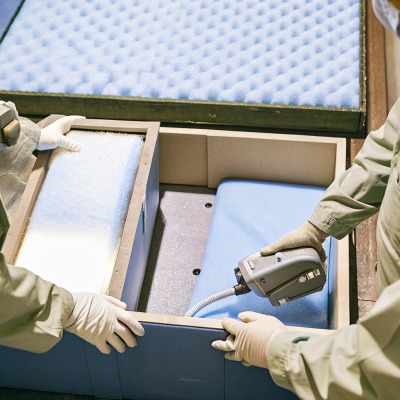
Visual Inspection Checklist
Before the goods leave the factory floor, you or your third-party inspector third-party inspector 10 must verify the external condition.
- Sealing Method: We use the "H-Tape" method. Tape is applied along the center seam and along the edges where the flaps meet the sides. This prevents the box from popping open if dropped.
- Strapping: For heavier medical machines, plastic strapping bands (2 or 4 bands) should be tightened around the box to secure the lid.
- No Bulging: The box should be perfectly rectangular. If it bulges, the foam is too tight or the box is too weak.
Labeling and Compliance
Customs issues can delay your shipment longer than production time.
- Country of Origin: For the US market, "Made in China" must be clear on the outer master carton.
- Lithium Batteries: If your shockwave machine is portable and contains a battery, the UN3481 label must be applied. Failure to do this will get the cargo rejected by airlines.
- Handling Marks: ISO 780 symbols (Umbrella for Keep Dry, Wine Glass for Fragile) are non-negotiable.
The Physical "Shake Test"
This is a simple but effective field test you can instruct an inspector to do.
- Lift the packed box.
- Shake it vigorously side-to-side and up-and-down.
- Result: There should be absolute silence. If you hear a "thud-thud," the machine is sliding inside. If you hear a "clatter," the applicator or power cord is loose. Loose items act like hammers during transit.
Pre-Shipment Inspection Points
| Inspection Area | Specific Check Point | Why it Matters |
|---|---|---|
| External Marks | "Made in China", Net/Gross Weight, Dim. | Required for US Customs clearance. |
| Sealing | H-Taping + Plastic Strapping | Prevents pilferage and accidental opening. |
| Structure | Corners are sharp, not crushed. | Indicates good storage before shipping. |
| Internal | Accessories (gel, manual) secured. | Loose accessories scratch the touchscreen. |
| Stability | Shake Test (No noise). | Prevents impact damage to the blue casing. |
Conclusion
Ensuring your shockwave therapy machines arrive safely requires enforcing strict material standards like EPE foam and double-wall cartons. By validating ISTA testing protocols and conducting thorough pre-shipment inspections of seals and labels, you protect your investment and reputation.
Footnotes
1. Official FDA guidelines for exporting medical devices to international markets. ↩︎
2. Background on the properties and limitations of Styrofoam in industrial packaging. ↩︎
3. Authoritative medical overview of shockwave therapy treatment and devices. ↩︎
4. Official manufacturer page for the trademarked material Styrofoam. ↩︎
5. Technical specifications for multi-layered protective packaging from a global manufacturer. ↩︎
6. Research on the effects of vehicle vibration on product packaging during transport. ↩︎
7. Official website of the organization setting the global packaging standards. ↩︎
8. Official resources from the International Trade Administration on exporting and distribution. ↩︎
9. Major logistics provider explaining volumetric weight calculations. ↩︎
10. Global leader in inspection and verification services. ↩︎

 English
  Español de México
  Deutsch
  Français
  العربية
  Русский