When we export our lymphatic drainage systems 1 to partners in Brazil or Chile, we frequently see shipments flagged due to classification errors. This uncertainty creates significant delays and financial risks for importers lacking the right data.
The most effective method is to request the standardized 6-digit international HS code 9019.10 from your supplier, then cross-reference it with the specific national tariff schedules of your South American destination, such as the NCM in Brazil, to ensure compliance with local medical device regulations.
Let’s explore the specific steps to validate these codes and secure your supply chain.
How do I verify the HS code my Chinese supplier provided for South American customs?
Our logistics team often assists clients in correcting codes before goods leave the factory, as a single mismatched digit can trigger weeks of inspection Nomenclatura Común del Mercosur (NCM) 2. Without independent verification, your capital remains tied up in customs indefinitely.
You must verify the code by checking the first six digits against the World Customs Organization standard and then consulting a local customs broker to confirm the final country-specific digits. Official databases like the Mercosur Common Nomenclature are essential for matching the supplier’s description with local tax categories.
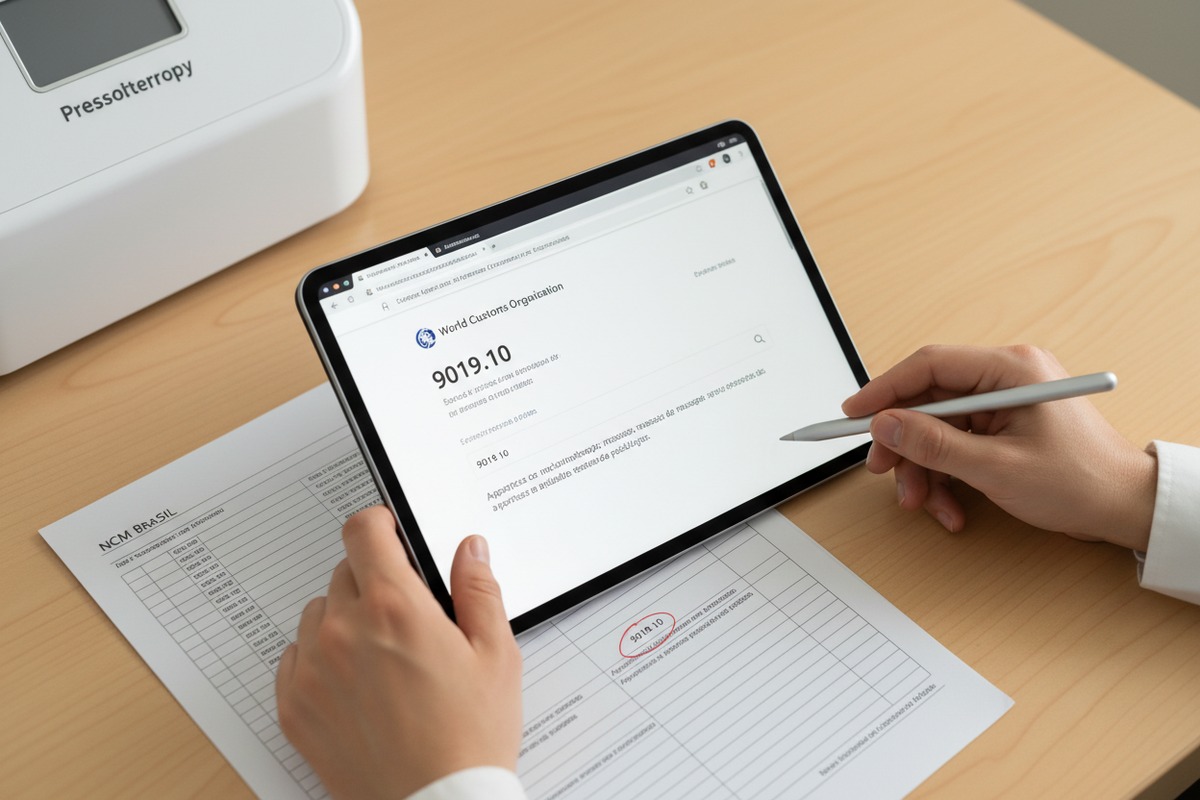
Validating the HS code provided by a Chinese supplier is not just a paperwork exercise; it is a critical step in cost control objective characteristics 3. In our experience manufacturing pressotherapy units, Chinese exporters typically use the Harmonized System (HS) code 4 9019.10 for "Mechano-therapy appliances." This is accurate for the export declaration in China. However, South American customs authorities often require a far more granular classification (8 to 12 digits) to determine the exact duty rate and non-tariff barriers.
Understanding the 6-Digit vs. 8-Digit Split
The first six digits of the HS code are universal. This means the code your supplier gives you (likely 9019.10) is the correct starting point. However, countries like Brazil, Argentina, and Colombia add extension digits to track specific goods. For example, in the Mercosur region (Brazil, Argentina, Paraguay, Uruguay), the system is known as the Nomenclatura Común del Mercosur (NCM).
If your supplier provides a generic code, you must translate it into the local NCM. Relying solely on the Chinese export code can lead to your pressotherapy machine being misclassified as a general massage device (often lower duty) or a specialized medical instrument (potentially higher duty or strict licensing).
Steps for Independent Verification
- Request the Export Code: Ask your supplier for the exact HS code they declare to Chinese Customs.
- Consult National Tariffs: Use the official customs site of your destination country (e.g., Receita Federal 5 for Brazil).
- Check for "Ex" Notations: Some countries have "Ex-tarifários" (tariff exceptions) that lower duties for capital goods not produced locally. A generic code might miss this benefit.
- Validate with a Broker: A local broker knows if "lymphatic drainage" triggers a medical classification (ANVISA/INVIMA) versus a cosmetic one.
The table below illustrates how the code evolves from the supplier to the destination.
Table 1: HS Code Evolution from China to South America
| Level | Code Example | Scope | Who Defines It? |
|---|---|---|---|
| Global Base | 9019.10 | Mechano-therapy; Massage apparatus | WCO (Global Standard) |
| Chinese Export | 9019.10.10 | Specific massage appliances | Chinese Customs |
| Brazil (NCM) | 9019.10.00 | Mechano-therapy appliances | Mercosur / Brazil |
| Colombia | 9019.10.00.00 | Massage apparatus | DIAN (Colombia) |
Will my private labeling change the HS code classification for my pressotherapy machines?
We frequently customize device casings and user interfaces for brands, yet clients worry that these aesthetic changes might alter import duties. This fear of reclassification is understandable but generally based on a misunderstanding of customs rules.
Private labeling typically does not change the HS code because classification is based on the machine’s technical function and internal mechanism rather than its external branding. However, if branding claims alter the “intended use” from aesthetic to medical, it might trigger a shift from massage apparatus to medical equipment.
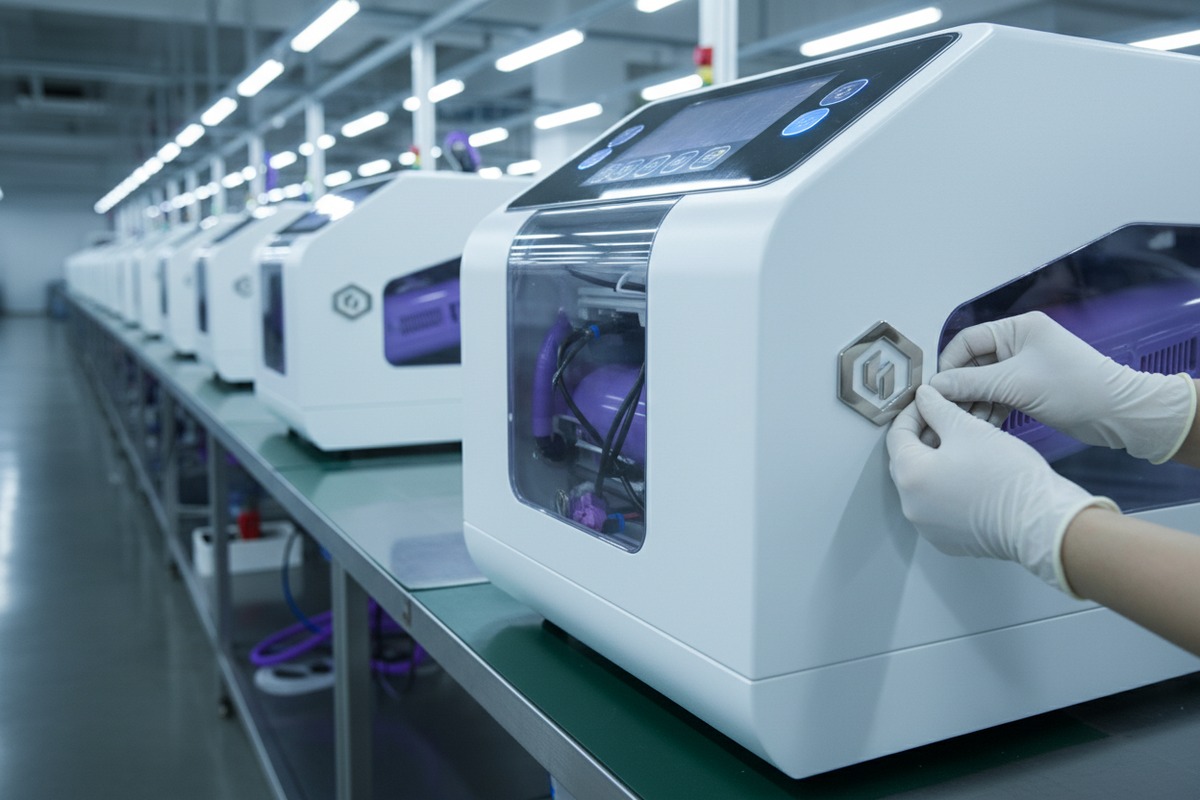
Many of our clients assume that putting a premium brand name on a machine changes its legal status. Generally, the HS code is determined by the objective characteristics of the product—how it works and what it is physically built to do—not by the logo printed on the front. A pressotherapy machine functions by pumping air into chambers to create compression. Whether that machine is branded "Luxury Spa Pro" or "Medical Rehab X," the mechanism remains a pneumatic compression pump.
The Risk of "Intended Use"
However, there is a nuance. While the logo doesn't matter, the labeling and manual text do. If your private label packaging explicitly claims "treatment of venous thrombosis" or "medical rehabilitation," customs officers in countries like Brazil or Peru may push to classify the device under a stricter medical heading (like 9018) rather than the general mechano-therapy heading (9019).
- Aesthetic Labeling: Focuses on "relaxation," "body contouring," and "drainage." This usually keeps the device safely in 9019.10.
- Medical Labeling: Focuses on "curing diseases," "post-surgical recovery," or "circulatory disorders." This invites scrutiny.
Strategic Branding for Customs
When we develop OEM products, we advise clients to ensure their user manuals and packaging align with the HS code they plan to use. If you declare a "massage apparatus" (9019) but your box says "Medical Grade Surgical Tool," you create a discrepancy that customs inspectors will flag. The physical product is the same, but the presentation can force a reclassification.
Table 2: Impact of Branding Claims on HS Classification
| Feature | Aesthetic Branding (Safe for 9019.10) | Medical Branding (Risk of Reclassification) |
|---|---|---|
| Product Name | Body Contouring System | Lymphedema Therapy Unit |
| Manual Keywords | Relaxation, Wellness, Massage | Treatment, Diagnosis, Cure |
| Target User | Beauty Salons, Spas | Hospitals, Clinics |
| Risk Level | Low (Standard Duty) | High (Requires Health Registration) |
What specific questions should I ask my supplier to ensure the HS code is accurate?
During our production meetings, we prepare detailed specification sheets, yet many buyers never ask for the technical details that actually define classification. This oversight leaves you vulnerable to customs brokers guessing the wrong code.
Ask your supplier to provide the specific 6-digit HS code they use for export and request the “Principal Function” description they list on commercial invoices. You must also ask if the device contains any electro-stimulation features, as this often forces a reclassification from mechanical therapy to electro-medical devices.

When communicating with suppliers in China, vague questions lead to vague answers. If you simply ask, "What is the HS code?", we might give you the one that is most convenient for Chinese export rebates, which isn't necessarily the one that matches your local import laws. To get actionable data, you need to ask specific questions that dig into the technical nature of the device.
The "Principal Function" Rule
Customs classification often relies on the "Principal Function 6" of a device. Pressotherapy is mechanical (air pressure). However, some modern machines are hybrids, combining air pressure with EMS (Electrical Muscle Stimulation) or Infrared heat.
- If the machine only does air compression, it is 9019.10.
- If the machine adds electrical stimulation, it might shift to 9018.90 (Electro-medical instruments), which can attract different duties and stricter certifications.
Essential Question Checklist
You need to confirm exactly what the machine does to defend your classification. Send these questions to your supplier to create a paper trail that supports your customs declaration.
- "Does this machine rely solely on pneumatic compression, or does it include electrical currents for therapy?" (Distinguishes 9019 from 9018).
- "How do you describe this product on the Chinese Certificate of Origin?" (Ensures consistency between export and import docs).
- "Are the accessories (boots, suits) detached or permanently fixed?" (Sometimes accessories are classified separately if shipped as spares).
Table 3: Supplier Questionnaire for HS Code Validity
| Question Category | Specific Question to Supplier | Why It Matters |
|---|---|---|
| Functionality | "Is the therapy mechanical (air) or electrical?" | Determines 9019 (Mechano) vs. 9018 (Electro-medical). |
| Documentation | "Can you list the HS code on the Proforma Invoice?" | Locks the supplier into a written declaration early on. |
| Hybrid Features | "Does it include infrared heating pads?" | Heating elements can sometimes trigger "electrical heating" classifications (8516) in rare cases. |
What technical documents should I request from my supplier to avoid customs delays?
We maintain a strict archive of technical files because missing a single circuit diagram can cause rejection by agencies like ANVISA or INVIMA. Failing to secure these documents beforehand guarantees administrative headaches and potential cargo seizure.
You should request a detailed commercial invoice with the HS code clearly stated, a technical data sheet describing the compression mechanism, and a Certificate of Origin to potentially reduce duties. For South America, specifically ask for valid ISO 13485 certificates and internal test reports to support medical registration requirements.

Documentation is the bridge between the physical product and the customs officer's approval. In South America, bureaucracy is notoriously strict. A simple invoice is rarely enough. When sourcing from us or any other manufacturer, you must compile a "technical dossier" before the ship even sails.
The Role of the Technical Data Sheet
The most overlooked document is the Technical Data Sheet (TDS). Customs officers are not engineers. If they see a complex machine, they might assume it is high-tech medical gear subject to high taxes. A clear TDS that explains the "working principle" as simple air compression helps demystify the product. It proves the device fits the definition of "mechano-therapy" under HS 9019.10.
Country-Specific Requirements
- Brazil (ANVISA): You need the manufacturer's Good Manufacturing Practice (GMP) or ISO 13485 certificate 7. The HS code 9019.10 is linked to ANVISA's database. If the manufacturer isn't registered, the goods are blocked.
- Certificate of Origin (CO): China has trade agreements with several nations (e.g., Chile, Peru). A valid CO can reduce your import duty from 15% to 0%. However, the HS code on the CO must match the HS code on your import declaration exactly.
Document Checklist for Customs Clearance
Ensure your supplier provides these digital copies before you pay the balance:
- Commercial Invoice: Must list the HS code (first 6 digits) and detailed description.
- Packing List: identifying net/gross weight accurately.
- Technical Manual: In English (and preferably Portuguese/Spanish).
- Test Reports: IEC safety reports (e.g., IEC 60601 8) to prove safety compliance if questioned.
Conclusion
Successfully importing pressotherapy machines into South America requires more than just finding a supplier; it demands a proactive approach to classification and documentation. By validating the 9019.10 HS code, clarifying your branding strategy, asking the right technical questions, and securing a complete document dossier, you can navigate complex customs regulations with confidence. This preparation ensures your products move smoothly from our production line to your clients, avoiding costly delays and unexpected fines.
Footnotes
1. Provides information on the human lymphatic system and its function. ↩︎
2. Official decree related to the Mercosur Common Nomenclature for trade classification. ↩︎
3. Explains that customs classification is based on a product’s inherent features. ↩︎
4. Official overview of the international Harmonized System for classifying goods. ↩︎
5. Official website of the Brazilian federal revenue service, responsible for customs. ↩︎
6. This article from Skill Dynamics explicitly addresses the concept of ‘primary purpose’ or ‘principal function’ in the context of HS code classification, which is a direct match for the anchor text. ↩︎
7. Information on the international standard for quality management systems for medical devices. ↩︎
8. Wikipedia overview of the international standard for medical electrical equipment safety. ↩︎

 English
  Español de México
  Deutsch
  Français
  العربية
  Русский