When our production team ships shockwave therapy machines overseas, we hear one concern repeatedly from US buyers: “What happens when something breaks?” Clinic downtime means lost revenue, frustrated patients, and damaged reputation FDA registration 1. Yet many suppliers dodge this question or offer vague promises.
To properly evaluate US repair networks, ask suppliers for documented proof of authorized service centers, certified technicians, guaranteed response times, spare parts availability, and warranty terms. Request references from existing US clients and verify technician certifications directly before signing any agreement.
This guide walks you through the exact questions to ask, red flags to watch for, and negotiation tactics that protect your investment. Let’s dive into the specifics.
How do I verify if a Chinese supplier truly has a functional repair network within the US?
Every month, we receive calls from frustrated clinic owners who bought shockwave machines with "US support" promises that turned out to be empty. The supplier's website showed American phone numbers, but calls went to voicemail. This verification problem costs buyers thousands in downtime.
Verify a supplier's US repair network by requesting a list of service center addresses, technician credentials, and three to five US client references. Call these references directly. Ask for service contracts, response time guarantees, and proof of spare parts inventory stored within the United States.

Start With Physical Locations
Many Chinese suppliers claim US partnerships but cannot provide specific addresses. Ask for the exact street addresses of their service centers. A legitimate network should have at least two to three locations covering major regions like the East Coast, West Coast, and Central US.
Once you have addresses, verify them. Use Google Maps to confirm the locations exist. Call the centers directly and ask if they service your specific shockwave machine brand. Some suppliers list general medical equipment repair shops as "partners" without formal agreements.
Request Client References
A supplier confident in their US network will gladly provide references. Ask for at least three US-based clients who have used their repair services in the past 12 months. When you contact these references, ask specific questions:
| Question to Ask Reference | Why It Matters |
|---|---|
| How long did your last repair take? | Reveals actual turnaround time versus promised time |
| Did they have spare parts in stock? | Shows inventory preparedness in US |
| Were technicians knowledgeable about your exact model? | Indicates proper training on specific equipment |
| Did repair costs match quoted prices? | Uncovers hidden fees or bait-and-switch tactics |
| Would you use them again? | Overall satisfaction indicator |
Check Certification Documentation
Legitimate repair networks employ technicians with manufacturer certifications 2. Request copies of these certificates. Verify they are current and issued by recognized training programs. For shockwave therapy machines, certifications from Storz Medical 3, Chattanooga, or the specific OEM carry weight.
Watch for Red Flags
Several warning signs indicate a weak or nonexistent US repair network:
- Supplier hesitates when asked for specific addresses
- References are all from the same city or region
- No documented service level agreements 4 available
- Technicians have generic medical equipment certifications only
- Parts must be shipped from China for every repair
Our engineering team has seen cases where suppliers claimed "nationwide coverage" but actually outsourced to one independent repair shop in California. When that shop closed, their entire "network" disappeared.
What specific questions should I ask to ensure my shockwave therapy machines get fast local service?
At our factory, we test every shockwave handpiece 5 before shipping, but components still wear out over time. Clinic owners tell us their biggest fear is a machine failure during a busy treatment day. The right questions upfront prevent weeks of downtime later.
Ask suppliers about average repair turnaround time, emergency response protocols, loaner unit availability, on-site versus ship-in service options, and parts inventory levels in the US. Get these commitments in writing with penalties for missed deadlines.
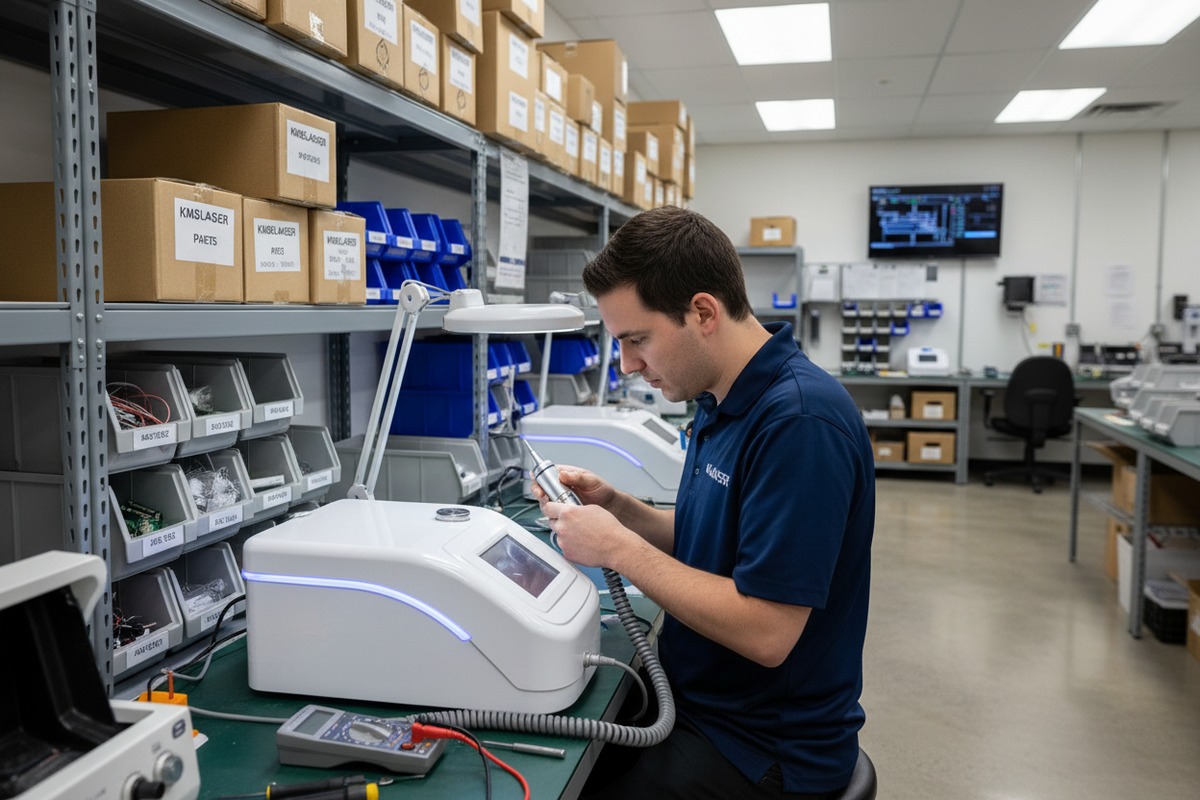
Response Time Questions
The first hours after a breakdown determine your downtime costs. Structure your questions around specific timelines:
| Service Metric | Question to Ask | Acceptable Answer |
|---|---|---|
| Initial response | How quickly will a technician contact me after I report an issue? | Within 4 hours during business days |
| Diagnosis time | How long to determine if repair is needed? | Remote diagnosis within 24 hours |
| On-site arrival | If on-site service is needed, when will a technician arrive? | Within 48-72 hours for major metros |
| Repair completion | What is your average total repair turnaround? | 5-7 business days for standard repairs |
Parts Availability Questions
Parts shortages cause the longest delays. When we design our machines, we stock critical components in multiple locations. Ask your supplier:
- Which spare parts do you stock in US warehouses?
- What is the lead time for parts not stocked locally?
- Can I purchase backup handpieces or transmitters to keep on site?
- How often do you audit your US parts inventory?
Emergency Protocol Questions
Equipment failures rarely happen at convenient times. Understand what happens during emergencies:
- Do you offer 24/7 emergency support lines?
- Is weekend or after-hours service available?
- What additional costs apply for emergency calls?
- Do you provide loaner units 6 during extended repairs?
Some suppliers like Kinas advertise 24-hour emergency assistance. Others require you to wait until Monday morning. Know the difference before you need help.
Service Coverage Questions
Geographic coverage varies widely. Ask:
- Which US states have on-site service capability?
- For areas without coverage, what are ship-in repair procedures?
- Who pays shipping costs for repairs?
- Do you have mobile technicians who travel to clinics?
Our experience shows that suppliers with factory-direct models sometimes struggle with service scalability. Distributors like Vale or JAG often have broader networks because service is their primary business model.
Documentation Requirements
Verbal promises mean nothing during a dispute. Require written documentation for:
- Service level agreements with specific timeframes
- Penalty clauses for missed deadlines
- Scope of coverage including labor and parts
- Exclusions and conditions that void coverage
How can I negotiate the cost of spare parts and labor within my US-based warranty agreement?
We price our shockwave machines competitively, but we also know that post-sale costs can exceed the original purchase price over a machine's lifetime. Smart buyers negotiate these costs before signing, not after a breakdown when they have no leverage.
Negotiate spare parts and labor costs by requesting itemized pricing lists, comparing quotes from multiple suppliers, bundling service contracts with equipment purchases, and locking in fixed rates for common repairs. Demand caps on annual maintenance costs and include price escalation limits in multi-year agreements.
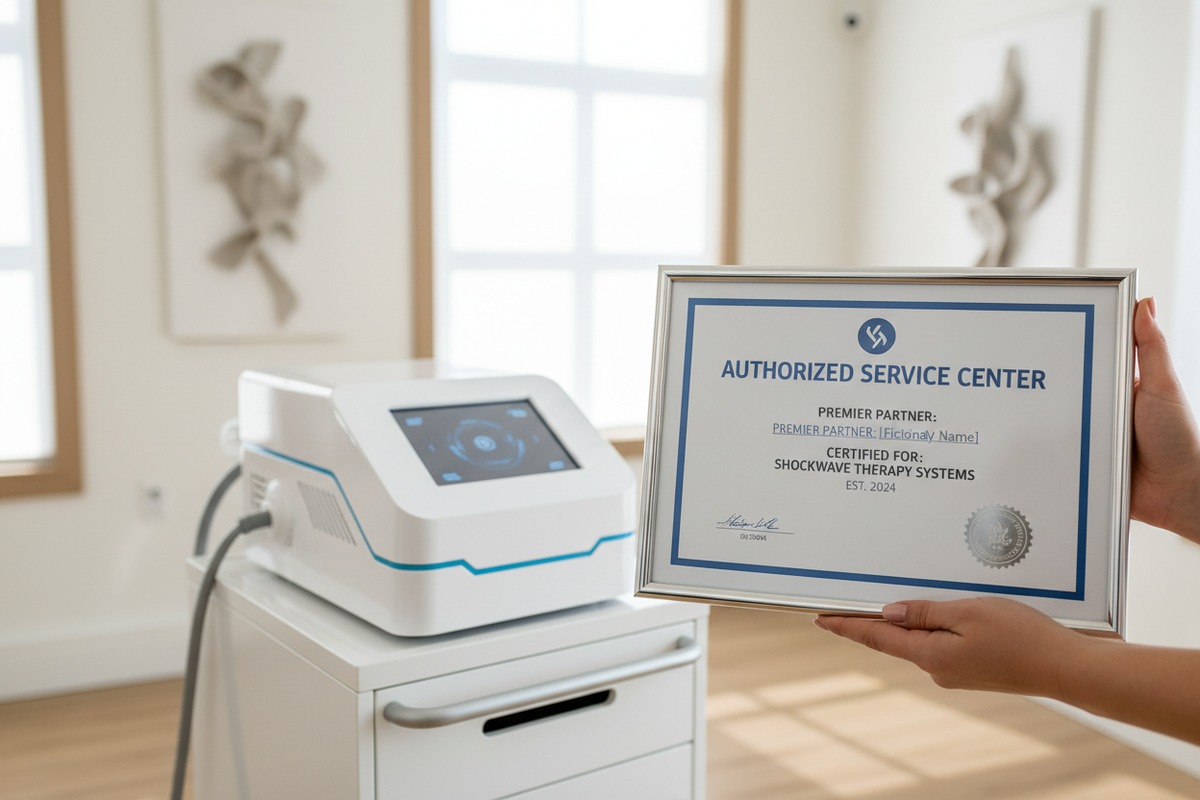
Understand the True Cost Structure
Before negotiating, understand what drives repair costs. Shockwave therapy machines have several cost categories:
| Cost Category | Typical Range | Negotiation Opportunity |
|---|---|---|
| Handpiece replacement | $800-$2,500 | Bundle with purchase, volume discounts |
| Transmitter repairs | $400-$1,200 | Include in warranty extension |
| Labor (per hour) | $150-$300 | Fixed rate agreements |
| Travel fees | $200-$500 | Eliminate for nearby service centers |
| Calibration service | $300-$600 | Include in annual maintenance package |
Bundling Strategies
Suppliers are most flexible during initial negotiations. Use this leverage:
Extended warranty bundles: Ask for two or three years of coverage instead of the standard one year. Our production costs for warranty service decrease over time, so suppliers can often offer extended coverage at minimal additional cost.
Spare parts packages: Purchase backup handpieces at discounted rates when buying the main unit. Some electromagnetic and pneumatic systems from manufacturers like Chattanooga 7 feature constant energy handpieces that reduce replacement frequency.
Training and service bundles: Combine operator training with service contracts. Suppliers like Kinas and JAG offer comprehensive packages that include both.
Price Lock Provisions
Parts and labor costs increase over time. Protect yourself with contractual provisions:
- Maximum annual price increase percentages (typically 3-5%)
- Fixed pricing for specific components over the warranty period
- Price matching clauses if supplier offers better rates to other buyers
- Caps on total annual maintenance expenditure
Leasing Considerations
Leasing models increasingly include embedded service. For example, Oceanus offers their PhysioPRO at approximately $500 per month with warranty and support included. Compare total cost of ownership:
| Ownership Model | Initial Cost | Annual Service Cost | 5-Year Total |
|---|---|---|---|
| Purchase + separate service | $15,000 | $2,000 | $25,000 |
| Purchase + bundled service | $17,000 | $1,200 | $23,000 |
| Lease with included service | $0 | $6,000 | $30,000 |
The best option depends on your cash flow and usage volume.
Hidden Cost Traps
Watch for costs that suppliers hide in fine print:
- Shipping charges for parts or equipment
- "Diagnostic fees" that apply even for warranty repairs
- Charges for software updates or calibration certificates
- Travel expenses that add hundreds to each service call
- Premium rates for "expedited" service that should be standard
Our quality control team documents every component in our machines. Request similar documentation from your supplier so you know exactly what parts cost before they need replacement.
What proof should I demand to confirm my supplier's US technicians are properly trained on my equipment?
When our engineers design a new shockwave machine model, we create specific training protocols because generic medical equipment knowledge is not enough. Technicians who lack model-specific training cause more damage than they fix. We have seen it happen.
Demand copies of technician certification certificates, training completion records, and ongoing education documentation. Verify certifications directly with the issuing organization. Ask about training frequency, hands-on requirements, and whether technicians have serviced your exact model and software version.

Types of Certifications to Verify
Not all certifications carry equal weight. Understand the hierarchy:
Manufacturer certifications: The gold standard. Issued by the OEM after completing brand-specific training. Examples include Storz Medical certification for focused ESWT systems or Chattanooga certification for Intelect and RPW units.
Distributor certifications: Companies like Vale and PCT train their technicians on specific product lines they represent. These are legitimate but limited to particular brands.
Generic biomedical certifications: Certifications like CBET (Certified Biomedical Equipment Technician 8) demonstrate general competence but not shockwave-specific expertise.
Verification Process
Do not trust certificates alone. Verify them:
| Verification Step | How to Complete | What to Look For |
|---|---|---|
| Contact issuing organization | Call or email the training provider | Confirm certificate is valid and current |
| Request training dates | Ask for completion records | Training within past 2 years |
| Check model coverage | Verify specific equipment models covered | Your exact model listed |
| Confirm hands-on component | Ask about practical training requirements | Physical repair experience, not just classroom |
Questions About Ongoing Training
Medical equipment evolves. Software updates, new handpiece designs, and revised calibration procedures require updated training. Ask:
- How often do your technicians receive refresher training?
- How do you handle training for software updates or new accessories?
- Are your technicians required to maintain certifications?
- What happens if a technician's certification lapses?
Model-Specific Expertise
Shockwave therapy machines vary significantly. Radial systems use pneumatic or electromagnetic mechanisms. Focused systems use piezoelectric or electrohydraulic technology. Each requires different repair skills.
| Machine Type | Technology | Common Repair Issues | Required Expertise |
|---|---|---|---|
| Radial pneumatic | Compressed air-driven projectile | Handpiece wear, air compressor maintenance | Pneumatic systems, impact mechanics |
| Radial electromagnetic | Coil-driven applicator | Coil revisions, transmitter failures | Electronics, coil replacement |
| Focused piezoelectric | Ceramic crystal arrays | Crystal degradation, focusing accuracy | Precision calibration, high-voltage systems |
| Focused electrohydraulic | Spark gap in water | Electrode wear, membrane replacement | Hydraulic systems, electrode timing |
Ask if your supplier's technicians have specific training on your machine's technology type, not just the brand name.
Red Flags in Training Documentation
Watch for these warning signs:
- Certificates older than three years without renewal
- Training from unknown or unverifiable organizations
- No hands-on practical component documented
- Generic "medical device" training without shockwave specificity
- Reluctance to provide verification contact information
Compliance Considerations
Properly trained technicians matter for regulatory compliance. FDA and ISO 13485 standards require documented training for personnel who service medical devices. If your supplier cannot prove technician training, repairs may void your device's regulatory standing.
Our production facility maintains ISO 13485 certification 9 and FDA registration. We require similar documentation standards from any service partners. Demand the same from your supplier.
Conclusion
Asking the right questions about US repair networks separates smart buyers from those who face costly downtime. Verify service centers, demand written SLAs, negotiate costs upfront, and confirm technician training. Your due diligence today prevents expensive problems tomorrow.
Footnotes
1. Official FDA guidance on registration and listing requirements for medical device establishments. ↩︎
2. Explains the importance and types of professional certifications in the medical device industry. ↩︎
3. Official website of Storz Medical, a leading manufacturer of shockwave therapy devices. ↩︎
4. Defines Service-Level Agreements (SLAs) specifically within the medical device industry context. ↩︎
5. Explains the function and types of handpieces/transmitters used in shockwave therapy. ↩︎
6. Describes the purpose and operation of medical equipment loan programs for patients. ↩︎
7. Replaced with the official brand page for Chattanooga on the parent company’s (Enovis) website, which mentions shockwave therapy. ↩︎
8. Provides official information on the Certified Biomedical Equipment Technician (CBET) certification from AAMI. ↩︎
9. Explains ISO 13485 as the international standard for quality management systems in medical device industry. ↩︎

 English
  Español de México
  Deutsch
  Français
  العربية
  Русский