
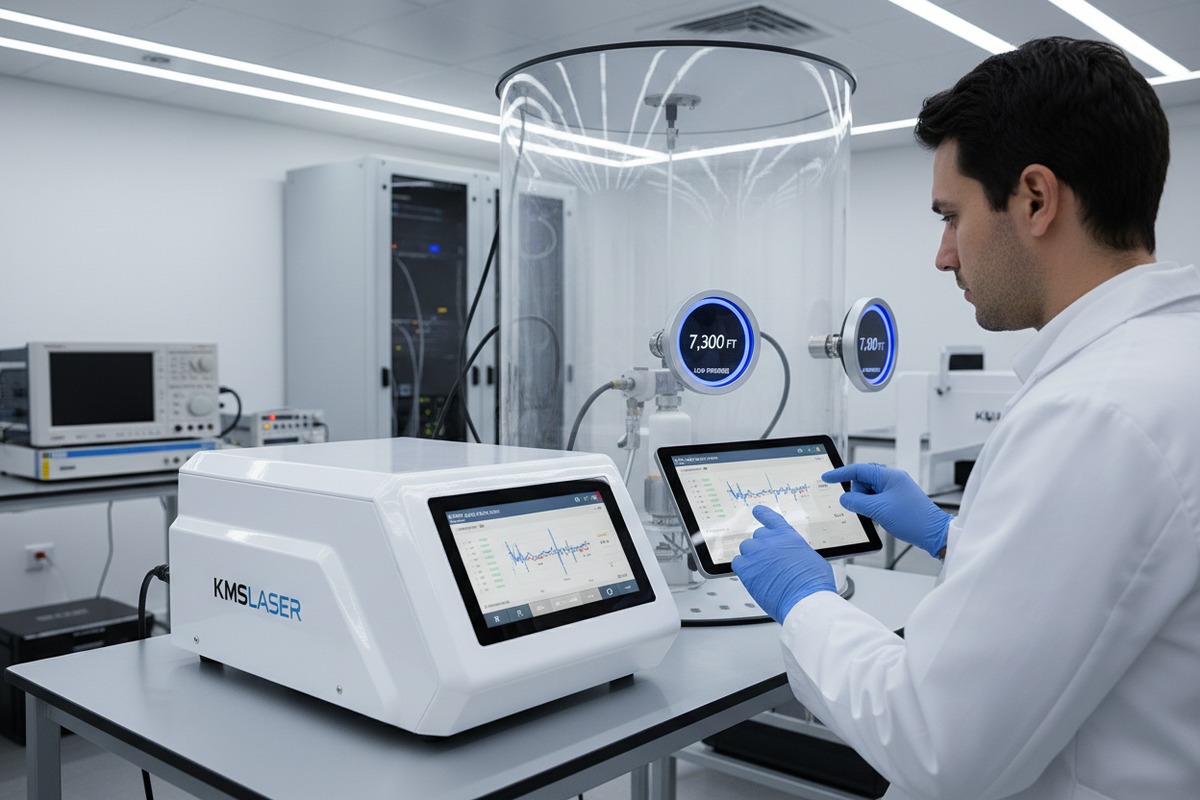
When our engineering team first received feedback from a clinic in Mexico City, we discovered a problem nobody talks about altitude chamber simulations 1. Their shockwave therapy machine 2 was losing power. The treatment results were inconsistent. Patients complained. The culprit? Altitude. At 7,300 feet above sea level, the thin air was starving the pneumatic system 3.
To properly evaluate altitude performance, ask suppliers for specific test data from altitude chamber simulations, inquire about the energy generation type (pneumatic versus electromagnetic), request energy output stability metrics at elevations between 2,000 and 10,000 feet, and demand documentation of component durability under varying atmospheric pressures.
This guide will walk you through the exact questions to ask your supplier. You will learn how to spot red flags and protect your investment. Let us dive into the details.
How can I verify that your shockwave therapy machines maintain consistent output pressure at high altitudes?
Our quality control lab runs machines through pressure simulations daily. We have seen firsthand how altitude affects different technologies. The difference between a reliable machine and a problematic one often comes down to one factor: how it generates shockwaves.
Request altitude chamber test reports showing energy flux density readings at multiple elevations. Ask whether the machine uses pneumatic or electromagnetic generation. Pneumatic systems may lose 10-20% efficiency above 5,000 feet, while electromagnetic and piezoelectric systems maintain stable output regardless of atmospheric pressure changes.

Understanding Energy Generation Types
The way a shockwave machine creates its therapeutic waves determines everything about altitude performance. There are two main categories you need to understand.
Radial pressure wave machines use pneumatic or ballistic systems. They compress air to fire a projectile against an applicator. This creates the shockwave. The problem is simple: at high altitudes, air density drops approximately 3% for every 1,000 feet of elevation. Less dense air means less compression. Less compression means weaker shockwaves.
Focused ESWT machines use electromagnetic or piezoelectric technology 4. They do not rely on compressed air. They generate acoustic waves through electrical impulses. These machines perform consistently whether you are at sea level or on a mountain.
Key Questions for Your Supplier
When you contact suppliers, ask these specific questions:
- What type of energy generation does your machine use?
- Have you tested output pressure at elevations above 5,000 feet?
- Can you provide before-and-after pressure readings from altitude testing?
- What is the maximum elevation at which your machine maintains full specifications?
Performance Comparison Table
| Generation Type | Altitude Sensitivity | Recommended Elevation Range | Energy Stability |
|---|---|---|---|
| Pneumatic/Ballistic | High | 0-4,000 feet | May drop 10-20% above 5,000 ft |
| Electromagnetic | Low | 0-15,000 feet | Consistent across elevations |
| Piezoelectric | Low | 0-15,000 feet | Consistent across elevations |
| Electroacoustic | Low | 0-15,000 feet | Consistent across elevations |
Our factory tests every electromagnetic unit at simulated altitudes of 10,000 feet. We document the results. A trustworthy supplier should provide this documentation without hesitation.
What testing data can you provide to prove my equipment will perform reliably in high-elevation cities?
When we ship units to distributors in Denver, Bogotá, or Addis Ababa, we include specific test certificates. These documents show exactly what the machine can do under reduced atmospheric pressure. Without this data, you are buying blind.
Demand altitude chamber simulation reports, energy flux density measurements at various elevations, frequency stability documentation, and compressor performance data under low-pressure conditions. Reliable suppliers provide test certificates showing output consistency at 2,000, 5,000, and 10,000 feet above sea level.

What Test Data Should Include
A complete altitude performance report should contain several key metrics. Do not accept vague promises. Ask for numbers.
Energy flux density 5 is the most important measurement. This tells you how much therapeutic energy reaches the treatment area. For focused machines, look for readings between 0.01 and 0.55 mJ/mm². For radial machines, expect 0.3 to 5.0 bar of pressure. These numbers should remain stable across different test elevations.
Frequency stability matters too. High-performance machines operate between 1 and 25 Hz. At altitude, some machines struggle to maintain higher frequencies. Ask for frequency test data at your target elevation.
Sample Data Request Template
Send this to your supplier:
"Please provide the following documentation:
- Altitude chamber test certificate for [model name]
- Energy output readings at sea level, 5,000 ft, and 10,000 ft
- Frequency stability report across all test elevations
- Compressor efficiency data under reduced atmospheric pressure
- Any clinical trial results from high-elevation facilities"
Essential Test Metrics Table
| Test Parameter | Sea Level Baseline | 5,000 ft Target | 10,000 ft Target |
|---|---|---|---|
| Energy Flux Density | 0.01-0.55 mJ/mm² | Within 95% of baseline | Within 90% of baseline |
| Operating Frequency | 1-25 Hz | Full range maintained | Full range maintained |
| Pressure Output (Radial) | 0.3-5.0 bar | Within 90% of baseline | Within 80% of baseline |
| Compressor Efficiency | 100% | 90-95% | 80-90% |
Red Flags to Watch For
Be cautious if a supplier:
- Claims altitude has no effect on any machine type
- Cannot provide written test data
- Offers only verbal assurances
- Has no experience exporting to high-altitude regions
Our engineering team has learned that suppliers who test rigorously are happy to share results. Those who do not test will avoid the conversation.
Can your engineers customize the pneumatic systems to prevent performance degradation at different atmospheric pressures?
Our R&D department has spent years solving this exact problem. When a client in La Paz, Bolivia needed reliable performance at 11,900 feet, we had to rethink our approach. Customization is possible, but it requires engineering expertise and honest communication from your supplier.
Yes, experienced manufacturers can customize pneumatic systems by upgrading compressors for low-pressure environments, adjusting pressure regulators, recalibrating energy delivery algorithms, and modifying sealed component specifications. Request detailed engineering proposals and cost estimates for altitude-specific modifications.
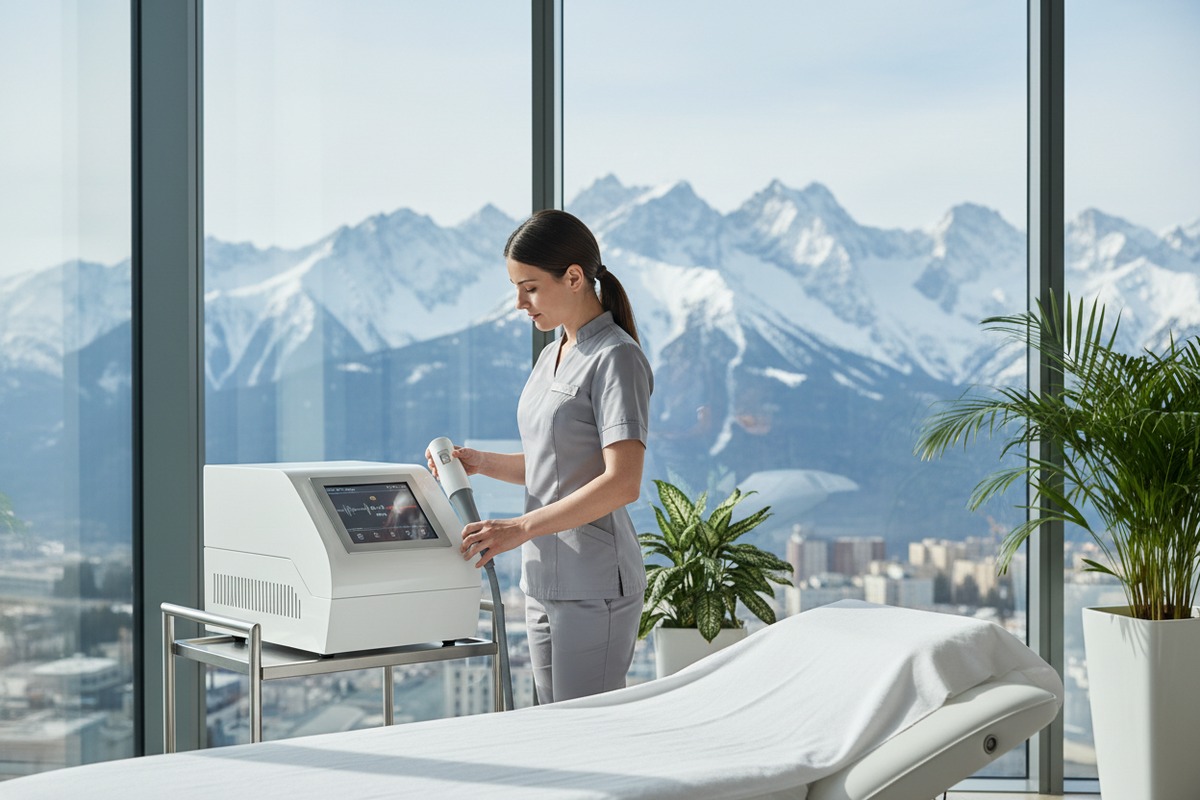
Customization Options for Pneumatic Systems
If you prefer pneumatic technology for its adjustable power range (10-190 mJ) and versatility, customization can compensate for altitude effects.
Compressor upgrades are the most common solution. Standard compressors struggle when air density drops. A high-altitude compressor has larger displacement and stronger motors. It works harder to achieve the same compression ratio.
Pressure regulator recalibration adjusts the baseline settings. At sea level, a regulator set for 3 bar delivers 3 bar. At 8,000 feet, the same setting might deliver only 2.5 bar. Recalibration corrects this gap.
Software algorithm adjustments can also help. Modern machines have digital controls. The software can be programmed to compensate for expected pressure loss at specific elevations.
Questions About Customization
Ask your supplier:
- Do you offer altitude-specific compressor options?
- Can the pressure regulator be recalibrated for my clinic's elevation?
- Is the control software adjustable for altitude compensation?
- What is the additional cost for high-altitude customization?
- How does customization affect the warranty?
Customization Cost-Benefit Analysis
| Modification Type | Typical Cost Increase | Expected Performance Gain | Warranty Impact |
|---|---|---|---|
| High-altitude compressor | 15-25% | Full output recovery | Usually covered |
| Pressure regulator recalibration | 5-10% | 10-15% improvement | Usually covered |
| Software altitude compensation | 5-8% | 5-10% improvement | Usually covered |
| Sealed component upgrades | 10-15% | Extended lifespan | Usually covered |
| Full altitude package | 25-35% | Near sea-level performance | Usually covered |
When to Choose Electromagnetic Instead
Sometimes customization is not the best answer. If your clinic operates above 8,000 feet, consider electromagnetic or piezoelectric technology instead. The upfront cost may be higher, but you avoid ongoing calibration issues and performance uncertainty.
Our sales team always discusses both options with high-altitude clients. We want you to make an informed decision, not just buy the most expensive option.
How do I ensure the machine's internal components are durable enough to handle the stress of varying altitudes during transport and use?
During shipping from our Guangzhou facility to high-altitude destinations, machines experience dramatic pressure changes. We have seen what happens when components are not designed for this stress. Seals fail. Fluids expand. Calibration drifts. These problems are preventable with the right questions.
Verify component durability by requesting transport simulation test reports, asking about sealed component specifications, confirming fluid system designs for pressure variance, and checking shock lifespan ratings. Quality machines withstand 3-5 million pulses and survive transport across elevation ranges from sea level to 15,000 feet without damage.

Transport Stress Factors
Your machine will experience altitude changes before it even reaches your clinic. Air freight often exposes cargo to pressures equivalent to 8,000 feet or higher. Ground transport across mountain passes can create additional stress.
Sealed components face the biggest risk. O-rings, gaskets, and sealed electronics can expand or contract with pressure changes. Poor-quality seals may leak or crack.
Internal fluids also matter. Some focused shockwave machines use water buffers or coupling fluids. These fluids can behave differently under reduced pressure. Air bubbles may form. This affects wave transmission.
Component Durability Questions
Ask your supplier these questions:
- What elevation range is the machine rated for during transport?
- Have sealed components been tested for repeated pressure cycling? sealed component specifications 7
- What is the shock output lifespan, and how was it tested?
- Are internal fluids rated for low-pressure environments?
- What packaging protects the machine during altitude-variable shipping?
Lifespan and Durability Specifications
| Component | Industry Standard | Premium Standard | Testing Method |
|---|---|---|---|
| Shock output lifespan | 1-2 million pulses | 3-5 million pulses | Continuous operation test |
| Seal durability | 5,000 pressure cycles | 10,000+ pressure cycles | Pressure cycling chamber |
| Compressor motor | 3 years | 5+ years | Accelerated aging test |
| Applicator tip | 500,000 pulses | 1 million+ pulses | Impact fatigue test |
| Housing integrity | Basic drop test | Vibration + altitude simulation | Multi-stress test |
Packaging and Shipping Considerations
We use reinforced packaging with pressure-relief valves for high-altitude shipments. This prevents pressure differentials from stressing the machine during transit.
Ask your supplier about:
- Pressure-equalized packaging options
- Climate-controlled shipping recommendations
- Pre-shipment calibration verification
- Post-delivery inspection protocols
A good supplier will offer pre-shipment inspection services. We photograph and video every unit before it leaves our facility. This protects both parties if damage occurs during transport.
Long-Term Durability in High-Altitude Clinics
Daily operation at altitude creates ongoing stress. Temperature fluctuations are more extreme at elevation. Humidity levels vary more dramatically. These factors accelerate wear on some components.
Request information about:
- Recommended maintenance schedules for high-altitude use
- Spare part availability for altitude-sensitive components
- Extended warranty options for high-elevation clinics
- On-site calibration services in your region
Our experience shows that machines designed for global markets handle altitude stress better than those designed only for sea-level use. Ask if the supplier exports to high-altitude regions regularly. Their experience will show in their answers.
Conclusion
Altitude affects shockwave therapy machine performance more than most buyers realize. By asking the right questions about energy generation type 8, test data, customization options, and component durability, you protect your investment and ensure consistent patient outcomes. Choose suppliers who provide documentation, not just promises.
Footnotes
1. Discusses the importance and methodology of altitude chamber testing for medical devices. ↩︎
2. Provides a general overview of extracorporeal shockwave therapy and its medical applications. ↩︎
3. Explores various applications and the fundamental role of pneumatic systems in healthcare. ↩︎
4. Compares different shockwave generation methods, including electromagnetic and piezoelectric. ↩︎
5. Defines energy flux density (EFD) and its relevance as a parameter in shockwave therapy. ↩︎
6. Describes the function, components, and applications of pressure regulators in various systems. ↩︎
7. Discusses the evolution and critical role of O-rings and seals in modern medical devices. ↩︎
8. Explains the physical principles and different technologies for shockwave generation. ↩︎

 English
  Español de México
  Deutsch
  Français
  العربية
  Русский