Over the years, our production team has seen countless buyers struggle with mismatched pressotherapy accessories 1. A spa owner orders eye cuffs or abdominal belts only to find they leak air or fail to connect with their existing machine. The result? Wasted money, frustrated clients, and lost revenue OEM and ODM services 2. This problem is more common than you think.
To ensure pressotherapy eye and abdominal accessory compatibility, ask suppliers for your machine’s exact model number, air plug specifications, chamber count, and pressure range. Request technical documentation, compatibility charts, and sample testing before placing bulk orders. Verify certifications and warranty coverage for all accessories.
Below, we break down the essential questions every buyer should ask FDA registration 3. You will learn how to verify compatibility, negotiate customization, assess quality testing, and secure damage-free delivery. Let’s dive in.
How do I know if your eye and abdominal accessories are compatible with my machine's air plugs?
When we receive inquiries from overseas distributors, the most common issue is vague machine specifications. Buyers often assume that all pressotherapy accessories are universal. They are not. Different brands use different air plug sizes, chamber configurations, and pressure systems. A small mismatch can cause leaks, weak compression, or total accessory failure.
To verify compatibility, always provide your machine's model number, air plug diameter, number of air outlets, and operating pressure range. Ask the supplier for a compatibility chart, connector specifications, and photos of the plug interface. Request a sample accessory for testing before committing to a large order.

Why Model Numbers Matter
Your pressotherapy machine's model number 4 is the starting point. Each model has specific air outlet configurations. For example, some machines have 8 air outlets while others have 12 or 20. Eye accessories typically require 2-4 dedicated air channels. Abdominal belts may need 4-6 chambers. If your machine cannot support the required number of channels, the accessory simply will not work.
Air Plug Specifications to Confirm
| Specification | What to Ask | Why It Matters |
|---|---|---|
| Plug Diameter | Inner and outer diameter in mm | Must match exactly to prevent air leaks |
| Connector Type | Quick-release, screw-on, or push-fit | Determines ease of use and seal quality |
| Number of Tubes | Single tube or multi-tube | Must align with accessory chamber count |
| Pressure Rating | Maximum mmHg supported | Accessory must handle machine's pressure range |
Chamber Count and Pressure Compatibility
Most professional pressotherapy machines operate between 20-260 mmHg. Eye accessories work best at lower pressures (20-80 mmHg) to avoid discomfort. Abdominal belts typically handle higher pressures (100-200 mmHg) for effective compression. If your machine's minimum pressure is too high for delicate eye treatments, the accessory will be unsuitable.
What Happens With a Mismatch
A mismatched air plug creates air leaks at the connection point. This reduces pressure delivery to the airbags. The accessory inflates weakly or unevenly. Clients feel minimal effect. Over time, the machine's pump works harder to compensate, shortening its lifespan. In worst cases, over-pressurization can damage the accessory or cause client discomfort.
Request Technical Documentation
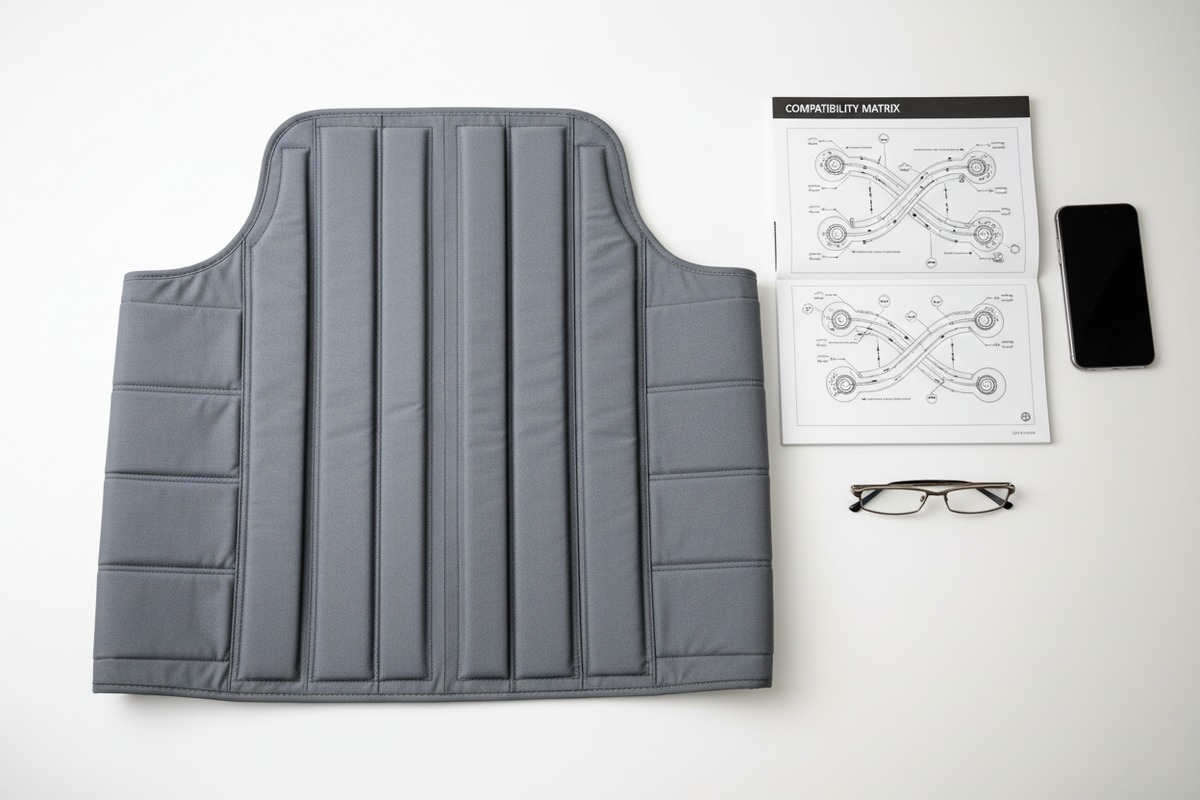
Always ask for connector dimension drawings, pressure curve data, and a compatibility matrix. Reliable suppliers like our team provide these documents without hesitation. If a supplier cannot provide clear technical specs, consider it a red flag.
Can I customize the pressure settings and branding for my specific pressotherapy accessory order?
In our experience working with distributors across the US and Europe, customization requests have grown significantly. Brand owners want their logo on the control unit and accessories. Some require specific pressure presets for their treatment protocols. Others need unique accessory sizes to fit their client demographics. Not all suppliers can deliver this level of customization.
Yes, reputable suppliers offer OEM and ODM services including logo integration on startup screens and machine bodies, custom pressure presets, unique accessory sizes, and private-label packaging. Discuss minimum order quantities, development timelines, and sample approval processes before confirming your order.
Branding Options Available
Our factory, like many professional manufacturers, offers multiple branding touchpoints. Your logo can appear on the machine's startup screen, the control unit body, and the accessory labels. Some clients request custom packaging with their brand colors and design elements. These options strengthen your market identity and differentiate you from competitors using generic equipment.
Pressure Customization Explained
| Customization Type | Description | Typical Requirements |
|---|---|---|
| Preset Programs | Pre-saved treatment modes (e.g., lymphatic drainage 5, recovery, slimming) | Define pressure levels, cycle times, and sequence patterns |
| Pressure Range Adjustment | Modify default mmHg range | Specify minimum and maximum values for your protocols |
| Zone-Specific Settings | Different pressure for different body zones | Requires software modifications |
| User Interface Language | Menu language customization | Provide translation files or specify language |
Minimum Order Quantities for Customization
Customization requires production adjustments. Most suppliers set MOQs for custom orders. Logo etching on machine bodies typically starts at 10-20 units. Custom software presets may require 50+ units. Fully customized accessory designs often start at 100 sets or more. Smaller orders may incur additional tooling or setup fees.
Development Timeline
Custom orders take longer than standard products. Expect 2-4 weeks for logo integration and packaging design. Software modifications may need 4-6 weeks for development and testing. Custom accessory sizes require prototype approval, adding another 2-3 weeks. Plan your purchase timeline accordingly to avoid inventory gaps.
Sample Approval Process
Before mass production, request pre-production samples. Test the branding quality, pressure accuracy, and accessory fit. Our team provides sample units for evaluation. Approve the samples in writing before the factory begins full production. This step prevents costly corrections later.
Negotiating Custom Terms
When negotiating, clarify ownership of custom designs. Ensure the supplier will not sell your branded products to other buyers. Request a written agreement covering design ownership, confidentiality, and exclusivity terms. This protects your brand investment.
What testing do you perform to ensure my eye and abdominal attachments won't fail during salon use?
When our engineers develop pressotherapy accessories, reliability is non-negotiable. Salon equipment faces heavy daily use. Eye cuffs and abdominal belts inflate and deflate thousands of times per year. Seams, airbags, and connectors must withstand constant stress. If a supplier cannot explain their testing protocols, their products may fail prematurely.
Quality suppliers conduct multiple tests including air leak testing, pressure cycling tests (10,000+ cycles), seam strength tests, material durability tests, and electrical safety tests. Ask for test reports, certifications (CE, FDA, ISO 13485), and warranty terms. Pre-shipment inspection photos and videos provide additional assurance.

Key Tests for Pressotherapy Accessories
| Test Type | Purpose | Standard Benchmark |
|---|---|---|
| Air Leak Test | Detects seam or valve leaks | Zero leakage at rated pressure for 30 minutes |
| Pressure Cycling Test | Simulates long-term use | 10,000+ inflation/deflation cycles without failure |
| Seam Strength Test | Measures welding or stitching durability | Withstands 2x rated pressure without rupture |
| Material Fatigue Test | Evaluates PU/fabric degradation | No cracking or peeling after UV and flex testing |
| Electrical Safety Test | Ensures control unit safety | Meets IEC 60601 or equivalent standards |
Why Certifications Matter
Certifications prove compliance with international safety standards. CE marking 6 indicates European conformity. FDA registration applies to US market requirements. ISO 13485 7 demonstrates a quality management system designed for medical devices. These certifications require third-party audits and documented quality processes. Products without certifications may pose safety risks and legal liability.
Pre-Shipment Quality Assurance
Before shipping, our QC team conducts a final inspection. We check every unit for cosmetic defects, functional performance, and packaging integrity. Photos and videos of the inspection are shared with buyers. This transparency builds trust and catches problems before products leave our factory.
Warranty and After-Sales Support
Ask about warranty terms for accessories. Some suppliers offer 12 months on the main machine but only 3 months on accessories. Clarify what the warranty covers—manufacturing defects, normal wear, or all failures. Understand the process for warranty claims, replacement shipping, and technical support.
Red Flags to Watch
If a supplier cannot provide test reports, avoids certification questions, or offers unusually short warranties, proceed with caution. Low-quality accessories may save money upfront but cost more in replacements, client complaints, and reputational damage.
Questions to Ask Your Supplier
- Can you provide your latest air leak and pressure cycling test reports?
- Do you have CE, FDA, or ISO 13485 certifications for these accessories?
- What is the warranty period and what does it cover?
- Do you conduct pre-shipment inspections? Can you share photos/videos?
- What is your process for handling defective products?
How will you manage the door-to-door logistics to ensure my accessories arrive without any cosmetic defects?
Over the past decade, our logistics team has refined packaging and shipping methods to minimize transit damage. Beauty equipment buyers expect flawless products upon delivery. A scratched control unit or dented accessory creates a poor first impression. Worse, damaged packaging suggests poor supplier quality. Proper logistics management prevents these issues.
To ensure damage-free delivery, ask suppliers about their packaging materials, cushioning methods, and shipping partners. Request reinforced double-wall cartons, foam inserts, and protective wrapping for delicate surfaces. Confirm insurance coverage, real-time tracking, and the claims process for transit damage.

Packaging Best Practices
| Packaging Element | Purpose | Our Standard |
|---|---|---|
| Double-Wall Cartons 8 | Outer protection against compression and impact | 5-ply corrugated cardboard |
| Custom Foam Inserts | Cradles machine and accessories securely | High-density PE foam, custom-cut |
| Bubble Wrap | Protects surfaces from scratches | Multiple layers on control units |
| Silica Gel Packets | Absorbs moisture during transit | Included in sealed bags |
| Corner Protectors | Prevents edge damage | Rigid plastic or foam corners |
| "Fragile" Labels | Alerts handlers to careful treatment | Applied on all sides |
Shipping Partner Selection
We partner with trusted carriers like DHL, FedEx, and UPS for international shipments. These companies have experience handling beauty and medical equipment. They offer tracking, insurance, and expedited delivery options. Sea freight is available for large orders but requires longer lead times and additional packaging for humidity exposure.
Insurance and Claims Process
Every shipment should be insured against loss and damage. Clarify the insurance coverage amount and the claims process before shipping. If a product arrives damaged, document the issue immediately with photos. Contact the supplier and carrier within 48 hours. A clear claims process protects your investment.
Climate Considerations
Extreme temperatures affect some components. The control unit's LCD screen and electronic components are sensitive to heat and cold. Abdominal accessories with PU materials can crack in freezing conditions. If shipping to hot or cold regions, discuss insulated packaging or climate-controlled shipping options.
Pre-Shipment Inspection Photos
Before dispatch, request photos of packed products inside the cartons. This documentation proves the condition before shipping. If damage occurs in transit, these photos support your insurance claim.
Door-to-Door Service Benefits
Door-to-door logistics simplifies the import process. The supplier handles export customs, freight booking, and delivery coordination. You receive the products at your warehouse without managing multiple logistics contacts. This reduces administrative burden and ensures accountability from a single supplier.
What to Include in Your Shipping Agreement
- Detailed packaging specifications
- Carrier name and service level
- Insurance coverage and claims procedure
- Tracking information delivery timeline
- Responsibility for customs duties and taxes
- Process for reporting and resolving transit damage
Conclusion
Asking the right questions protects your investment and ensures pressotherapy accessories work flawlessly with your machines. Verify compatibility through technical specs and sample testing. Negotiate customization terms that align with your brand strategy. Demand rigorous quality testing and documentation. Secure logistics arrangements that deliver products in perfect condition. These steps separate successful procurement from costly mistakes.
Footnotes
1. Provides a general overview of pressotherapy and its common accessories. ↩︎
2. Clarifies the concepts of Original Equipment Manufacturer (OEM) and Original Design Manufacturer (ODM) services. ↩︎
3. Replaced with the official FDA website’s ‘Registration and Listing’ page, offering authoritative information on FDA registration for various products. ↩︎
4. Explains the definition and importance of model numbers for product identification and support. ↩︎
5. Describes the medical procedure of lymphatic drainage and its health benefits. ↩︎
6. Replaced with an official and authoritative source from the European Union’s ‘Your Europe’ portal, detailing CE marking requirements. ↩︎
7. Official source detailing the ISO 13485 standard for medical device quality management systems. ↩︎
8. Explains the structure and protective benefits of double-wall corrugated cardboard for shipping. ↩︎

 English
  Español de México
  Deutsch
  Français
  العربية
  Русский