
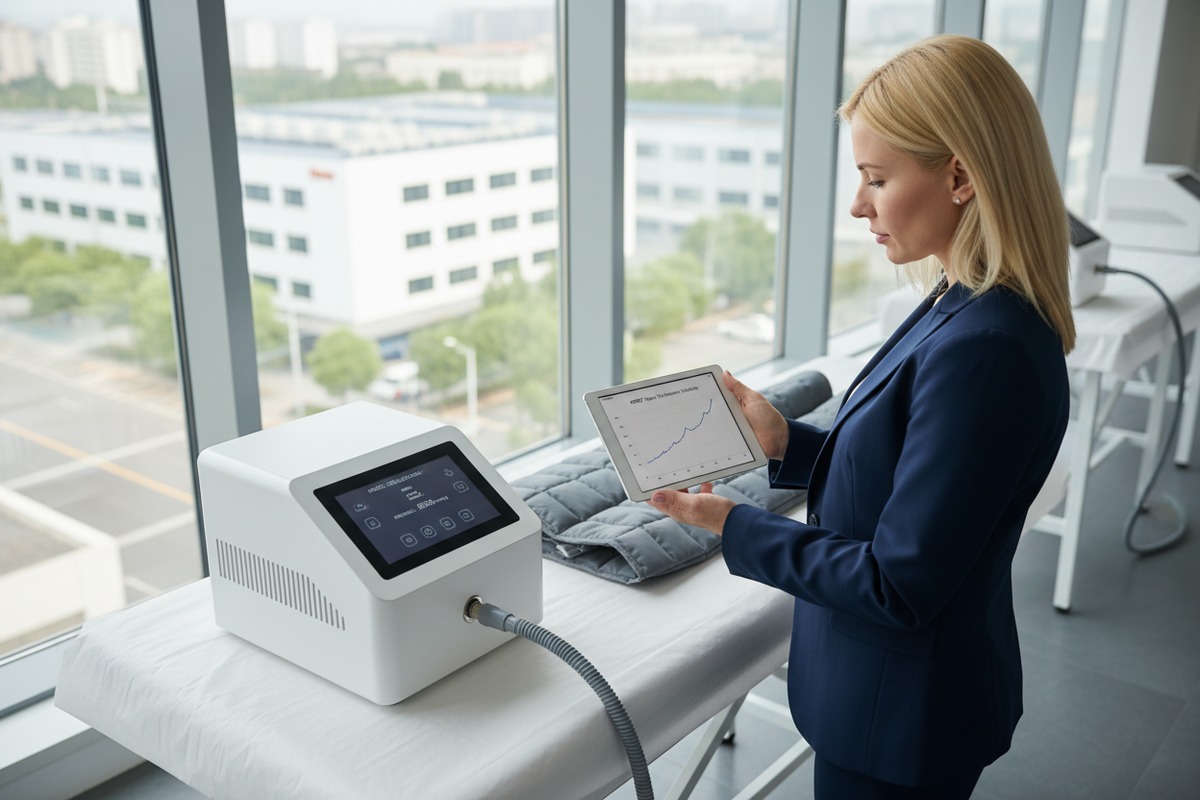
When we analyze the long-term performance of the beauty equipment leaving our production lines, we often find that the difference between a machine that lasts five years and one that fails in six months lies in the unseen durability metrics life-cycle testing 1. You invest significant capital and reputation into importing equipment, yet a single component failure can grind your client’s salon operations to a halt. Asking the right questions about reliability prevents these costly disruptions.
To evaluate pressotherapy machine reliability, you must ask suppliers for the Mean Time Between Failures (MTBF) of the compressor and solenoid valves, specifically requesting data from continuous load testing. This metric reveals the average operational hours your device can withstand before requiring critical repair, directly impacting your warranty costs and client satisfaction.
Below, we break down the specific technical inquiries that strip away marketing fluff and reveal the true engineering quality of the system.
How can I verify that the MTBF data provided by my pressotherapy machine supplier is actually accurate?
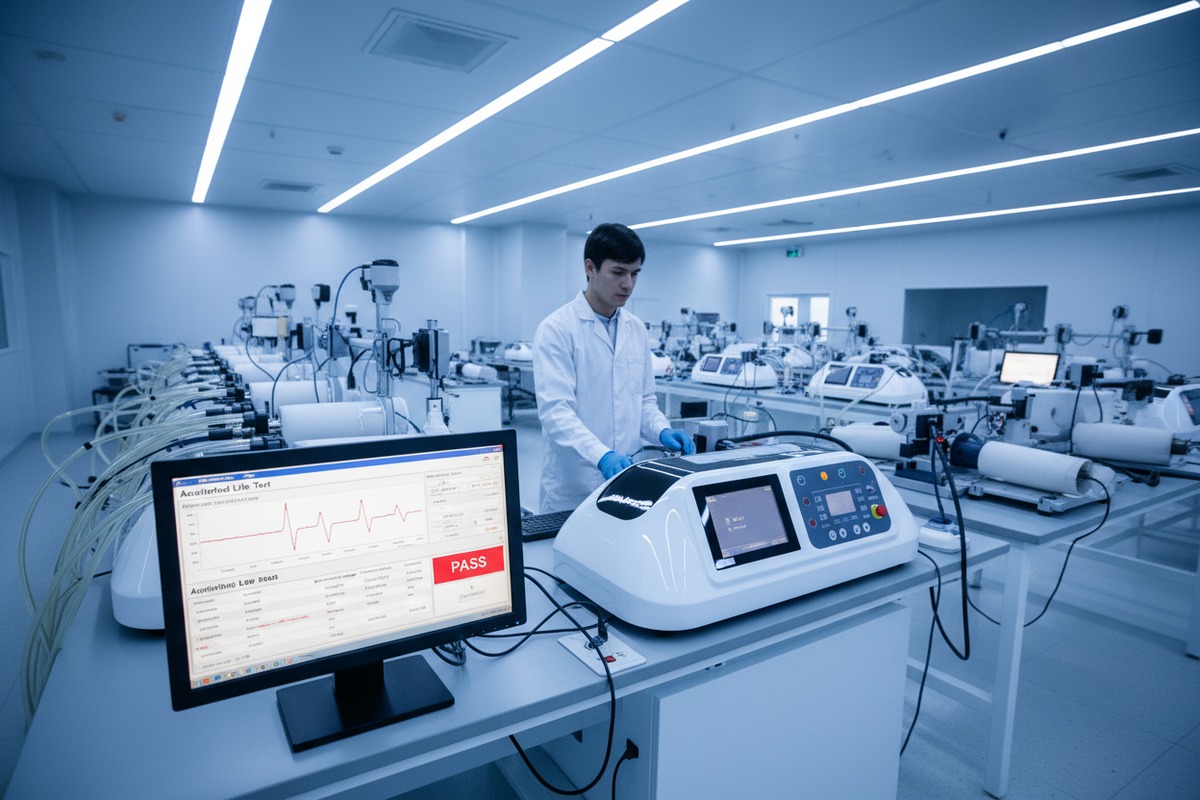
In our experience dealing with component sourcing for high-end devices, we frequently encounter spec sheets that list theoretical numbers rather than tested realities Life Cycle Testing 2. When we validate our own supply chain, we do not accept a simple number at face value because we know that “20,000 hours” on paper means nothing if the testing conditions do not match the aggressive usage of a busy American salon.
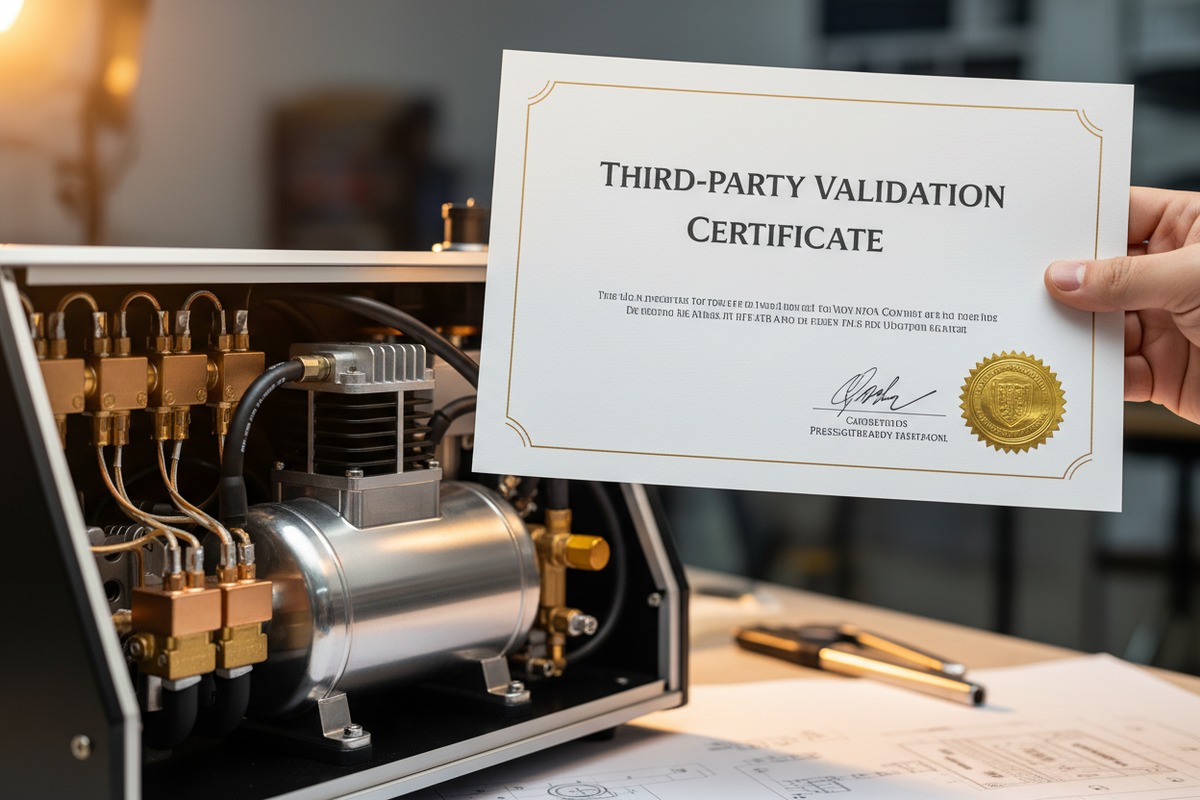
To verify MTBF accuracy, demand raw data from life-cycle testing rather than just a final number. Ask if the testing conditions match clinical usage patterns, specifically regarding pressure cycling and continuous operation times, and request third-party validation certificates for critical components like the compressor.
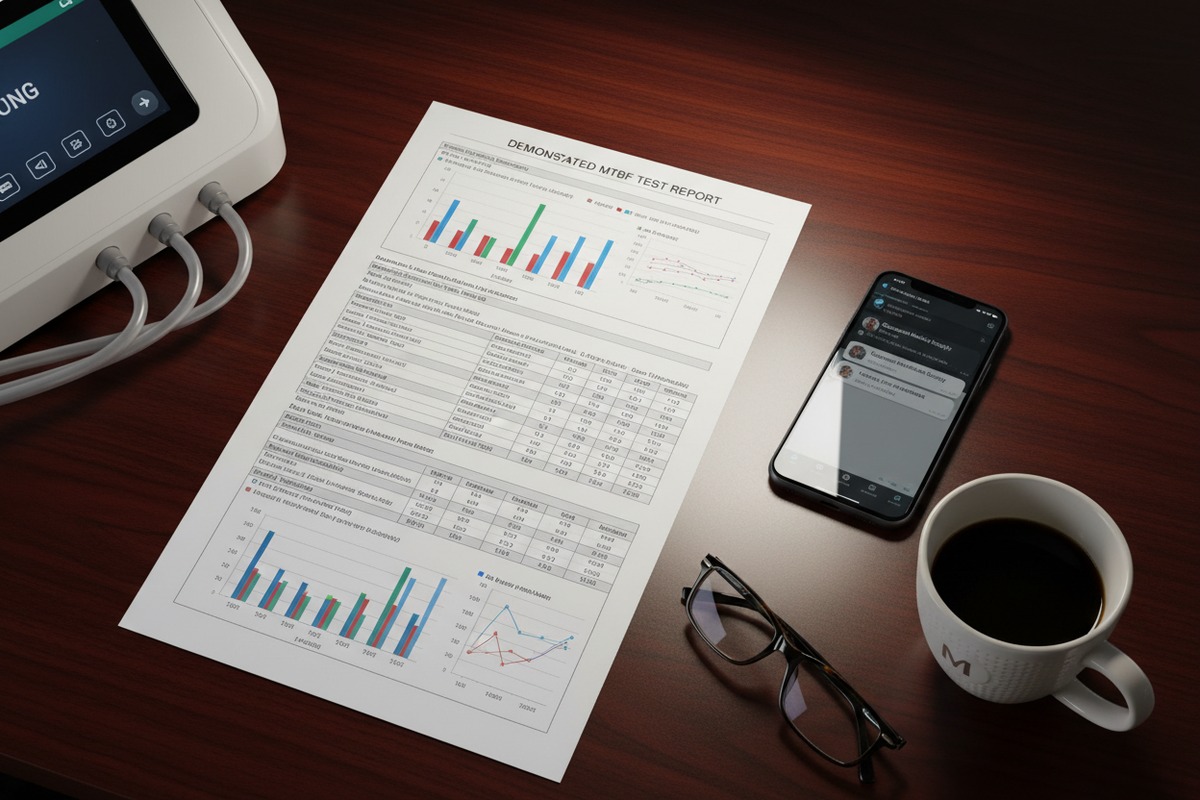
Verifying the accuracy of Mean Time Between Failures 3 (MTBF) requires a deep dive into the methodology the manufacturer used to derive their figures. In the manufacturing world, there are two primary ways to generate an MTBF number: prediction based on parts count (theoretical) and demonstration based on physical testing (empirical) Valve Switching Cycle Test Report 4. A supplier who simply calculates MTBF based on the theoretical lifespan of the individual electronic components will often provide an inflated number that does not account for the physical stress of pneumatic compression.
You must ask your supplier to distinguish between “Calculated MTBF” and “Demonstrated MTBF.” For a pressotherapy machine, the stress is mechanical Sleeve Burst Pressure Test 5. The air pump diaphragm and the solenoid valves are constantly moving parts. A theoretical calculation might assume the electronics last 50,000 hours, but if the rubber diaphragm in the pump fatigues after 2,000 hours of high-pressure cycling, the theoretical number is useless to you Transportation Vibration Test Report 6. We recommend asking for the specific “duty cycle” used during testing. If they tested the machine running for 10 minutes on and 10 minutes off, but your customers run back-to-back 45-minute sessions, the heat buildup will significantly alter the failure rate.
Key Differences in MTBF Data Types
Understanding the source of the data helps you judge its validity. Use the table below to categorize the answers you receive from suppliers.
| Data Type | Description | Reliability Level | What to Ask |
|---|---|---|---|
| Predicted MTBF | Based on standard databases (e.g., MIL-HDBK-217 7) summing up failure rates of parts. | Low | "Is this number calculated from a database or actual physical testing?" |
| Operational MTBF | Based on warranty returns and field failure data from previous models. | Medium | "Does this data come from actual field returns of this specific model?" |
| Demonstrated MTBF | Derived from accelerated life testing 8 (ALT) in a lab environment under stress. | High | "Can you show me the Accelerated Life Test report for the compressor?" |
The "Bathtub Curve" and Infant Mortality
When probing for accuracy, ask about their “burn-in” process. Reliability engineering follows a “Bathtub Curve 9,” where failure rates are high at the very beginning (manufacturing defects), low during the useful life, and high at the end (wear out). An accurate MTBF rating focuses on that middle period. However, if the factory does not perform sufficient burn-in testing 10 to eliminate those early failures, your customers will experience them instead. We find that a rigorous 48-hour continuous run test on finished units eliminates the vast majority of “infant mortality” failures before the goods ever leave the factory floor. If a supplier cannot prove they do this, their MTBF claims for the field are likely optimistic estimates rather than guaranteed performance.
What specific testing reports should I request to ensure my private-label pressotherapy machines won't fail in the field?
When we prepare technical files for our OEM partners, we organize them not just by regulatory compliance, but by performance assurance. We know that a CE certificate proves safety, but it does not prove durability. To ensure your brand does not suffer from premature equipment failure, you need to request the internal engineering reports that track the physical limits of the pneumatic system.
You should request a Life Cycle Assessment report detailing the compressor’s performance over 5,000+ hours and a Burst Pressure Test report for the air chambers. Additionally, ask for the Burn-In Test logs that show how the machine handles continuous operation under maximum load before packaging.
Requesting specific reports signals to the manufacturer that you are a sophisticated buyer who understands the engineering behind the product. The most critical document for a pressotherapy system is the **Compressor Life Cycle Report**. This report should document the degradation of pressure output over time. A compressor might deliver 200mmHg perfectly when new, but a poor-quality pump will see that pressure drop to 150mmHg after just 500 hours of use due to seal wear. You need to see the data curve that proves the pressure remains stable within a 10% variance over the claimed lifespan.
Valve Switching and Sleeve Durability
Beyond the pump, the solenoid valves are the second most common point of failure. In a typical lymphatic drainage session, these valves open and close thousands of times to create the wave-like compression effect. You should request a **Valve Switching Cycle Test Report**. This document should verify that the valves have been tested for at least 1 to 2 million cycles without sticking or leaking. If the valves fail, the machine cannot hold pressure, rendering it useless. Furthermore, ask for the **Sleeve Burst Pressure Test**. This destructive test determines the maximum pressure the TPU (Thermoplastic Polyurethane) or nylon fabric can withstand before rupturing. Knowing the safety margin—for example, if the machine operates at 200mmHg but the sleeve withstands 600mmHg—gives you confidence in the product’s safety and longevity.
Essential Reliability Reports vs. Safety Certificates
Many buyers confuse safety certifications with reliability reports. Use this guide to know what you are looking at.
| Document Name | Purpose | What It Tells You about Durability |
|---|---|---|
| CE / LVD Certificate | Electrical Safety | Minimal. It only proves the machine won't shock the user or catch fire. |
| Burn-In Test Log | Quality Control | High. Shows the unit survived a stress test (e.g., 24-48 hours) immediately after assembly. |
| Temperature Rise Test | Thermal Management | High. Shows if the internal components overheat during long usage sessions. |
| Noise Level Test | User Experience | Indirect. Increasing noise levels over time indicate internal mechanical wear. |
Finally, do not overlook the **Transportation Vibration Test Report**. Pressotherapy machines contain heavy compressors and sensitive circuit boards. If the internal mounting brackets are weak, the vibration of shipping from China to the US can loosen connections or damage the pump mounts. A vibration test report (often following ISTA standards) simulates the shipping environment to ensure the packaging and internal structural design are robust enough to survive international logistics. Without this, you risk a high rate of “Dead on Arrival” (DOA) units, which is a logistical nightmare for your distribution center.
How will a high MTBF rating for these machines reduce my after-sales service costs and protect my brand reputation?
We have observed that for our distributors, the initial purchase price is only the visible tip of the iceberg; the submerged bulk of the cost is after-sales support. When we design our chassis and select pumps, we aim to minimize the “rebound rate” because we know that processing a return drains profit faster than any other operational expense. High reliability is not just a technical feature; it is a financial shield.
A high MTBF rating directly lowers your total cost of ownership by minimizing expensive shipping for repairs and reducing technician labor hours. It protects your brand reputation by ensuring consistent uptime for salon clients, preventing revenue loss from cancelled appointments due to equipment failure.
The financial logic of prioritizing MTBF is straightforward when you calculate the true cost of a failure. Pressotherapy machines are relatively heavy due to the compressor and the density of the suit materials. Shipping a defective unit back and forth across the US can easily cost $100 to $150 in logistics fees alone, not including the technician’s time to diagnose and fix the issue. If you are importing a machine that saves you $50 upfront but has a low MTBF, a single failure wipes out that saving and puts you in the red. A high MTBF rating ensures that the machine stays in the field, generating revenue, rather than on a UPS truck generating costs.
The Hidden Logistics and Brand Costs
Beyond the direct shipping costs, there is the “Soft Cost” of brand damage. Salon owners operate on tight schedules. If a machine fails mid-treatment, or if they have to cancel a day’s worth of appointments because their equipment is down, they lose immediate revenue and trust in your brand. In the B2B beauty sector, word of mouth is powerful. A reputation for selling “workhorse” machines that never die is an invaluable asset that allows you to charge a premium. Conversely, being known as the supplier of “glitchy” equipment will force you to compete solely on price, which is a race to the bottom.
Cost Analysis: Reliable vs. Budget Units
The following table illustrates the potential savings over a 2-year period for a fleet of 100 machines.
| Cost Category | Low MTBF Unit (Higher Failure Rate) | High MTBF Unit (Lower Failure Rate) | Impact on Business |
|---|---|---|---|
| Failure Rate (Est.) | 15% per year | 2% per year | High MTBF means far fewer unhappy customers. |
| Return Shipping Costs | High ($150 x 30 units = $4,500) | Low ($150 x 4 units = $600) | Direct impact on your bottom line profit margin. |
| Spare Parts Inventory | Large stock required (capital tied up) | Minimal stock required | Frees up cash flow for marketing or new products. |
| Technician Labor | Frequent repairs distract staff | Rare repairs allow focus on R&D | Increases overall operational efficiency. |
| Client Churn | High (Clients switch vendors) | Low (Clients re-order) | High MTBF builds long-term customer lifetime value. |
Furthermore, high reliability reduces the pressure on your support team. When machines work as intended, your customer service staff can focus on upselling and education rather than de-escalating angry customers. This shifts your company culture from reactive fire-fighting to proactive growth. When negotiating with us or any manufacturer, frame your MTBF requirements as a prerequisite for this long-term partnership stability.
What technical questions should I ask to see if a manufacturer truly understands the durability requirements of my US salon customers?
When we sit down with our engineering team to outline the specifications for the US market, the conversation is very different from when we design for home-use devices. We know that American salons often have rigorous operating hours and specific power grid characteristics. To determine if a manufacturer is truly “export-ready” or just a domestic factory looking for quick sales, you need to probe their understanding of these specific environmental stressors.
Ask the manufacturer how their machines handle voltage fluctuations common in US commercial spaces and if they test for thermal management during back-to-back 60-minute sessions. Inquire about their specific protocol for component sourcing, particularly if they use medical-grade pumps versus standard consumer-grade air pumps.
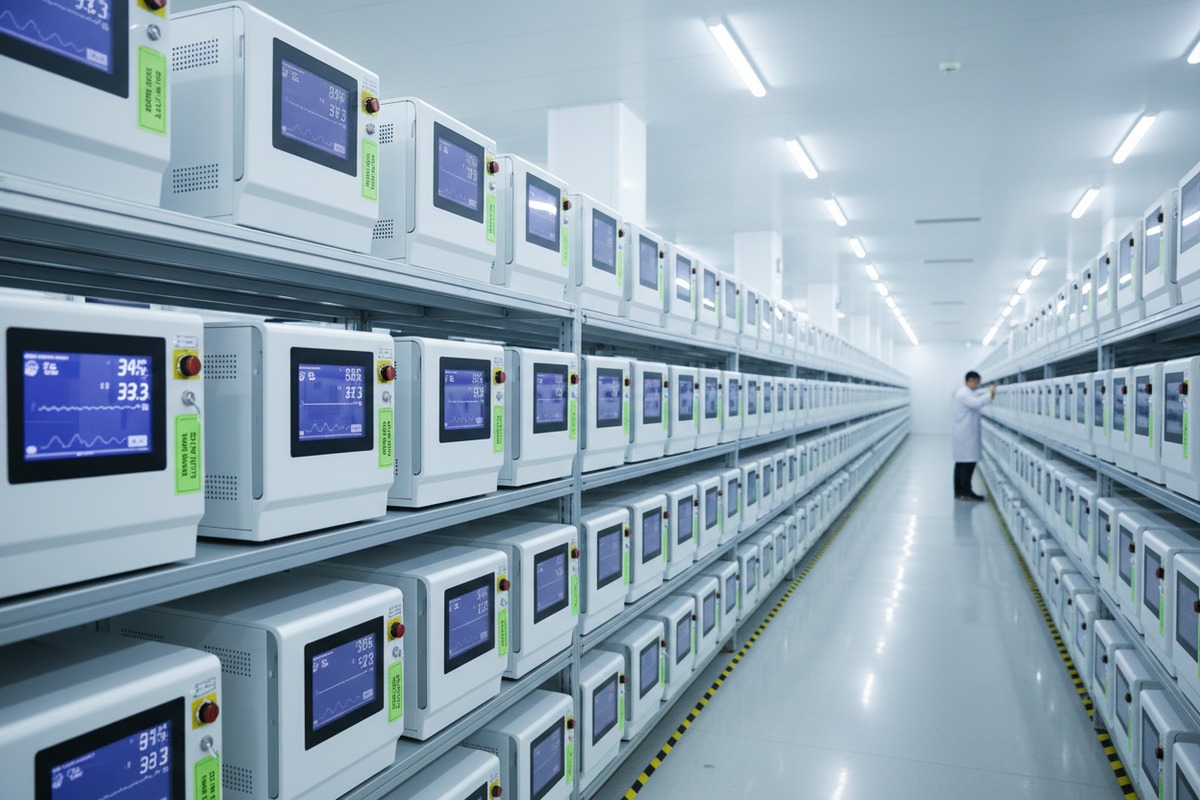
The first technical question should focus on **Thermal Management and Duty Cycles**. A home user might use a pressotherapy suit once a day for 30 minutes. A popular salon might run the machine for 8 hours straight. Ask the supplier: “What is the maximum continuous run time before the machine requires a cool-down period?” and “Does the internal design include active cooling (fans) or passive cooling (heatsinks) for the compressor?” If they cannot answer this immediately, they likely engineered the device for light, consumer use, which will lead to overheating and pump failure in a commercial setting.
Voltage and Component Sourcing
Secondly, inquire about **Voltage Compatibility and Frequency**. The US operates on 110V/60Hz. Some manufacturers simply put a 110V adapter on a pump designed for 220V/50Hz without adjusting the internal motor mechanics. This mismatch can cause the pump to run hotter or vibrate more, drastically reducing its MTBF. You should ask, “Is the air compressor motor specifically wound for 60Hz operation, or is it a 50Hz motor adapted for voltage?” The answer reveals if they are truly manufacturing for the US market.
Questions to Assess "Commercial Grade" Reality
Use these targeted questions to cut through the sales pitch.
- Pump Origin: "Do you manufacture the air pump in-house or source it? If sourced, is it a medical-grade diaphragm pump or a piston pump?" (Diaphragm pumps generally offer smoother operation and better durability for this application).
- Housing Material: "Is the casing made of ABS or standard plastic? How does it handle accidental impacts?" (Salons are busy; machines get bumped).
- Connection Durability: "How many insertion cycles are the air hose connectors rated for?" (Connectors are a high-wear point; flimsy plastic clips break easily).
- Software Stability: "Does the system have a watchdog timer to reset the software in case of a glitch due to power surges?"
Finally, ask about their **Component Obsolescence Strategy**. A durable machine is one that can be repaired. Ask, “Do you guarantee the availability of spare parts (pumps, mainboards, valves) for at least 5 years after production ends?” A manufacturer who understands professional needs knows that a salon cannot throw away a $2,000 machine just because a $50 circuit board is no longer being made. Their ability to commit to long-term part availability is a strong proxy for their confidence in the machine’s overall design life.
Conclusion
Asking the right questions about MTBF transforms you from a passive buyer into an informed partner. By demanding data on testing methodologies, specific component lifecycles, and real-world durability, you ensure that your pressotherapy machines become reliable assets for your customers rather than liabilities for your business.
Footnotes
1. Explains the process for evaluating product durability. ↩︎
2. Evaluates product durability and performance over time. ↩︎
3. Wikipedia provides a comprehensive and authoritative definition of Mean Time Between Failures (MTBF). ↩︎
4. Verifies valve durability under repeated operation. ↩︎
5. Determines maximum pressure before rupture. ↩︎
6. Simulates shipping environment to ensure robustness. ↩︎
7. Standard for predicting electronic component reliability. ↩︎
8. Wikipedia offers a clear and authoritative explanation of Accelerated Life Testing (ALT). ↩︎
9. Illustrates typical product failure rate over time. ↩︎
10. Process to eliminate early product failures. ↩︎

 English
 Español de México
 Deutsch
 Français
 العربية
 Русский
