

While testing air pressure stability on our latest production line, we realized how a single faulty valve can trigger a massive safety crisis FDA or CE database reports 1. Don’t risk your brand on unverified equipment.
To ask about recall history, request official FDA or CE database reports and a signed declaration of safety events. Legitimate suppliers should provide ISO 13485 documentation and a clear history of any market withdrawals, including corrective actions taken to resolve past engineering or manufacturing defects.
Knowing the right questions saves you from expensive legal headaches and protects your clients ISO 13485 documentation 2.
How do I ask a supplier for their historical product recall records and safety certifications?
While reviewing our export documents for US-based clients, we noticed that many buyers overlook the "Safety Paper Trail." You must know if a factory hides its past mistakes CDRH medical device databases 3.
Directly request a "Regulatory Compliance History Report" and current ISO 13485 or CE certificates. Ask for their specific FDA registration number and check it against the CDRH database to verify if any "Class I, II, or III" recalls were issued for their pressotherapy models.
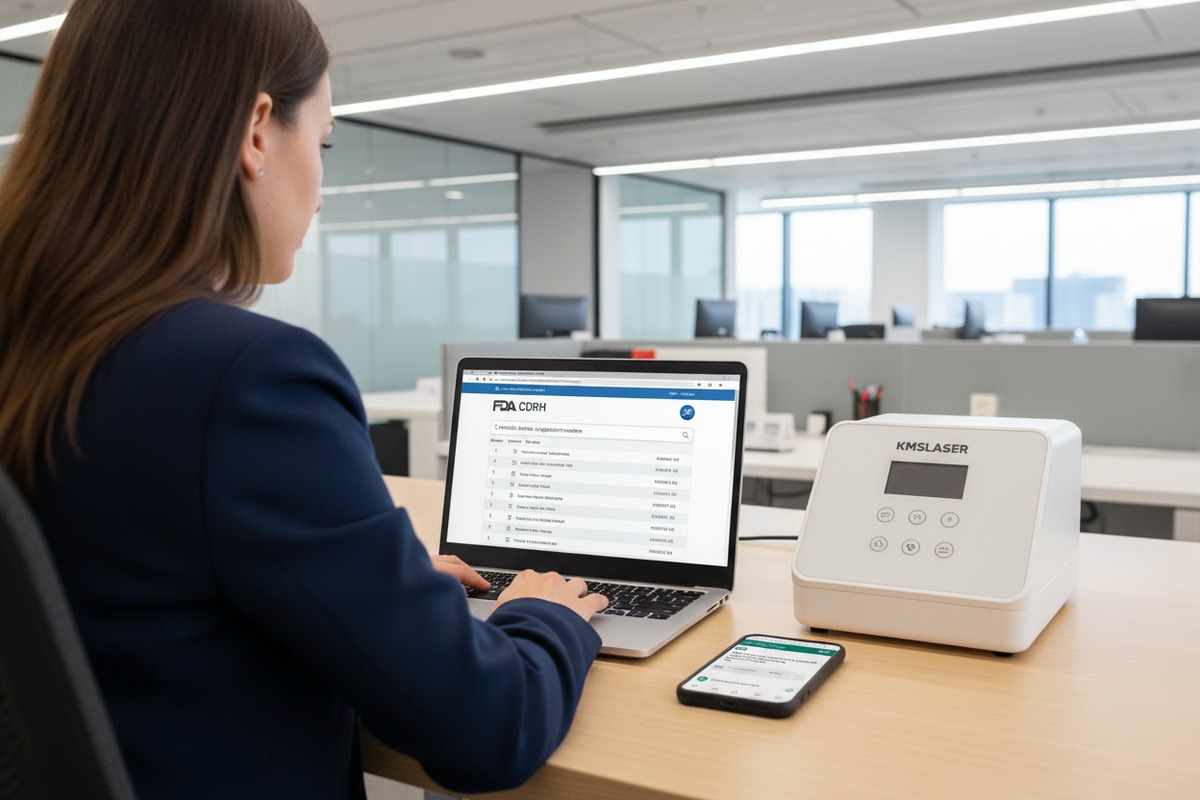
Navigating Regulatory Databases
When you contact a supplier, don't just ask if they have had recalls Class I, II, or III recalls 4. Most will say "no" immediately. Instead, ask for their FDA Registration Number or their European Single Registration Number (SRN). With these codes, you can perform your own due diligence. The FDA’s Center for Devices and Radiological Health (CDRH) maintains a public database. You can search by the manufacturer's name or the specific product code for "Limb Compression Systems." If the supplier is hesitant to provide these numbers, it is a major red flag regarding their transparency.
Understanding the Importance of ISO 13485
In our industry, ISO 9001 is a general quality standard, but ISO 13485 is the gold standard for medical devices. ISO 9001 quality management 5 We adhere to this because it requires a rigorous system for tracking every component. When you ask for this certification, check the "Scope" section on the certificate. It should explicitly mention the design or manufacture of physiotherapy or beauty equipment. If a supplier lacks this, they likely do not have the traceability required to manage a recall effectively if something goes wrong.
Verification Steps
Always ask for a "Declaration of Conformity 6." This document links the specific model you are buying to the safety tests it passed. If the model number on the test report doesn't match the one in your quote, the certification might be fake or outdated.
| Certification Type | What It Verifies | Importance Level |
|---|---|---|
| ISO 13485 | Medical device quality management systems | Critical |
| FDA 510(k) | Substantial equivalence for US market entry | Essential (US) |
| CE (MDR) | Compliance with EU health and safety laws | Essential (EU) |
| RoHS | Absence of hazardous substances in electronics | High |
What specific quality control evidence should I request to prevent a recall on my branded machines?
During the R&D phase of our compression suits, we found that even a 2% variance in air pressure can cause discomfort. Detecting these issues early prevents your brand from facing returns.
Request the Pre-Shipment Inspection (PSI) reports, Bill of Materials (BOM) for critical components like pumps, and Burn-in test logs. Demand to see their CAPA (Corrective and Preventive Action) records, which prove they have systems to catch and fix defects before they leave the factory floor.

The Power of CAPA Records
A professional manufacturer should be proud to show you their CAPA records. CAPA stands for Corrective and Preventive Action. It is the internal log of what went wrong during production and how it was fixed so it never happens again. If a supplier claims they never have production errors, they are likely not looking hard enough. We use these records to improve the soldering on our circuit boards and the stitching on our pressure sleeves. By reviewing these, you see the "intellectual honesty" of the factory.
Component Traceability and BOM
Ask for a "Critical Component List" or a Bill of Materials (BOM) 7. For a pressotherapy machine, the air pump and the solenoid valves are the heart of the system. If a factory uses unbranded or low-grade pumps, the machine will fail within six months. You should ask: "Who is the manufacturer of your air pumps?" and "Do you have the UL or CE certificates for the power supply?" A recall often happens because a third-party component fails. If the supplier cannot tell you exactly where their parts come from, they cannot guarantee the safety of the final product.
Mandatory Testing Protocols
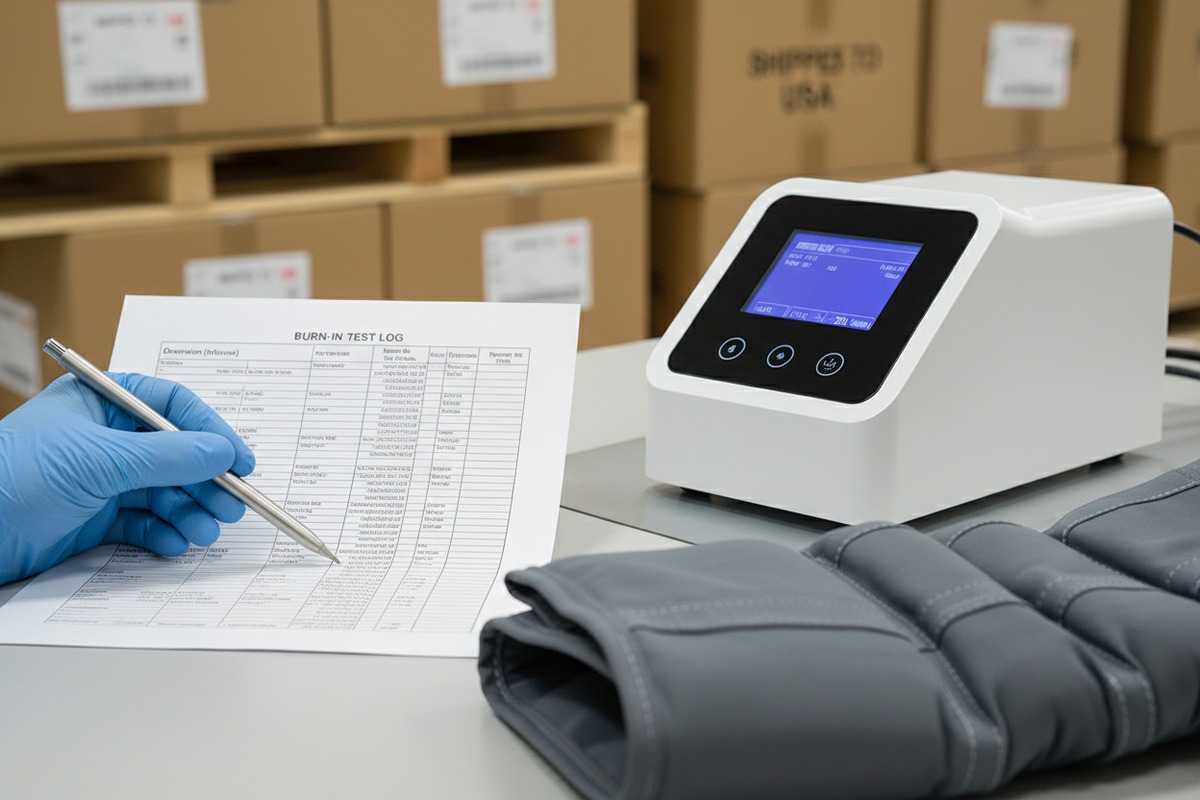
Before any machine leaves our facility, it must undergo a "Burn-in" test. This means running the machine at maximum pressure for 24 to 48 hours continuously. Ask your supplier for a sample "Aging Test Log" for your specific order. This document proves that each unit was tested under load, reducing the "infant mortality" rate of the electronics.
| Quality Control Phase | Required Documentation | Purpose |
|---|---|---|
| IQC (Incoming) | Raw material test reports (e.g., TPU fabric) | Prevent fabric bursts |
| IPQC (In-Process) | Circuit board voltage check logs | Prevent electrical shorts |
| FQC (Final) | Pressure mapping and noise level reports | Ensure therapeutic effect |
| OQC (Outgoing) | Packaging drop test results | Prevent shipping damage |
At our Guangzhou headquarters, we utilize automated leak-detection systems for every compression garment. Relying on human eyes alone is where most safety-related returns begin for many importers.
Evaluate production standards by auditing their manufacturing workflow and air-leak testing protocols. High-standard manufacturers use computerized pressure mapping and automated "aging tests" for 48-72 hours. Check if they use medical-grade TPU for sleeves to prevent skin irritation or bursting under high pressure.
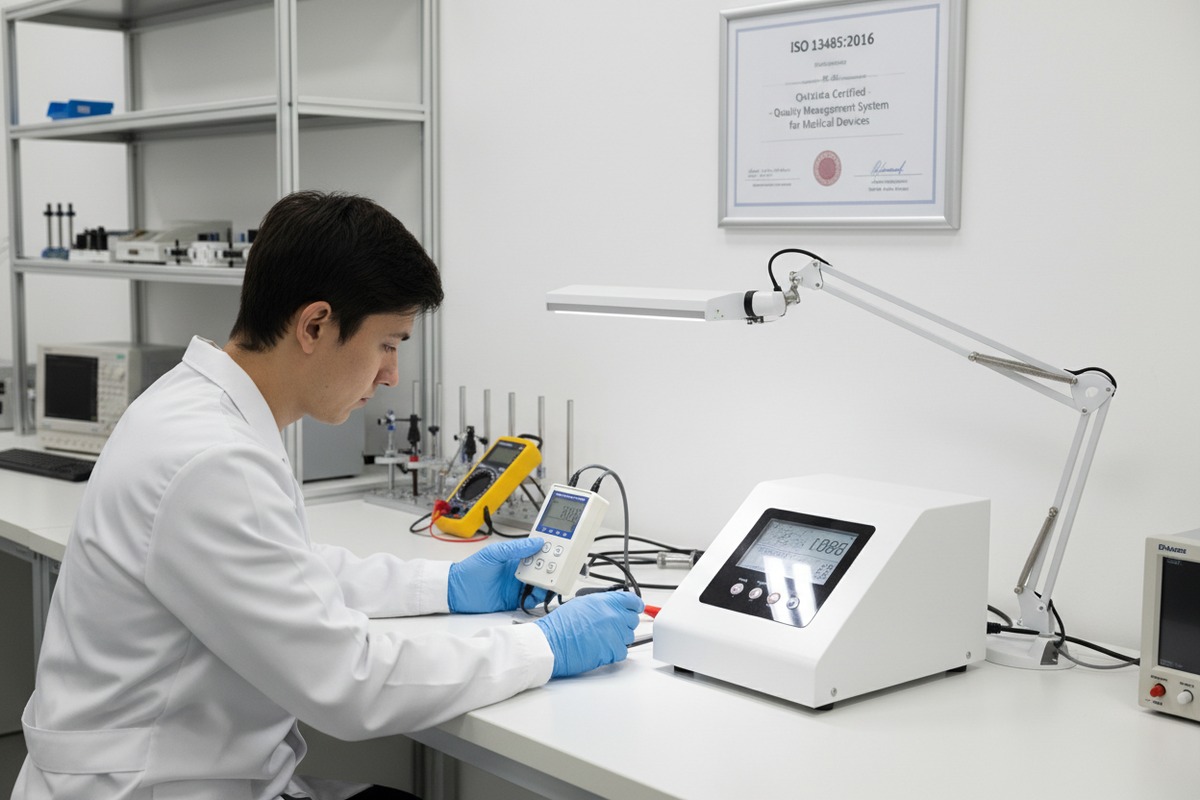
Material Science and Safety
In pressotherapy, the material of the suit is just as important as the machine. Low-end suppliers use PVC because it is cheap. However, PVC can crack and cause air leaks, or worse, cause allergic reactions on the client's skin. We prioritize medical-grade TPU 8 (Thermoplastic Polyurethane) because it is flexible, durable, and biocompatible. When evaluating a supplier, ask for the material safety data sheet (MSDS) for the sleeve fabric. If they cannot provide it, the material might contain phthalates or other restricted chemicals that could lead to a regulatory recall in the US or Europe.
Automated Testing vs. Manual Labor
High production standards are usually supported by automation. In a high-end factory, you will see machines testing the air pressure sensors against a master gauge. If the factory workers are simply "feeling" the air pressure with their hands, the quality will be inconsistent. Ask the supplier: "What equipment do you use to calibrate the pressure sensors?" and "Can you send a video of your pressure leakage test?" A professional supplier will have specialized rigs designed to detect even a 0.5 PSI drop over an hour.
Longevity and Housing Quality
Look at the machine's outer shell. Is it thin plastic that vibrates and rattles? Or is it a high-grade, fire-retardant ABS? Vibration can loosen internal connections over time, leading to electrical failures. We design our housings with reinforced mounting points for the pumps to minimize noise and internal wear. A stable machine is a safe machine.
| Feature | High-Standard Production | Low-Standard Production |
|---|---|---|
| Sleeve Material | Double-layered Medical TPU | Single-layer PVC |
| Air Connectors | Metal or Locking Industrial Plastic | Simple friction-fit plastic |
| Pump Type | Oil-free, Low-noise Medical Grade | Standard industrial/aquarium grade |
| Internal Wiring | Neatly bundled with heat-shrink wrap | Loose wires with electrical tape |
What should I ask about my supplier’s liability and response plan if a product defect occurs after delivery?
When we ship our units to distributors in Canada, we establish clear communication protocols. If a pump fails in a clinic thousands of miles away, who is responsible for the solution?
Ask for a written "Recall and Product Liability Agreement" that defines financial responsibility for shipping, repairs, and replacements. Inquire about their "Field Safety Notice" procedure and whether they provide replacement parts or full unit swaps if a systemic manufacturing defect is identified post-delivery.
Defining Financial Responsibility
A recall is not just a safety issue; it is a financial disaster. You need to know who pays for the shipping if 50 units need to be returned to China. Ask the supplier directly: "If a batch of machines has a documented design defect, will you cover the door-to-door shipping costs for replacements?" Most suppliers will offer "free parts" but expect you to pay for the shipping. For a recall-level event, this is unacceptable. You should negotiate a clause that holds the manufacturer liable for logistics costs if the defect rate exceeds a certain percentage (e.g., 3%).
Field Safety Notices (FSN)
Professional medical device manufacturers use Field Safety Notices to alert users of potential issues before they become dangerous. Ask the supplier to show you an example of a previous FSN or a "Technical Service Bulletin." This shows they have a communication channel to reach you after the sale. If their plan is just to wait for you to complain, they are not a proactive partner. We maintain a database of every serial number and where it was shipped, allowing us to pinpoint specific batches if an issue is discovered.
After-Sales Support Infrastructure
Ask about their "Spare Parts Kit." A good supplier should provide a "First Aid Kit" for your technicians, including spare valves, fuses, and connectors. This allows you to fix minor issues immediately, preventing them from escalating into a situation where a full recall is discussed. Furthermore, ask if they provide remote video support with their engineers. In our experience, 80% of "defects" are actually user errors that can be solved with a 10-minute WhatsApp call.
Establishing a Response Timeline
Time is your enemy during a recall. Ask the supplier for a guaranteed response time. "If I report a safety concern, how many hours will it take for your engineering team to provide an initial assessment?" You should expect a response within 24 hours. A supplier that goes silent during a crisis is a liability to your business.
Conclusion
Asking about recall history is not about finding a perfect supplier, but finding a transparent and responsible one. Focus on certifications, QC evidence, and clear liability to protect your brand.
Footnotes
1. Provides access to official FDA medical device recall information. ↩︎
2. Official ISO page detailing the international standard for medical device quality management systems. ↩︎
3. Official FDA page listing various Center for Devices and Radiological Health databases. ↩︎
4. Official FDA explanation of medical device recall classifications. ↩︎
5. Authoritative government explanation of the ISO 9001 quality management system standard. ↩︎
6. Details the document affirming a product’s compliance with EU health and safety laws. ↩︎
7. Provides a comprehensive definition and explanation of a Bill of Materials in manufacturing. ↩︎
8. Describes the properties and applications of thermoplastic polyurethane, including medical grades. ↩︎

 English
 Español de México
 Deutsch
 Français
 العربية
 Русский
