When we test new prototypes on our assembly line, we often find that clients prioritize maximum pressure while overlooking the critical metric of airflow rate 1. This oversight frequently leads to dissatisfaction with treatment pacing.
Air pump power directly dictates inflation speed by establishing the volume of air delivered per minute (L/min). A robust pump system with high airflow capability fills garment chambers rapidly, ensuring efficient compression cycles of 6 to 10 seconds, whereas underpowered pumps result in sluggish performance and fewer therapeutic cycles per session.
Here is how you can evaluate pump specifications to ensure your machines deliver the performance your brand promises.
How much air pump power do I need to ensure my pressotherapy machines meet professional inflation speed standards?
Our engineering team frequently advises clients that raw wattage on a spec sheet does not always translate to the “fast” feeling users expect in a busy clinic lymphatic drainage treatments 2. We define performance by flow.
To meet professional standards, look for air pumps delivering an airflow rate of at least 50 liters per minute (L/min). This output ensures that full-leg garments inflate completely within 10 seconds per chamber, allowing for the rapid, rhythmic compression required for effective lymphatic drainage treatments in a commercial setting.

Understanding the Flow Rate vs. Pressure Dynamic
In the beauty equipment industry 3, there is a common misconception that high pressure (measured in mmHg) equals high speed. This is incorrect. Pressure is the force exerted once the bag is full; flow rate (L/min) is how fast the bag gets full thermal stress 4.
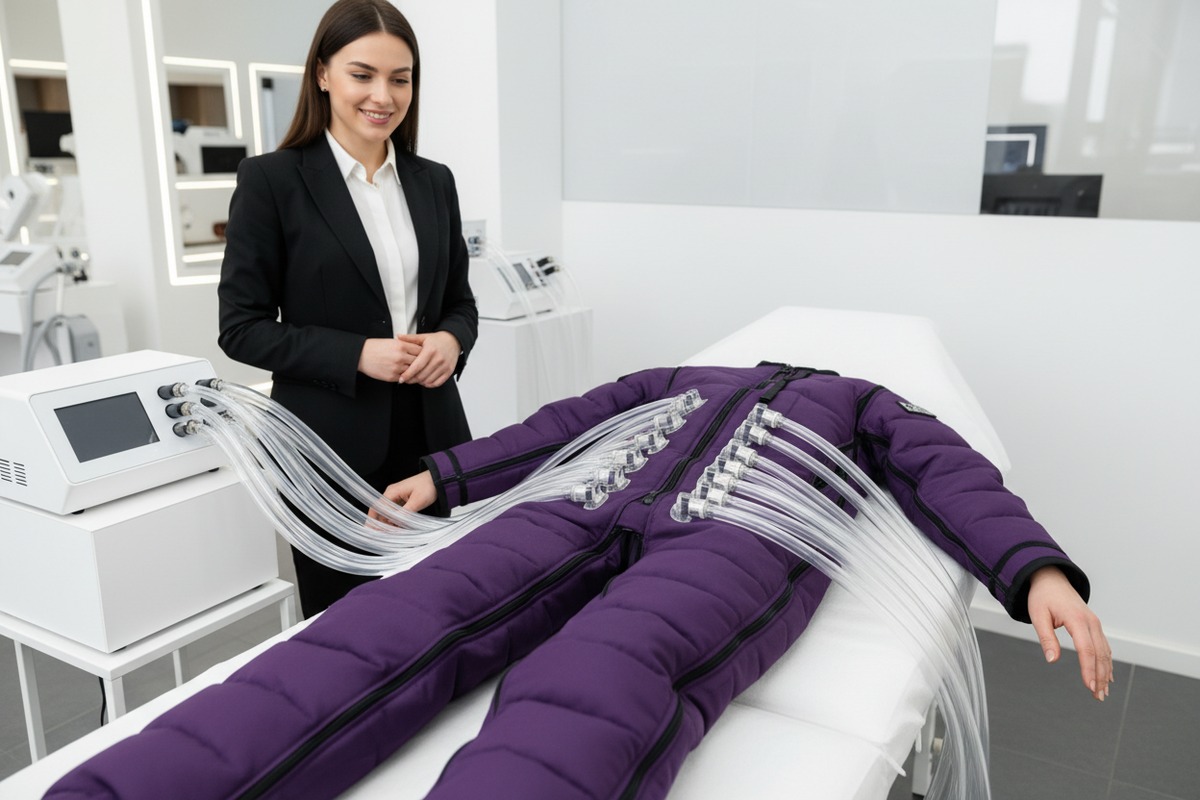
When we configure machines for high-end salons, we prioritize pumps that can handle high volume. A standard commercial pressotherapy suit has significant internal volume, especially when treating larger clients diaphragm pumps 5. A "strong" pump with low airflow might eventually reach 200mmHg, but it might take 45 seconds to get there. This is unacceptable for professional use.
The Impact of Chamber Count
The more chambers your machine has, the more power you need. A 24-chamber suit requires significantly more air volume than a basic 8-chamber model. If you use a standard entry-level pump on a 24-chamber high-end suit, the inflation cycle will lag. The machine will struggle to fill the distal chambers before the cycle timer advances, leading to weak, ineffective compression.
Recommended Specifications by Use Case
To help you select the right components for your brand, we have categorized the necessary pump specifications based on the intended end-user.
| Machine Category | Target Airflow (L/min) | Typical Cycle Time | Recommended Application |
|---|---|---|---|
| Home/Portable | 15 – 25 L/min | 20 – 40 seconds | Personal recovery, travel, light use. |
| Mid-Range Salon | 30 – 45 L/min | 12 – 18 seconds | Esthetic clinics, relaxation spas. |
| Professional Medical | 50+ L/min | 6 – 10 seconds | Lymphatic drainage specialists, sports rehab centers. |
For your professional line, specifying a pump with at least 50L/min ensures that even with complex, multi-chamber suits, the therapy remains snappy and effective.
Will a higher-wattage pump improve the durability and lifespan of the machines I import for my brand?
During our long-term reliability testing, we often see lower-wattage pumps fail prematurely when subjected to the back-to-back sessions common in successful salons. Heat management is usually the culprit.
Yes, a higher-wattage pump generally improves durability because it operates well below its maximum capacity during standard treatments. This “headroom” reduces thermal stress on internal components like diaphragms and valves, preventing overheating and extending the machine’s operational lifespan significantly compared to smaller pumps running at full limit.

The Engineering Behind Pump Longevity
When you import machines for a professional brand, warranty claims are a major profit drain. The durability of the air pump is the single biggest factor in machine reliability.
A low-wattage pump (e.g., 30W) has to run at 100% capacity to inflate a large suit to 180mmHg. This generates substantial heat. Over time, this heat degrades the rubber diaphragms inside the pump mechanism and dries out the lubrication on the piston arms.
Headroom and Heat Dissipation
A higher-wattage pump (e.g., 150W or more) might only need to run at 60% capacity to achieve that same pressure and speed. Because it is not straining, it runs cooler. Cooler operation preserves the elasticity of the internal rubber components and protects the electronic control board from heat damage.
Duty Cycle Considerations
Professional environments require machines to run continuously for hours. We call this the "duty cycle 6."
- Low-Wattage Consumer Pumps: Often have a 30-minute duty cycle. They need to cool down after one treatment. If a salon ignores this, the pump fails.
- High-Wattage Professional Pumps: Designed for continuous duty. They often feature larger heatsinks and dedicated cooling fans that smaller units lack.
Component Comparison
We use different grades of components based on the power rating of the machine.
| Component | Standard Pump (Low Wattage) | Heavy-Duty Pump (High Wattage) | Impact on Lifespan |
|---|---|---|---|
| Diaphragm Material | Standard Rubber | Reinforced Silicone/EPDM | Heavy-duty resists cracking under heat. |
| Cooling | Passive Airflow | Active Cooling Fan | Fans prevent thermal shutdown. |
| Motor Winding | Aluminum or Thin Copper | Thick Pure Copper | Copper handles heat and electrical load better. |
Investing in higher wattage is essentially investing in insurance against breakdown.
How can I customize the pump specifications to balance fast inflation with low noise levels for my high-end clients?
In our collaborative projects with European brands, we frequently address the challenge of keeping the treatment room tranquil while maintaining high power. Noise is often the trade-off for speed.
To balance speed and noise, we customize the pump assembly by utilizing dual-head diaphragm pumps mounted on vibration-dampening silicone feet and lining the chassis with acoustic foam. This configuration allows for high-volume air delivery without the high-pitched mechanical whine that typically accompanies powerful motors.
The Source of the Noise
Noise in pressotherapy machines comes from two sources:
- Vibration: The motor spinning creates physical vibration that resonates through the plastic casing.
- Air Turbulence: The sound of air being sucked in and pushed out rapidly.
Faster inflation requires moving more air, which naturally creates more turbulence and requires a faster-spinning motor. This is why powerful machines are naturally louder. However, high-end clients expect a spa-like atmosphere, not an industrial factory floor.
Customization Options for Noise Reduction
When we develop a private-label machine, we can implement several engineering modifications to suppress noise without sacrificing the 50L/min speed.
Internal Suspension Systems
Instead of screwing the pump directly to the chassis, we mount it on "floating" silicone suspension blocks. This isolates the vibration. The motor shakes, but the case—and the table it sits on—remains still and silent.
Acoustic Baffling
We can line the interior of the machine casing with dense acoustic foam 7. This traps high-frequency motor whine. We also design the air intake vents with a baffle structure (like a car muffler) to smooth out the airflow sound.
Pump Sizing Strategy
A larger pump running slowly is quieter than a small pump running fast. By selecting a larger displacement pump (more volume per stroke) and running it at a lower RPM, we achieve the same inflation speed (L/min) with a deeper, less intrusive hum rather than a high-pitched whine.
Trade-offs and Expectations
| Feature | Standard Configuration | "Silent" Custom Configuration | Result |
|---|---|---|---|
| Pump RPM | High (3500+ RPM) | Moderate (2200 RPM) | Lower RPM reduces pitch. |
| Mounting | Hard Plastic Mounts | Rubber Isolation Mounts | Eliminates rattling. |
| Case Interior | Bare Plastic | Acoustic Foam Lined | Absorbs motor noise. |
| Cost | Base Price | +15% – 20% | Higher BOM cost for silence. |
How do I verify that the pump power specifications from my supplier will actually deliver the inflation speed my customers expect?
We encourage our partners to look beyond the printed user manual, as paper specifications can be inflated by marketing teams. Real-world validation is the only way to be certain.
Verify specifications by requesting a video demonstration of a “loaded cycle test” where the machine inflates a suit worn by a person, not just empty on a table. Time the cycle with a stopwatch; a professional machine should fully inflate a leg section to maximum pressure in under 12 seconds under load.

The "Empty Suit" Deception
Many suppliers test their inflation speed on an empty suit laid flat on a table. Without a person inside, the internal volume of the air chambers is very small. The machine will inflate it instantly. This data is misleading.
When a client wears the suit, the chambers must expand against the resistance of the limb and the weight of the body. This requires significantly more torque and airflow. A pump that looks fast on an empty table may stall or drag when treating a 200lb client.
Essential Verification Steps
When you are vetting us or any other supplier, follow this protocol:
- Request a Pressure Hold Test: Ask the supplier to inflate the suit to max pressure and turn the pump off. If the pressure drops immediately, there are leaks (cheap valves), which will force the pump to work harder and slower to compensate.
- The Stopwatch Test: Do not rely on the digital timer on the screen. Watch a video of the machine and use your own phone to time how long it takes from "Start" to "Full Squeeze."
- Check the Wattage Rating on the Component: Ask for a photo of the sticker on the actual internal motor, not just the label on the back of the machine. The internal motor label is usually accurate.
Interpreting the Data
Use this checklist to verify if the machine meets your speed requirements.
| Metric | What Supplier Says | How to Verify | Red Flag |
|---|---|---|---|
| Airflow | "High Speed" | Ask for L/min rating. | No L/min data provided. |
| Pressure | "Max 240mmHg" | Video of gauge reaching 240. | Needle shakes/struggles at top. |
| Speed | "Fast Cycle" | Stopwatch test (loaded). | Cycle takes >20 seconds. |
| Power | "300W" | Photo of internal pump label. | Pump label says "30W". |
Conclusion
Selecting the right air pump power is not just about maximizing pressure; it is about ensuring sufficient airflow (L/min) to drive fast, effective, and profitable treatment cycles. By prioritizing airflow specifications, investing in higher-wattage components for durability, balancing power with noise dampening, and strictly verifying performance through loaded tests, you can import pressotherapy machines that satisfy the rigorous demands of the US professional beauty market.
Footnotes
1. Explains the definition and engineering relevance of airflow. ↩︎
2. Describes what lymphatic drainage massage is and its benefits. ↩︎
3. Provides an overview of the beauty devices market and its growth. ↩︎
4. Defines thermal stress and its causes in materials. ↩︎
5. Replaced with a detailed and authoritative Wikipedia article on diaphragm pumps. ↩︎
6. Explains the concept of duty cycle in electrical devices. ↩︎
7. Replaced with a comprehensive and authoritative Wikipedia article on acoustic foam. ↩︎

 English
  Español de México
  Deutsch
  Français
  العربية
  Русский