When I speak with new buyers preparing to introduce shockwave therapy into their clinics, one of the first practical questions they ask concerns ongoing consumable costs and how difficult it is to maintain stable supply across the year.
Most shockwave therapy machines require a small but essential set of consumables—mainly coupling gel 1 and wear-based handpiece components—and understanding these items helps buyers plan predictable maintenance budgets, avoid downtime, and choose a supplier who can support long-term operational needs.
Clear information about consumables ensures clinics can price treatments correctly and prevent hidden expenses after installation.
What items need regular replacement during machine operation?
Because we support clinics that use their machines daily, we see firsthand which components wear out regularly and how clinics should plan for replacements.
Shockwave therapy machines typically require coupling gel, transmitters or applicator tips, O-rings, and periodic replacement parts such as projectiles or guide tubes 2 in radial handpieces, all based on pulse counts or visible wear.

Coupling gel
This is the primary consumable used every session.
- enables proper acoustic transmission
- prevents energy loss
- must be bubble-free and skin safe
- used for medical and beauty applications
Transmitters / applicator tips
These parts make direct contact with the skin.
- wear down gradually
- affect energy output
- need replacement based on pulse volume
Typical lifespan: 100,000–1,000,000 pulses depending on model.
O-rings
Often made of silicone or rubber.
Revision kits (radial devices)
Include parts such as:
- projectile
- guide tube
- springs
- metal sleeves
These guarantee consistent impact force.
Focused device parts
Some focused ESWT machines use:
- silicone caps
- membrane covers
- focusing heads
These maintain wave precision and require scheduled replacement.
Summary Table
| Consumable Type | Replacement Trigger | Notes |
|---|---|---|
| Coupling gel | Every session | Main daily consumable |
| Transmitters/tips | Pulse limit or visible wear | Model-specific |
| O-rings | Drying, cracking, pulse cycles | Important for sealing |
| Revision kit parts | Pulse-based replacement | Radial machines |
| Silicone caps | Wear or discoloration | Certain focused models |
Regular replacement keeps wave output stable and maintains the machine’s long-term durability.
How should buyers budget for consumables and availability?
Clinics often ask us to help calculate annual consumable costs before they finalize a purchase.
Consumable budgeting depends on client volume and average pulses per session, with gel being the daily recurring item and mechanical components requiring replacement at predictable pulse intervals 4.
Daily-use consumables
Coupling gel is required for every treatment session.
- typical use: 5–15 ml per treatment
- buying in bulk reduces cost
- recommended monthly or quarterly purchase
Pulse-based components
High-volume clinics reach maintenance thresholds faster.
- transmitters: replaced every few months
- O-rings: replaced monthly or quarterly
- revision kits: replaced every pulse cycle (e.g., 1M pulses)
For example:
A clinic performing 20 sessions per day may need a revision kit every 2–3 months.
Simple budgeting formula
(Consumable cost / Pulse lifespan) × Average pulses per treatment
This gives cost per treatment, ideal for pricing services.
Inventory recommendations
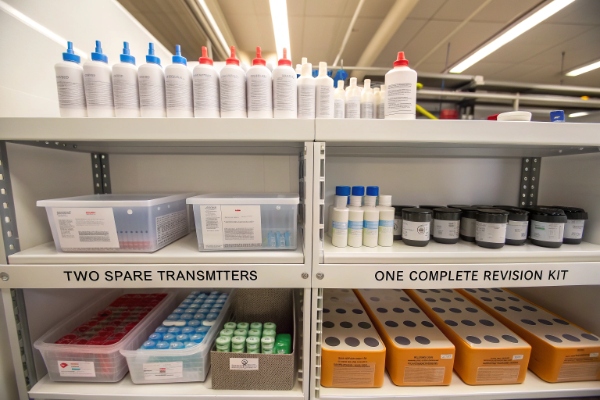
Clinics often benefit from keeping:
- two spare transmitters
- one complete revision kit
- multiple O-rings
- a monthly supply of gel
- spare silicone caps (for focused models)
Consumable Budgeting Table
| Consumable | Replacement Window | Cost Impact |
|---|---|---|
| Gel | Daily | Low |
| Transmitters | 3–6 months | Medium |
| O-rings | Monthly/quarterly | Low |
| Revision kit | Pulse-based | Medium–High |
Proper budgeting prevents unexpected expenses or treatment interruptions.
Are consumables standardized across brands or proprietary?
This question is one of the most common concerns buyers raise when switching suppliers or expanding their clinic.
Coupling gel is universal, but most mechanical consumables—such as transmitters, O-rings, and revision kits—are proprietary because each manufacturer uses different dimensions, materials, and calibration designs 5.

Universal consumables
These items work on any shockwave device:
- coupling gel
- alcohol wipes 6
- cleaning cloths
- disinfection agents
Proprietary consumables
These vary by brand and model:
- transmitters
- projectile
- guide tube
- barrel sleeve
- O-rings (exact size differs)
- silicone membrane caps
- focusing heads
Why manufacturers use proprietary parts
To ensure:
- correct acoustic output
- internal pressure balance
- consistent impact force
- durability of the handpiece
- warranty protection 7
Consumable Compatibility Table
| Consumable Type | Universal? | Notes |
|---|---|---|
| Coupling gel | Yes | Standard across all machines |
| Transmitters/tips | No | Brand/model specific |
| O-rings | Mostly no | Size varies |
| Revision kits | No | Proprietary sets |
| Silicone caps | Sometimes | Depends on applicator design |
Understanding compatibility prevents buyers from purchasing incompatible third-party parts that may damage the machine.
How can suppliers support buyers with long-term consumable needs?
Since consumables directly affect daily clinical operations, supplier support is just as important as machine performance.
A reliable supplier helps buyers estimate consumable usage, maintains stable inventory, offers predictable lead times, and provides maintenance guidance 8—ensuring clinics stay fully operational at all times.

What suppliers should provide
- guaranteed availability of transmitters and revision kits
- transparent pricing lists for all consumables
- estimated lifespan based on pulse counts
- reorder reminders for high-volume clients
- maintenance videos and documentation 9
- optional OEM customization for branded consumables
Value-added support we often provide
- forecasting replacement cycles based on your daily patient volume
- training your staff to perform routine part inspections
- helping clinics create annual consumable budgets
- advising how to extend handpiece lifespan with correct lubrication and cleaning
- stocking fast-moving parts to avoid shortages
Why supplier support matters
It reduces downtime 10.
It improves long-term performance.
It protects the handpiece from premature wear.
It creates predictable operational costs.
It strengthens clinic efficiency and patient satisfaction.
Conclusion
Shockwave therapy machines depend on a manageable set of consumables—mainly gel and wear-based parts. Understanding these items helps clinics plan budgets, maintain stable inventory, and ensure smooth long-term operation with strong supplier support.
Footnotes
1. Research paper discussing the essential role of ultrasound coupling gel in ensuring optimal acoustic transmission during shockwave procedures. ↩︎
2. Technical document detailing the routine maintenance and component replacement recommendations for radial shockwave handpieces. ↩︎
3. Overview of how prolonged vibration and mechanical stress cause material degradation in components like rubber O-rings. ↩︎
4. General engineering concept explaining how replacement intervals are set based on operational cycles to ensure continuous functioning. ↩︎
5. Technical resource explaining acoustic impedance and how proprietary parts are calibrated to ensure correct energy delivery. ↩︎
6. Study validating the use of alcohol-based wipes for the sanitation of equipment surfaces in clinical settings. ↩︎
7. FTC guide on warranties and service contracts, highlighting the importance of using certified parts to maintain coverage. ↩︎
8. Engineering overview of the critical role of comprehensive supplier support and maintenance for complex equipment reliability. ↩︎
9. Instructional video demonstrating proper communication and maintenance procedures for medical devices. ↩︎
10. Study emphasizing the link between proper equipment maintenance and the reduction of clinical downtime, ensuring consistent patient care. ↩︎

 English
  Español de México
  Deutsch
  Français
  العربية
  Русский