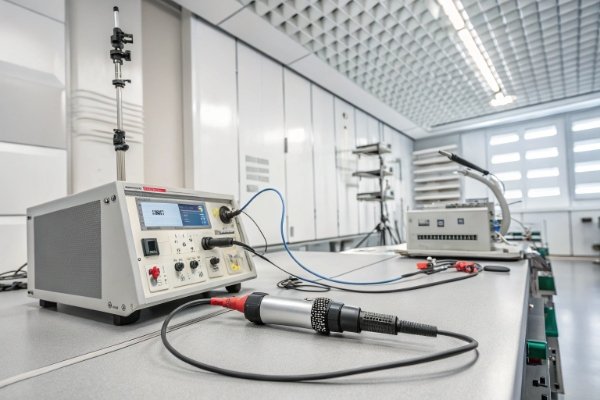
As the manufacturer, I hear this first in every audit: do our shockwave systems require EMC testing? The short answer is yes—and we design for it from day one.
Yes. Shockwave therapy machines are active medical-electrical devices and must undergo EMC testing to control emissions and ensure immunity. Without verified EMC conformity, devices risk interference, unsafe behaviour, regulatory rejection, and field recalls across all professional and home-health environments.
Let’s unpack what that means in practice for buyers, engineers, and brand owners.
What are the consequences of not complying with EMC regulations in export markets?
As the manufacturer, I have seen projects stall at customs and distributors lose entire seasons because EMC paperwork was incomplete or outdated. Non-compliance is expensive and public.
Failing EMC compliance jeopardises market access, voids insurance reimbursement, triggers customs holds, increases product liability exposure, and damages brand trust. Distributors often face forced returns, while clinics risk unplanned downtime, data loss, and interference with nearby critical equipment.

Real-world fallout we’ve witnessed
- Border delays and seizures: Missing IEC 60601-1-2 standard documentation 1 or mismatched model numbers halt shipments.
- Notified Body findings: CE audits flag obsolete editions or unlisted variants, forcing corrective actions.
- Distributor penalties: Contracts tie sell-through to valid EMC docs; failures trigger charge-backs.
- Clinic incidents: Interference with ECG or Wi-Fi networks causes service interruptions and reputational harm.
Table 1 — Noncompliance impact by stakeholder
| Stakeholder | Immediate Impact | Long-Term Effect |
|---|---|---|
| Manufacturer | Shipment holds, re-testing costs | Lost tenders, recalls |
| Distributor | Returned stock, fines | Contract termination |
| Clinic | Device downtime | Loss of patient confidence |
| Patient | Cancelled treatments | Delayed care |
| Insurer/Regulator | Incident reports | Increased scrutiny |
When EMC is treated as a checkbox instead of an engineering requirement, the consequences multiply across the supply chain.
What EMC standards (e.g., IEC 60601-1-2) apply to shockwave therapy equipment?
As the manufacturer, I map requirements from the start: collateral EMC, general safety, and any particular or environmental standards that influence test-setups and labelling.
Core EMC applies through IEC 60601-1-2:2014/4.0 & its updates 2. It defines emissions and immunity levels for professional and home-health environments. Pair it with IEC 60601-1 general safety standard 3, relevant particular standards by modality, and environmental tests that influence EMC behaviour and labelling.
The practical standards stack (plain English)
- IEC 60601-1-2 (EMC collateral): Radiated/conducted emissions; ESD, EFT, surge, dips, radiated/conducted immunity; harmonics/flicker.
- IEC 60601-1 (general safety): Essential performance; links EMC to risk management.
- Particular standards (technology-dependent): Applied by analogy where relevant to shockwave energy delivery and performance stability.
- Complementary references: ISO 14971 risk management (risk), IEC 62304 software lifecycle (software), ISO 13485 QMS (QMS), IEC 60068 environmental tests (environmental) to justify use-environments and warnings.
Table 2 — EMC tests you should see in a report
| Test Category | Examples | Why It Matters |
|---|---|---|
| Emissions | CISPR 11 radiated/conducted | Prevents device from disturbing others |
| Immunity (ESD) | Air/contact up to kV levels | Protects against static zaps on the handpiece |
| Radiated immunity | RF fields 80 MHz–6 GHz | Ensures stability near radios/Wi-Fi |
| Conducted immunity | RF on mains/cables | Blocks noise from power lines |
| EFT/Surge | Fast transients, surges | Withstands switching/lighting spikes |
| Voltage dips/interruptions | Brown-outs, short outages | Safe behaviour on unstable power |
| Harmonics/flicker | Power quality | Grid friendliness, especially in clinics |
Correct edition control matters: buyers should ask which edition was used, and whether home-health immunity levels were applied if the device targets non-clinical environments.
How should buyers verify supplier’s EMC test reports and certificates?
As the manufacturer, I encourage tough verification. It helps good factories stand out and protects your project timelines.
Verify edition, model identity, test-setups, operating modes, and pass/fail criteria. Cross-check that reports list exact trade names, options, and accessories. Require a CB Test Certificate or NRTL/Notified Body evidence tied to the same report. FDA guidance for EMC submissions 4
A step-by-step verification routine
- Match the identity: Model number, firmware revision, photos, and accessories must match your purchase spec.
- Check the edition: Ensure IEC 60601-1-2 Ed. 4.x with the correct environment (professional/home).
- Lab credentials: Look for ISO/IEC 17025 accreditation and scope covering medical EMC.
- Set-ups and modes: Reports should show worst-case energy/frequency, hand-piece attached, cables at prescribed lengths, and treatment running.
- Results and margins: Review tables for compliance levels and performance criteria (A/B/C).
- Certificates: Obtain CBTC (IECEE) or national certification (UL, TUV, Intertek) referencing the same report.
- Changes control: If hardware/firmware changed, request delta assessment or re-test summary. Quality system guidance on EMC 5
Table 3 — Red flags in EMC documentation
| Red Flag | Why It’s Risky | What to Ask |
|---|---|---|
| “Engineering sample” photos unlike production | Test not representative | Production-equivalent re-test |
| No handpiece/cable during test | Missed worst-case coupling | Full system retest with accessories |
| Obsolete edition only | May fail current tenders | Update plan and risk justification |
| Unknown lab, no ISO/IEC 17025 | Quality doubtful | Accredited re-test or CB scheme proof |
| Report lists different brand | Certificate not transferable | Correctly branded CBTC |
Strong suppliers welcome this scrutiny and provide clean, cross-referenced packages quickly.
What risks are involved if the machine lacks proper EMC testing (safety, regulatory, liability)?
As the manufacturer, I treat EMC as patient safety. An unstable pulse during a treatment is more than a nuisance; it’s a hazard.
Without proper EMC testing, devices may emit interference that disrupts nearby equipment or suffer immunity failures that alter therapy pulses, cause unexpected shutdowns, or corrupt logs—creating patient risk, regulatory violations, warranty disputes, and product-liability exposure. FDA overview of EMC/EMI in medical devices 6
Safety and business risks you should anticipate
- Clinical safety: Transient RF fields alter pulse timing; ESD resets during treatment; dips cause abrupt stops.
- Data integrity: Corrupted logs complicate warranty validation and incident investigations.
- Regulatory: Failed inspections, MDR/FDA observations, field corrective actions.
- Commercial: Lost tenders and distributor off-boarding; insurance premium increases.
- Reputation: Negative word-of-mouth from clinic downtime or interference complaints.
Table 4 — Risk chain from missing EMC
| Failure Mode | Immediate Effect | Downstream Impact |
|---|---|---|
| Immunity failure at RF | Output drift/shutdown | Incomplete therapy, complaints |
| ESD lock-up | Device reboot mid-session | Refunds, adverse reports |
| Excess emissions | WiFi/monitor interference | Hospital IT escalation |
| Power dips sensitivity | Frequent resets | Service calls, warranty costs |
| Incomplete labelling | Misuse in wrong environment | Liability, non-conformity finding |
Plan EMC early, test honestly, and document thoroughly—that’s how you avoid this chain reaction.
Conclusion
As a manufacturer, I design shockwave devices around EMC from day one. Tested immunity, controlled emissions, clear labelling, and rigorous documentation protect patients, clinics, brands, and your downstream business.
Footnotes
1. Official IEC 60601-1-2:2014 specification for medical-electrical equipment EMC testing. ↩︎
2. Overview article explaining IEC 60601-1-2 edition 4/4.1 and its implications for medical devices. ↩︎
3. Wikipedia entry for IEC 60601 series (general safety & performance of medical electrical equipment). ↩︎
4. FDA guidance “Electromagnetic Compatibility (EMC) of Medical Devices” for industry and staff. ↩︎
5. FDA investigative guidance on EMC aspects of medical device Quality Systems. ↩︎
6. FDA webpage on Electromagnetic Compatibility (EMC)/Electromagnetic Interference (EMI) for medical devices. ↩︎
7. EMC standards & limits guide for medical devices: emissions & immunity explained. ↩︎
8. Intertek article on IEC 60601-1-2 EMC testing services for medical devices. ↩︎
9. Blog article summarising changes in IEC 60601-1-2 new edition for medical device manufacturers. ↩︎
10. Article on “New FDA EMC Guidance” explaining 2022 update for medical devices including IVDs. ↩︎

 English
  Español de México
  Deutsch
  Français
  العربية
  Русский