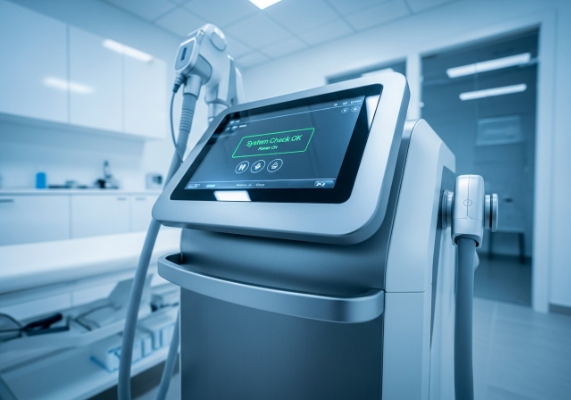
As a manufacturer, I receive this question from many overseas buyers who want machines that can protect themselves during daily operation and reduce long-term service risk for their distributors.
Most mid- to high-end shockwave therapy machines include automatic fault-detection functions such as power-on self-tests, handpiece-connection monitoring, pressure-deviation alerts, frequency-stability checks, and temperature protection, all designed to stop unsafe operation and notify the operator immediately.
These systems directly affect safety, performance, and long-term equipment stability.
How can built-in fault detection reduce machine downtime and maintenance costs?
In my daily production testing, I often see how early fault detection prevents minor abnormalities from turning into expensive failures, which is why buyers value strong diagnostic features.
Built-in fault detection reduces downtime by identifying abnormal conditions early, pausing unsafe output, and providing clear troubleshooting guidance that prevents severe internal wear, unnecessary part replacement, and unpredictable maintenance expenses 1.

Shockwave generators operate under mechanical vibration and high temperature. When pressure shifts or frequency becomes unstable, damage can accumulate quickly. A diagnostic system stops the process at the first sign of trouble, so the machine avoids internal stress.
Without fault detection, operators keep using the machine even when early symptoms appear. This results in overheating, projectile wear, and air-system collapse long before the usual service cycle. Distributors then face higher warranty costs.
Cost Advantages of Built-In Diagnostics
| Cost Factor | Without Fault Detection | With Fault Detection |
|---|---|---|
| Unexpected downtime | High | Low |
| Repair frequency | Frequent | Reduced |
| Component replacement | Trial-and-error | Targeted |
| Technician workload | Heavy manual checks | Guided troubleshooting |
| Total service cost | Increasing | Predictable |
A clear alert system allows even inexperienced operators to respond correctly. This reduces service calls and improves customer confidence in the distributor’s brand.
How Diagnostics Protect Internal Components
Fault detection monitors sensor values several times per second. When a value exceeds the normal range, the machine stops immediately. This protects the generator, handpiece, pressure system, and motor. By preventing misuse, the system extends the lifespan of every core component 2.
What kinds of fault detection (handpiece disconnection, pressure deviation, frequency instability) are typical?
During quality-control checks, I simulate common failure scenarios to make sure the machine reacts correctly before it reaches a client’s warehouse.
Typical shockwave detection includes handpiece-connection monitoring, pressure-sensor deviation alerts, frequency-stability checks, thermal overload protection, and shot-count maintenance reminders, each designed to maintain treatment consistency and protect internal components.
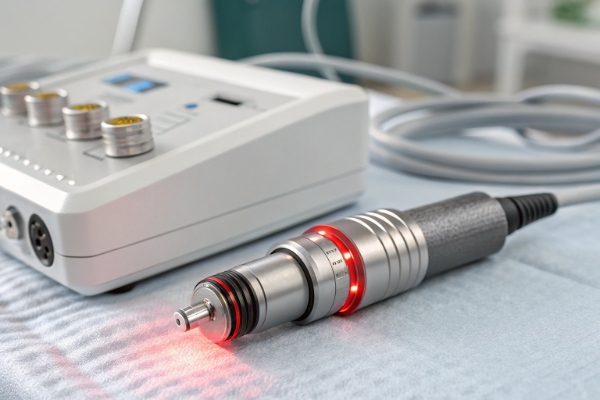
Handpiece disconnection is the most common user-side issue. When the connector becomes loose, the machine stops output immediately and instructs the operator to fix the connection.
Pressure deviations indicate air leaks or internal stress. The sensors detect out-of-range values and pause the operation. This reduces the risk of projectile or tube damage.
Frequency instability appears when components wear or when the motor struggles under load. The system compares actual frequency with the target frequency and stops pulses if the deviation is too large.
Overheating is another risk, especially for long, high-intensity sessions. Temperature sensors 3 cut off output and protect the motor coil from irreversible damage.
Typical Detection Types
| Fault Type | Sensor Used | Machine Response |
|---|---|---|
| Handpiece disconnection | Connector sensor | Output blocked + alert |
| Pressure deviation | Pressure transducer | Auto-pause + warning |
| Frequency instability | Frequency comparator | Stop pulses + reset |
| Temperature overload | Heat sensor | Cooldown + lockout |
| Shot-count limit | Internal counter | Maintenance reminder |
These events, if ignored, can destroy internal mechanisms. Early alerts prevent long-term wear and protect the machine from repeated stress.
Why These Faults Require Immediate Action
Each failure mode can escalate quickly. Pressure issues impact energy delivery, overheating reduces motor life, and frequency drift signals vibration stress. Automatic detection stops damage before it spreads, keeping daily use stable and safe.
How should a buyer review the machine’s UI/logging and fault-history reporting?
During OEM projects, I often advise buyers to review UI screenshots before confirming a production run because the UI determines how easily their end customers can handle technical issues.
Buyers should evaluate whether the UI provides clear text alerts, accessible fault-history menus, timestamps, shot-count logs, and simple navigation, because strong reporting greatly improves troubleshooting efficiency 4 and reduces warranty claims.
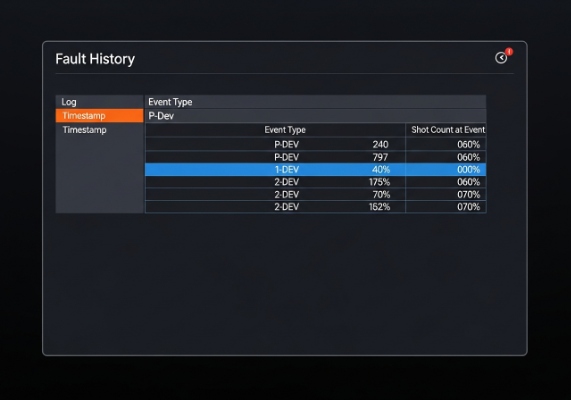
The first thing to check is whether the error messages use plain English. A good UI avoids confusing codes that require technical training.
A proper fault-history menu stores past events. Without this, technicians must reproduce the problem manually, which costs time and increases downtime for the salon.
Timestamps allow the distributor to identify patterns and root causes. This is essential for recurring pressure or frequency issues.
Shot-count logs help determine when consumable components require replacement 5. Many unnecessary service requests come from operators who don’t realize the handpiece has reached its normal service cycle.
If the UI supports screenshots or export functions, distributors can diagnose remotely. Even a quick photo sent by WhatsApp can solve a case.
UI Evaluation Criteria
| UI Component | What to Look For | Benefit |
|---|---|---|
| Error messages | Clear sentences | Faster training |
| Fault history | Easy access | Faster support |
| Timestamps | Accurate logs | Pattern recognition |
| Event labels | Logical grouping | Easier analysis |
| Export options | Screenshot/USB | Remote diagnosis |
A high-quality UI reduces confusion, improves user confidence, and minimizes complaints.
Why UI Matters for Distributors
Distributors handling multiple product lines need equipment that requires minimal support. A strong UI lowers training time, reduces operator mistakes, and cuts down on unnecessary warranty claims. This directly strengthens brand credibility.
What impact does automatic detection have on serviceability and reliability?
When designing internal diagnostic logic, I focus on how easily technicians can locate issues without opening the housing and how well the machine protects itself during long-term use.
Automatic detection improves serviceability by identifying the exact source of faults and guiding technicians, while improving reliability by preventing overheating, pressure stress, vibration wear, and misuse, resulting in longer equipment lifespan 6 and fewer repair events.

Technicians benefit from clear fault messages and logs because they no longer need to guess the problem. This reduces repair time and helps distributors manage support cases more efficiently.
Reliability increases as the machine automatically blocks unsafe operation. This prevents internal components from being exposed to long-term stress and excessive temperature spikes.
Automatic detection also reduces the number of unexpected failures at customer sites. Operators receive immediate alerts and can adjust their usage before causing permanent damage.
Reliability Comparison
| Reliability Factor | Without Detection | With Detection |
|---|---|---|
| Motor overheating | High risk | Controlled |
| Pressure drift | Severe impact | Stabilized |
| Misuse damage | Frequent | Limited |
| Operator error | Common | Reduced |
| Long-term lifespan | Shorter | Longer |
Reliable diagnostics protect the equipment and provide predictable service cycles, which is essential for distributors working with clinics, physiotherapy centers, and salon chains.
Compliance and Safety
Automatic detection systems are crucial for meeting electrical safety standards like IEC 60601-1 7, which requires medical devices to maintain safety even under single-fault conditions. This is a core regulatory requirement in many markets. Specifically, regulatory requirements for medical devices 8 mandate that devices maintain essential performance under anticipated fault conditions.
Long-Term Benefits for Buyers
A machine with full diagnostic logic creates fewer complaints, fewer returns, and fewer surprise breakdowns. This improves business stability and strengthens your brand reputation.
Conclusion
Built-in fault-detection systems protect internal hardware, reduce downtime, simplify troubleshooting, and ensure long-term stability for professional shockwave therapy machines. This adherence to diagnostic standards ensures compliance with global medical safety standards 9 and supports efficient after-sales service, making the product easier to sell and maintain in competitive markets 10.
Footnotes
1. Article explaining the purpose and financial benefits of implementing fault detection systems to prevent unpredictable maintenance costs. ↩︎
2. Engineering resource detailing why proactive monitoring is critical for maximizing the operational lifespan of complex electromechanical equipment. ↩︎
3. Research discussing the importance of thermal monitoring and control in high-energy medical devices to prevent tissue damage and component failure. ↩︎
4. Resource explaining how effective fault diagnosis and prognosis tools significantly increase the efficiency of repair and maintenance processes. ↩︎
5. Manufacturer’s guide providing recommendations for regular inspection and replacement intervals for shockwave handpiece consumable components. ↩︎
6. Study linking consistent machine performance and reliability, often achieved through fault detection, to the overall longevity of therapeutic devices. ↩︎
7. TUV SUD guide on the necessity of comprehensive testing, including single-fault conditions, for IEC 60601-1 compliance. ↩︎
8. Regulatory resource emphasizing the mandatory requirement for medical devices to maintain essential performance under anticipated fault conditions. ↩︎
9. FDA guidance on maintaining device safety, including guidelines for usability and consideration of error states in medical equipment design. ↩︎
10. Industry analysis confirming that robust diagnostic features are key factors that support efficient after-sales service and reduce the TCO for distributors. ↩︎

 English
  Español de México
  Deutsch
  Français
  العربية
  Русский