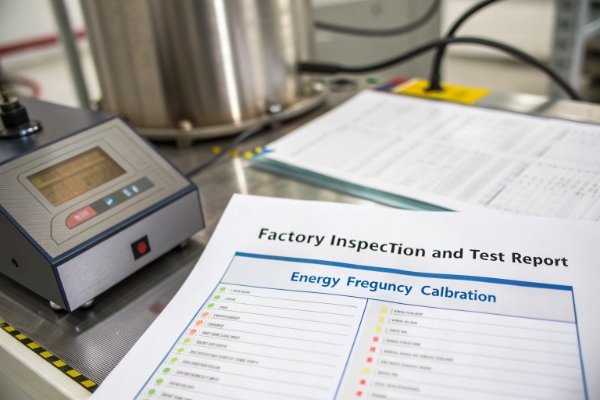
When we prepare each shockwave therapy machine 1 for shipment, quality verification is the last step we never skip.
Yes—every shockwave therapy machine we ship is accompanied by a factory inspection and test report. This document confirms that the machine meets its declared performance, passes all safety and calibration checks, and carries a traceable record of its production batch and serial number.
That inspection report travels with the device because it matters for both import clearance and end-user confidence—it shows customs officers, distributors, and clinics that the machine is tested, safe, and ready for clinical or aesthetic use.
The factory inspection and test report 2 is also a key document for documentation compliance and importer validation.
Why Is a Factory Test Report So Important?
I always remind importers that paperwork is part of performance.
A proper test report proves the unit was functionally verified, complies with standards like IEC 60601-1/-1-2 3, and is electrically and acoustically safe.
It also speeds customs clearance 4, supports warranty validation, and protects your brand if local authorities audit your stock.
How the report helps
- Import & regulatory clearance: Authorities often request traceable test or calibration data.
- Distributor liability protection: Documents show that the machine was compliant at shipment.
- After-sales service: Calibration references help technicians benchmark future maintenance.
- Quality image: Buyers recognize a complete QC file as a sign of serious manufacturing discipline.
What Quality-Control Documents Should Be Provided?
Each unit’s documentation pack is standardized and traceable. We include both machine-specific test data and system-level certificates.
| Document Type | What It Covers | Why It Matters |
|---|---|---|
| Final Inspection Checklist | Visual check, labeling, accessories, firmware version | Confirms readiness and completeness |
| Performance Test Report | Output energy, frequency accuracy, pulse count verification, stability | Confirms claimed specifications |
| Electrical Safety & EMC Report | Leakage current, insulation, ground continuity, interference test | Meets IEC 60601-1/-1-2 5 requirements |
| Calibration Certificate | Reference instruments, traceability chain, calibration date | Proof of energy accuracy |
| Functional Run Log | Continuous test record (e.g., 10 000-pulse endurance) | Detects early failure patterns |
| Batch Traceability Record | Serial number, production lot, QC inspector signature | Enables recall or warranty tracking |
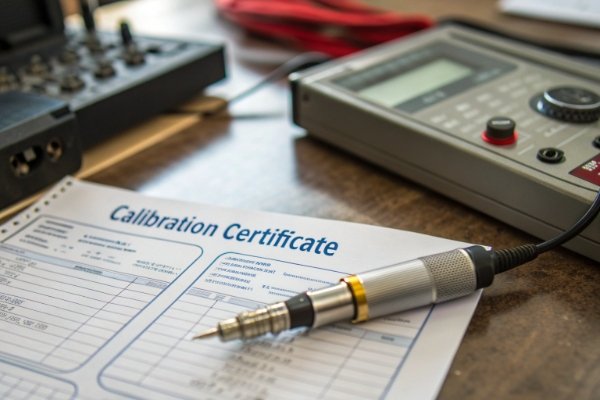
These records are stored under our ISO 13485 quality-management system 6 and linked to the serial number on the nameplate.
Should Suppliers Include Serial Numbers, Batch Records, and Test Logs?
Absolutely. Every professional manufacturer should.
Each machine should have a unique serial number, batch record, and test log 7 tied to its individual test results. That traceability lets distributors trace any performance issue to a specific lot of components or assembly date.
What Buyer Due Diligence Should Be Done on Supplier’s QC Process?
Many importers focus on certificates but forget the daily QC behind them. Here’s what smart buyers always verify before payment release.
- Confirm test documentation per serial number. Ask for a scanned copy of the actual test report, not a blank template.
- Verify calibration traceability — ensure the certificate cites an ISO/IEC 17025-accredited lab 8 or in-house calibration bench with traceable standards.
- Match model, firmware, and serial number consistently on the test report, invoice, and device label.
- Request endurance or aging logs for stability validation.
- Review batch and inspector information and confirm signature on the report.
- Validate labeling and safety marks like CE, UKCA, FDA 9 with supporting documentation.
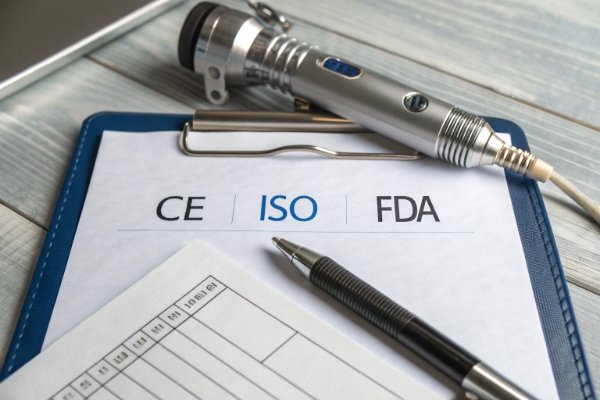
Recommended Documentation Package Checklist for Importers
When you audit or receive your shipment, this is the ideal set of QC and compliance papers you should expect:
| Document | Description | Issued By |
|---|---|---|
| Factory Inspection Report | Per-unit results of energy/frequency/pulse tests | Manufacturer QC dept. |
| Calibration Certificate | Output verified against calibrated reference | In-house or ISO 17025 lab |
| Safety & EMC Verification | Electrical safety and emissions compliance | Internal test or third-party |
| Final Visual & Function Test | Accessories, handpiece function, firmware check | QC inspector |
| Traceability Sheet | Batch, serial number, assembly and inspector IDs | Production/QC team |
| Warranty & Service Log Template | For future maintenance recording | After-sales team |
Buyers in regulated markets may also request a Declaration of Conformity 10, a Risk-Management Summary, and a Biocompatibility Statement for patient-contact parts.
Our Own QC Procedure Before Shipping
I personally sign off on the QC folder before dispatch. A unit does not leave the line until it passes each gate:
- Incoming component check (energy coil, pneumatic module, control board).
- Sub-assembly verification (pressure stability, trigger accuracy).
- Aging run (continuous pulses to simulate heavy use).
- Calibration of output energy and frequency.
- Electrical safety and ground integrity test.
- Final software and mechanical inspection.
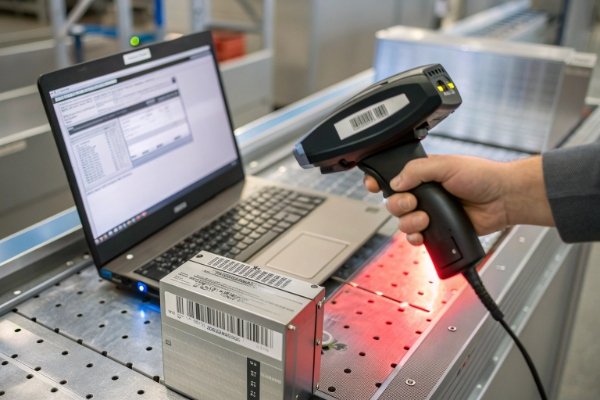
- Packaging integrity check with serial tracking scan.
Every test result is stored in our database and mirrored to our cloud QC system for OEM partners, so distributors can access reports online.
Conclusion
Every shockwave therapy machine should ship with a verifiable factory inspection and test report.
This isn’t just paperwork—it’s your evidence of quality, safety, and performance consistency. When choosing a supplier, always verify their QC documentation process, calibration traceability, and serial-level logs.
A reliable test report protects both your import approval and your clinic’s reputation.
Footnotes
1. Learn what a shockwave therapy machine is and how it operates. ↩︎
2. Guide to defining test plans and protocols for medical devices. ↩︎
3. Overview of IEC 60601 standards for medical device safety and EMC. ↩︎
4. Explanation of customs clearance procedures for medical devices. ↩︎
5. Details on IEC 60601 documentation requirements. ↩︎
6. What ISO 13485 quality-management systems ensure in manufacturing. ↩︎
7. Explanation of traceability records in medical device compliance. ↩︎
8. What ISO/IEC 17025 accreditation means for calibration labs. ↩︎
9. Overview of CE, UKCA, and FDA marks for medical devices. ↩︎
10. What an EU Declaration of Conformity includes for medical devices. ↩︎

 English
  Español de México
  Deutsch
  Français
  العربية
  Русский