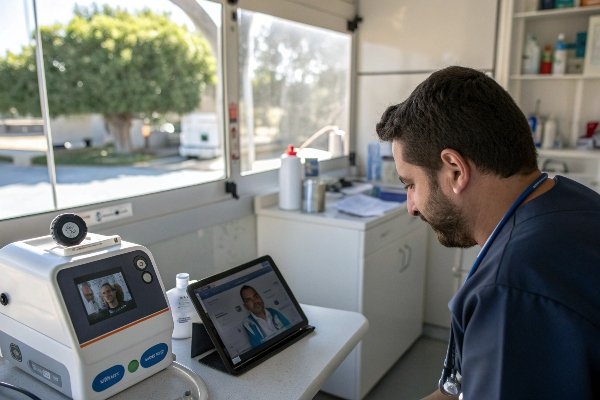
I keep hearing the same worry from buyers: “We need videos our staff can follow on day one, or we will get support calls.” I get it, and I plan for it.
Yes. Most professional suppliers provide videos and tutorials for shockwave therapy machines. These usually cover setup, operation, clinical techniques, care, and troubleshooting. Quality varies, but good suppliers keep videos current, organized by topic, and easy to access.
Buyers benefit when training media is scoped to the actual device revision, translated for frontline staff, and paired with quick-start checklists. Aligning tutorials with human factors guidance helps reduce use errors and speeds onboarding—see the FDA’s recommendations on applying human factors to medical devices 1.
Are training videos included for buyers?
I am asked this the moment pricing lands in the inbox: “Is training included, or is it an add-on?” I prefer to be clear from the start.
Training videos are commonly included for buyers at no extra charge, especially for clinic-grade devices. Deeper courses, certifications, or branded modules may be bundled at certain order sizes or offered as paid add-ons, depending on scope and region.

Most suppliers package a baseline training library with the machine, because it reduces onboarding friction and support tickets. What “included” means should be defined before purchase. Many manufacturers also align training control and records with ISO 13485 quality management requirements 2 so clinics can document competence.
What “included training” usually covers
The included set typically contains a short device overview, unboxing and installation, safety checks, the first power-on sequence, and a series of operation clips that map to common treatments. Strong programs follow usability engineering principles from IEC 62366 3 so the on-screen workflow matches how operators actually work. Good sets also include a maintenance video for wear parts, a handpiece hygiene guide, and a troubleshooting clip that explains error codes and basic recovery steps.
Table 1 — Typical “included vs. paid” training scope
| Training item | Usually included | Often paid/conditional | Notes |
|---|---|---|---|
| Unboxing & installation | ✅ | — | Safety checks, connections, first run |
| Basic operation & presets | ✅ | — | Start/stop, energy/frequency, shot counter |
| Maintenance & cleaning | ✅ | — | Transmitter care, filter/cover changes |
| Troubleshooting basics | ✅ | — | Error codes, common fixes |
| Clinical technique library | ⚪ Sometimes | ✅ | Depth by indication; often tiered |
| Certification course | — | ✅ | CE/CME credits or badges |
| Branded clinic modules | — | ✅ | Custom intros, logos, SOP alignment |
| Distributor trainer pack | ⚪ Sometimes | ✅ | Extended rights for local training |
Clear scope avoids mismatched expectations between purchasing and clinical teams. If a course offers formal credits, check the provider’s status with the ACCME 4 or your local accreditor.
How to confirm inclusion in a quote or contract
Contracts should list training deliverables: number of core videos, runtime ranges, languages, platform (private portal, USB, QR codes), update cadence, and access duration. If cleaning or reprocessing steps are taught, ensure they mirror FDA’s reusable-device guidance on reprocessing in healthcare settings 5.
Do tutorials explain clinical applications?
I often hear, “We need more than buttons; we need the why, where, and how on real anatomy.” That is a fair ask.
Well-designed tutorials do explain clinical applications. Strong libraries cover indications, contraindications, anatomical landmarks, patient positioning, coupling, parameter selection, dosing logic, and after-care. The best sets tie presets to evidence and show full treatments.

Clinics should verify that contraindications and warnings remain consistent with cleared or approved labeling; this aligns with the risk-management approach in ISO 14971 6.
Table 2 — Clinical tutorial checklist (use for vendor evaluation)
| Section | What to look for | Why it matters |
|---|---|---|
| Indication overview | Goals, expected response timeline | Sets realistic patient expectations |
| Anatomy & targeting | Landmarks, probe angles, depth hints | Improves accuracy and outcomes |
| Parameter rationale | Energy/frequency presets + why | Builds safe, consistent dosing |
| Technique demo | Hand position, motion, coupling | Reduces variability and discomfort |
| Safety & contraindications | Clear do/don’t guidance | Mitigates risk and claims |
| After-care | Stretching, rest intervals, notes | Improves adherence |
| Documentation | Session logs, shot counts, photos | Supports audits and QA |
Are videos available in multiple languages?
I am often asked to support multilingual frontlines: “Our therapists speak English and Spanish; our patients prefer English and French.” That is common in international programs.
Yes. Many suppliers localize videos into multiple languages or provide voice-over and subtitle tracks. Coverage depends on target markets. At minimum, English captions are typical; Spanish, French, German, and Chinese are common adds for international deployments.

For accessibility and consistency, ask for subtitle files in standard .srt subtitle format 7 and confirm captions meet WCAG 2.1 captioning guidance 8.
Table 3 — Language and access matrix
| Option | Voice-over | Subtitles | Typical access | Best for |
|---|---|---|---|---|
| Single EN master | English | English | Public/portal | Small markets, pilots |
| EN + key EU/NA | EN + FR/DE/ES | Multilingual | Portal/QR | Multi-site clinics |
| EN + APAC | EN + CN/JP/KR | Multilingual | Portal/USB | Distributors in Asia |
| Subtitle kit | Optional | Editable SRT | Shared drive | Fast localizations |
| On-device help | UI prompts | Short strings | Device screen | Day-to-day reminders |
If videos might include any patient information or clinical footage, ensure hosting and sharing respect the U.S. HIPAA Privacy Rule 9 or your local privacy laws.
Can suppliers provide live training sessions?
I often get a final question before PO: “Will you send a trainer or host a live webinar for our team?” I plan for that in project timelines.
Yes. Many suppliers provide live training—remote or on-site. Live sessions typically include device commissioning, supervision of first cases, and advanced Q&A. On-site workshops may carry fees or be bundled once order size crosses a threshold.

For secure distribution, suppliers often host libraries privately. Two common options are unlisted hosting on platforms like YouTube 10 or privacy-controlled album links on Vimeo (password/“only people with the link”). Confirm access rules in the contract.
Common formats for live training
There are four common formats. A commissioning session occurs on delivery day, with installation, verification, and first-use coaching. A virtual classroom is a 60–120-minute webinar for multiple clinics, focused on technique refreshers and new firmware features. A hands-on workshop brings a trainer on-site for half-day or full-day practical supervision; it may include patient volunteers or staff role-play. A train-the-trainer program certifies the buyer’s educators so they can scale training internally.
What to capture in a training statement of work (SOW)
A simple SOW prevents surprises. It lists session objectives, agenda and timing, number of participants, required room setup, live-stream needs, indications to be practiced, and post-session materials (checklists, quizzes, certificates). It also states who owns the recordings and how long the clinic can access them.
Conclusion
Training videos are widely provided and often included; clinical tutorials matter most; multilingual options are common; and live sessions are available. Clear scopes, languages, and schedules make rollouts smooth.
Footnotes
1. FDA human factors guidance reduces use errors and aligns tutorials with safe workflows. ↩︎
2. ISO 13485 helps structure training records and staff competence evidence. ↩︎
3. IEC 62366 usability engineering underpins effective, realistic device training flows. ↩︎
4. ACCME accreditation verifies continuing education credibility for clinicians. ↩︎
5. FDA reprocessing guidance ensures cleaning tutorials match regulatory expectations. ↩︎
6. ISO 14971 anchors contraindications and warnings in documented risk management. ↩︎
7. SubRip (.srt) is a common, editable subtitle format for localization. ↩︎
8. WCAG 2.1 captions improve accessibility and reduce misinterpretation. ↩︎
9. HIPAA Privacy Rule governs sharing media that might include patient information. ↩︎
10. YouTube “Unlisted” keeps training videos accessible without public listing. ↩︎

 English
  Español de México
  Deutsch
  Français
  العربية
  Русский