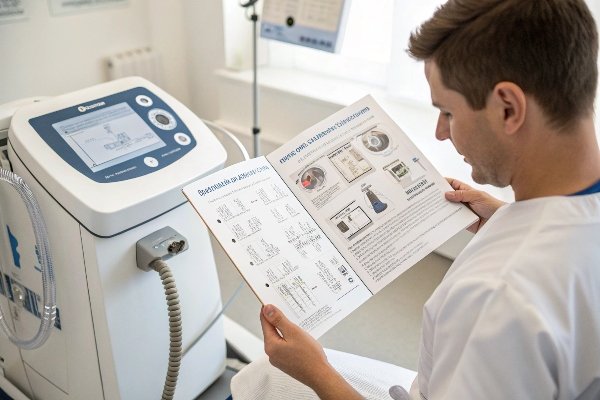
I often receive this question from new distributors: “Will you give me a cleaning or maintenance guide?” The answer matters because poor maintenance ruins even the best device.
Yes, most reputable suppliers of imported shockwave therapy machines provide detailed maintenance and cleaning guides. These guides include cleaning protocols, maintenance schedules, and spare part care instructions to ensure long-term performance and regulatory compliance.
Manufacturers typically align their maintenance documentation with global standards such as ISO 13485:2016 1 and IEC 60601-1 maintenance safety guidelines 2, which ensure equipment upkeep and hygiene consistency across markets.
What cleaning instructions are included?
I always check how suppliers explain daily cleaning because it reflects their manufacturing quality and clinical awareness.
Cleaning guides usually include specific steps for disinfecting the handpiece, probe, and housing; removing gel residue; drying surfaces; and avoiding harsh chemicals that may damage seals or electronics.

Detailed cleaning guidance is based on disinfection principles from ISO 17664:2017 3 and medical device hygiene regulations like the FDA Reprocessing Guidance for Reusable Devices 4.
Typical cleaning checklist
| Area | Cleaning frequency | Recommended method | Key caution |
|---|---|---|---|
| Handpiece exterior | After each use | Wipe with soft cloth & approved disinfectant | Avoid alcohol >70% |
| Applicator heads | After each use | Remove gel & disinfect with mild solution | Don’t soak in water |
| Cable & connectors | Weekly | Inspect & wipe dry | Don’t twist or pull |
| Console surface | Daily | Wipe with non-abrasive cloth | Prevent fluid ingress |
| Air vents & fans | Monthly | Blow dust gently | Unplug before cleaning |
Are maintenance schedules recommended?
I’ve seen that the best suppliers always include clear schedules—it’s the difference between casual sellers and professional OEMs.
Yes. Maintenance schedules are clearly recommended, often listing daily, weekly, and monthly checks. They specify cleaning tasks, lubrication cycles, component inspections, and replacement intervals based on shot counts or hours of use.
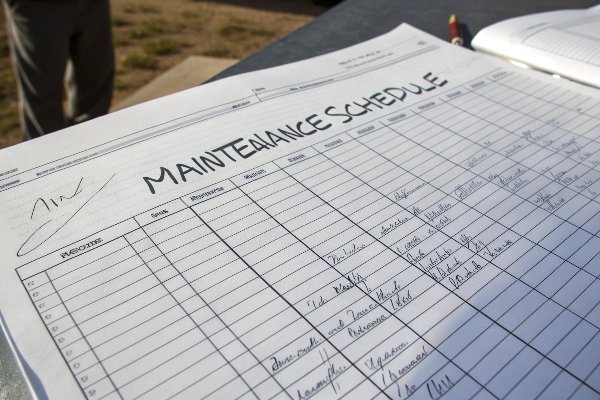
Structured schedules are designed following preventive maintenance concepts under IEC 62353 5, which governs recurrent testing and inspection for medical electrical equipment.
Sample maintenance timeline
| Frequency | Task | Responsible staff | Remarks |
|---|---|---|---|
| Daily | Clean handpiece, remove gel, wipe console | Operator | Log in daily sheet |
| Weekly | Inspect O-rings and cables | Technician | Replace if cracked |
| Monthly | Verify shot counter, clean fan vents | Operator | Record in log |
| Quarterly | Replace bullet/guide tube | Service tech | Use OEM kit only |
| Annually | Full calibration, firmware update | Authorized engineer | Certificate required |
Maintenance documentation often includes a digital log system for traceability, as suggested by 21 CFR 820.200 – Servicing Records 6.
Do guides include spare part care?
In every supplier audit I’ve done, I focus on this: do they teach how to handle revision kits and spares correctly?
Yes. Maintenance guides usually contain spare part care sections explaining how to replace consumables like projectiles, guide tubes, O-rings, and filters. They also describe proper lubrication and storage of unused kits.
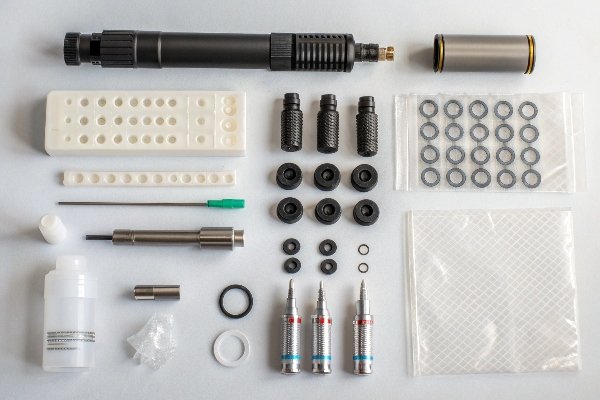
Spare part handling procedures typically follow storage recommendations from ISO 22301 Business Continuity Management 7 to ensure uninterrupted operation in clinical environments.
Storage and handling tips
Spare kits should be stored in a dry, temperature-stable place. Keep each kit labeled by batch and date. Avoid touching lubricated parts with bare hands to prevent contamination.
Some suppliers include lubrication charts compliant with EU MDR Annex I – Safety and Performance Requirements 8 for traceability.
Can digital manuals be requested?
I often advise new importers: always request the digital version—it’s easier to translate and archive.
Yes. Almost all suppliers provide PDF or online manuals that include operation, cleaning, and maintenance sections. OEM clients can request multilingual digital copies or editable versions for branding and training.

Digital documentation aligns with the ISO/IEC 26514 standard 9 for user manual structure and ensures consistent formatting for multilingual distribution.
Cloud-based manuals may also include revision history logs under FDA 21 CFR Part 11 compliance 10 for secure record-keeping.
Conclusion
Reliable suppliers always provide detailed cleaning and maintenance guides. Following them ensures longer device life, stable energy output, and warranty protection—proof that the supplier values long-term partnership, not just the sale.
Footnotes
1. ISO 13485 – Quality management for medical device manufacturing and maintenance. ↩︎
2. IEC 60601-1 – Electrical safety and maintenance provisions for medical devices. ↩︎
3. ISO 17664 – Reprocessing and cleaning instructions for reusable medical devices. ↩︎
4. FDA guidance for reprocessing reusable medical devices in healthcare settings. ↩︎
5. IEC 62353 – Recurrent test and inspection standard for medical equipment. ↩︎
6. 21 CFR 820.200 – FDA servicing records and maintenance documentation rule. ↩︎
7. ISO 22301 – Storage and continuity management for critical medical assets. ↩︎
8. EU MDR Annex I – Requirements for safety, performance, and maintenance traceability. ↩︎
9. ISO/IEC 26514 – Structure and content standard for user manuals and guides. ↩︎
10. 21 CFR Part 11 – Electronic records and signature management for digital manuals. ↩︎

 English
  Español de México
  Deutsch
  Français
  العربية
  Русский