As the manufacturer, I see many requests about custom packaging, so I try to explain the real options in a simple and honest way.
Yes, shockwave therapy machine packaging can be customised with branded boxes, private-label artwork, inserts, and labels, and the minimum order quantity usually ranges from 500–1000 cartons depending on the printing method and supplier. Costs vary by material, printing colours, and storage needs.
Here is how the full process works and what you should expect.
What options are available for branded or private-label packaging?
As the manufacturer, I receive many requests for branded boxes, so I know how confusing the options can be for new buyers.
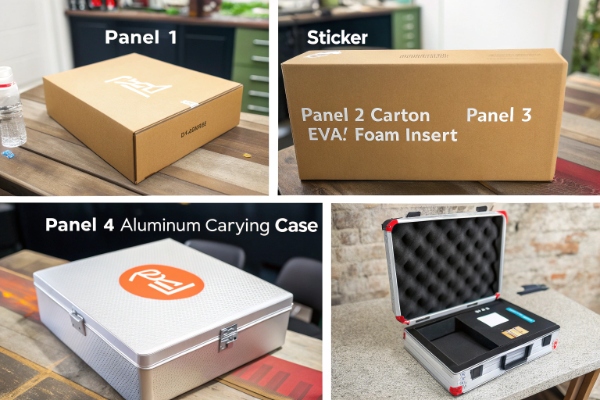
Branded packaging options include colour-printed cartons, custom inserts, branded shipping boxes, labels, manuals, and protective cases, and each option varies in cost, durability, and lead time depending on material thickness and printing style 1.
Understanding the Range of Packaging Options
Buyers often imagine only a colour box, but packaging has many layers. I explain each layer so you can choose what fits your brand and budget.
1. Common Custom Packaging Types
| Packaging Type | What Can Be Customized | Cost Level | Notes |
|---|---|---|---|
| Color Printed Box | Artwork, logo, brand colors | Medium | Requires higher MOQ |
| Brown Carton + Sticker | Sticker design | Low | Best for small orders |
| EVA / Foam Insert | Layout, thickness | Medium | Protects machine during shipping |
| Carrying Case | Shell color, logo plate | High | For premium brands |
2. Custom Color Boxes
This is the most popular option for distributors who want a clean retail look. You can change background colours, artwork, logo placement, and product photos. The structure stays the same unless you need a special shape, which requires tooling.
3. Custom Stickers
This is the fastest and most flexible option. I recommend this when your volume is low or when you need urgent shipments. Stickers are printed in small batches and applied to standard cartons.
4. Manuals and Insert Cards
These help standardize your brand voice. The cost is low, but they help your product feel consistent.
5. Custom Transport Cartons
These are brown shipping cartons with printed logos or handling marks. They are strong and meet courier requirements.
Why Buyers Choose Each Option
Some buyers choose full-printed boxes for brand-building. Others choose stickers because their order quantity is small or their product line is still growing. Both solutions work well; the key is to match cost with your sales volume.
What is the MOQ and cost for packaging customisation?
As the manufacturer, I must explain MOQ clearly because it affects almost every decision you make.
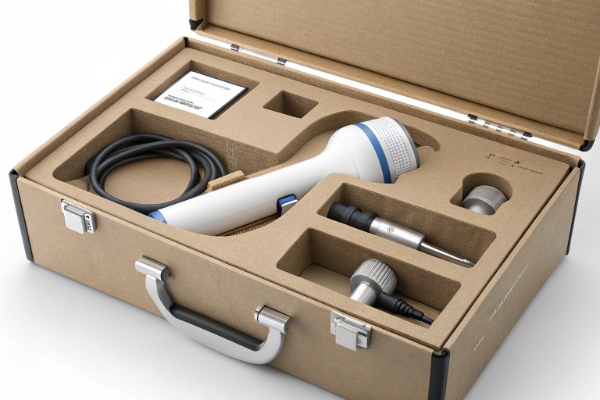
Most suppliers require 500–1000 cartons as MOQ 2 for fully printed boxes, while stickers can be produced starting from 100–200 sets, and total cost depends on size, material, and storage requirements arranged with the factory.
Why MOQ Requirements Exist
Carton factories run large printing machines. They do not stop machines for small batches because the setup cost is high. This is why the MOQ normally starts at 500–1000 pieces.
Here is how MOQ usually works:
MOQ Table for Different Packaging Types
| Packaging Type | Typical MOQ | Cost Range per Unit | Notes |
|---|---|---|---|
| Full Printed Color Box | 500–1000 pcs | $0.60–$1.50 | Depends on thickness & colors |
| Brown Carton with Print | 500 pcs | $0.40–$0.80 | Simple and durable |
| Sticker Label | 100–200 pcs | $0.05–$0.20 | Best for small orders |
| Custom Carrying Case | 200–500 pcs | $3–$10 | For premium machines |
What If You Cannot Meet the MOQ?
I often help customers with two practical solutions:
Option 1 — Buy More Cartons Than Machines
You buy 1000 cartons but 300 machines.
We store the extra 700 cartons for your next orders.
Option 2 — Use Stickers for Now
You start with stickers.
When your sales grow, move to full printed boxes.
Both options reduce your risk and help maintain brand consistency.
How can packaging design support your brand identity?
As the manufacturer, I see how good packaging elevates brand value, so I always guide customers to use packaging as part of their long-term strategy.
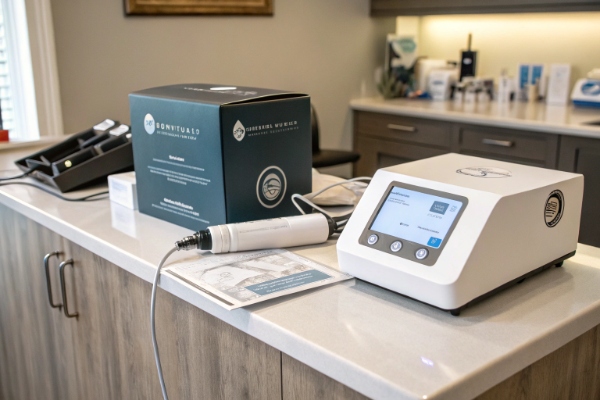
Packaging supports brand identity by using consistent colors, logos, messaging, and structural elements that reinforce your positioning, ensure recognition 3, and communicate quality to distributors and salon owners.
Why Packaging Matters for Beauty Equipment
Shockwave machines are not impulse-buy consumer products. They are professional devices sold to clinics and salons. Buyers care about perceived quality, and packaging contributes to that perception.
Elements That Strengthen Brand Identity
1. Color System
Use a repeatable color palette.
Avoid random changes each batch.
2. Fonts and Messaging
Short, clear phrases build trust.
Technical descriptions should be structured and simple.
3. Icons and Feature Highlights
Many brands add simple icons to explain key functions.
This helps non-technical buyers understand your product quickly.
4. Insert Design
Well-designed inserts make the unboxing experience clean and safe.
Poor inserts lead to damaged machines, and this hurts your reputation.
Example Brand Alignment Table
| Brand Goal | Packaging Element | Why It Helps |
|---|---|---|
| Premium Image | Matte laminated color box | Feels high-end |
| Fast-growing brand | Sticker system | Keeps cost low as brand scales |
| Professional clinic market | Strong brown carton | Protects during transport |
| Retail presence | High-resolution artwork | Improves shelf appeal |
What factors affect lead time for customised packaging?
As the manufacturer, I manage production schedules every day, so I know which factors slow down custom packaging jobs.
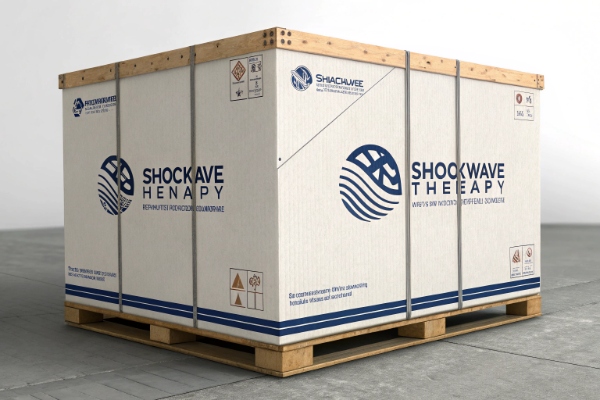
Lead time is affected by artwork approval, printing slot availability, carton material stock, order quantity, and whether inserts require new molds, with typical timelines ranging from 10–25 days for production, often requiring clients to start planning 6-8 weeks ahead 4.
How Lead Time Works
Most buyers only consider their machine production time, but packaging production runs in parallel. Understanding the timeline helps you plan your launch better.
Key Factors That Influence Lead Time
1. Artwork Approval
This is the biggest delay.
When customers send back revisions late, the whole schedule shifts.
2. Printing Factory Schedule
During peak seasons—like before Chinese New Year—printing lines are fully booked.
3. Material Availability
If you choose thick, high-grade paper, the supplier may need extra time to restock.
4. Insert Structure
Custom EVA or foam inserts require precise cutting.
If your layout changes, sample production takes extra days.
5. Volume
Large orders take longer to pack and palletize.
Typical Lead Time Breakdown
| Step | Days Required | Notes |
|---|---|---|
| Artwork Confirmation | 2–5 days | Depends on how fast you review |
| Printing Preparation | 3–7 days | Plate setup and material prep |
| Production | 5–10 days | Depends on order size |
| QC and Packing | 2–3 days | Ensures correct printing |
| Total | 12–25 days | Average range |
What are the regulatory considerations for medical device packaging?
Because shockwave machines can be classified as medical devices, packaging customization is subject to stricter rules than consumer goods.
Medical device packaging must comply with standards like ISO 11607 5 and FDA regulations (21 CFR Part 820) to ensure the device is protected from damage, maintains its integrity during transport, and features correct, non-misleading labeling.
Key Regulatory Requirements for Custom Packaging
- Protection and Integrity: Packaging must be designed and constructed to protect the device from damage or alteration during processing, storage, and shipping (FDA Sec. 820.130).
- Material Traceability: Materials used for packaging should be traceable, non-toxic, and non-leaching, especially if the device is sterilized (ISO 11607).
- Labeling: Labels, including any printed graphics on the box, must clearly state the name and location of the manufacturer/distributor and the intended use of the device, avoiding any misleading statements 6.
- Validation: Any custom packaging design requires validation testing to ensure it withstands shipping stress (e.g., burst tests, seal integrity) and protects the device’s function 7.
Packaging Materials and Safety
The choice of materials is highly regulated. For instance, High-Impact Polystyrene (HIPS) 8 and recycled PET (RPET) are common, but must be confirmed non-toxic and suitable for the product’s environment.
Final Compliance Check
Custom packaging is a labeling extension of the medical device. Therefore, the OEM/distributor must ensure their branded packaging does not conflict with the device’s approved classification or intended use 9.
Conclusion
Custom packaging is flexible, affordable, and effective for growing your brand when planned with the right MOQ, timeline, and design strategy. However, for a shockwave therapy machine, the design must also adhere to strict medical device standards to ensure product safety and regulatory compliance 10.
Footnotes
1. Discussion on how materials and design for medical device packaging must adhere to strict regulations for safety and durability. ↩︎
2. Article explaining the rationale behind high minimum order quantities (MOQ) for custom offset printed boxes due to high setup costs. ↩︎
3. How custom printed boxes, even in wholesale quantities, can be used effectively as a communication and branding tool for businesses. ↩︎
4. Overview of the time required for custom packaging production, emphasizing the need for clients to start planning months in advance. ↩︎
5. Analysis of the international standard ISO 11607, which dictates the requirements for sterile barrier systems and protective packaging for medical devices. ↩︎
6. Detailed explanation of the FDA’s labeling requirements, which apply to all printed material accompanying a medical device, including packaging. ↩︎
7. Reference to the necessity of validation testing for medical device packaging to ensure it maintains integrity during shipping and storage. ↩︎
8. Information on common material selection for medical device packaging, such as high-impact polystyrene, and the required regulatory compliance. ↩︎
9. Discussion on how a device’s classification (e.g., Class I, II, or III) determines the specific regulatory provisions that govern its packaging standards. ↩︎
10. Overview of key regulatory standards like FDA and ISO 11607 that guide the design and manufacturing of medical device packaging for compliance and safety. ↩︎

 English
  Español de México
  Deutsch
  Français
  العربية
  Русский