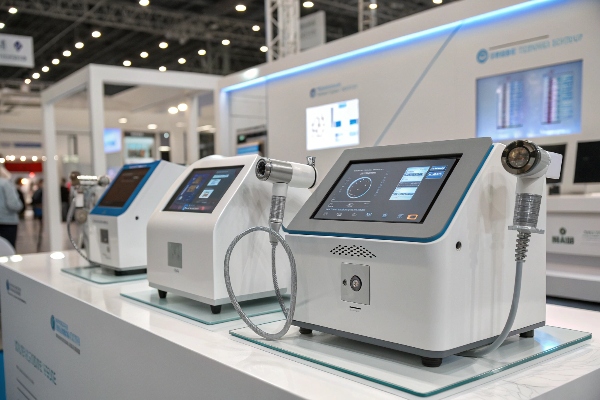
As a manufacturer serving clinics and distributors worldwide, I hear this request almost daily: “Can you tailor the machine to our way of treating patients?”
Yes. Most imported shockwave therapy machines can include custom functions—both hardware and software—when you work with an OEM/ODM-capable supplier. We can modify protocols, interfaces, connectivity, and accessories within regulatory limits, then validate the changes so your clinic gets repeatable results.
If you want real differentiation without regulatory headaches, you need clear scope, a realistic timeline, and documented verification. Let’s break it down.
What Functions Can Be Customized by Suppliers?
I like to start by mapping “wish list” features into hardware, firmware, and workflow layers. This keeps the project safe, testable, and on-budget.
Working with an experienced OEM or ODM medical equipment manufacturer 1 helps ensure the right balance between customization and compliance.
Common customizations include treatment protocols, preset libraries, multilingual UI, branding, handpiece and applicator sets, pulse modes, usage locks, EMR connectivity, and region-specific limits. Hardware redesigns take longer; software and workflow tweaks move faster.
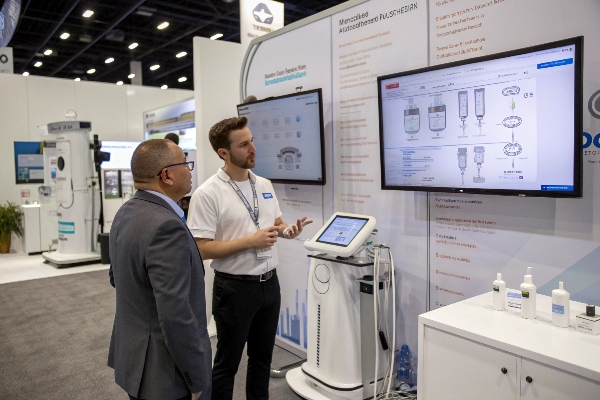
The Customization Landscape At A Glance
| Layer | Customizable Items | Typical Effort | Notes & Risks |
|---|---|---|---|
| Branding | Logo, splash screen, UI theme, packaging, manuals | Low | No functional change; quick approvals |
| UI & Languages | Multilingual menus, icons, larger fonts, color-blind palettes | Low–Medium | Validate translations; keep safety wording consistent |
| Protocols | Preset libraries by indication (e.g., plantar fasciitis, tendinopathy), step-by-step wizards | Medium | Needs clinical review and verification logs |
| Parameters | Energy range steps, frequency ceilings, burst/pause patterns | Medium | Must respect hardware and regulatory limits 2 |
| Workflow | Role-based logins, usage counters, maintenance reminders | Medium | Great for multi-site standardization |
| Connectivity | USB export, Wi-Fi/LAN, HL7/FHIR, remote diagnostics | Medium–High | Security review and IT compliance 3 required |
| Safety Locks | Region locking, indication locks, password-protected max settings | Medium | Useful for compliance and rental fleets |
| Handpiece | Grip geometry, cable length, color coding, quick-release couplers | Medium–High | Ergonomics testing standards 4 matter |
| Applicators | Custom transmitter shapes/sizes, contact materials, color codes | Medium | Validate energy delivery and wear patterns |
| Electronics | Power supply options, input voltage ranges, surge protection | High | Requires new safety testing (IEC 60601) 5 |
| Chassis | Cart design, docking, storage for gels/applicators | High | Packaging re-qualification needed |
How I De-Risk Feature Requests
I group requests into three buckets—cosmetic, config, and core. Cosmetic is fast (branding, UI theme). Config changes (presets, ceilings) require verification and user validation. Core changes (power train, handpiece internals) demand full design control, risk analysis, and ISO 13485 certification 6 alignment. This keeps your launch plan realistic and audit-ready.
Can Software Settings Be Tailored for Clinics?
When hospital groups or national chains partner with me, software tailoring is where we unlock consistency across sites and staff.
Yes. We can tailor software settings: clinic-specific preset libraries, role-based permissions, language packs, maintenance prompts, audit trails, and EMR exports. These changes standardize care, reduce training time, and protect the device from misuse.
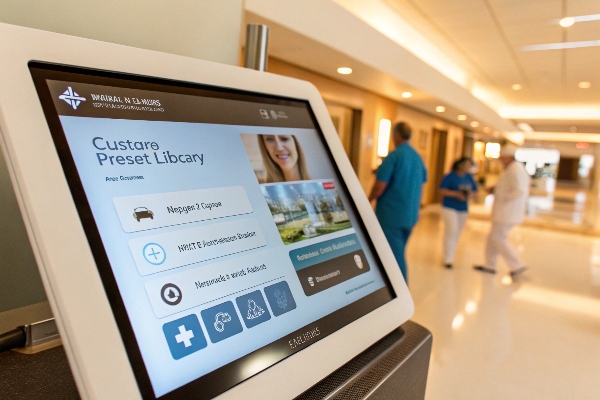
By implementing HL7 FHIR frameworks 7 and EMR interoperability standards 8, clinics can ensure smooth data exchange with hospital systems.
High-Impact Software Options For Real Clinics
| Software Option | What It Does | Benefit In Daily Use |
|---|---|---|
| Clinic preset library | Saves protocols by indication/provider preference | Faster setup, less variation |
| Energy/frequency ceilings | Locks maximum outputs per indication | Safety and consistency |
| User roles & PINs | Limits who can edit presets or service menus | Protects configuration |
| Maintenance scheduler | Pulse-count alerts, service logs, part-life trackers | Prevents downtime, extends lifespan |
| Language/UI packs | Adds languages and larger text/icon modes | Easier onboarding; fewer menu errors |
| Data export & EMR | CSV/HL7/FHIR session exports | Documentation and analytics |
| Kiosk/training mode | Safe demo with capped outputs | Education without risk |
How We Validate Tailored Software
I run changes through a lightweight, medical-device style process:
- Requirements capture: we define indications, limits, and user roles.
- Risk analysis: confirm no new hazards (e.g., unintended output at a locked setting).
- Verification: bench tests for outputs, locks, counters, and alarms.
- Usability checks: short hallway tests with your staff to confirm the flow.
- Release notes & training: quick guides, QR-coded videos, and a rollback path.
Avoiding “Version Chaos”
We assign your organization a configuration ID and store it in firmware. Every shipped unit matches that ID so IT, training, and service stay aligned. This also simplifies audits and warranty support.
How Does Customization Affect Delivery Time?
The honest answer: it depends on scope. Branding is quick; new hardware is not. I like to lay out a timeline so purchasing can lock dates early.
Minor software and branding customizations add 1–3 weeks. Protocol libraries and connectivity add 3–6 weeks. Handpiece or electronics changes can add 8–16+ weeks due to design, tooling, and safety testing. Packaging and manuals add 1–2 weeks.
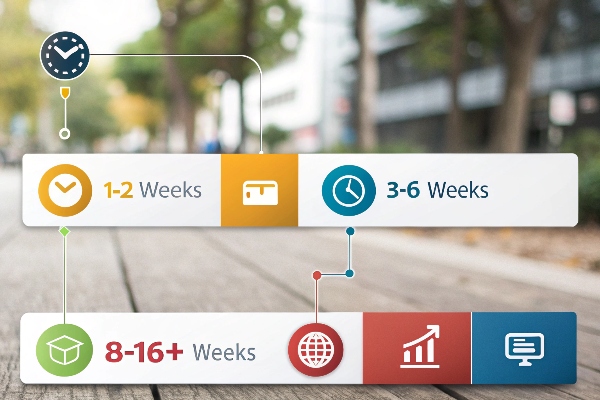
As supported by medical device development lifecycle studies 9, project duration largely depends on validation and documentation tasks.
Typical Lead-Time Model You Can Plan Around
| Workstream | Lead Time (Typical) | What’s Inside |
|---|---|---|
| Branding & UI skin | 1–2 weeks | Logo integration, splash screens, carton/label templates |
| Language packs | 1–3 weeks | Translation, UI fit checks, on-device review |
| Preset libraries & locks | 2–4 weeks | Build → verify outputs → clinic sign-off |
| Connectivity (USB/CSV/HL7) | 3–6 weeks | IT onboarding, security review, export mapping |
| Handpiece/applicator tweaks | 6–10 weeks | CAD → prototype → energy validation → wear tests |
| Electronics/power options | 8–16+ weeks | Schematics, EMC/safety re-tests, updated drawings |
| Cart/packaging revisions | 2–4 weeks | Foam/ISTA checks, drop/vibration qualification |
| Regulatory labeling/manuals | 1–2 weeks | Indications alignment, multilingual inserts |
Lead-Time Accelerators I Recommend
- Freeze the preset list early; micro changes cause re-verification.
- Parallel tasks: run packaging and manual work while firmware is in test.
- Golden sample approval stops scope creep and secures your production slot.
- Ship in waves: start with your top clinics; roll the rest after feedback.
Is There a Minimum Order for Customization?
MOQ is the question that decides whether we do simple branding or full OEM engineering. I always tailor the MOQ to effort and risk.
Yes, most suppliers set MOQs. Soft customizations (branding, UI themes, presets) can start at 10–20 units. Deeper changes (handpiece geometry, electronics, custom carts) typically require 50–200+ units or a one-time NRE (engineering) fee to offset tooling and validation.
The NRE (Non-Recurring Engineering) concept 10 explains how one-time setup costs can make small-batch customization feasible.
How MOQ Usually Scales With Effort
| Customization Type | Typical MOQ | Alternatives If You Can’t Meet MOQ |
|---|---|---|
| Branding & packaging | 10–20 units | Generic box + branded inserts |
| Language/UI packs | 10–20 units | Post-shipment firmware update kit |
| Preset libraries & locks | 10–30 units | Per-unit license fee |
| Connectivity add-ons | 20–50 units | External data logger accessory |
| Handpiece tweaks | 50–100 units | 3D-printed grips/sleeves for ergonomics |
| New applicator shapes | 100–200 units | Limited run with shared tooling cost |
| Electronics options | 150–300 units | Universal PSU + locale cables |
| Cart/chassis redesign | 150–300 units | Modular add-on shelves and holders |
Budgeting When Volumes Are Small
Two levers make low volumes workable:
- NRE (Non-Recurring Engineering) fee to cover design, fixtures, and validation.
- Phased rollout—ship baseline units first, then apply firmware customization as an on-site or depot update.
Practical Guardrails So Custom = Compliant
Because we ship into regulated markets, every customization runs through basic medical-device discipline. That protects you if regulators or insurers ask questions later.
What I always include
- Specification sheet + configuration ID that matches your PO.
- Verification records (outputs, alarms, locks, counters).
- Risk review to confirm no new hazards were introduced.
- Release notes & quick guide for your staff.
- Service impact sheet (spare parts, maintenance intervals, warranty scope).
What I never change without review
- Maximum energy beyond hardware limits,
- Safety interlocks, emergency stop behavior,
- Regulatory indications, labeling, and claims for the target market.
Conclusion
Custom functions are absolutely possible—and powerful—when they’re scoped, validated, and planned into your schedule. Define must-have software settings, lock timelines, align MOQs or NRE, and let your supplier prove performance with simple, traceable tests.
Footnotes
1. Guide to OEM vs ODM manufacturing models for medical devices. ↩︎
2. FDA guidance on medical device design and safety limits. ↩︎
3. HIPAA compliance requirements for healthcare IT. ↩︎
4. ISO ergonomics testing standards for handheld medical devices. ↩︎
5. IEC 60601 safety certification for medical electrical systems. ↩︎
6. ISO 13485 quality management system for medical devices. ↩︎
7. HL7 FHIR data exchange framework for healthcare. ↩︎
8. HIMSS standards for EMR interoperability. ↩︎
9. Medical Design Briefs article on device development timelines. ↩︎
10. Explanation of NRE engineering costs in product development. ↩︎

 English
  Español de México
  Deutsch
  Français
  العربية
  Русский