Every week, our production team receives calls from mobile therapists frustrated by machines that promised portability but delivered backaches and dead batteries ergonomic handpieces 1. We see this pattern constantly on our assembly lines—devices that look compact in photos but weigh down practitioners during six-hour home-visit schedules.
To evaluate shockwave therapy machine portability, assess five core factors: total weight under 10kg, battery life exceeding 50,000 pulses, compact dimensions fitting car trunks, durable carrying cases, and ergonomic handpieces. These criteria determine whether your mobile practice thrives or struggles with equipment limitations daily.
This guide breaks down every factor your downstream clients need quality metrics 2. We will cover practical weight assessments, transit-ready packaging, private-label 3 design options, and performance consistency. Let us dive into each critical evaluation point.
How do I evaluate if the machine's weight and size are practical for my mobile therapy customers?
When we ship units to distributors serving home-visit therapists, weight complaints rank among the top returns. Mobile practitioners carry equipment through apartment buildings, up staircases, and across parking lots daily. The wrong machine turns profitable house calls into exhausting struggles.
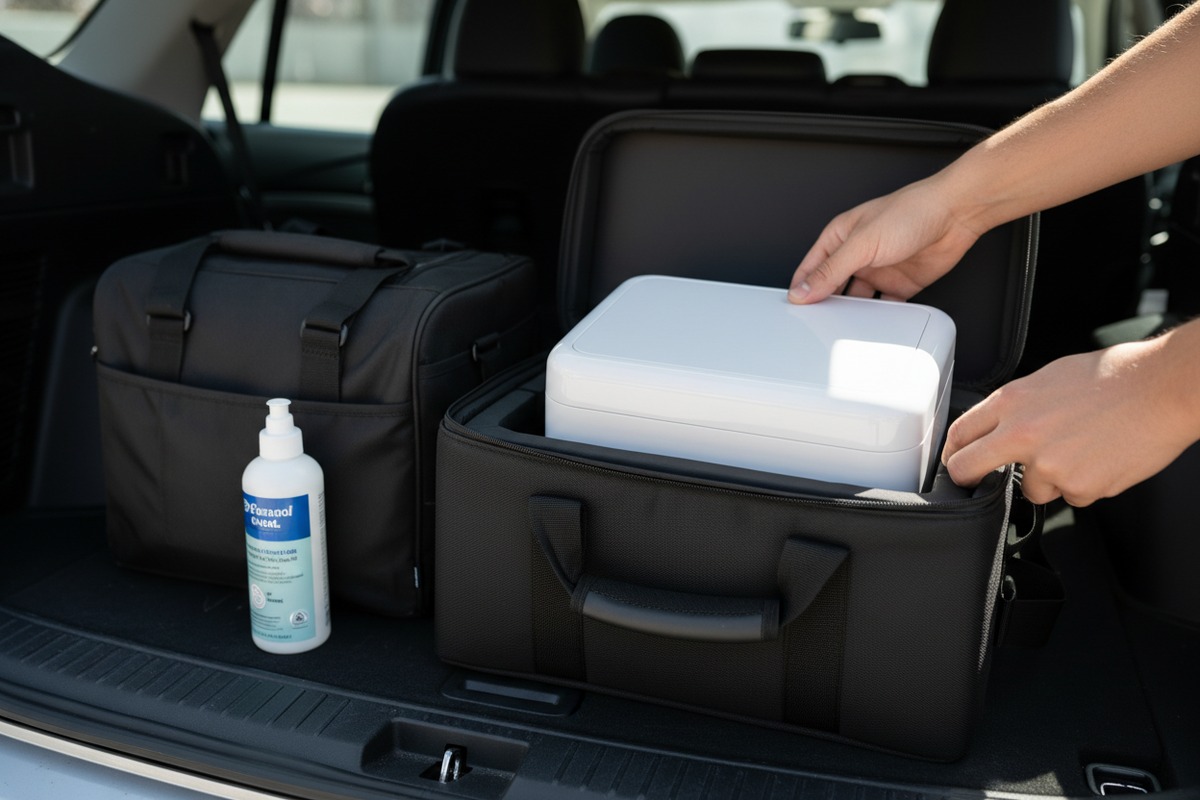
Evaluate practicality by targeting machines under 10kg total weight, dimensions under 12x10x6 inches, and included carrying cases with shoulder straps. Your mobile therapy customers need one-trip capability from car to treatment room, setup times under five minutes, and enough compactness to store alongside other professional supplies.
Understanding Weight Categories for Mobile Use
Our engineering team categorizes portable shockwave machines into three weight classes. Each serves different mobile therapy scenarios. Understanding these categories helps you match products to customer needs.
Ultra-light machines weigh under 5kg. These fit backpacks and enable public transit commutes. However, some sacrifice power output or penetration depth 4. Mid-weight machines range from 5-10kg. They balance performance with portability, suiting car-based therapists. Heavy portable units exceed 10kg. These often deliver clinic-grade results but strain mobile practitioners.
| Weight Class | Weight Range | Best For | Limitations |
|---|---|---|---|
| Ultra-light | Under 5kg | Backpack transport, public transit | May limit penetration depth |
| Mid-weight | 5-10kg | Car-based home visits | Requires carrying case |
| Heavy portable | 10-15kg | High-performance mobile clinics | Physical strain, cart needed |
Dimensional Considerations Beyond Weight
Weight alone does not determine portability. Our quality control inspectors measure dimensional practicality using car trunk tests. A 7kg machine measuring 20 inches wide creates more transport problems than a 9kg unit at 12 inches.
Consider your customers' typical vehicles. Compact car trunks average 13 cubic feet. A portable shockwave system with case, applicators, and gel supplies needs roughly 2-3 cubic feet. This leaves room for other equipment.
The One-Trip Test
We recommend distributors apply the "one-trip test" when evaluating machines for mobile therapy customers. Can a therapist carry the machine, applicator case, gel supplies, and paperwork in a single trip from vehicle to home? If not, the machine fails practical portability standards.
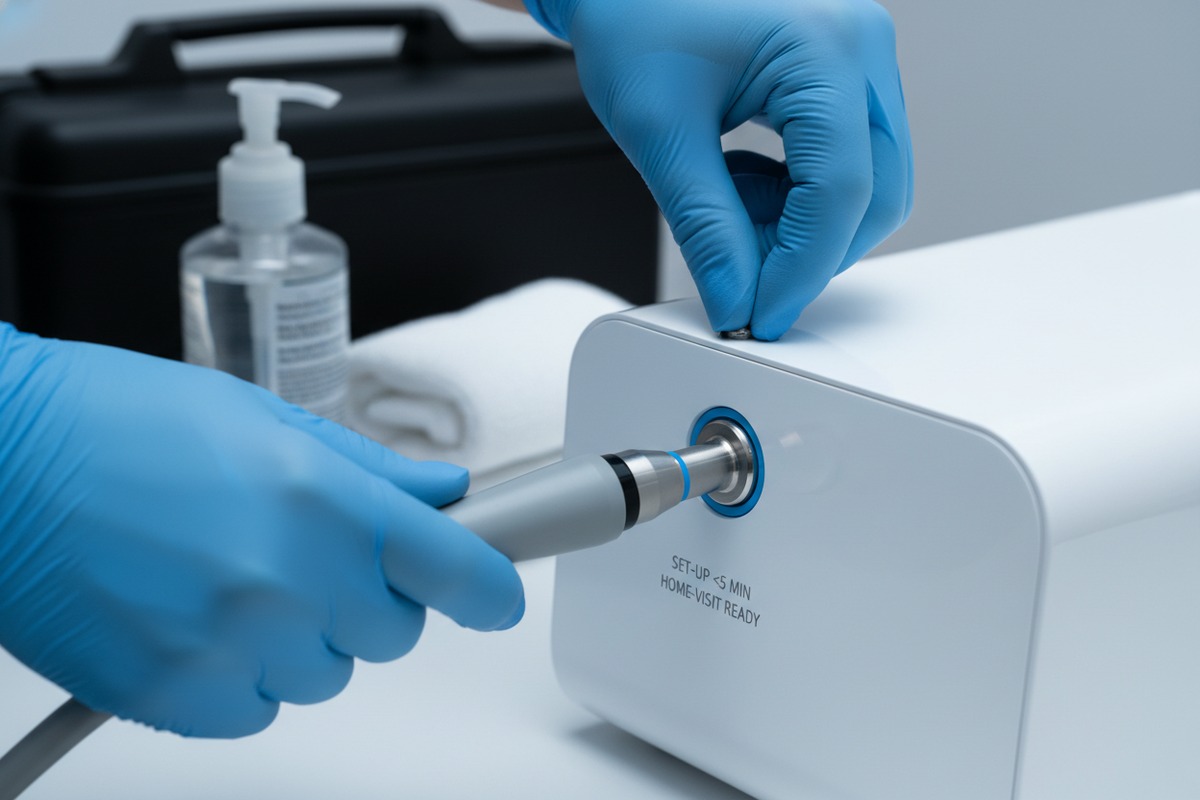
Setup time matters equally. Our field tests show therapists lose client trust when equipment assembly exceeds five minutes. Machines with quick-connect handpieces and intuitive interfaces win customer loyalty. Complex calibration routines frustrate both therapists and patients.
| Feature | Ideal Specification | Why It Matters |
|---|---|---|
| Total system weight | Under 10kg with case | Single-trip carrying |
| Longest dimension | Under 14 inches | Fits standard car trunks |
| Setup time | Under 5 minutes | Maintains professional image |
| Carrying case | Included, padded, shoulder strap | Hands-free transport |
What durability features should I require in the packaging to protect my investment during transit?
Our shipping department sees damaged units weekly from competitors who skimp on packaging. We learned expensive lessons before developing our current transit protection standards. Every cracked screen or misaligned handpiece connector represents lost revenue for distributors and frustrated end customers.
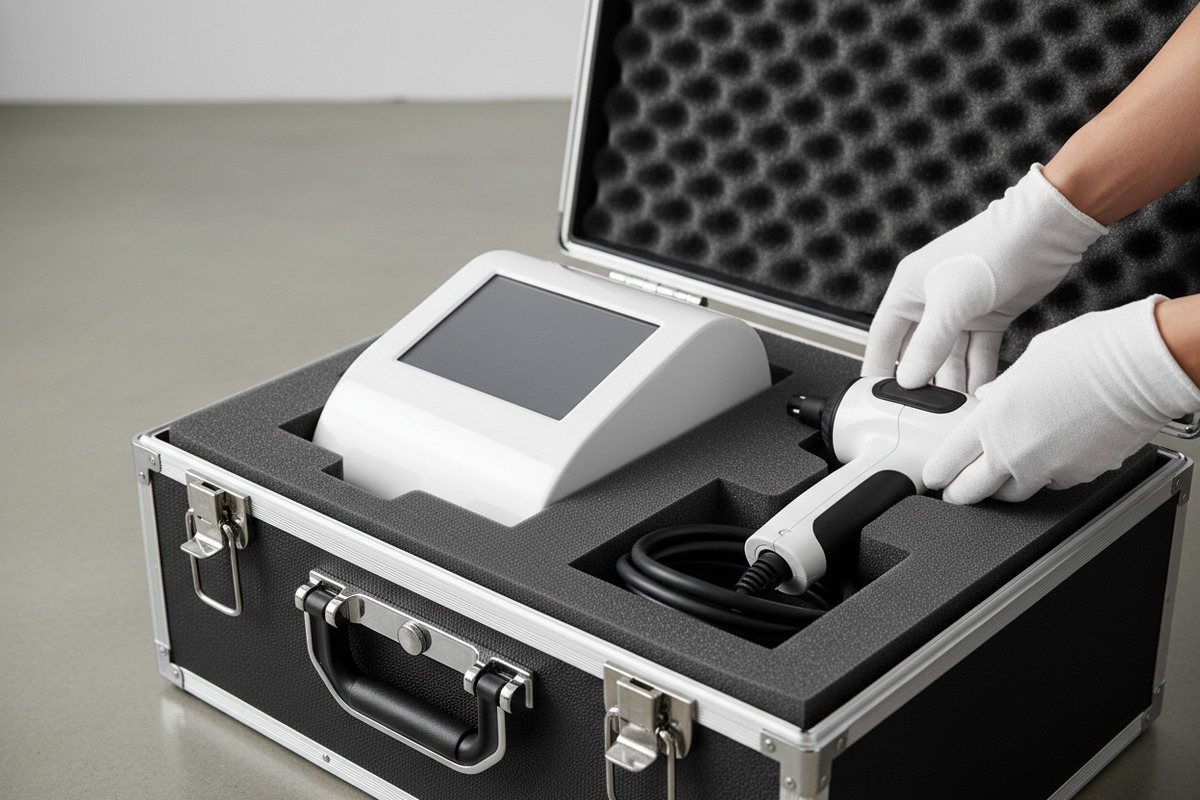
Require packaging with custom-molded foam inserts, reinforced corner protection, humidity indicators, drop-test certification to 1.2 meters, and shock-absorbing materials rated for international freight conditions. Additionally, demand double-walled corrugated boxes with minimum 275 PSI burst strength to protect your shockwave therapy investment during ocean and air transport.
Essential Packaging Components
We design packaging systems around worst-case shipping scenarios. International freight involves multiple handling points, temperature variations, and stacking pressure. Your packaging requirements should address each threat.
Custom-molded foam inserts prevent internal movement. Generic packing peanuts shift during transit, allowing components to collide. Our molded inserts cradle each component—main unit, handpieces, applicators, power supplies—in dedicated compartments.
Corner reinforcement absorbs drop impacts. Shipping studies show packages most commonly strike corners during handling. Double-layered corner protectors distribute impact force away from sensitive electronics.
Material Specifications Worth Demanding
Not all cardboard performs equally. When we audit supplier packaging, we test burst strength and edge crush resistance. These metrics predict survival rates during international shipping.
| Packaging Element | Minimum Specification | Purpose |
|---|---|---|
| Outer box | 275 PSI burst strength | Survives stacking weight |
| Inner foam | Custom-molded EVA | Prevents component collision |
| Corner protection | Double-layered cardboard | Absorbs drop impacts |
| Humidity indicator | Color-change cards | Detects moisture exposure |
| Seal tape | Tamper-evident, 3-inch width | Shows handling interference |
Protecting Sensitive Components
Handpieces contain precision-engineered components vulnerable to shock damage. Our packaging separates handpieces from main units using individual compartments. Each applicator tip receives protective caps preventing surface scratches.
Power supplies generate heat during use. Packaging must allow post-transit inspection for thermal damage indicators. We include temperature-sensitive labels showing if units experienced extreme conditions during shipping.
Consider also requesting packaging that doubles as storage. Therapists often keep original packaging for equipment protection between home visits. Durable, reusable packaging adds value without increasing your costs significantly.
Testing Certifications to Request
Ask suppliers for drop-test documentation. Reputable manufacturers subject packaging to ISTA (International Safe Transit Association) testing protocols. ISTA testing protocols 5 These simulate real-world shipping conditions including vibration, compression, and atmospheric changes.
Our packaging passes ISTA 3A testing, simulating parcel delivery environments. This certification gives distributors confidence that units arrive functional. Without such testing, you gamble on every shipment.
Can I private-label a portable shockwave machine that matches the high-end design of my brand?
Our design team works daily with brand owners who want premium aesthetics without engineering entire products from scratch. We understand the frustration—finding machines with clinical performance but consumer electronics polish seems impossible. Most portable units look industrial, not aspirational.
Yes, you can private-label portable shockwave machines with high-end design through OEM partnerships offering custom housing colors, logo placement, interface branding, packaging customization, and user manual personalization. Select manufacturers with industrial design capabilities who provide 3D renders before tooling, ensuring visual alignment with your brand identity before production commitment.
Customization Levels Available
Private-labeling ranges from simple logo placement to complete redesigns. Understanding these tiers helps you balance customization depth against cost and timeline.
Basic customization includes logo printing on existing housings, branded startup screens, and custom packaging. This level requires minimal investment and ships within standard lead times. Our minimum order quantities start at 50 units for basic branding.
Intermediate customization adds housing color changes, custom interface graphics, and personalized user manuals. Color changes require 200+ unit commitments to justify paint line setup. Lead times extend 2-3 weeks beyond standard.
Advanced customization involves housing redesigns, custom control panel layouts, and bespoke accessories. These projects require 6-12 month development cycles and 500+ unit commitments. However, results create truly differentiated products.
Design Elements That Elevate Brand Perception
Our industrial designers identify several elements that transform clinical devices into premium brand assets. High-gloss finishes communicate sophistication. Rounded edges suggest modern aesthetics. Integrated cable management eliminates visual clutter.
| Design Element | Standard Appearance | Premium Upgrade |
|---|---|---|
| Surface finish | Matte textured plastic | High-gloss or soft-touch coating |
| Logo placement | Adhesive label | Debossed or backlit logo |
| Control interface | Monochrome LCD | Full-color touchscreen |
| Cable routing | External cables | Integrated channels |
| Carrying case | Generic black nylon | Custom branded hardshell |
Working With Manufacturer Design Teams
Successful private-label projects require clear communication between your brand vision and manufacturing capabilities. We recommend providing mood boards showing your existing product aesthetics. Reference images of competitor products you admire help designers understand your standards.
Request 3D renders 7 before approving tooling investments. Digital mockups cost far less than physical prototypes. Our design team provides three render revisions within standard project timelines.
Maintaining Brand Consistency Across Touchpoints
Private-labeling extends beyond the machine itself. Consider every customer touchpoint. Training materials should carry your branding. Warranty cards need your contact information. Even replacement parts bags benefit from branded labels.
Our comprehensive OEM packages include branded quick-start guides, warranty registration cards, and aftercare instruction sheets. These details distinguish professional brand partnerships from simple logo slapping.
How do I ensure the portable units I source will provide consistent performance for my downstream clients?
We calibrate every unit leaving our facility because inconsistent performance destroys distributor reputations faster than any other issue. Your downstream clients expect identical treatment results whether using unit serial number 001 or 500. Manufacturing variance exists in all production, but proper quality systems minimize it.
Ensure consistent performance by demanding calibration certificates with each unit, specifying acceptable tolerance ranges (typically ±5% on energy output), requiring burn-in testing before shipment, verifying warranty coverage includes performance degradation, and establishing clear quality metrics in your purchase agreements that trigger remediation for out-of-spec units.
Understanding Performance Variables
Shockwave machine performance involves multiple measurable parameters. Energy output per pulse determines treatment effectiveness. Frequency accuracy affects protocol timing. Penetration depth consistency ensures reproducible results across conditions.
Our testing protocols measure each parameter against specifications. Units failing any test undergo adjustment or rejection. This prevents field failures that damage your brand reputation.
| Performance Parameter | Typical Specification | Acceptable Tolerance |
|---|---|---|
| Energy output | 60-185mJ | ±5% of setting |
| Frequency accuracy | 1-22Hz | ±0.5Hz |
| Penetration depth | Up to 6cm | ±3mm |
| Pulse count accuracy | Digital counter | ±1% |
| Battery capacity | 50,000+ pulses | ≥95% of rated |
Pre-Shipment Testing Protocols
We implement three-stage testing before shipment. Initial testing occurs during assembly, verifying component-level function. Burn-in testing 8 runs units continuously for 4-8 hours, revealing infant mortality failures. Final calibration confirms all parameters meet specifications.
Request suppliers document their testing protocols. Vague quality claims indicate inadequate systems. Specific test descriptions—including equipment used, pass/fail criteria, and sample rates—demonstrate manufacturing maturity.
Warranty Terms That Protect Performance
Standard warranties cover defects but often exclude performance degradation. Negotiate warranty terms specifically addressing output consistency. Our warranties guarantee performance within specifications for the warranty duration, not just freedom from complete failure.
Handpiece warranties deserve special attention. These consumable components degrade with use. Quality manufacturers specify shock counts—typically 150,000 to 2,000,000—before expected replacement. Units failing earlier indicate quality issues warranting warranty claims.
Establishing Quality Metrics in Agreements
Purchase agreements should include quality clauses. Specify acceptable defect rates, typically under 2% for electronics. Define performance parameters requiring measurement. Establish remediation procedures for non-conforming shipments.
Our standard distributor agreements include quality appendices detailing these metrics. Clear documentation prevents disputes and ensures both parties understand expectations.
Field Feedback Integration
Consistent performance requires ongoing monitoring. Establish feedback channels from your downstream clients. Track complaints by serial number to identify batch issues. Share field data with manufacturers for continuous improvement.
We analyze returned units thoroughly, identifying root causes and implementing corrective actions. Distributors who share field feedback help us improve products benefiting all customers.
Conclusion
Evaluating shockwave therapy machine portability requires systematic assessment of weight, packaging durability, branding options, and performance consistency. Your downstream clients depend on equipment that travels easily, survives transit, represents their brand professionally, and delivers reliable treatments. Apply these criteria rigorously, and your portable shockwave sourcing will build lasting customer relationships.
Footnotes
1. Explains the importance of ergonomic design in medical devices for usability and safety. ↩︎
2. Lists and explains various quality metrics used to assess product and process quality in manufacturing. ↩︎
3. Explains the concept of private labeling in manufacturing and its benefits. ↩︎
4. Defines penetration depth in medical imaging and factors influencing it. ↩︎
5. Provides official information on ISTA testing protocols for package performance. ↩︎
6. Provides an overview of shockwave therapy and its medical uses. ↩︎
7. Discusses the role and benefits of 3D rendering in product development and visualization. ↩︎
8. Replaced with a relevant and working page on burn-in testing from the same domain. ↩︎

 English
  Español de México
  Deutsch
  Français
  العربية
  Русский