Last year, one of our clients lost $47,000 when an entire container of shockwave therapy machines arrived with damaged control panels Named Perils Marine Insurance 1. No marine insurance. No compensation. Just a devastating financial blow that nearly bankrupted their business.
When sourcing shockwave therapy machines from China, you need all-risk marine cargo insurance with door-to-door coverage. This policy protects against physical damage, loss, theft, and transit perils. Insure at 110% of CIF value to cover incidental costs and profit margins for complete financial protection.
In this guide, I will walk you through everything you need to know about marine insurance for importing these sensitive medical devices Total Loss Only Coverage 2. Let me share what we have learned from shipping thousands of units worldwide.
Which specific marine insurance policy provides the best coverage for my high-end shockwave therapy machines?
When we ship shockwave therapy machines from our Guangzhou facility, clients often ask us which policy type offers the strongest protection FOB or EXW terms 3. The answer matters because these precision devices face unique risks during ocean transit.
All-risk marine cargo insurance provides the best coverage for high-end shockwave therapy machines. It protects against any external cause of physical loss or damage, including rough handling, water exposure, and container accidents. Named perils or total loss policies leave dangerous gaps for sensitive medical equipment.
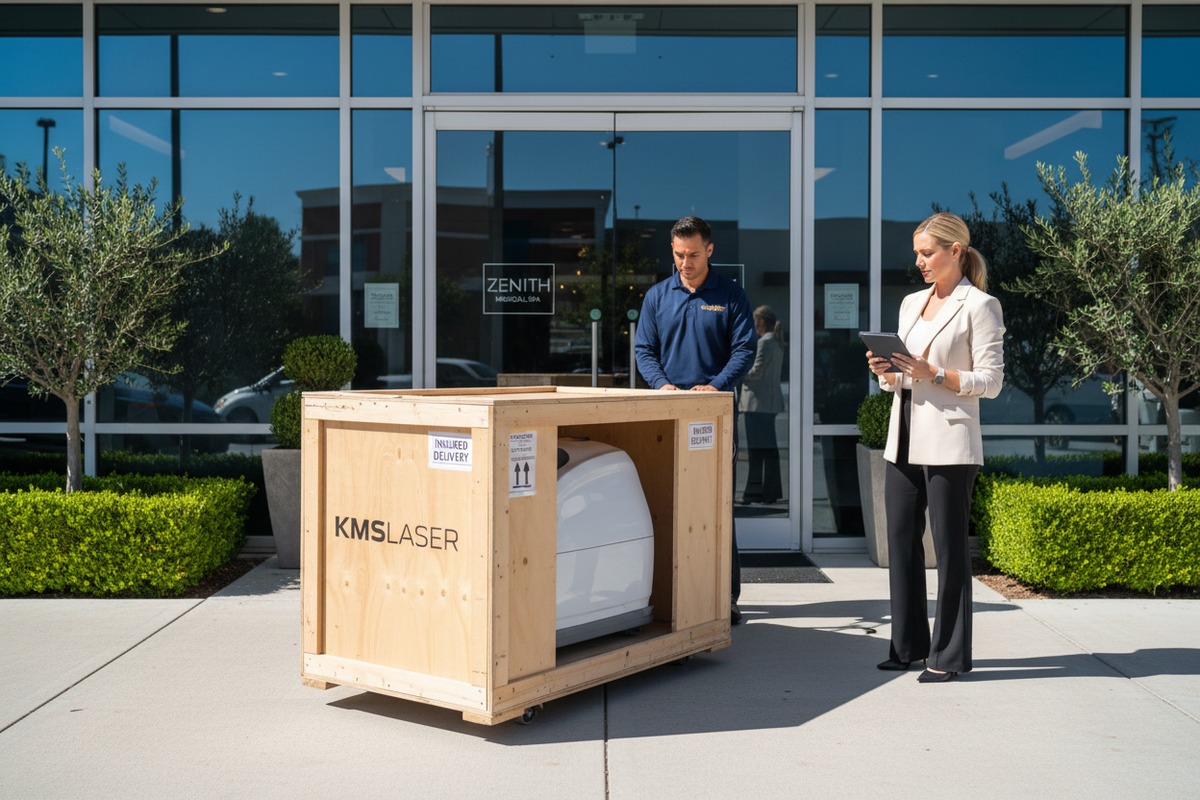
Understanding Marine Cargo Insurance Types
Marine cargo insurance falls into three main categories. Each offers different levels of protection for your shipment.
All-Risk Coverage is the gold standard. It covers any physical loss or damage from external causes. This includes drops, water damage, theft, contamination, and even mysterious disappearance. For shockwave therapy machines with delicate applicator heads and calibrated electronics, this broad protection is essential.
Named Perils Coverage only pays for losses from specific events listed in the policy. Common named perils include fire, collision, and sinking. However, if your machines suffer vibration damage during transit—a common problem—and "vibration" is not listed, you get nothing.
Total Loss Only Coverage is the cheapest but most risky option. It pays only when your entire shipment is destroyed or lost. Partial damage, which happens frequently with medical equipment, receives no compensation.
Policy Comparison for Shockwave Therapy Machines
| Coverage Type | Premium Cost | What It Covers | Best For |
|---|---|---|---|
| All-Risk | 0.3% – 0.5% of cargo value | Any external physical loss or damage | High-value medical devices |
| Named Perils | 0.1% – 0.3% of cargo value | Only listed events (fire, sinking, collision) | Low-value bulk goods |
| Total Loss Only | 0.05% – 0.1% of cargo value | Complete destruction or loss only | Very low-risk shipments |
Why All-Risk Is Non-Negotiable for Medical Equipment
Our engineering team tests every shockwave therapy machine before shipping. We know exactly how sensitive these devices are. The piezoelectric crystals 4 inside the applicator heads can shift from excessive vibration. The calibration software can corrupt from electromagnetic interference. The control touchscreens can crack from pressure changes.
Standard all-risk policies cover these scenarios. They also cover general average 5, which means you are protected if the ship jettisons cargo during an emergency. This is more common than most importers realize.
Special Endorsements to Request
Ask your insurer about these add-ons for shockwave therapy machines:
- Environmental control endorsement: Covers damage from extreme temperature or humidity
- Calibration loss endorsement: Compensates for recalibration costs if accuracy is compromised
- Concealed damage extension: Protects when damage is discovered after delivery
- Consolidation coverage: Essential if your machines share container space with other cargo
The premium difference between basic all-risk and enhanced coverage is usually only 0.1% to 0.2% of cargo value. For a $50,000 shipment, that is an extra $50 to $100 for significantly better protection.
How can I protect my business from financial loss if my shipment is damaged during the long transit from China?
We see clients make the same mistake repeatedly. They assume shipping from China to North America is safe because modern vessels are reliable. Then something goes wrong, and they face losses that could have been prevented.
Protect your business by securing door-to-door marine cargo insurance valued at 110% of CIF cost, documenting everything with pre-shipment photos and videos, requiring professional crating for shock-sensitive components, and choosing FCL shipments over LCL when possible to reduce handling risks.

The Real Risks During China-to-US Transit
Ocean transit from Shanghai or Shenzhen to Los Angeles takes 14-21 days. During this time, your shockwave therapy machines face multiple threats.
Port congestion in Shanghai has increased dramatically since 2023. Containers sometimes sit on docks for weeks, exposed to weather and temperature swings. At our facility, we add extra moisture-absorbing packets and reinforced packaging specifically because of these delays.
Transshipment handling multiplies damage risks. If your container transfers at a hub port like Singapore or Busan, longshoremen move it between vessels. Each lift and drop creates impact forces that can damage sensitive electronics.
Red Sea route changes have affected many shipments. Diversions around the Cape of Good Hope add 10-14 days of transit time, increasing exposure to rough seas and extended humidity.
Cost-Benefit Analysis: Insurance vs. No Insurance
| Scenario | Without Insurance | With All-Risk Insurance |
|---|---|---|
| $50,000 shipment arrives safely | $0 cost | $150-250 premium cost |
| $50,000 shipment has $10,000 damage | $10,000 loss | $150-250 premium, full claim recovery |
| $50,000 shipment total loss | $50,000 loss | $150-250 premium, up to $55,000 recovery (110% CIF) |
| Annual import volume: 10 shipments | Potential exposure: $500,000 | Annual premium: $1,500-2,500, full protection |
Practical Protection Steps
Before Shipping:
- Photograph every machine from multiple angles
- Video record the packaging process
- Document serial numbers and calibration certificates
- Request shock indicators on each crate
During Transit:
- Use 24/7 tracking services
- Monitor vessel location and weather conditions
- Receive alerts for any transshipment delays
- Keep your insurance policy documents accessible
At Delivery:
- Inspect packaging for external damage before signing
- Note any concerns on the delivery receipt
- Power on each machine within 48 hours
- Compare calibration readings to factory specifications
Why FCL Beats LCL for Medical Equipment
Full Container Load shipments cost more upfront but reduce damage risks significantly. Your shockwave therapy machines are not handled multiple times for consolidation. They are not stacked under heavy cargo. Temperature and humidity remain more stable.
When we ship via LCL, we have seen damage rates three times higher than FCL shipments 7. The savings rarely justify the risk for equipment worth $5,000 to $50,000 per unit.
Should I rely on my supplier's insurance or arrange my own marine coverage to ensure full protection?
This question comes up in almost every conversation we have with new clients. They see CIF terms and assume they are fully covered. The reality is far more complicated and potentially dangerous for their business.
Always arrange your own marine cargo insurance. Supplier-provided CIF insurance typically covers only 110% of invoice value with limited claim rights. Your own policy provides higher coverage limits, direct claims handling, door-to-door protection, and coverage for your actual replacement costs including duties and lost profit.

What CIF Insurance Actually Provides
When you buy under CIF Incoterms, your supplier includes basic marine insurance in the price. This sounds convenient. However, the coverage has significant limitations.
Standard CIF insurance covers 110% of the invoice value—not your true costs. It does not account for import duties (often 5-10% for medical devices), freight charges if you need replacement rush shipping, or the profit margin you lose from delayed sales.
The policy belongs to the seller, not you. Filing a claim often requires working through your supplier in China, dealing with their insurer's adjusters, and navigating language barriers during a stressful time.
Coverage typically ends at the destination port. If damage occurs during customs clearance, inland trucking, or warehouse storage, CIF insurance may not pay.
Comparison: CIF vs. Buyer-Arranged Insurance
| Factor | Supplier's CIF Insurance | Your Own Marine Policy |
|---|---|---|
| Coverage amount | 110% of invoice only | Full replacement cost + duties + profit |
| Coverage territory | Port to port | Door to door (warehouse to warehouse) |
| Policy control | Supplier controls claims | You control entire process |
| Claims filing | Through supplier, possible delays | Direct with your insurer |
| Customization | Standard terms only | Add endorsements for specific needs |
| Premium cost | Included but basic | 0.3-0.5% of cargo value |
| Language of policy | Often Chinese or poorly translated | Your preferred language |
Hidden Gaps in Supplier Insurance
We have seen clients learn these lessons the hard way:
Undervaluation problems: Some suppliers declare lower values to reduce their insurance costs. When you file a claim, you receive compensation based on the declared value, not what you actually paid.
Exclusions for packaging: If damage results from "improper packing," the claim is denied. The policy defines what counts as proper packing—and your supplier's methods may not qualify.
Deductibles and limits: Many CIF policies have high deductibles or per-item limits that surprise importers when they try to claim. A $500 deductible on a $2,000 machine means you absorb 25% of the loss.
The Right Approach: Hybrid Coverage
For clients ordering shockwave therapy machines from us, we recommend this strategy:
-
Negotiate FOB or EXW terms instead of CIF. This often lowers the product price slightly since the supplier removes their insurance markup.
-
Purchase your own all-risk policy from a reputable insurer in your country. Companies like AIG, Travelers, and Chubb offer specialized medical equipment coverage.
-
Ensure warehouse-to-warehouse coverage that begins when goods leave our facility and ends when they reach your final destination.
-
Add your freight forwarder as a named party so they can assist with claims if needed.
This approach typically costs similar to CIF pricing but gives you dramatically better protection and control.
What are the essential steps I must follow to successfully file an insurance claim for damaged beauty equipment?
Filing a marine cargo claim can be straightforward or nightmarishly complicated. The difference usually comes down to preparation and documentation. When clients discover damage to their shockwave therapy machines, the actions they take in the first 72 hours determine whether they receive full compensation or nothing.
To successfully file an insurance claim: immediately document all damage with photos and videos, note damages on delivery receipts before signing, notify your insurer within 72 hours, preserve damaged goods for inspection, gather all shipping documents, and obtain professional repair estimates from authorized technicians.

Step-by-Step Claims Process
Step 1: Document Everything at Delivery
When your shipment arrives, inspect external packaging before accepting. Look for dents, water stains, torn shrink wrap, or crushed corners. Photograph any anomalies from multiple angles with timestamps visible.
If the driver wants you to sign quickly, resist. Write "Subject to inspection" or "Damaged packaging noted" on the delivery receipt. This preserves your claim rights.
Step 2: Conduct Immediate Internal Inspection
Open crates within 24 hours while damage is fresh and traceable to transit. For shockwave therapy machines, check:
- Physical damage to housing and touchscreens
- Loose or disconnected internal components
- Visible moisture or corrosion
- Intact seals on applicator connections
Power on each unit and run diagnostic tests. Record any error codes or calibration deviations.
Step 3: Notify Your Insurer Promptly
Most policies require notification within 72 hours of discovering damage. Contact your insurer by email and phone. Provide:
- Policy number
- Bill of lading 9 number
- Brief description of damage
- Estimated loss value
Do not dispose of damaged equipment or packaging until the insurer approves.
Required Documentation Checklist
| Document | Why It Matters | Where to Get It |
|---|---|---|
| Commercial invoice | Proves cargo value | Your supplier |
| Packing list | Details contents and quantities | Your supplier |
| Bill of lading | Proves shipping contract and route | Freight forwarder |
| Pre-shipment photos | Shows condition before transit | Request from supplier |
| Delivery receipt with notes | Documents condition at arrival | Delivery driver |
| Damage photos/videos | Visual evidence of loss | You, immediately |
| Repair estimate | Quantifies financial loss | Authorized technician |
| Calibration deviation report | Proves functional damage | Your technicians |
Common Mistakes That Destroy Claims
Signing clean delivery receipts: Once you sign without noting damage, proving that damage occurred during transit becomes nearly impossible. Insurers may deny the claim.
Discarding damaged packaging: The crate, foam inserts, and shock indicators are evidence. Surveyors need to examine them to determine when and how damage occurred.
Delaying notification: Waiting weeks to report damage raises suspicions of post-delivery mishandling. Most policies strictly enforce notification windows.
Repairing before approval: If you fix machines before the insurer inspects or approves repairs, they may dispute repair necessity or costs.
Working with Insurance Surveyors
For claims above $5,000 to $10,000, insurers typically send a surveyor to inspect the damage. Prepare for this visit:
- Keep all damaged units in one accessible location
- Have all documentation organized and ready
- Preserve original packaging alongside the machines
- Have a technician available to demonstrate functional issues
- Prepare a written summary of the timeline from shipment to discovery
Surveyors are not adversaries. They need to verify the loss is legitimate and covered. Transparent cooperation speeds up your claim.
Typical Claims Timeline
After filing, expect this general timeline:
- Initial acknowledgment: 1-3 business days
- Surveyor assignment: 3-7 business days
- Survey completion: 1-2 weeks
- Claim evaluation: 2-4 weeks
- Payment: 2-4 weeks after approval
Total time from claim to payment: 6-12 weeks for straightforward cases. Complex disputes can take longer, but thorough documentation dramatically reduces delays.
Conclusion
Marine cargo insurance is not optional when sourcing shockwave therapy machines from China. Choose all-risk coverage with door-to-door protection. Arrange your own policy rather than relying on supplier CIF terms. Document everything meticulously to ensure successful claims if problems occur.
Footnotes
1. Replaced with an article clearly defining Named Perils Marine Insurance and comparing it to All-Risks. ↩︎
2. Explains a basic and limited marine insurance option. ↩︎
3. Clarifies common Incoterms for international trade. ↩︎
4. Provides background on the technology in shockwave therapy machines. ↩︎
5. Explains a critical concept in marine insurance law. ↩︎
6. Explains comprehensive marine insurance coverage. ↩︎
7. Defines Full Container Load shipping in logistics. ↩︎
8. Defines CIF (Cost, Insurance, and Freight) in international trade. ↩︎
9. Explains a key shipping document. ↩︎

 English
  Español de México
  Deutsch
  Français
  العربية
  Русский