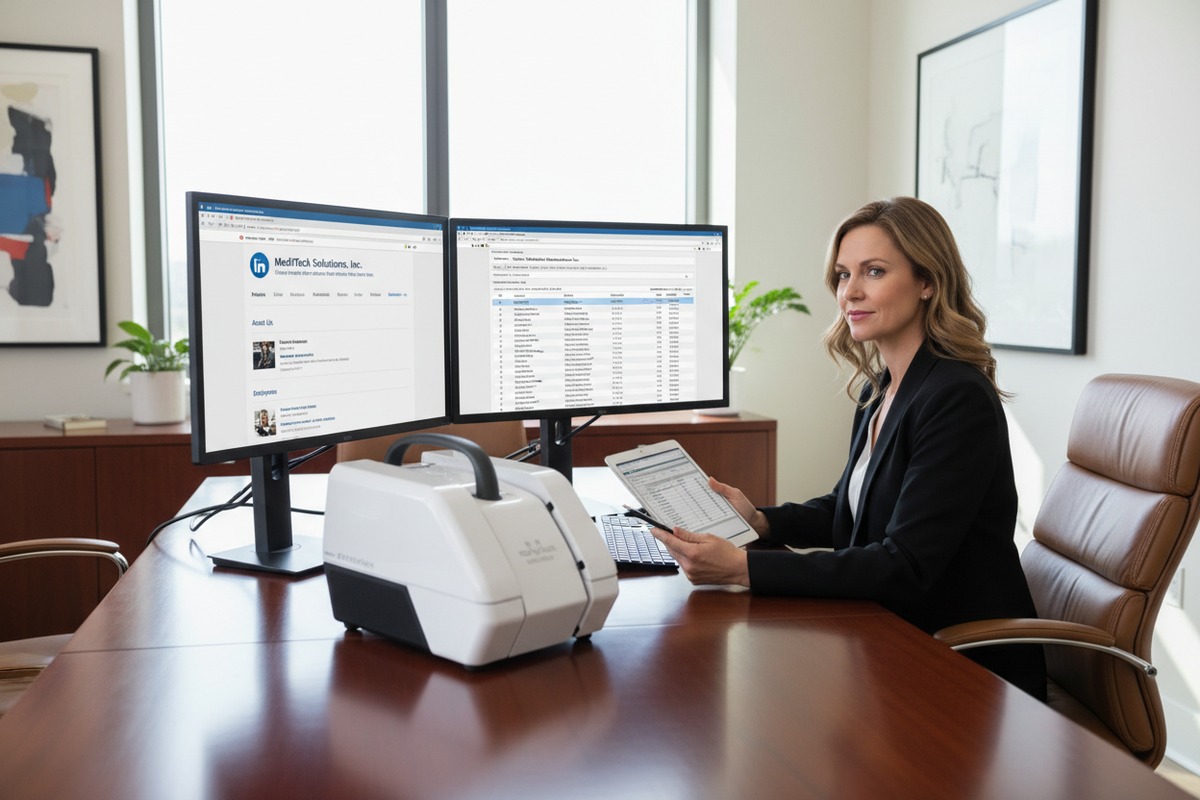
Every month, our customer service team receives inquiries from clinic owners who bought cheap shockwave devices online CE marking certificates 1. They share horror stories about counterfeit machines with fake certifications. These devices fail within weeks. Some even pose safety risks to patients. The rise of fake medical equipment on e-commerce platforms has become a serious problem for genuine buyers.
To verify shockwave therapy machine suppliers, cross-reference their LinkedIn company profiles with B2B platform ratings, check for FDA 510(k) clearance and CE marking documentation, verify employee credentials, request biocompatibility reports, and contact existing customers for references. Always demand proof of certifications through official databases like NANDO or FDA.
In this guide, I will walk you through practical steps to separate legitimate suppliers from risky ones Biocompatibility testing 2. You will learn what to look for on LinkedIn profiles and B2B platforms 3. Let us start with the basics of identifying quality manufacturers.
How can I identify high-quality shockwave therapy machine manufacturers on B2B platforms?
When we list our products on Alibaba, we notice that buyers often struggle to filter through thousands of suppliers. The sheer volume creates confusion. Many suppliers look similar on the surface. But quality varies dramatically beneath polished product photos.
High-quality shockwave therapy machine manufacturers on B2B platforms display verified badges, maintain transaction histories above 95% satisfaction, provide complete regulatory documentation including FDA 510(k) and CE certificates, respond within 24 hours, and show consistent export records to regulated markets like the US and EU.

Start With Platform Verification Badges
B2B platforms like Alibaba, ThomasNet, and Global Sources offer verification systems. These badges indicate that the platform has checked the supplier's business registration. Look for "Verified Supplier" or "Gold Supplier" status. However, badges alone are not enough. They confirm legal existence, not product quality.
Our factory went through multiple verification audits. We know these audits check business licenses and factory addresses. They do not test product safety. So use badges as a first filter, not a final decision.
Check Transaction History and Ratings
Reliable manufacturers have extensive transaction records. Look for suppliers with hundreds of completed orders. Check their satisfaction ratings. Anything below 95% deserves scrutiny. Read negative reviews carefully. Patterns matter more than isolated complaints.
| Indicator | Trustworthy Supplier | Risky Supplier |
|---|---|---|
| Transaction History | 500+ completed orders | Under 50 orders |
| Satisfaction Rating | 95% or higher | Below 90% |
| Response Time | Under 24 hours | Over 72 hours |
| Verified Badge | Gold or Verified status | No verification |
| Export Markets | US, EU, Canada | Unspecified regions |
| Years Active | 5+ years | Under 2 years |
Demand Regulatory Documentation Upfront
This is where many buyers fail. They accept claims without verification. Quality manufacturers provide FDA 510(k) clearance 4 numbers. They share CE marking certificates with notified body details. They offer ISO 13485 certification 5 for quality management systems.
Be wary of "FDA registered" claims. Registration is simple paperwork. Clearance requires safety and efficacy testing. Class I registered devices are basic massagers. They are not medical-grade shockwave machines 6. Our engineering team explains this distinction to every serious buyer.
Evaluate Export History to Regulated Markets
Suppliers who export to the United States, Canada, and Europe face strict customs checks. These markets require proper documentation. A supplier with consistent exports to these regions has passed real-world regulatory tests.
Ask for shipping records or customer references in these markets. Genuine suppliers share this information readily. Hesitation suggests problems with compliance history.
Watch for Pricing Red Flags
Over 17,000 ESWT products exist on major B2B platforms from 1,400+ suppliers. Prices range wildly. If a deal seems too good to be true, it usually is. Premium shockwave machines cost more because they include proper testing, certification, and support.
Counterfeit devices often mimic premium brands like STORZ Medical. They use similar branding but wrong handpieces and multi-voltage specifications. Genuine devices have consistent voltage standards for safety.
How do I use LinkedIn to verify the professional expertise of a supplier's engineering and sales team?
Our sales team maintains active LinkedIn profiles. We believe transparency builds trust. When buyers check our profiles, they see real people with verifiable backgrounds. This simple step separates legitimate operations from shell companies.
Use LinkedIn to verify supplier expertise by examining employee profiles for relevant engineering degrees and industry experience, checking endorsements from medical device professionals, confirming company page employee counts match claimed factory size, and connecting with current or former staff for honest feedback about manufacturing capabilities.

Analyze the Company Page First
Start with the supplier's official LinkedIn company page. Check when it was created. Companies with years of consistent posting show stability. Look at employee counts. A manufacturer claiming 200 workers should have dozens of LinkedIn profiles listing them as employer.
Our company page shows growth over time. Employee profiles display their roles in engineering, quality control, and sales. This consistency proves we are a real operation, not a trading company reselling other factories' products.
Deep Dive Into Key Personnel
Search for the CEO, engineering director, and quality manager. Their profiles reveal education backgrounds. Engineers should have relevant degrees in biomedical engineering 7, mechanical engineering, or related fields. Sales staff should show experience in medical device industries 8.
| Profile Element | Green Flag | Red Flag |
|---|---|---|
| Education | Engineering degree from accredited university | No education listed or unverifiable schools |
| Work History | 5+ years in medical devices | Job-hopping across unrelated industries |
| Endorsements | From verified medical professionals | Only from unknown profiles |
| Connections | Industry professionals, clinic owners | Random or suspicious accounts |
| Content Activity | Posts about industry topics | No activity or purely promotional |
| Profile Photo | Professional headshot | Stock photo or no image |
Verify Cross-References
Compare LinkedIn information with the supplier's official website. Executive names should match. If the website lists "John Smith" as CEO but LinkedIn shows "David Lee," something is wrong. This mismatch often indicates fake profiles or misrepresentation.
Check the executives' connection networks. Quality suppliers connect with industry professionals, clinic owners, and distributors. Strong networks indicate real business relationships built over years.
Reach Out to Connections Directly
This step requires effort but yields valuable insights. Find clinics or distributors connected to the supplier's employees. Send polite messages asking about their experience. Most professionals respond honestly when asked directly.
In our experience, satisfied customers become advocates. They willingly share positive experiences. Silence or reluctance from connections often signals problems.
Spot Fake or Purchased Profiles
Counterfeit operations sometimes create fake LinkedIn profiles. These profiles have stock photos as profile pictures. They show vague job descriptions. Their connection counts are low despite claimed years of experience.
Look for profile activity. Real professionals post occasionally, comment on industry news, and engage with their network. Dormant profiles with perfect descriptions but no activity raise concerns.
What indicators should I look for on a supplier's profile to confirm their OEM and private labeling capabilities?
When clients approach us for private labeling, they ask detailed questions. They want proof we can customize packaging, branding, and even product specifications. These questions show experienced buyers. They know that claiming OEM capability and delivering it are different things.
Confirm OEM and private labeling capabilities by requesting case studies with photos of previous branded projects, asking for minimum order quantities for customization, verifying design team credentials on LinkedIn, reviewing their product variation catalog, and demanding sample units with your branding before bulk orders.

Request Previous OEM Project Examples
Genuine OEM manufacturers have portfolios. They can show photos of machines branded for different clients. They explain customization options clearly. Our design team maintains a catalog of branding variations we have produced.
Ask for references from OEM clients. Reputable suppliers connect you with buyers who used their private labeling services. If a supplier refuses or claims confidentiality for every project, proceed with caution.
Evaluate Design and Engineering Resources
OEM capabilities require in-house design teams. Check LinkedIn for industrial designers, graphic designers, and packaging engineers employed by the supplier. Their profiles should show relevant experience.
A company claiming extensive OEM services but listing only sales staff on LinkedIn lacks the internal resources. They likely outsource design work, which adds delays and quality risks.
Understand Customization Scope
OEM ranges from simple logo printing to complete product redesign. Clarify what the supplier offers. Some only provide basic branding. Others modify software interfaces, chassis designs, and packaging materials.
| Customization Level | What's Included | Typical MOQ |
|---|---|---|
| Basic Branding | Logo on device and packaging | 10-50 units |
| Standard OEM | Custom colors, UI language, branded manuals | 50-100 units |
| Advanced OEM | Modified chassis design, custom accessories | 100-200 units |
| Full ODM | Complete product development from specifications | 200+ units |
Check Manufacturing Flexibility
Quality OEM partners accommodate changes. They offer multiple packaging options. They adjust voltage settings for different markets. They modify user interfaces for local languages.
Our production line handles both standard orders and customized batches. We explain lead time differences clearly. Customization takes longer than stock products. Suppliers promising identical timelines for both may cut corners.
Verify After-Sales Support for Branded Products
Private labeled products carry your brand, but warranty issues return to you. Ensure the supplier provides technical support even for branded units. They should offer replacement parts, repair services, and documentation.
Ask about complaint handling procedures. How does the supplier address quality issues in branded products? Responsible manufacturers share these policies upfront.
How can I evaluate a supplier's quality control standards and logistics reliability through their online presence?
Our quality control department documents everything. We photograph in-production inspections. We video pre-shipment checks. This documentation protects both us and our buyers. Suppliers who cannot show similar records likely skip these steps.
Evaluate quality control and logistics reliability by requesting ISO 13485 or ISO 9001 certificates, asking for production inspection photos and videos, checking shipper reviews on freight platforms, reviewing their complaint resolution history, and demanding pre-shipment inspection reports with detailed photos of your specific order.

Verify Quality Management Certifications
ISO 13485 certification is the gold standard for medical device manufacturers. It requires documented quality management systems. Ask for the certificate and verify it through the issuing body.
ISO 9001 applies to general manufacturing quality. While less specific than ISO 13485, it still indicates structured processes. Suppliers lacking both certifications operate without standardized quality systems.
Request Process Documentation
Quality-focused manufacturers document their processes. Ask for:
- Incoming material inspection procedures
- In-production quality checkpoints
- Final product testing protocols
- Packaging verification steps
Our production team photographs key inspection stages. These photos accompany shipments as quality records. Suppliers unable to provide such documentation lack proper quality systems.
Examine Their Testing Capabilities
Medical devices require specific safety tests. Shockwave machines need electrical safety testing per IEC 60601 9. Biocompatibility testing per ISO 10993 ensures patient safety for skin-contact components.
| Test Category | Standard | What It Verifies |
|---|---|---|
| Electrical Safety | IEC 60601 | Safe electrical design, grounding, leakage |
| Biocompatibility | ISO 10993 | Material safety for patient contact |
| EMC Testing | IEC 60601-1-2 | Electromagnetic compatibility |
| Performance | Device-specific | Output accuracy, consistency |
| Durability | Accelerated aging | Long-term reliability |
Ask for test reports from accredited laboratories. Legitimate suppliers share these openly. Reports should reference ISO/IEC 17025 accredited labs.
Investigate Logistics Track Record
Shipping delays damage businesses. Late inventory means lost sales. Check if the supplier has documented logistics processes. Ask about their freight partners.
Research the supplier's logistics partners independently. Freight company reviews reveal patterns. Consistent delays or damage complaints indicate problems.
Review Complaint Handling History
No manufacturer achieves perfection. What matters is how they handle problems. Ask about their complaint resolution process. Request examples of past issues and resolutions.
On B2B platforms, check for complaint-related reviews. How did the supplier respond? Professional suppliers address issues promptly. They offer replacements or refunds. Defensive or dismissive responses predict future problems.
Demand Pre-Shipment Inspection
Before finalizing any order, require a pre-shipment inspection. This inspection should include:
- Photos of finished products
- Functional test results
- Packaging condition documentation
- Serial number verification
Our pre-shipment reports include 20+ photos per order. We video functional tests. This transparency costs time but prevents disputes. Suppliers refusing inspections hide problems.
Conclusion
Verifying shockwave therapy machine suppliers requires systematic effort across multiple channels. Use LinkedIn to check people. Use B2B platforms to check processes. Demand documentation for every claim. Trust patterns over promises. Your due diligence today prevents costly problems tomorrow.
Footnotes
1. European Medicines Agency overview of medical device regulation and CE marking in the EU. ↩︎
2. Official ISO page for ISO 10993-1, outlining biological evaluation of medical devices. ↩︎
3. Explains what B2B marketplaces are and their role in business-to-business transactions. ↩︎
4. Official FDA page explaining the 510(k) premarket notification process for medical devices. ↩︎
5. Official ISO page detailing the ISO 13485 standard for medical device quality management systems. ↩︎
6. Replaced with an authoritative article from Mayo Clinic providing an overview of extracorporeal shockwave therapy (ESWT). ↩︎
7. Wikipedia article defining biomedical engineering and its applications. ↩︎
8. Replaced with the official FDA overview of medical device regulation, which is highly authoritative and directly relevant to the original intent. ↩︎
9. Official IEC page for the IEC 60601 standard concerning medical electrical equipment safety. ↩︎

 English
  Español de México
  Deutsch
  Français
  العربية
  Русский