
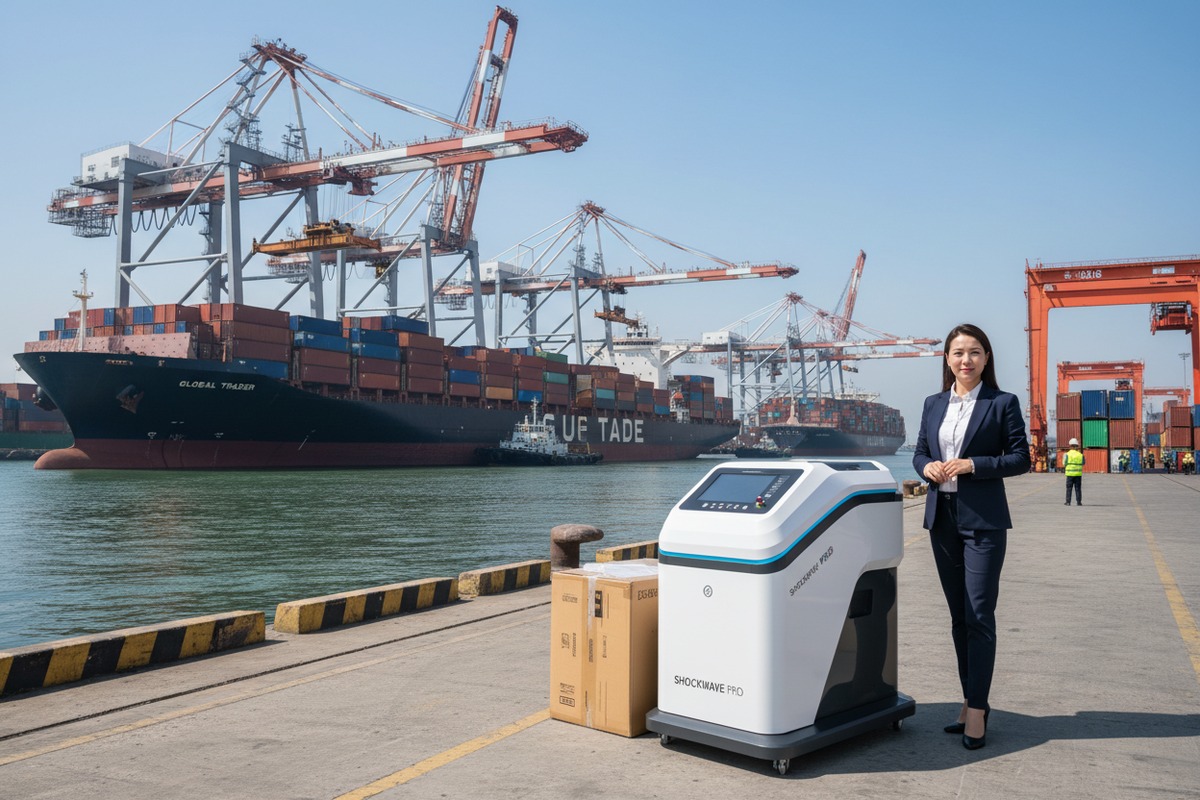
When our production team ships high-value shockwave therapy machines overseas, clients constantly ask which shipping term protects them best pre-shipment inspection 1. The answer depends on your experience level and risk tolerance.
FOB reduces risk more effectively for experienced importers because it transfers control early at the Chinese port, allowing buyers to manage shipping, insurance, and customs directly. DDP minimizes operational burden but often hides costs and limits quality verification, making FOB the preferred choice for high-value medical equipment sourcing.
Understanding Incoterms 2020 2 is essential before placing your first order. Let me walk you through each shipping term and help you decide which one fits your business model.
How do I manage quality control and inspection risks when choosing between FOB and DDP for my shockwave therapy machines?
Our quality control engineers 3 face this question weekly when preparing export documentation. Buyers want assurance that their $10,000+ units arrive in perfect working condition, but the shipping term you choose dramatically affects your ability to verify quality.
Under FOB, you control inspection timing and can verify product quality at the factory and port before assuming risk. DDP limits your visibility because the seller manages the entire chain, making pre-shipment inspection harder to coordinate and quality verification less transparent for sensitive medical devices.

Understanding Risk Transfer Points
The fundamental difference between FOB and DDP lies in when responsibility shifts from seller to buyer. With FOB (Free On Board), risk transfers once goods are loaded onto the vessel at Chinese ports like Shanghai, Shenzhen, or Ningbo. From that moment, you own the cargo and any problems that occur during ocean transit.
DDP (Delivered Duty Paid) keeps risk with the seller until goods reach your warehouse door. This sounds protective, but it creates a blind spot. You cannot easily inspect goods mid-journey or choose specific carriers known for handling delicate electronics carefully.
Pre-Shipment Inspection Strategies
| Inspection Type | FOB Advantage | DDP Limitation |
|---|---|---|
| Factory Audit | Full access before loading | Seller may restrict access |
| Calibration Check | Buyer verifies at source | Relies on seller certification |
| Packaging Review | Direct control over materials | No input on shipping protection |
| Documentation | Buyer reviews export papers | Seller manages all paperwork |
When our clients choose FOB, they often send third-party inspectors to our Guangzhou facility. These inspectors test shockwave output levels, check probe calibration, and verify that packaging meets international shipping standards. Under DDP, sellers rarely accommodate such thorough inspections because they control the timeline.
The Hidden Quality Problem with DDP
Here is something many first-time importers miss. DDP pricing bundles everything together. When problems arise, sellers face pressure to cut corners on packaging or choose cheaper carriers to protect their margins. We have seen competitors use single-layer foam instead of double-layer protection because DDP margins were tight.
FOB buyers, conversely, select their own freight forwarders 4. They specify climate-controlled containers for sensitive electronics. They purchase comprehensive marine insurance with specific coverage for calibration drift caused by vibration. This level of control matters enormously for medical devices 5.
Verification Timing Matters
Shockwave therapy machines contain precision components. The electromagnetic coils and pressure sensors require careful handling. Under FOB, experienced importers arrange inspections at two points: once at the factory before packing, and again at the Chinese port before the container is sealed. This dual-check system catches problems early.
DDP removes this control. By the time goods arrive at your door, any damage claim becomes complicated. Was the unit defective at origin? Did damage occur during ocean freight? Who bears responsibility? These questions become difficult to answer when you had no visibility into the supply chain.
In our experience exporting shockwave machines to the United States and Europe, customs clearance represents the most unpredictable phase of international shipping. Delays at US ports can damage your relationship with downstream distributors and clinics waiting for equipment.
DDP does protect buyers from customs paperwork but creates new risks through seller-controlled import declarations. FOB exposes you to direct customs responsibility but allows proper duty classification, accurate FDA documentation, and avoidance of seller errors that could trigger holds or penalties on your medical devices.

Customs Responsibility Under Each Term
| Factor | FOB | DDP |
|---|---|---|
| Import Duty Payment | Buyer pays directly | Seller pays, often with markup |
| Customs Broker Selection | Buyer chooses specialist | Seller uses general broker |
| FDA Documentation | Buyer controls accuracy | Seller may lack expertise |
| Tariff Classification | Buyer verifies HS codes | Seller may misclassify |
| Delay Liability | Buyer manages directly | Seller bears initial delay |
The Real Cost of DDP Customs Handling
Many Chinese suppliers add 15-30% markup on duties when offering DDP terms. They estimate conservatively to protect their profit. In 2025, US tariffs on Chinese medical technology reached 25% in some categories. A $10,000 shockwave machine could carry $2,500 in duties. If your DDP seller quoted $3,000 for duties, you just lost $500 in unnecessary expense.
FOB buyers pay duties directly to customs authorities. There is no middleman markup. You see exactly what you owe. You can also work with specialized customs brokers who understand FDA requirements for medical devices.
FDA Import Requirements for Shockwave Machines
Shockwave therapy machines fall under FDA jurisdiction 6 as medical devices. Importing them requires proper registration, listing, and sometimes 510(k) clearance depending on their intended use. Under DDP, your Chinese seller handles import paperwork. But most sellers lack expertise in US FDA regulations.
We have heard stories of DDP shipments held at US ports for weeks because sellers used incorrect device classifications. The buyer had no control over the situation. Their brand reputation suffered as customers waited. Under FOB, you file your own FDA paperwork or hire a regulatory consultant who specializes in medical device imports.
Tariff Transparency and Planning
The US-China trade relationship remains volatile. Tariffs change with political winds. FOB gives you advance visibility. You know exactly which tariff codes 7 apply. You can plan financially for duty payments. You might even time orders strategically around policy changes.
DDP locks you into whatever the seller quoted months ago. If tariffs increase between quotation and delivery, sellers may demand additional payment or delay shipment. This happened frequently during 2024-2025 tariff escalations. Buyers with FOB terms adjusted their budgets accordingly. DDP buyers faced unpleasant surprises.
Import Liability and Brand Protection
When customs authorities find problems with imported goods, they contact the importer of record 8. Under DDP, that might be your seller's US agent or freight forwarder. Communication becomes indirect. Resolving issues takes longer.
FOB makes you the importer of record. This sounds scarier, but it actually gives you control. You respond directly to customs inquiries. You provide documentation immediately. You protect your brand by handling issues professionally rather than waiting for a foreign supplier to react.
How can I minimize the risk of transit damage to my high-end beauty equipment by using a door-to-door logistics service?
When we calibrate shockwave generators in our testing lab, we know these machines are sensitive to shock and vibration. The electromagnetic components that create therapeutic pressure waves can lose calibration during rough handling. This makes transit damage a primary concern for every buyer.
Door-to-door DDP service reduces handling touchpoints but removes your control over carrier selection and insurance coverage. FOB with a trusted freight forwarder actually minimizes transit damage better because you specify climate-controlled containers, purchase comprehensive all-risk insurance, and choose carriers with medical device handling experience.

Understanding Transit Damage Risks
Shockwave therapy machines face multiple hazards during ocean freight. Humidity inside containers can damage electronic control boards. Vibration from engine rooms can shift calibration settings. Rough handling during port transfers can crack housing components. Temperature swings can affect probe assemblies.
Global cargo damage statistics show approximately 0.5% loss rates by value. However, sensitive electronics and medical devices experience 2-3 times higher damage rates. A $10,000 shockwave unit has meaningful exposure during its 20-30 day journey from Shenzhen to Los Angeles.
Carrier Selection and Container Specifications
| Protection Factor | FOB Buyer Control | DDP Seller Control |
|---|---|---|
| Carrier Selection | Choose COSCO, Maersk, etc. | Seller picks cheapest option |
| Container Type | Specify climate-controlled | Standard container typical |
| Stowage Location | Request away from engine | No input on placement |
| Insurance Coverage | Purchase ICC A all-risk | Rely on seller's basic policy |
| Damage Documentation | Direct relationship with insurer | Indirect claims process |
The Insurance Advantage of FOB
FOB buyers purchase their own marine cargo insurance 9. The industry standard for high-value electronics is ICC A coverage 10, which protects against all risks except explicitly excluded events. Premium rates run 0.3-1% of cargo value. For a $50,000 shipment of shockwave machines, you might pay $150-500 for comprehensive protection.
DDP sellers include insurance in their bundled price, but they rarely disclose the coverage level. Many use minimum ICC C coverage, which only protects against major incidents like sinking or fire. Vibration damage, moisture intrusion, and handling impacts often fall outside basic policies. You discover this only after filing a claim.
Packaging Standards and Verification
Our production team uses double-layer foam cushioning, anti-static wrap for electronics, and humidity indicators inside each carton. We provide FOB clients with packing photos and test reports before shipping. They verify our standards meet their requirements.
DDP clients rarely see this documentation. They receive goods at their door without visibility into how we packed and protected each unit. If our standards were lower, they would never know until damage appeared.
Real-World Damage Prevention Strategies
Experienced FOB importers implement several protective measures. They require fumigation-free wooden crates rated for international shipping. They specify that containers should not be stacked near the top of cargo holds where motion is greatest. They add shock indicators that reveal if g-forces exceeded safe levels during transit.
These details matter for medical devices. A shockwave machine that arrives looking perfect might have internal calibration drift from excessive vibration. Without shock indicators and detailed transit records, you cannot prove the carrier caused damage. Your claim gets denied.
Freight Forwarder Relationships
FOB buyers develop relationships with freight forwarders who specialize in medical equipment. These forwarders know which carriers handle sensitive cargo carefully. They track shipments actively and intervene when problems develop. They have experience filing successful damage claims.
Digital freight platforms like Flexport and Ship4wd now make FOB logistics accessible even for smaller importers. These platforms negotiate container rates 15-30% below retail pricing. They provide real-time tracking and documentation. The technology gap that once favored DDP convenience has largely disappeared.
Which shipping term allows me to hold my Chinese supplier more accountable for the final condition of my products?
Our service team tracks every shipment from production line to customer delivery. We take responsibility seriously because our reputation depends on it. But accountability structures differ significantly between FOB and DDP, affecting how you can address problems when they occur.
FOB creates clearer accountability boundaries by separating manufacturing quality from shipping quality. You hold the supplier responsible for factory-gate condition and hold carriers responsible for transit damage. DDP blurs these lines, making it harder to pinpoint fault and obtain compensation when shockwave machines arrive damaged or defective.

Accountability Boundaries Explained
| Issue Type | FOB Accountability | DDP Accountability |
|---|---|---|
| Manufacturing Defect | Supplier responsible | Supplier responsible |
| Packaging Failure | Supplier if verified at port | Unclear after delivery |
| Transit Damage | Carrier/insurer responsible | Supplier initially responsible |
| Customs Delays | Buyer manages | Supplier responsible |
| Calibration Drift | Depends on inspection timing | Very difficult to prove origin |
The FOB Inspection Advantage
Under FOB, you can inspect goods at the Chinese port before they load onto the vessel. This inspection creates a documented record of product condition at the point where risk transfers. If machines arrive damaged at your destination, you have clear evidence that damage occurred during transit.
This documentation supports insurance claims against carriers. It protects your relationship with the supplier by proving they delivered good products. It gives you clear paths to compensation without finger-pointing or uncertainty.
DDP Accountability Challenges
DDP sounds like greater supplier accountability because they remain responsible until delivery. In practice, this creates problems. When you receive damaged goods under DDP, the supplier argues that damage occurred after delivery. Or they blame their freight forwarder. Or they claim you stored goods improperly after receipt.
Without inspection records from multiple checkpoints, you cannot prove when damage occurred. Claims become disputes. Disputes drag on for months. Meanwhile, you have damaged inventory and unhappy customers.
Warranty and After-Sales Complications
Shockwave therapy machines require calibration and occasionally need repairs. Under FOB, warranty obligations are clear. The supplier guarantees manufacturing quality. They provide replacement parts and technical support. Transit issues are separate matters handled through insurance.
DDP complicates this picture. If a machine arrives with calibration problems, did the supplier ship a defective unit? Or did rough transit cause the issue? Sellers often argue that their DDP responsibility ends at delivery. Warranty coverage for transit-induced problems becomes unclear.
Building Long-Term Supplier Relationships
Counterintuitively, FOB often creates stronger supplier relationships than DDP. When accountability boundaries are clear, disputes are easier to resolve. Suppliers respect buyers who understand international trade mechanics. They provide better service to clients who manage their own logistics professionally.
DDP buyers sometimes develop adversarial relationships with suppliers. Every problem becomes a negotiation about who bears responsibility. Trust erodes over time. FOB clarity prevents these corrosive dynamics.
Contract Language Recommendations
Regardless of which Incoterm you choose, include specific language in your purchase contracts. Define inspection protocols and acceptance criteria. Specify how calibration verification will occur. Establish clear timelines for warranty claims. Document packaging requirements in detail.
For FOB contracts, add provisions requiring the supplier to cooperate with your port inspection. For DDP contracts, require detailed transit documentation and multi-point inspection records. These provisions strengthen accountability under either term.
Conclusion
Choosing between FOB and DDP for shockwave therapy machines depends on your experience level and control preferences. FOB offers transparency, cost savings, and accountability clarity for experienced importers. DDP provides convenience for newcomers but often at hidden costs.
Footnotes
1. Details the process and importance of pre-shipment inspections. ↩︎
2. Explains international trade terms for shipping. ↩︎
3. Defines the role and responsibilities of quality control engineers. ↩︎
4. Describes the services and role of freight forwarders. ↩︎
5. Provides an overview of medical device classifications and regulations. ↩︎
6. Clarifies the FDA’s authority over medical devices. ↩︎
7. Explains the purpose and use of tariff codes in international trade. ↩︎
8. Defines the legal responsibilities of an importer of record. ↩︎
9. Explains the types and benefits of marine cargo insurance. ↩︎
10. Explains the scope and benefits of ICC A marine insurance. ↩︎

 English
  Español de México
  Deutsch
  Français
  العربية
  Русский