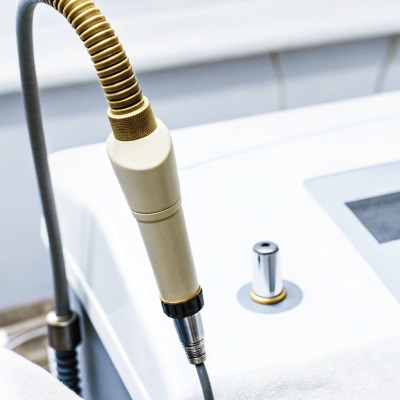
We see broken machines return to our repair center too often because the housing cracked under normal use. It is frustrating to see a valuable medical device 1 medical device fail simply because the outer shell was too brittle or poorly designed.
To ensure durability and cleanability, verify the machine uses medical medical device 2-grade ABS or reinforced polycarbonate rather than standard plastics. Check for IP21 ratings against liquid ingress, UV stabilization to prevent yellowing, and smooth, non-porous finishes that resist cracking when exposed to common hospital-grade disinfectants like isopropyl alcohol.
Here are the specific details you need to check before approving a purchase.
Which specific casing materials offer the best resistance to cracks and daily wear?
When we source raw pellets for injection molding, we reject standard consumer plastics injection molding 3 because they cannot handle the vibration of a shockwave generator. You need materials that survive constant mechanical stress without developing hairline fractures.
Medical-grade ABS and polycarbonate blends are superior choices for shockwave therapy machine casings due to their high impact resistance and structural rigidity. Unlike brittle standard plastics, these materials withstand the mechanical vibrations of the generator and accidental drops, preventing hairline cracks that compromise the device’s internal safety.
The Hidden Stress of Vibration
Many buyers overlook the fact that shockwave therapy machines generate significant internal vibration. Even if the machine sits on a cart, the internal electromagnetic or pneumatic generator creates a constant "hum" and physical pulse.
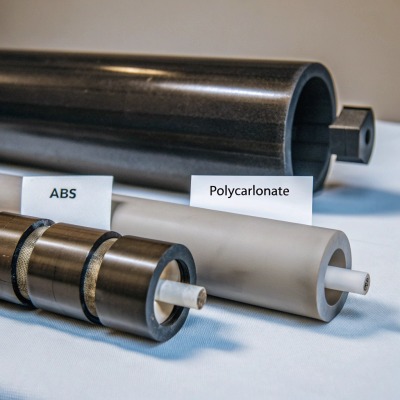
In our engineering lab, we have found that standard polystyrene (often used in cheap toys) will develop stress fractures around the screw bosses after just a few months of heavy usage. A durable casing must act as a dampener, not just a cover. We prioritize Acrylonitrile Butadiene Styrene (ABS) or Polycarbonate (PC) blends. These materials have a high modulus of elasticity, meaning they can flex slightly under stress rather than snapping.
Identifying Quality Through Texture
You can often tell the material quality by touch. High-quality ABS feels dense and warm, while cheaper plastics feel hollow and brittle. When you inspect a sample unit:
- Press on the center of the panel: It should not bow significantly or make a creaking sound.
- Check the seams: There should be no sharp burrs or gaps where the two halves meet. Gaps indicate poor mold tolerance, which leads to weak points.
Material Comparison for Buyers
We use the following chart to benchmark materials for our own product lines. This helps our clients understand why a slightly more expensive casing saves money on warranty claims later.
| Material Type | Impact Resistance | Chemical Resistance | Common Use Case | Verdict |
|---|---|---|---|---|
| Standard Polystyrene (PS) | Low (Brittle) | Poor (Melts with some solvents) | Low-cost consumer electronics | Avoid. Too fragile for clinical use. |
| Medical Grade ABS | High | Good | Standard medical device housings | Recommended. Best balance of cost and durability. |
| Polycarbonate (PC) | Very High | Excellent | Safety goggles, heavy-duty cases | Excellent. Best for portable units prone to drops. |
| Aluminum Alloy | Extreme | Moderate (can corrode) | Internal chassis or handhelds | Overkill for main housing, makes unit heavy. |
Will the outer shell withstand frequent exposure to medical-grade disinfectants without fading?
Our support team frequently handles complaints about machines turning sticky or discoloration after a year of clinic use. This happens when the plastic chemistry reacts poorly with aggressive hospital cleaning protocols.
High-quality casings feature chemical-resistant coatings or molded-in colors that withstand daily wiping with harsh agents like hydrogen peroxide or quaternary ammonium. Inferior painted surfaces often peel or craze after repeated exposure, while proper chemically compatible compatible with disinfectants 4 materials maintain their structural integrity and aesthetic appearance for years.
The Problem of "Crazing"
Crazing is a network of fine cracks on the surface of a material. It looks like a spiderweb. In our testing facility, we have seen this happen when incompatible plastics are wiped with high-concentration alcohol or bleach.
Disinfectants can penetrate the molecular structure of low-quality plastic. This causes the polymer chains to swell and break. While the machine might still work, "crazed" plastic is porous. It traps bacteria and dirt, making the device unsanitary and violating health codes. A durable casing is tested against:
- Isopropyl Alcohol (70%+)
- Quaternary Ammonium Compounds (Quats)
- Hydrogen Peroxide
Paint vs. Molded-In Color
For the blue and white design mentioned in your product context, the way the color is applied matters immensely.
- Surface Painting: Some manufacturers mold the shell in grey and paint it blue. Disinfectants will strip this paint over time, leaving ugly patches.
- Molded-In Color: We prefer adding the blue pigment directly into the plastic resin before molding. This means the color goes all the way through the material. If you scratch the surface, it is still blue underneath. This creates a casing that never "fades" in the traditional sense because there is no paint to rub off.
Seamless Design for Hygiene
Cleanability is not just about material; it is about shape. We design our molds to minimize "dirt traps."
- Avoid: Deep grooves, textured finishes that grab paper towel lint, and exposed screw heads on the top surface.
- Look For: Smooth, glossy or semi-gloss finishes. The area around the touchscreen and the applicator holder should be seamless. Gel residue often collects where the grey cable connects to the main unit; a good design ensures this area is wipeable.
How can I verify the impact resistance of the machine housing before placing a bulk order?
We purposefully drop our prototypes to see exactly where they break, which saves you from dealing with shipping damages. You simply cannot rely on a specification sheet to tell you if a machine can handle a fall.
Request video evidence of drop tests from varying heights and specific impact tests on the housing corners, which are most vulnerable. Additionally, inspect the casing specifications for wall thickness and internal ribbing reinforcement reinforcement ribs 5, which are critical design elements that absorb shock and protect internal electromagnetic components.
Ask for the "Drop Test" Video
Any reputable factory performs packaging and unit drop tests. We often film these for our internal records. As a buyer, you should ask for this footage.
- The Standard: The machine (in packaging) should survive a drop from 1 meter (waist height).
- The Unit Test: The casing itself should withstand the impact of a 500g steel ball dropped from 50cm without cracking.
If a supplier refuses to show this or says "it is standard quality," be cautious. Real durability is measurable.
Internal Ribbing: The Skeleton
External thickness is only half the story. If you ever have the chance to open a demo unit (or see photos of the inside), look for reinforcement ribs.
These are thin walls of plastic molded perpendicular to the outer shell. They act like the beams in a building.
- Without Ribs: The casing is a hollow shell. A single impact can cave it in.
- With Ribs: The force of an impact is distributed across the entire structure.
Wall Thickness Standards
We have found that increasing wall thickness by just 1mm dramatically changes the feel and durability of the device.
| Casing Area | Minimum Recommended Thickness | Why it matters? |
|---|---|---|
| Main Top Surface | 2.5mm – 3.0mm | Supports the weight of the handpiece and prevents bowing. |
| Corners/Edges | 3.0mm+ | These areas take the hardest hits during transport. |
| Bottom Plate | 3.0mm – 4.0mm | Must support the heavy internal transformer/generator. |
| Screen Bezel | 2.0mm | Protects the sensitive touchscreen glass. |
Checking the Joints
The way the blue top housing connects to the bottom white chassis is critical. Cheap units use self-tapping screws directly into plastic posts. If you drop it, these posts snap. High-end units use brass threaded inserts molded into the plastic. Metal-on-metal fastening is far more secure and allows the unit to be opened for service without stripping the plastic threads.
Does the manufacturer use UV-stabilized materials to prevent the casing from yellowing over time?
We have visited clinics where older machines look like they were owned by a heavy smoker, turning an ugly beige color. This visual aging instantly lowers the perceived value of your treatments and harms your brand.
Manufacturers must add UV stabilizers to the plastic resin during the injection molding process to block ultraviolet radiation damage. Without this additive, prolonged exposure to sunlight or fluorescent clinical lighting causes the polymer chains to break down, resulting in permanent yellowing and significant brittleness within 12 to 24 months.

The Science of Yellowing
White plastic turns yellow because of a reaction called photo-oxidation 6 photo-oxidation. Even if the machine is not outside, standard fluorescent lights in a clinic emit UV radiation. Over time, this energy excites the molecules in the plastic (specifically the butadiene Acrylonitrile Butadiene Styrene (ABS) 7 component in ABS), breaking the double bonds and creating free radicals.
This reaction changes the color to yellow or brown and, more dangerously, makes the plastic brittle. A yellowed machine is a fragile machine.
The UV Stabilizer Additive
When we mix our plastic resin, we add a specific UV stabilizer compound. This acts like sunscreen for the machine. It absorbs the UV energy and dissipates it as low-level heat, protecting the polymer chains.
- Cost Factor: UV-stabilized ABS costs roughly 15-20% more than standard ABS.
- The Check: You cannot see this additive with the naked eye. You must ask the supplier: "Is the casing material UV stabilized? Can you provide the resin datasheet?"
Why Aesthetics Affect ROI
You might think, "It is just cosmetic." But in the beauty and medical industry, appearance is everything.
- Patient Confidence: Patients pay for high-end therapy. If the machine looks old and dirty (yellowed), they question the hygiene and technology.
- Resale Value: When you eventually upgrade your equipment, a machine with a bright white casing will sell for significantly more than a yellowed one.
- Branding: Your private label represents your reputation. A device that stays crisp blue and white for 5 years proves you invest in quality.
Environmental Stress Cracking
Yellowing is often the precursor to cracking. Once the material degrades from UV exposure, it loses its elasticity. The vibration from the shockwave generation (as discussed in the first section) will then cause the brittle casing to snap. This is why UV stabilization is a structural requirement, not just a cosmetic one.
Conclusion
Determining the quality of a shockwave therapy machine's casing requires looking beyond the brochure photos. You must verify the use of medical-grade ABS or Polycarbonate ABS or Polycarbonate 8 medical-grade ABS 9, confirm the presence of UV stabilizers, and demand proof of impact resistance. By ensuring the casing is chemically compatible with disinfectants 10 chemically compatible with disinfectants and structurally reinforced with internal ribbing, you protect your investment against early failure. A robust exterior ensures your device remains safe, sanitary, and professional-looking for years of clinical use.
Footnotes
1. Official regulatory definition and standards for medical devices. ↩︎
2. FDA regulatory definition and classification standards for therapeutic medical devices. ↩︎
3. Background on the industrial process used for manufacturing complex plastic parts and housings. ↩︎
4. EPA list of approved disinfectants for use against pathogens on hard surfaces in healthcare. ↩︎
5. Industry standard design guidelines for structural integrity in injection molding. ↩︎
6. Scientific explanation of the chemical process causing plastic degradation. ↩︎
7. Scientific overview of ABS material properties and applications. ↩︎
8. General overview of polycarbonate properties, including its high impact resistance and heat resistance. ↩︎
9. Technical data from a major manufacturer regarding the properties of medical-grade ABS resins. ↩︎
10. Official CDC guidelines on chemical disinfectants in healthcare settings. ↩︎

 English
  Español de México
  Deutsch
  Français
  العربية
  Русский