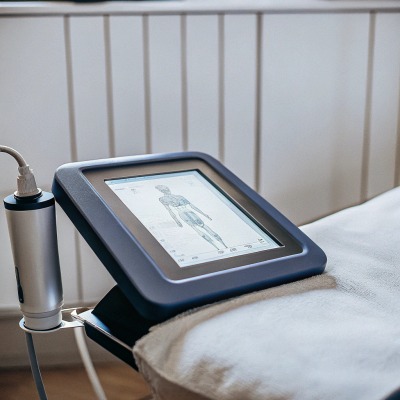
When we test the pneumatic systems in our assembly line, we know that a jammed projectile or a software freeze means lost revenue for your clinic customers. lost revenue 1 Unexpected downtime creates immediate panic for salon owners, and if we delay our support, that panic turns into a lost business relationship. Evaluating a supplier is not just about the machine; it is about how fast they move when things go wrong.
To evaluate response speed effectively, review the supplier’s Service Level Agreement (SLA) for a guaranteed initial response time of under 24 hours. You must verify their ability to provide immediate remote diagnostics via video and their willingness to air-ship critical spare parts within 48 hours to minimize operational downtime.
Here is how you can determine if a supplier acts with urgency or just makes empty promises.
What is the acceptable timeframe for a supplier to acknowledge and resolve a critical machine failure?
Our service team understands that a “ticket received” automated email is not enough when a client has a full day of appointments booked. Real humans need to assess the technical fault immediately to prevent the clinic from canceling treatments.
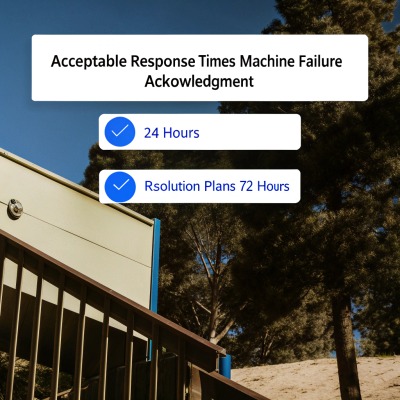
An acceptable timeframe for initial acknowledgment is within 24 hours, regardless of time zones. For critical failures stopping operations, a concrete resolution plan—such as shipping a replacement part or authorizing a return—must be established within 48 to 72 hours. Anything longer signals a lack of professional support infrastructure.

Defining "Critical" vs. "Minor" Failures
In the manufacturing world, we categorize issues to prioritize speed. You need to know if your supplier does the same. A "critical" failure in a shockwave therapy machine usually involves shockwave therapy machine 2 the pneumatic engine or the projectile mechanism. If the projectile inside the handpiece cannot move, the machine is useless. This requires immediate attention.
A "minor" failure might be a UI glitch on the touchscreen where the anatomical diagram loads slowly, but the shockwaves still generate correctly. While annoying, this does not stop business.
If a supplier treats a broken handpiece with the same casual speed as a cosmetic scratch, you will face long delays. You must ask them specifically how they prioritize tickets. Do they have a "Code Red" protocol for total system failure?
The Resolution Timeline Breakdown
Speed is not just about the first email. It is about the total time until the machine works again. We measure this in three stages:
- Triage: The time it takes to identify the problem (e.g., Is it the bullet or the compressor?).
- Logistics: The time it takes to get parts out of the warehouse.
- Transit: The actual shipping time.
Many suppliers claim "24-hour support," but they only mean they will reply in 24 hours. They might take five days to find a spare part. You need to verify their internal processing speed.
Benchmarking Supplier Performance
Use this table to score potential suppliers during your negotiation phase.
| Performance Metric | Excellent Standard | Acceptable Standard | Red Flag (Avoid) |
|---|---|---|---|
| First Human Response | < 12 Hours | 12 – 24 Hours | > 48 Hours |
| Remote Diagnosis | Immediate Video Call | Email instructions (Same Day) | Manual PDF sent after 2 days |
| Spare Parts Dispatch | Same Day / Next Day | Within 3 Business Days | "Backordered" / > 1 Week |
| Total Resolution Time | 3 – 5 Days (Air Shipping) | 7 – 10 Days | > 2 Weeks |
How do I verify if the manufacturer has a standardized protocol for urgent quality claims?
Before we ship any unit to clients in New York or Toronto, we double-check our documented claim workflows to ensure our team knows exactly what steps to follow. Chaos during a crisis usually happens because the supplier lacks a written playbook for handling defects.
You can verify a standardized protocol by requesting a blank copy of their Return Merchandise Authorization (RMA) form and their Corrective and Preventive Action (CAPA) flowchart. These documents prove the manufacturer follows a rigid, repeatable process for quality quality management system 3 claims rather than relying on disorganized, ad-hoc email chains.
The Importance of the RMA Process
A standardized Return Merchandise Authorization (RMA) process is the backbone Return Merchandise Authorization (RMA) 4 of after-sales service. Without it, your broken device might sit in a warehouse in China for weeks because the receiving dock does not know whose machine it is.
When you ask for their RMA form, look for specific fields. Does it ask for the serial number? Does it ask for the error code displayed on the screen? A detailed form shows they have a system to track your device from arrival to repair. If they just say, "Send it to this address," be very careful. That is how equipment gets lost.
CAPA: Root Cause Analysis
Serious manufacturers do not just fix the problem; we want to know why it happened. This is where CAPA (Corrective and Preventive Action) comes in. CAPA (Corrective and Preventive Action) 5 Corrective and Preventive Action 6 If a shockwave handpiece overheats, we need to know if it was a bad batch of O-rings or a user error.
Ask the supplier: "If I report a recurring failure, do you provide a root cause analysis report root cause analysis 7?" If they look confused, they likely do not have a quality management system. quality management system 8 A good supplier will investigate the failure to prevent it from happening to your next order. This transparency protects your reputation with your downstream customers.
Essential Protocol Checklist
When vetting a new factory, ask for these specific documents to prove they are ready for emergencies.
| Document Name | Purpose | What to Look For |
|---|---|---|
| RMA Policy | Defines return logic | Clear instructions on who pays for shipping. |
| Troubleshooting Log | Standardizes diagnosis | A list of error codes and corresponding fixes. |
| CAPA Report Template | preventing recurrence | Sections for "Root Cause" and "Future Prevention." |
| Escalation Matrix | Defines authority | Contact info for a manager if support is too slow. |
Can the engineering team provide immediate video guidance to troubleshoot shockwave device issues?
Our engineers often hop on WhatsApp video calls with technicians to diagnose projectile jams because hearing the sound of the compressor tells us more than a written description. Static manuals are often useless when a complex pneumatic issue stops the device from functioning.
Yes, a capable engineering team must provide immediate video support to diagnose issues like air pressure leaks or software glitches. This remote troubleshooting is crucial for distinguishing between user error and hardware failure, potentially solving the problem instantly without the high cost and delay of shipping the unit back.
The Value of "Tele-Engineering"
Shipping a heavy shockwave therapy machine back to the factory is expensive and slow. Roughly 40% of the "failures" we see are actually maintenance issues or loose connections that can be fixed on-site.
Video support allows the manufacturer to see the error code on the touchscreen. We can hear if the air compressor is struggling. We can watch how the operator holds the applicator. This real-time feedback loop is the fastest way to resolve problems. If a supplier refuses video calls and insists on email only, they are adding unnecessary days to your downtime.
What Can Be Fixed Remotely?
You need to know what is realistic. Not everything can be fixed over a call, but many things can.
- Software Resets: If the screen freezes or the pulse counter glitches, a video call can guide you through a hard reset or a hidden factory menu to recalibrate the system.
- Applicator Maintenance: The projectile and tube inside the handpiece wear out over time. An engineer can watch you disassemble the handpiece and tell you if the parts need cleaning or replacement.
- Connection Checks: sometimes the foot pedal or the handpiece cable is just loose. A quick visual check confirms this.
Video Support Competency Table
Evaluate the supplier's technical team based on these capabilities.
| Issue Type | Remote Video Fix Probability | Action Required via Video |
|---|---|---|
| Error Code: "Water Flow" | High (80%) | Guide user to check water levels or unkink tubes. |
| Low Pressure Output | Medium (50%) | Listen to compressor; inspect O-rings visually. |
| Touchscreen Unresponsive | Low (10%) | Check cable connections; likely needs part replacement. |
| Projectile Jammed | High (90%) | Guide user to open applicator and clean the barrel. |
Will the supplier agree to air-ship replacement parts to minimize my business downtime?
We always keep a stock of spare bullets, transmitters, and mainboards ready for express pickup because we know that sea freight is not an option for urgent repairs. A supplier who insists on slow shipping methods for warranty parts does not value your business continuity. business continuity 9
Top-tier suppliers will agree to air-ship critical components like handpieces or mainboards to minimize downtime, usually reaching you within 3 to 5 days. You must ensure this provision is explicitly written into your purchase contract, specifying that the supplier covers express courier costs for defects occurring within the warranty period.

The Logistics of Speed
In the B2B beauty equipment industry, the biggest bottleneck is often logistics, not engineering. A replacement mainboard weighs less than 1kg. Sending it via DHL or FedEx from China to the US takes about 3 to 5 days. Sending it via sea freight takes 35 days.
If your contract says "parts provided under warranty" but does not specify how they are shipped, a cheap supplier will choose the cheapest method. You will wait a month while your customer screams at you. You must negotiate terms that specify "Express Air Shipping" for any part that renders the machine unusable.
Inventory Availability
Air shipping only works if the supplier actually has the part in stock. Some manufacturers practice "Just-in-Time" manufacturing Just-in-Time 10 and carry zero spare parts. If a board fails, they have to order it from their supplier, wait a week, and then ship it to you.
Ask them directly: "Do you keep stock of touchscreens, compressors, and handpieces for immediate dispatch?" Demand a photo of their spare parts warehouse. A supplier with dusty, empty shelves is a risk to your business.
Negotiating the Cost of Speed
Who pays for the shipping? This is a common dispute.
- Standard Warranty: Supplier pays for the part; Buyer pays for shipping.
- Premium Warranty: Supplier pays for the part AND shipping.
- DOA (Dead on Arrival): Supplier should always pay for everything.
For a distributor, paying $50 for shipping is better than losing a client. However, you should push for the supplier to cover air shipping costs for any quality defects that happen in the first 6 months. It forces them to be accountable for their quality control.
Conclusion
Evaluating a supplier's response speed is about minimizing risk. You need a partner who acknowledges issues within 24 hours, follows a strict CAPA protocol, offers video diagnostics to avoid unnecessary returns, and commits to air-shipping parts. Do not just hope for the best—audit their documents and negotiate these terms into your contract before you pay the deposit.
Footnotes
1. General concept of revenue loss resulting from operational downtime in a business context. ↩︎
2. Medical definition and mechanism of the device. ↩︎
3. Reference to the international standard (ISO 9001). ↩︎
4. Definition of the standard return logistics process. ↩︎
5. Official regulatory standard for handling quality issues. ↩︎
6. International standard for quality management systems including CAPA protocols for medical devices. ↩︎
7. Background on the systematic process used to identify the underlying cause of equipment failure. ↩︎
8. FDA regulations regarding the quality management systems required for medical device manufacturers. ↩︎
9. Authoritative guide on maintaining operations during disruptions. ↩︎
10. Explanation of the manufacturing inventory strategy. ↩︎

 English
  Español de México
  Deutsch
  Français
  العربية
  Русский