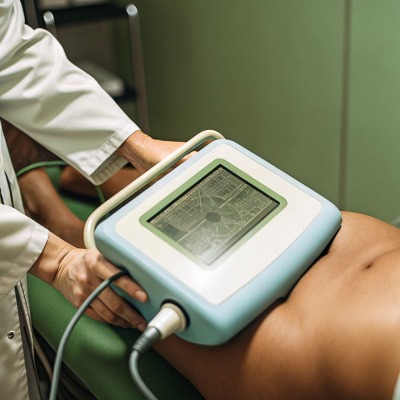
Clients frequently ask us why their treatment results plateau despite using high-end equipment. Often, the issue isn’t the machine itself, but using a generic setup for specialized needs. When we analyze feedback from clinics, we find that skipping the configuration phase leads to suboptimal outcomes.
To choose the best configuration, match the probe type to the pathology depth pathology depth 1 and tissue density. Use radial transmitters (15-20mm) for superficial myofascial pain and cellulite, while selecting focused electromagnetic probes for deep tendon issues or calcifications requiring precision up to 70mm deep.
Let’s break down the specific technical parameters you need to consider for your inventory to ensure clinical success.
Which specific transmitter heads do I need to offer for effective cellulite reduction versus muscle recovery?
When we configure aesthetic-focused units for export, we notice distributors often overlook the distinct mechanical requirements for breaking down fat cells versus soothing athletic injuries. Investing in the wrong transmitter head can render a powerful machine ineffective for specific treatments.
For cellulite reduction, prioritize large radial transmitters (20-35mm) that distribute acoustic acoustic impedance 2 acoustic waves 3 energy Energy Flux Density (EFD) 4 widely across the subcutaneous fat layer. Conversely, muscle recovery demands smaller, focused 15mm tips to target specific trigger points and stimulate blood flow in localized deep tissue areas without scattering energy.
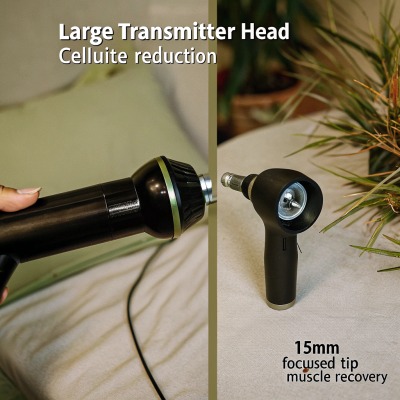
To understand why specific heads are non-negotiable for different treatments, we must look at the physics of how acoustic waves interact with tissue density. In our engineering labs, we test wave propagation through various mediums, and the results consistently show that "one size fits all" is a myth in shockwave therapy.
The Physics of Fat vs. Muscle Tissue
Cellulite reduction relies on the mechanical disruption of fibrous septae mechanical disruption of fibrous septae 5—the connective tissue bands that pull skin down and create dimpling—and the stimulation of lymphatic drainage. This process happens relatively close to the surface but covers a large surface area.
If you use a small diameter probe (like 15mm) on a large thigh area for cellulite, two problems occur. First, the energy is too concentrated, potentially causing bruising on soft fatty tissue. Second, the treatment becomes incredibly inefficient, requiring thousands of pulses to cover a standard standard 15mm radial tip 6 zone. A larger transmitter, such as a 35mm radial head, disperses the energy. This creates a vibration effect that shakes the structure of the connective tissue and boosts circulation across a wider net, which is exactly what is needed for aesthetic smoothing.
On the other hand, muscle recovery often involves treating hypertonic muscles or "knots" (trigger points). These are dense, contracted areas deep within the muscle belly. A large 35mm head would bounce energy off the surface of a large muscle group without penetrating effectively to the knot. Here, a 15mm or 20mm transmitter acts like a precision tool. It allows the therapist to deliver a high peak pressure directly into the trigger point, forcing the muscle fibers to relax and stimulating immediate blood flow for recovery.
Optimizing Energy Dispersion
The key difference lies in Energy Flux Density (EFD). For muscle recovery, you generally want higher EFD in a smaller spot to restart the healing process in tendons or muscles. For cellulite, you want lower EFD spread over a larger area to avoid pain and maximize the "massage" effect of the acoustic wave.
Below is a breakdown of the recommended transmitter configurations based on our testing data:
| Application Area | Recommended Probe Size | Wave Characteristic | Primary Mechanism of Action |
|---|---|---|---|
| Cellulite (Stages I-III) | 25mm – 35mm D-ACTOR | Divergent, High Vibration | Mechanical disruption of septae, lymphatic drainage |
| Skin Tightening | 20mm – 35mm | Broad, Low Intensity | Collagen stimulation, increased skin elasticity |
| Trigger Points (Neck/Shoulder) | 10mm – 15mm | Focused/Semi-Focused | Ischemic compression relief, pain gating |
| Large Muscle Recovery (Quads) | 20mm | Radial, Medium Depth | Hyperemia (blood flow), muscle tone reduction |
By equipping your machines with a versatile set of heads, you ensure your clients can switch from an "Aesthetic Mode" to a "Rehab Mode" effectively. Our device's touchscreen interface, which displays the running human figure, helps guide the user, but the hardware must match the software's intent.
How do I select the right probe sizes to accommodate different body areas and tissue depths?
During our quality control tests on different body phantoms, we see that mismatching probe diameter with anatomical surface area dramatically reduces energy transmission efficiency and client comfort. A common complaint we hear from end-users involves pain caused by the plastic rim of a large probe hitting bone.
Select probe sizes based on the target surface area and required depth. Use 6-15mm tips for small joints and superficial trigger points (0-30mm depth), while reserving 25-35mm transmitters for large muscle groups like glutes or hamstrings to ensure deep, uniform energy absorption.
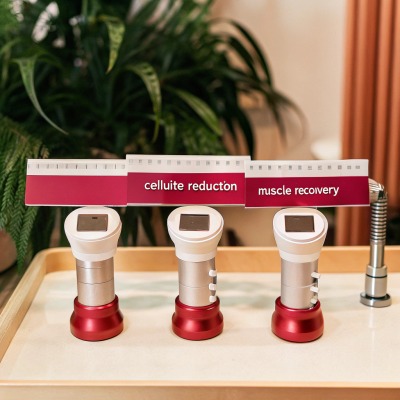
Selecting the right probe size is not just about coverage; it is about geometry and the coupling connection. If the probe is too large for the area (e.g., using a 20mm transmitter on a small ankle joint), the flat surface of the transmitter cannot make full contact with the curved skin surface. This leads to air pockets. Since acoustic waves cannot travel through air, the energy is lost, and the machine essentially "misfires," potentially damaging the applicator's internal projectile.
Matching Diameter to Anatomical Contours
When we design the blue and silver applicators for our units, we consider the ergonomics of the operator and the anatomy of the patient.
- Small Zones (Hands, Feet, Cervical Spine): These areas have thin soft tissue coverage and are close to the bone. A 6mm or 10mm tip is essential here. These tips allow the therapist to navigate around bony prominences like the malleolus (ankle bone) or the spine without striking the bone directly, which is extremely painful for the patient.
- Medium Zones (Elbows, Knees, Shoulders): The standard 15mm transmitter is the workhorse of the industry. It fits well into the curvature of the shoulder or the knee joint line. It provides a balance of depth (up to 40mm) and energy focus.
- Large Zones (Glutes, Hamstrings, Back): Here, you are dealing with thick muscle mass. A small probe might penetrate, but it would take too long to treat the whole area. A 20mm or larger probe allows for "smoothing" treatments that address the fascia covering the muscle.
The "Search and Treat" Diagnostic Protocol
A highly effective strategy we recommend to our distributors is teaching the "Search and Treat" protocol. This influences which probes you should include in your standard kit.
- Search: The therapist uses a larger, lower-energy probe to scan the area. This identifies general zones of sensitivity without causing acute pain.
- Treat: Once the exact lesion or knot is found, they switch to a smaller diameter probe (e.g., 15mm) to deliver therapeutic energy levels precisely to that spot.
This implies that selling a machine with only one probe size limits the therapist's ability to diagnose and treat effectively.
Depth Penetration vs. Probe Size
There is a common misconception that smaller probes always penetrate deeper. In Radial Shockwave Therapy (RSWT), the physics works differently than in focused therapy.
- Larger Heads (e.g., 35mm): These produce a wave that stays relatively superficial but covers a wide radius. They are excellent for connective tissue but do not penetrate deep into the muscle belly effectively.
- Standard Heads (e.g., 15mm): These offer the best compromise, penetrating 30-40mm depending on the energy settings (Bar/mJ).
- Deep Impact Transmitters: Some specialized probes are designed with a longer "nose" or specific geometry to push the focal point deeper, even in a radial system.
| Probe Diameter | Ideal Body Part | Typical Penetration Depth | Clinical Indication |
|---|---|---|---|
| 6mm | Fingers, Face, Acupuncture Points | 0 – 15mm | Tenosynovitis, trigger points in small muscles |
| 15mm | Elbow, Shoulder, Knee | 0 – 35mm | Tennis elbow, patellar tendonitis |
| 20mm | Calf, Thigh, Back | 0 – 50mm | Myofascial pain syndrome, muscle tightness |
| 35mm | Glutes, Abdomen, Thighs | 0 – 20mm (Broad) | Cellulite, lymphatic drainage |
By offering a kit that includes at least a 15mm, 20mm, and a 6mm option, you cover 90% of musculoskeletal pathologies.
Should I include specialized transmitters for ED therapy in my standard machine configuration?
Our R&D team has observed a massive surge in demand for vascular vascular regeneration modules 7 regeneration modules, yet many clinics hesitate to upgrade their standard orthopedic setups with these specialized tools. We often advise that ignoring this category means missing out on one of the fastest-growing revenue streams in men’s men’s health 8 health.
Yes, including focused or broad-focused transmitters specifically for Erectile Dysfunction is crucial for vascular regeneration. Unlike standard musculoskeletal probes, these specialized heads deliver low-intensity linear shockwaves optimized to stimulate angiogenesis and improve blood flow without causing micro-trauma to sensitive soft tissues.
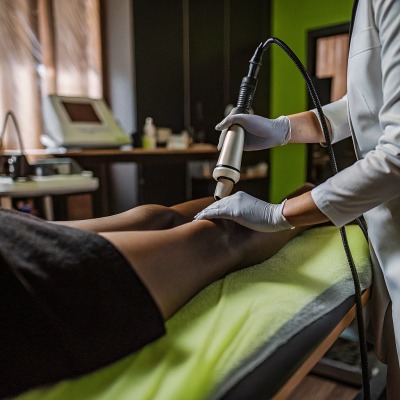
Treating Erectile Dysfunction (ED) with shockwave therapy—clinically known as Low-Intensity Extracorporeal Shockwave Therapy (Li-ESWT)—requires a fundamentally different approach than treating a heel spur. The goal is not to break down calcification or disrupt tissue, but to stimulate angiogenesis (the formation of new blood vessels).
Why Standard Probes Fail at ED Therapy
If a clinic attempts to use a standard 15mm radial tip for ED, they risk two outcomes:
- Inefficacy: Radial waves disperse rapidly. By the time the energy reaches the cavernous bodies of the penis, it may be too weak to trigger the biological response required for vessel growth.
- Safety Risks: Standard radial probes deliver high peak pressure at the skin surface. On the delicate tissue of the penis, this can cause pain, bruising, or hematomas.
Specialized ED transmitters are often designed to be linear or broad-focused.
- Linear Probes: Instead of a single dot of energy, these emit waves along a line (e.g., 40mm long). This allows the therapist to treat a segment of the crura or corpus cavernosum in one stationary position, ensuring uniform energy delivery.
- Focus-Lens Probes: These adjust the depth of the shockwave so that the energy maximum occurs inside the tissue, bypassing the skin surface. This is critical for patient comfort and effectiveness.
Commercial Viability and Kit Configuration
From a purchasing perspective, you must decide if your target market includes urologists or men's health clinics. However, even general wellness centers are adding this service.
We recommend a modular approach. Your base machine can be the standard orthopedic model (blue and white unit), but you should offer an "ED Upgrade Kit."
This kit should include:
- Specific Protocol Software: The touchscreen must have a preset for ED (vascular settings are typically lower energy, higher frequency).
- Disposable Silicone Caps: ED therapy requires strict hygiene. Probes that allow for easy capping or sterilization are essential.
- The Linear or Focused Head: This is the hardware differentiator.
Angiogenesis Mechanism
To sell this configuration, you need to explain the biology to your clients. The shockwaves create shear stress on the vessel walls. This stress triggers the release of VEGF triggers the release of VEGF 9 (Vascular Endothelial Growth Factor). Over a course of 6-12 sessions, this leads to neovascularization, improving blood flow naturally.
Standard radial hammering does not achieve this shear stress effect as efficiently as a specialized linear or focused wave. Therefore, relying on standard probes for this indication is a disservice to the patient.
How does the material of the treatment probe affect the longevity and maintenance of my equipment?
We often receive return requests for “faulty” handpieces, only to find that the internal projectile destroyed a low-quality tip because the material hardness was not properly matched. When we source raw materials, we balance acoustic impedance with durability balance acoustic impedance 10 to ensure the equipment survives the rigorous environment of a busy clinic.
Probe material directly dictates energy transfer efficiency and replacement frequency. Stainless steel transmitters offer maximum durability and depth for high-energy treatments, while ceramic or plastic tips provide gentler transmission for superficial areas but wear out significantly faster, requiring stricter maintenance schedules.
The material of the probe is the interface between the machine's power and the patient's body. In pneumatic ballistic shockwave machines (the most common type), a projectile is fired down a tube and collides with the back of the transmitter tip. This collision transfers kinetic energy into the acoustic wave.
The Impact of Acoustic Impedance
The "hardness" and density of the material determine how the wave propagates.
- Stainless Steel / Titanium: These metals have high acoustic impedance. They transfer the mechanical impact very efficiently. This results in a "harder" shockwave that penetrates deeper. It is ideal for breaking calcifications or treating deep tendon issues. However, the collision is forceful, creating more noise and vibration.
- Ceramic / Plastic / Soft Alloys: These materials dampen the impact. They create a "softer" wave that is more comfortable for the patient, making them ideal for superficial treatments, myofascial release, or sensitive areas.
Managing Consumable Costs and Lifespan
The hidden cost of shockwave therapy is the consumable lifespan. The projectile and the transmitter tip are wear-and-tear parts.
- Metal Fatigue: A stainless steel tip is durable but not invincible. After 1-2 million shocks, the metal structure can change, leading to micro-cracks. If a tip breaks during treatment, it can be dangerous.
- Deformation: Softer tips (alloys or plastics) will deform at the impact site (where the projectile hits inside). As the impact surface flattens, the energy transfer drops significantly. A worn-out tip might only deliver 50% of the energy displayed on the screen.
We recommend guiding your clients to check the "Shot Count" feature on the touchscreen.
- Steel Tips: Replace every 2-4 million shots.
- Soft/Alloy Tips: Replace every 1-2 million shots.
Maintenance Protocols for Longevity
To ensure your clients get the most out of their configuration, include a maintenance guide.
- Check the Projectile: The projectile inside the handpiece usually wears out faster than the steel tip. If the projectile is worn, it will damage the expensive tip.
- Coupling Gel: The gel isn't just for the skin; it protects the face of the probe from pitting caused by cavitation.
- Tightening: The constant vibration loosens the probe. If there is a gap between the probe and the barrel, the impact force changes, leading to rapid thread damage.
| Material Type | Energy Transmission | Comfort Level | Estimated Lifespan (Shots) | Best For |
|---|---|---|---|---|
| Stainless Steel | High / Sharp | Low (More aggressive) | 2,000,000+ | Deep tendons, Bone, Calcification |
| Titanium Alloy | High / Efficient | Medium | 1,500,000 – 2,000,000 | Sports injuries, High-volume clinics |
| Ceramic/Composite | Medium / Soft | High (Gentle) | 1,000,000 – 1,500,000 | Fascia, Sensitive skin, Aesthetics |
By choosing high-quality stainless steel for your standard kit, you reduce the frequency of complaints regarding "weak power" that usually stem from worn-out softer tips.
Conclusion
Choosing the right configuration ensures clinical results and equipment longevity. By aligning probe selection with client anatomy and pathology—using large radial heads for aesthetics and focused tips for deep recovery—you maximize therapeutic outcomes and business ROI. Proper material selection further safeguards your investment against premature wear.
Footnotes
1. Validates the importance of depth in shockwave probe selection. ↩︎
2. Technical reference for material properties and their effect on sound wave transmission. ↩︎
3. Educational resource explaining the fundamental physics of acoustic wave motion and propagation. ↩︎
4. Defines the key physical parameter for shockwave intensity. ↩︎
5. Explains the mechanism of action for cellulite treatment. ↩︎
6. General background on the technology and its history in medical applications. ↩︎
7. Official government health information regarding the vascular conditions treated by these specialized modules. ↩︎
8. Recent industry news and trends within the healthcare and men’s health sectors. ↩︎
9. Confirms biological mechanism for vascular regeneration in ED therapy. ↩︎
10. Defines the physical property affecting wave transmission efficiency. ↩︎

 English
  Español de México
  Deutsch
  Français
  العربية
  Русский