We often see clients worry about fried circuits or safety hazards when importing medical devices Type F 1. medical devices 2 Our engineering team ensures every unit matches your local grid perfectly to prevent expensive malfunctions.
To ensure compliance, verify that the device supports 230V 50Hz input and includes a medical-grade power cord with the correct Type C, E, or F plug. Request the CE certificate, check the IEC 60601-1 test report for electrical safety, and demand a pre-shipment video showing voltage testing.
Let’s break down the specific steps to guarantee your equipment is safe and ready for the European market. European market 3
How do I specify the exact voltage and plug type requirements to my Chinese supplier?
Miscommunication about plugs is the most common reason for shipment delays in our factory. We recommend being overly specific to avoid receiving useless power cords that delay your product launch.
Explicitly state your requirement for a 230V, 50Hz power supply and identify the specific plug type, such as Schuko Type F or Europlug Type C. Attach photos of your local sockets in the purchase order and require written confirmation on the proforma invoice before production begins.

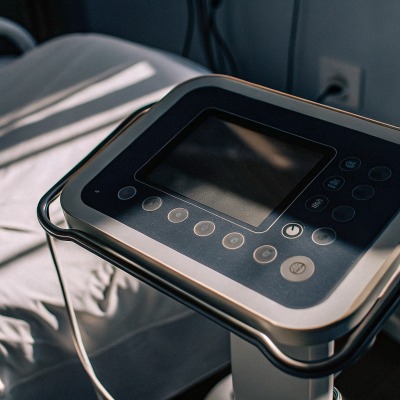
When you place an order for a medical device like our blue and white shockwave unit, vague instructions can lead to costly mistakes. Simply saying "European Plug" is never enough. Europe has a diverse range of socket standards, and assuming a single standard applies to the whole continent is a risk. socket standards 4 For instance, a plug that works in Germany (Type F) might not fit a grounded socket in France (Type E) without a specific pinhole configuration.
Visual Communication is Key
In our daily operations, we find that images eliminate language barriers. Do not rely solely on text. Download a picture of the exact wall socket used in your facility. Circle the grounding pin or the shape of the entry holes. Send this image to your supplier along with your purchase order. This visual aid guides our assembly team when they select the accessory pack for your machine.
The Voltage Switch Check
Some shockwave machines feature a manual voltage switch on the back panel. This switch toggles between 110V and 220V. If this is set incorrectly at the factory, you will blow the fuse—or worse, the power board—the moment you turn it on. You must specify in your contract that the supplier sets this switch to 230V before packing.
Below is a guide to help you specify the correct plug based on your target market:
| Region / Country | Plug Type Standard | Key Feature | Voltage / Frequency |
|---|---|---|---|
| Germany Germany (Type F) 5, Spain, Netherlands | Type F (Schuko) | Two round pins with side grounding clips | 230V / 50Hz |
| France, Belgium, Poland | Type E | Two round pins with a female grounding hole | 230V / 50Hz |
| United Kingdom, Ireland | Type G | Three rectangular pins with a fuse | 230V / 50Hz |
| Switzerland | Type J | Three round pins in a hexagon shape | 230V / 50Hz |
| Italy | Type L | Three round pins in a row | 230V / 50Hz |
By providing this level of detail, you force the supplier to acknowledge the specific requirements of your electrical grid. This prevents the "standard export" mentality where a supplier might just grab the most common cable they have in stock.
Will the internal power supply be compatible with the electrical frequency in my country?
During our R&D phase, we rigorously test internal power units against frequency fluctuations. Using the wrong frequency can cause immediate motor failure or inconsistent shockwave output during patient treatments.
Most modern medical power supplies are switch-mode and handle 50Hz/60Hz automatically, but you must verify this on the technical rating label. If the machine uses AC motors for cooling or compression, a frequency mismatch will cause overheating, so explicitly request 50Hz compatibility for European grids.

The difference between 50Hz (Europe) and 60Hz (North America) is often overlooked, but it is critical for the longevity of your machine. While the digital touchscreen and the control board of our shockwave devices run on DC power converted by a universal switching power supply, other components are not as flexible.
The Risk of Frequency Mismatch
Shockwave therapy machines often use air compressors or electromagnetic coils to generate energy. These mechanical components rely heavily on the frequency of the AC current. frequency of the AC current 6
- Compressors: If a compressor designed for 60Hz is plugged into a 50Hz European outlet, it will run slower. This leads to reduced pressure output. The machine will struggle to reach the high bar settings required for effective therapy. Over time, the motor will draw more current to compensate, leading to overheating and premature failure.
- Cooling Fans: AC cooling fans will also spin slower on 50Hz. This reduces airflow inside the device casing. For a high-energy device, proper cooling is essential to prevent the mainboard from shutting down during a long treatment session.
Verifying the Internal Components
You must ask your supplier to confirm the specifications of the internal components, not just the external sticker. Ask for the datasheet of the power supply unit (PSU) and the air pump.
Impact of Frequency on Device Performance
| Component | Function | Effect of Running 60Hz Motor on 50Hz Grid | Risk Level |
|---|---|---|---|
| Air Compressor | Generates pneumatic shockwaves | Runs 20% slower; reduced pressure output | High |
| Cooling Fan (AC) | Dissipates heat from internals | Reduced airflow; potential High Potential Test 7 overheating | Medium |
| Solenoid Valve | Controls air pulses | Timing errors; irregular shock frequency | High |
| Touchscreen | User Interface | No effect (runs on DC) | Low |
| Mainboard | Logic Control | No effect (runs on DC) | Low |
Always verify that the "heart" of the machine—the motor and the pump—is rated for 50Hz. This ensures that the blue glowing button on the front panel activates a machine that performs exactly as the specifications promise.
Do the power cords and plugs meet the necessary CE safety certifications for the European market?
Our compliance department spends weeks verifying component certificates before assembly begins. A machine might pass CE, but a cheap, uncertified power cord can invalidate the entire approval and pose fire risks.
Yes, the power cord itself must bear individual VDE or KEMA-KEUR marks distinct from the machine's main CE certification. You must request a separate component datasheet for the cable set to prove it meets IEC 60227 standards and utilizes fire-retardant materials suitable for clinical environments.

It is a common misconception that the CE mark on the back of the machine covers the power cord. CE mark 8 It does not. The power cord is considered a removable component and must have its own safety certifications. In Europe, strict regulations govern the materials and conductivity of cables used in medical environments. medical environments 9
Reading the Cable Jacket
When we source cables for our European clients, we look for specific markings embossed directly onto the plastic cable jacket. You should do the same. Ask your supplier for a close-up photo of the text written on the cord. You should see marks like VDE (Germany), KEMA-KEUR (Netherlands), or SEMKO (Sweden). These marks prove that the insulation has been tested for durability and fire resistance. If the cable is blank or only says "China Export," reject it.
Medical Grade vs. Consumer Grade
Medical devices require a higher standard of reliability than a laptop or a toaster. The grounding pin is the most critical part. In a shockwave therapy machine, high voltages are generated to create the acoustic wave. If there is a short circuit, the grounding wire must channel that electricity safely away from the patient and the therapist.
- Wire Gauge: Ensure the copper wire inside is thick enough. We standardly use 0.75mm² or 1.0mm² wire cross-sections for medical devices to handle current surges without heating up.
- Insulation: The outer sheath must be robust. It should withstand being rolled over by the machine's wheels or stepped on in a busy salon environment.
Common Cable Certification Marks
| Certification Mark | Country of Origin | What It Signifies |
|---|---|---|
| VDE | Germany | Electrical, thermal, and mechanical safety compliance. |
| KEMA-KEUR | Netherlands | High-level safety testing for electrical components. |
| NF | France | Compliance with French national safety standards. |
| IMQ | Italy | Quality mark for Italian safety standards. |
| CE | European Union | Manufacturer declaration of conformity (Look for this on the plug head). |
Never compromise on the cable. A faulty cable can melt, cause a fire, or shock a user. Ensuring these small markings are present is a huge step in risk management.
What inspection methods can I use to verify electrical compliance before the goods leave the factory?
We encourage every client to witness the final quality check via video call. Seeing the multimeter reading live gives you peace of mind before the crate is sealed and shipped.
Schedule a live video inspection where the supplier plugs the specific unit into a 230V outlet and measures output with a multimeter. Check that the interface loads correctly without error codes, and verify the physical label on the back matches your order specifications exactly.

Once the machine is on a boat or a plane, it is too late to fix a voltage issue. The cost of returning a heavy medical device to China is prohibitive. Therefore, the "Golden Time" for verification is right before the courier collects the box. We implement a strict pre-shipment protocol, and you should demand the same rigor.
The Live Video Walkthrough
Do not settle for photos. Photos can be edited or taken from a previous batch. Request a real-time video call (via WhatsApp or Zoom) or a freshly recorded video where the supplier speaks your name and the date.
- The Label Check: Ask the camera operator to zoom in on the silver technical label on the back of the machine. Read the "Input Voltage" line. It must say AC 220V-240V, 50Hz. If it says 110V or 60Hz, stop the shipment immediately.
- The Power-On Test: Watch them plug the machine into a socket. Ensure they are not using a step-down transformer during the test. The machine should boot up immediately. The blue glowing button on the front should light up steadily, not flicker.
- The Multimeter Test: Ask the technician to measure the voltage of the socket they are using with a multimeter before plugging in the machine. This proves they are testing on a European-standard voltage, not a Chinese industrial line or a modified setup.
Third-Party Inspection Services
If your order volume is large, consider hiring a third-party inspection agency like SGS, Intertek, or V-Trust. For a fee, they will send an inspector to our factory. They will perform a "Hi-Pot Test" (High Potential Test) to check for electrical leakage and verify ground ground continuity 10 continuity. This is the gold standard for medical safety.
- Visual Check: They verify the plug shape against your photos.
- Functional Check: They run the machine at max power to ensure the fuse holds.
- Documentation: They verify that the user manual in the box is the English version and contains the correct voltage warnings.
Taking these steps ensures that when you unpack the device in your facility, it works instantly, safely, and legally.
Conclusion
Ensuring your Chinese shockwave therapy machine works in Europe requires specifying plug types, verifying 50Hz frequency compatibility, and checking component certifications. strict pre-shipment video inspections prevent costly safety hazards.
Footnotes
1. Wikipedia entry detailing the technical specifications of the Type F Schuko plug system. ↩︎
2. European Commission’s official regulatory framework and safety information for medical devices. ↩︎
3. Official European Commission guidance on CE marking compliance for products sold in the EU. ↩︎
4. Wikipedia overview of global electrical standards, including voltage and plug types by country. ↩︎
5. Official IEC standard definition for the specific plug type mentioned. ↩︎
6. MIT engineering resource explaining the importance of frequency synchronization in power grids. ↩︎
7. General background definition of the specific electrical safety test mentioned. ↩︎
8. Official European Commission page explaining the regulatory mark cited. ↩︎
9. International Electrotechnical Commission standards for electrical equipment used in medical settings. ↩︎
10. Industry standards body explaining electrical safety testing procedures like ground continuity. ↩︎

 English
  Español de México
  Deutsch
  Français
  العربية
  Русский