When we analyze the defective units clients send us for comparison, we often see how easily buyers fall for low prices that hide critical safety failures.
Common scam risks include purchasing rebranded generic massagers marketed as clinical devices, receiving equipment with forged FDA or CE safety certificates, and falling for exaggerated energy output claims that weak internal compressors cannot deliver. Suppliers may also act as middlemen or swap high-quality components for inferior parts after you approve the initial sample.
To protect your investment and reputation, you must learn to identify these deceptive practices before transferring any funds.
How do I spot a trading company pretending to be a direct manufacturer?
We often invite clients to video call our production floor, because legitimate factories have nothing to hide regarding their assembly lines or machinery.
To spot a trading company, inspect their Chinese business license for the word "Production" in the scope of business section. Trading companies only list "Sales" or "Trade," lack distinct manufacturing facilities during live video audits, and often sell an incoherent mix of unrelated product categories.

When sourcing medical aesthetics equipment, distinguishing between a genuine factory and a trading company is the first line of defense against scams. medical aesthetics equipment 1 In our industry, trading companies often present themselves as manufacturers to command higher margins, yet they lack control over quality, production scheduling, and after-sales support. This disconnect frequently leads to the communication delays and inconsistent product quality that frustrate purchasing managers.
Analyzing the Business License
The most reliable method involves requesting the supplier's business license. supplier's business license 2 In China, every registered company has a specific "Scope of Business." A manufacturer's license will explicitly include terms like "Production," "Manufacturing," or "Processing." If the license only states "Wholesale," "Distribution," or "Import/Export," you are likely dealing with a middleman. Do not rely on the English translation provided by the sales rep; ask for the original Chinese document and use translation software or a trusted third party to verify the keywords.
The Live Video Audit Strategy
Photos of factories on Alibaba are easily faked or stolen from legitimate competitors. factories on Alibaba 3 We encourage you to demand a live video call via WhatsApp or Zoom. During this call, do not settle for a tour of a showroom, which any trading company can rent. Ask the sales representative to walk onto the production floor. Request to see specific details in real-time, such as the inventory of raw materials (like the blue and white casings or touchscreens) or the assembly of the handpieces. If they make excuses about "trade secrets" or "inconvenient timing" to avoid showing the production line, this is a major red flag.
Product Portfolio Consistency
A genuine factory focuses on a specific technology or category. For instance, our facility specializes in beauty and medical machines. If a supplier's catalog features shockwave therapy machines alongside completely unrelated items like furniture, pet toys, or construction materials, they are undoubtedly a trading company. shockwave therapy machines 4 They are simply aggregating products from various sources without deep technical expertise.
Manufacturer vs. Trading Company Indicators
| Feature | Genuine Manufacturer | Trading Company / Middleman |
|---|---|---|
| Business License Scope | Includes "Production," "Manufacturing," or "Processing." | Lists only "Sales," "Trade," or "Supply Chain Management." |
| Product Portfolio | Specialized in one category (e.g., medical lasers, shockwave). | Broad mix of unrelated items (e.g., electronics + clothes). |
| Technical Knowledge | Sales staff can discuss internal engineering and customization. | Staff gives vague answers and must "check with the engineer" often. |
| Factory Access | Willing to show live production lines and raw materials. | Refuses video calls of the floor or only shows a polished showroom. |
| Pricing Structure | Lower unit costs due to direct selling. | Higher prices to cover their commission margin. |
How can I verify if the shockwave energy output claims are exaggerated?
Our engineering team tests competitor devices regularly and frequently finds "clinical" machines that barely generate enough pressure to treat minor muscle tension.
You can verify energy output claims by comparing the device's bar pressure and frequency specs against established clinical brands like Storz. If a $300 device claims equal performance to a $30,000 unit, or lacks specific energy density data (mJ/mm²), the specifications are likely fabricated.

The market is flooded with devices that look like medical shockwave machines but function like expensive vibrators. This "performance inflation" is one of the most common scams targeting international buyers. Sellers know that few buyers have the specialized equipment to measure bar pressure or millijoules (mJ) upon receipt, so they print impressive numbers on the technical datasheet that the machine cannot physically achieve.
The Pneumatic vs. Electromagnetic Deception
True radial shockwave therapy relies on a projectile being accelerated by compressed air radial shockwave therapy 5 (pneumatic) or a magnetic field (electromagnetic) to strike a transmitter, creating a shockwave. Many scam devices sold on platforms like AliExpress or Amazon use simple eccentric motors that create vibration, not shockwaves. These are essentially massagers. If a device is lightweight, lacks a substantial internal compressor or coil system, and costs under $500, it is physically impossible for it to generate the 4-5 Bar of pressure required for clinical efficacy.
Analyzing Technical Specifications
Legitimate medical devices have precise energy density ratings. When we design our systems, we calculate energy in millijoules per square millimeter (mJ/mm²). Scam listings often omit this crucial metric, focusing instead on vague terms like "high power" or generic "intensity levels" (1-10) that have no medical standardization. Furthermore, be skeptical of devices claiming an incredibly wide frequency range (e.g., 1Hz to 50Hz) at a budget price point. High-frequency shockwave generation requires expensive, durable components to prevent overheating—technology that cheap knockoffs simply do not possess.
The "Too Good to Be True" Price Test
There is a hard floor for manufacturing costs. High-quality pneumatic components, durable handpieces, and reliable logic boards cost money. If a supplier offers a machine with specifications matching a top-tier European brand for 1% of the price, it is a scam. These devices often fail after a few weeks because the internal striker wears out, or the "shockwave" is so weak it provides no therapeutic benefit, leading to patient complaints and liability for your clinic.
Comparison of Authentic vs. Suspicious Specifications
| Specification | Authentic Clinical Device | Suspicious / Scam Device |
|---|---|---|
| Price Point | $5,000 – $30,000+ | $200 – $800 |
| Pressure Generation | Real pneumatic compressor or heavy coil. | Simple electric motor (vibration only). |
| Energy Metric | Defined in Bar (1-5) or Energy Flux Density (mJ/mm²). | Generic "Levels" (1-20) or undefined "Power." |
| Weight | Heavy due to compressor/magnets (10kg+ for table units). | Very light (<3kg), feels hollow or plastic-heavy. |
| Handpiece Design | User-replaceable projectile/barrel kits included. | Sealed unit, no replacement parts available. |
What are the red flags that suggest a supplier's safety certificates are forged?
We spend months navigating the rigorous testing required for genuine FDA and CE certification, so seeing competitors Photoshop these documents is incredibly frustrating.
Red flags for forged certificates include blurred text, mismatched applicant names, or documents issued by non-accredited testing bodies. Always verify the 510(k) number directly in the official FDA database or check the Notified Body number on a CE certificate against the NANDO database.

Operating with non-compliant medical devices exposes your business to severe legal risks, including customs seizure, heavy fines, and lawsuits if a patient is injured. Unfortunately, document forgery is rampant in the cross-border trade of medical aesthetics equipment. Scammers bank on the fact that many buyers do not know how to validate a PDF file sent via email.
The "Certificate of Compliance" Trap
A common trick is to provide a "Certificate of Compliance" issued by a third-party testing lab that looks official but holds no regulatory weight. third-party testing lab 6 For medical devices entering the US, you need FDA 510(k) clearance, not just a generic safety test report. FDA 510(k) clearance 7 For Europe, you need a certificate from a Notified Body under the MDR (Medical Device Regulation), not a self-declaration. If the certificate lacks a specific reference to medical standards or is issued by a lab that is not an accredited body, it is likely worthless for import purposes.
Verify, Don't Trust
Never accept a PDF at face value. Scammers often take a valid certificate from a legitimate manufacturer (like us or a major European brand) and clumsily edit the company name and product model using Photoshop. Look for inconsistencies in fonts, blurry logos, or misalignment in the text. The definitive test is the database search. If the supplier claims to be FDA registered, ask for their Establishment Registration Number and look it up on the FDA website. Establishment Registration Number 8 If the search returns "No results found" or a different company name, you are being scammed.
The "Expired" Excuse
Another red flag is when a supplier sends an expired certificate and claims, "The new one is being processed, but you can use this for now." Regulatory bodies do not allow "grace periods" for expired safety certifications in customs clearance. Importing goods with expired documentation is a gamble that usually results in the shipment being detained or destroyed at the border.
Verification Channels for Safety Documents
| Region | Document Required | Verification Database / Method |
|---|---|---|
| USA | FDA 510(k) Clearance | FDA Device Listings Database |
| Europe | CE Certificate (MDR) | NANDO (New Approach Notified and Designated Organisations) Database |
| General | ISO 13485 (Quality Mgmt) | Contact the issuing registrar directly via their website. |
| Visual Check | Any PDF Document | Zoom in on text; pixelation around the company name suggests Photoshop. |
Is there a risk that the internal components will be swapped for cheaper ones after I pay?
Our quality control team inspects every incoming component because we know that consistency is what builds long-term trust with international partners.
Yes, there is a significant risk of "bait-and-switch" tactics where the sample unit uses high-quality parts, but the bulk order contains inferior pumps or circuit boards. To prevent this, hire third-party inspection agencies like SGS or BV to inspect the internal components before shipment.
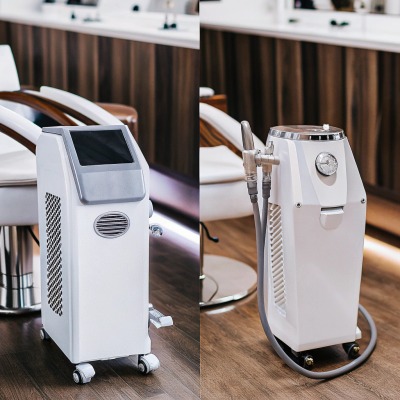
The "bait-and-switch" is one of the most sophisticated scams because it happens after you have already vetted the supplier and approved the quality. You receive a "Golden Sample"—a perfectly manufactured unit that meets all your specs. Based on this, you place a large order. However, to maximize profit, the dishonest supplier swaps critical internal components for cheaper alternatives in the mass production run.
The Hidden Downgrades
In shockwave therapy machines, the most expensive components are the air compressor (for pneumatic systems), the electromagnetic coil, and the power supply unit. A supplier might replace a heavy-duty, continuous-run compressor with a cheap consumer-grade pump designed for intermittent use. Externally, the machine looks identical. The blue and white casing, the touchscreen, and the packaging are unchanged. But inside, the machine is a ticking time bomb that will overheat or lose pressure after just a few treatments.
Third-Party Pre-Shipment Inspection
The only effective way to mitigate this risk is to inspect the goods before they leave the factory in China. We strongly recommend hiring professional third-party inspection agencies like SGS, Bureau Bureau Veritas (BV) 9 Veritas (BV) SGS 10, or Intertek. Do not rely on the supplier's own quality control report, as they are a biased party.
You must specifically instruct the third-party inspector to perform an "internal check." This involves opening the casing of a random sample of machines (e.g., 5-10% of the order) to verify that the motors, boards, and wiring match the specifications of your approved sample. If the supplier refuses to allow an inspector into the factory or refuses to let them open a machine, it is a confirmation that they have something to hide.
Locking Down Specifications
To support a successful inspection, your purchase contract must be incredibly detailed. Do not just list "Shockwave Machine" on the invoice. List the specific model of the compressor, the weight of the handpiece, and the brand of the power supply. If these details are contractually agreed upon, the inspector has a checklist to verify against. If you leave the internal specs vague, the supplier can legally argue that the cheaper components still meet the general description of the product.
Conclusion
Sourcing shockwave therapy machines from China offers significant cost advantages, but only if you navigate the landscape with vigilance. By distinguishing real manufacturers from traders, verifying energy specs and safety certificates, and utilizing third-party inspections to prevent component swapping, you can secure high-quality medical equipment safely.
Footnotes
1. Global health authority guidance on medical device regulation. ↩︎
2. Official Chinese government database for verifying enterprise registration and business scope. ↩︎
3. Background on the platform mentioned as a source of fake photos. ↩︎
4. General background on the medical technology discussed. ↩︎
5. Authoritative medical research explaining the physics and mechanism of shockwave therapy. ↩︎
6. International body for laboratory accreditation and standards. ↩︎
7. Official US regulatory requirement for medical devices. ↩︎
8. Official FDA database for verifying manufacturer registration. ↩︎
9. Major international certification and inspection body. ↩︎
10. Official website of the major inspection agency mentioned in the text. ↩︎

 English
  Español de México
  Deutsch
  Français
  العربية
  Русский