

Navigating the financial logistics of importing medical equipment can be just as complex as selecting the right technical specifications. In our years of exporting to the US and Europe, we have seen many deals stall simply because the buyer and supplier were not aligned on payment currency. You want a seamless transaction, but fluctuating rates and rigid banking systems can create friction.
Most professional Chinese manufacturers, including us, readily accept payments in major global currencies like USD, EUR, and GBP, alongside the local CNY. However, the specific currency you choose will dictate the payment method available (T/T, PayPal, or Letter of Credit) and may influence the final exchange rate locked in your contract.
Understanding your currency options before issuing a Purchase Order 1 is essential to avoid hidden conversion fees and delays.
Can I pay for my Shockwave Therapy Machine order in USD or other currencies?
We process transactions daily for clients from California to Berlin, and we know that forcing a buyer to convert funds manually is a major friction point. You need flexibility to pay in the currency you hold to keep your accounting simple.
Yes, you can almost always pay for your order in USD, as it is the standard trade currency for Chinese exports. Most suppliers also accept EUR, GBP, AUD, and CAD through multi-currency business accounts or platforms like Alibaba Trade Assurance, though direct bank transfers (T/T) are most commonly denominated in USD or CNY.
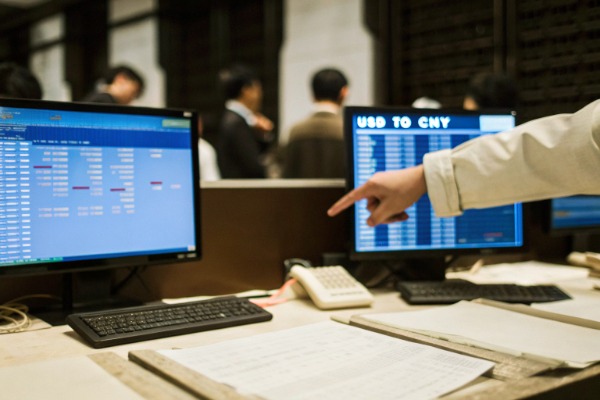
The Dominance of USD in Chinese Manufacturing
In our factory’s finance department, the US Dollar is king. Even though our local costs (labor, materials, rent) are in Chinese Yuan (CNY), the entire export infrastructure in China is built around the USD. When we buy imported components—like high-end pneumatic compressors or touchscreen panels—we often pay in USD as well. Therefore, paying in USD is the path of least resistance.
Accepted Currencies Beyond the Dollar
While USD is standard, the trade landscape is shifting.
- EUR (Euro): Very common. Most export-focused Chinese companies have a specific EUR bank account to service the European market without double conversion.
- CNY (Chinese Yuan / RMB): If you have a business entity in China or use a service like Wise 2 (formerly TransferWise) or AliPay, you can pay directly in CNY. This often gets you the best price because the supplier doesn’t have to add a "risk buffer" for exchange rate fluctuations.
- GBP/AUD/CAD: These are less common for direct wire transfers (T/T) to a standard Chinese bank account. Often, these must go through a third-party settlement platform (like PayPal or Alibaba) which handles the conversion behind the scenes.
Payment Method Compatibility
Your choice of currency often limits how you can pay.
| Currency | Direct Bank Wire (T/T) | PayPal / Credit Card | Alibaba Trade Assurance | Western Union |
|---|---|---|---|---|
| USD | Standard (Preferred) | Accepted (High Fees) | Standard | Accepted |
| EUR | Common (SEPA/Swift) | Accepted | Standard | Accepted |
| CNY | Cross-border CNY only | Not Common | Standard | Restricted |
| GBP/CAD | Difficult (Intermediary banks) | Best Option | Standard | Accepted |
The "Offshore Account" Factor
You might notice that the bank account on your invoice is located in Hong Kong or Singapore, even if the factory is in Guangzhou. This is normal. These "offshore" accounts allow Chinese manufacturers to hold foreign currency (USD) without immediately converting it to CNY, giving us flexibility to pay for imported raw materials.
What are the benefits or risks of paying in my local currency?
We have had conversations with Purchasing Managers who prefer to lock in costs in their own currency to simplify their internal budgeting. However, asking a supplier to invoice you in a non-standard currency shifts the risk from you to them, and they will charge for that safety.
Paying in your local currency simplifies your bookkeeping and eliminates the risk of your bank charging unexpected outgoing conversion fees. However, the risk is that the supplier will likely apply a "safety margin" of 3-5% to the exchange rate to protect themselves against currency depreciation during the production period.
The Benefit: Predictability for You
If your company account is in Euros, sending a wire in USD means you don’t know the exact amount that will leave your account until the moment the transaction clears. Your bank sets the "Sell Rate" for USD, and it changes hourly.
- Scenario: You budget €10,000 for a machine.
- Paying in USD: The exchange rate spikes the morning of the transfer. You end up paying €10,300.
- Paying in EUR: You send exactly €10,000. The cost is fixed.
The Risk: The "Supplier’s Buffer"
When we quote a price in a currency other than USD or CNY, we take on a risk. If the Euro drops 2% against the Dollar while we are manufacturing your shockwave machine, we lose money. To prevent this, suppliers usually use a "safe" exchange rate rather than the spot exchange rate 3 (market rate).
- Market Rate: 1 USD = 0.92 EUR.
- Supplier’s Rate: 1 USD = 0.95 EUR.
- Result: You pay more in total to avoid the hassle of conversion.
When to Pay in Local Currency vs. USD
Here is a decision matrix we share with our distributors:
| Scenario | Recommended Currency | Why? |
|---|---|---|
| US Buyer | USD | No conversion needed. Direct transfer. Lowest fees. |
| Eurozone Buyer | EUR | avoid double conversion. Most Chinese banks accept EUR directly. |
| UK/Aus/Canada | USD | Suppliers rarely have GBP/AUD accounts. Paying in local currency usually forces a poor exchange rate via PayPal. |
| High Value Order (>$50k) | CNY | Negotiate the price in CNY and use a forex broker. You control the rate, not the supplier. |
How do exchange rates impact my final payment amount?
In our daily operations, we monitor the USD/CNY exchange rate on screens in our office because a 1% shift can wipe out the profit margin on a competitively priced order. For you, timing the payment correctly can save hundreds of dollars.
Exchange rates impact your final payment by altering the real value of the funds the supplier receives; if the USD strengthens against the CNY, your purchasing power increases, potentially allowing for negotiation. Conversely, if your local currency weakens against the USD between the quote date and the payment date, your effective cost rises significantly.

The Two-Step Exchange Impact
Unless you are paying in CNY, there are two exchange rates at play in every transaction:
- Your Currency -> USD: (If you are not in the US). Your local bank converts your funds to USD to send the wire.
- USD -> Supplier’s CNY: (Internal). The supplier eventually converts that USD into CNY to pay workers and rent.
Validity of the Proforma Invoice (PI)
You will notice that most Proforma Invoices 4 include a line saying: "Price valid for 15 days" or "Valid for 30 days." This is not just a sales tactic; it is currency protection.
- Example: We quote you $3,000 for a machine when 1 USD = 7.1 CNY.
- One Month Later: The dollar drops to 6.8 CNY. That same $3,000 is now worth significantly less to us. If you try to pay on an old invoice, we might ask to adjust the price.
Hedging Your Bet with Deposits
The standard payment term in our industry is 30% Deposit / 70% Balance. This structure actually helps hedge against risk 5.
- You lock in the exchange rate for the first portion immediately.
- The balance is paid 20-30 days later (before shipment).
- Strategy: If you see your currency is strong now but predicted to weaken, you might ask to pay 100% upfront to lock in the cost, especially for smaller orders (under $5,000) where the risk of non-delivery is lower than the risk of currency crash.
Negotiation Leverage
If the US Dollar is very strong against the Chinese Yuan (e.g., hitting 7.3 or 7.4), the supplier is getting "bonus" money.
- Tactical Question: "I see the RMB has depreciated significantly against the Dollar this month. Can we split the exchange rate benefit? Maybe include free spare bullets or free shipping?"
- Many suppliers will agree to this to close the deal.
Are there additional fees for currency conversion when purchasing from China?
We often receive screenshots from confused buyers asking why the amount we received is $25 less than what they sent. The global banking system is filled with "middlemen," and each one takes a cut.
Yes, there are almost always additional fees, including the "Sender’s Fee" charged by your bank, "Intermediary Bank Fees" deducted as the money moves through the SWIFT network (typically $15–$30), and potentially a "Beneficiary Fee" if the supplier’s bank charges to receive foreign funds.
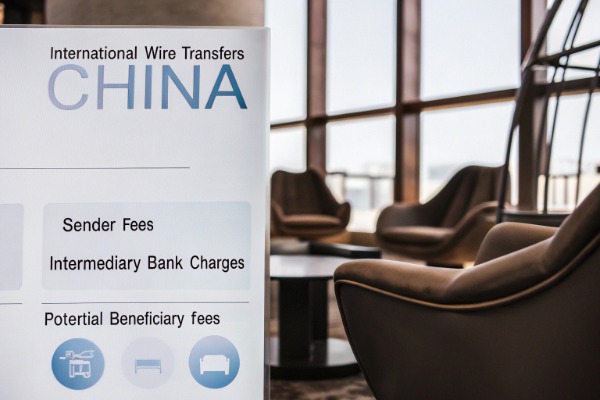
The "Missing" $25
The most common friction point is the Intermediary Bank Fee.
- You send $5,000 from your bank in New York.
- Your bank charges you $40 for the wire.
- The money routes through a correspondent bank 6 (like Citibank or HSBC HK). They take a $20 cut for processing.
- We receive $4,980.
- The Issue: Your invoice balance is now short by $20. We cannot ship until the balance is fully paid.
- The Fix: When sending the wire, select "OUR" in the charge details (Sender pays all fees). If you select "SHA" (Shared) or "BEN" (Beneficiary), these deductions will happen.
Platform Fees (Alibaba / PayPal)
If you choose convenience over traditional banking, you pay for it.
- PayPal: The fees are massive for international business. PayPal charges the receiver (supplier) roughly 4.4% + fixed fee.
- Who pays? Suppliers will usually add this 4.4% to your invoice total. On a $5,000 machine, that’s $220 just for using PayPal.
- Alibaba Trade Assurance: They charge a service fee (around 2.95%) for credit card payments. T/T via Alibaba Trade Assurance 7 is cheaper but still has a handling fee.
Fee Breakdown Table
Here is a quick guide to what you will likely pay on top of the machine price:
| Fee Type | Approximate Cost | Who Charges It? | How to Avoid? |
|---|---|---|---|
| Outbound Wire Fee | $25 – $50 | Your Bank | Use services like Wise or Revolut. |
| Intermediary Fee | $15 – $30 | Middleman Bank | Select "OUR" code on Swift transfer. |
| Conversion Spread | 1% – 3% | Your Bank | Hold a multi-currency account. |
| PayPal/Credit Card Fee | 3% – 5% | Payment Platform | Pay via T/T (Bank Wire). |
| Inbound Bank Fee | $10 – $15 | Supplier’s Bank | Usually absorbed by supplier for large orders. |
H3: Modern Alternatives (Wise, Revolut, Airwallex)
We are seeing more clients use fintech solutions like Wise Business 8.
- Why? They use local bank accounts. You pay into their local account in your country, and they pay us from their account in China or HK.
- Result: The fees are transparent and usually 5x cheaper than traditional banks. The money also arrives faster (often same-day).
Conclusion
Paying for a shockwave therapy machine 9 from China is not just about the sticker price; it is about the total cost of ownership after fees and exchange rates. While USD remains the standard, flexibility exists if you know where to look. By choosing the right currency (usually USD or paying directly in CNY via a broker), selecting the "OUR" fee option on wires, and timing your payment to avoid volatility, you can save significant margin—money better spent on marketing your new therapy services. For a successful transaction, always confirm the correct SWIFT fee codes 10 before initiating your transfer.
Footnotes
1. Definition and role of purchase orders in international trade documentation. ↩︎
2. Overview of various global payment types and their processing requirements. ↩︎
3. Understanding the spot exchange rate for real-time currency conversion. ↩︎
4. Guide to the purpose and use of proforma invoices in exports. ↩︎
5. How hedging protects businesses from unfavorable currency price fluctuations. ↩︎
6. Role of correspondent banks in bridging international financial transfers. ↩︎
7. Official guide to using Alibaba Trade Assurance for secure transactions. ↩︎
8. Comparing features and benefits of business vs personal international accounts. ↩︎
9. Cost analysis and technological factors for shockwave therapy equipment. ↩︎
10. Detailed explanation of SWIFT transfer codes OUR, SHA, and BEN. ↩︎

 English
  Español de México
  Deutsch
  Français
  العربية
  Русский