In many of the OEM and ODM projects we handle, buyers ask about logo-customisation fees early because this affects brand positioning, product cost, and packaging decisions.
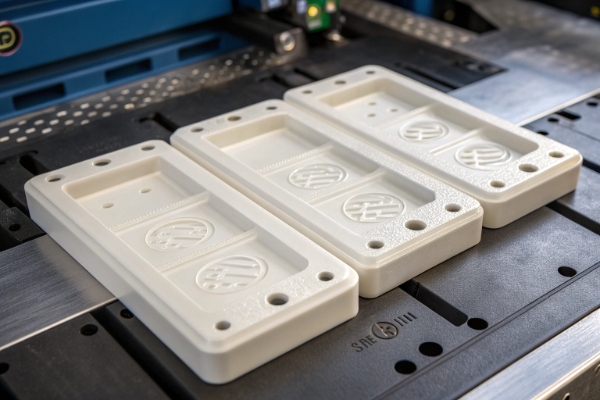
Logo customisation fees for shockwave therapy machines depend on the branding method—such as silk-screen printing, transfer stickers, or mould-engraved logos—and costs typically range from zero for basic printing to several hundred dollars when mould modification is required 1.
Knowing these options helps buyers balance visual quality and cost before placing an order.
Clear planning also keeps your production timeline predictable and avoids branding mistakes.
What is typically included in a logo customisation service?
When clinics or distributors approach us for private labelling, we guide them through the different branding layers that can be added to both the product and the packaging.
A complete logo customisation service usually includes printing the buyer’s logo on the machine shell, adding the logo to the startup interface, branding the outer packaging, and customising user manuals—depending on the chosen MOQ 2 and branding method.

Machine body logo placement options
Most manufacturers offer several locations:
- front panel
- side panel
- touchscreen welcome screen
- handpiece body
- base stand or trolley (if optional)
Branding methods
The three typical methods are:
Silk-screen printing
- clean and durable
- suitable for mid-range devices
- low cost
Transfer sticker printing
- cheapest method
- easy to apply
- lower durability and may peel over time
Mould-engraved logo (injection mould)
- premium texture
- permanent, cannot peel 3
- high cost due to mould modification
What’s included in a standard private-label service?
- logo placement on machine
- startup interface branding
- custom label or nameplate
- packaging graphic replacement
- manual cover rebranding
Table — Branding options and cost implications
| Branding Method | Quality Level | Durability | Cost Level | Notes |
|---|---|---|---|---|
| Silk-screen printing | Medium-High | High | Low-Medium | Most common |
| Transfer sticker | Low | Medium-Low | Lowest | Suitable for budget models |
| Mould engraving | Highest | Highest | High | For premium brands |
Why these services matter
Brand consistency raises perceived value.
A premium logo improves shelf appeal.
Professional packaging helps with distribution.
Strong branding supports long-term positioning.
Are there minimum order quantities for private labelling?
MOQ is one of the first things buyers need to confirm because logo production has setup costs.
Most manufacturers require a minimum order quantity (MOQ) of 1–10 units for printed logos, while mould-engraved branding requires larger orders—typically 100–300 units—because mould modification has significant upfront cost.

MOQ by branding method
Silk-screen printing
- MOQ: 1–10 units
- Suitable for small distributors
- No tooling cost
Transfer sticker printing
- MOQ: 1 unit
- Lowest entry cost
- Budget-friendly for beginners
Mould-engraved logo
- MOQ: 100–300 units
- Required because:
– mould rebuilding or modifying costs hundreds to thousands
– production line must be reserved
– engineering changes are permanent
Why MOQ varies
- setup cost 4
- printing plate cost
- mould fabrication cost
- labour time for rebranding
Table — MOQ requirements summary
| Branding Type | MOQ Requirement | Cost Impact | Suitable For |
|---|---|---|---|
| Sticker transfer | 1 unit | Cheapest | Small buyers |
| Silk-screen printing | 1–10 units | Low | Mid-size buyers |
| Mould-engraved logo | 100–300 units | High | Large distributors |
What buyers should consider
Low MOQs allow brand testing.
Large MOQs reduce per-unit cost.
Mould engraving is only cost-effective for long-term models.
How does logo branding affect packaging and manuals?
When a buyer applies for OEM branding, the logo doesn’t stay on the device alone—packaging and documents must match.
Logo branding affects the entire identity system, including the outer packaging box, internal foam layout, cable labels, user manuals, and nameplates. Most suppliers provide template-based redesigns for free, while full custom graphic work may incur fees 5.

Packaging customisation
Most buyers request:
- custom box printing
- custom colour scheme
- logo on outer carton
- optional brand story or marketing claims
Manual and documentation customisation
Suppliers usually replace:
- cover design
- brand name and model code
- safety compliance labels
- warranty card
- QC stickers
Impact on regulatory compliance
For CE, FDA, or other regulated markets 6:
- label must show importer/distributor information
- packaging must follow marking rules
- manuals must comply with local language requirements
Table — Branding elements influenced by logo customisation
| Customisation Area | Affected by Logo? | Notes |
|---|---|---|
| Machine body | Yes | Always included |
| Packaging box | Yes | Usually free template |
| Manual cover | Yes | Requires graphic editing |
| Nameplate label | Yes | Must follow regulatory format |
| Startup interface | Yes | Simple digital change |
Why packaging alignment matters
Customers expect consistent branding.
Distributors need professional retail presentation.
Regulatory packaging helps with import clearance.
Unified design increases perceived value.
What timeline should buyers expect for customised production?
Timeline planning prevents delays when distributors align marketing with production schedules.
For most shockwave therapy machines, logo customisation adds 3–7 days for printed branding and 20–35 days for mould-engraved customisation due to tooling work 7 and test production.

Standard timeline breakdown
Logo design confirmation
1–2 days
(depends on how fast buyers approve the artwork)
Silk-screen or sticker printing
3–5 days
(no engineering changes required)
Packaging/Manual redesign
3–7 days
(template changes only)
Full OEM mould engraving
20–35 days 8
(required for machining, testing, and sample confirmation)
Production timeline for complete order
Standard production time for the shockwave machine:
7–15 days
With branding included:
- printed logo: +3–7 days
- mould-engraved: +20–35 days
Table — Logo customisation timeline
| Branding Method | Added Time | Total Complexity |
|---|---|---|
| Sticker transfer | 1–3 days | Low |
| Silk-screen printing | 3–7 days | Medium |
| Mould engraving | 20–35 days | High |
What buyers should plan for
Confirm the logo file early.
Approve digital mockups promptly.
Allow extra days when holidays approach.
Consider ordering spare packaging for future batches.
Conclusion
Logo customisation for shockwave therapy machines ranges from simple printing to premium mould engraving. Buyers should assess budget, order volume, packaging needs, and timelines before choosing the most suitable branding method 9.
Footnotes
1. Analysis of cost factors in medical device molding, including the high upfront expense of mold modification for integrated branding. ↩︎
2. Explanation of the Minimum Order Quantity (MOQ) concept and why it is a critical factor in manufacturing profitability and logistics planning. ↩︎
3. Comparison of silk screen printing and laser marking/engraving, highlighting the superior durability and permanence of engraved markings. ↩︎
4. Factors that influence a product’s MOQ, including assembly effort, testing requirements, and the fixed costs of production setup. ↩︎
5. Guide to logo design costs, explaining how different quality levels and agencies charge for graphic design services, influencing branding expenses. ↩︎
6. Comparison of OEM and ODM models, noting that branding and labeling must comply with specific regulatory standards for different markets. ↩︎
7. Detailed breakdown of the timeline for injection molding projects, emphasizing the duration required for tooling and trial runs in custom production. ↩︎
8. Comprehensive guide to the plastic injection molding timeline, detailing the weeks required for tool fabrication and testing stages. ↩︎
9. Comparison of OEM/ODM/CM models, helping businesses choose the manufacturing type that best aligns with their branding control needs and investment level. ↩︎
10. Overview of the typical costs associated with professional logo design in the USA, ranging from low-cost templates to high-end agency work. ↩︎

 English
  Español de México
  Deutsch
  Français
  العربية
  Русский