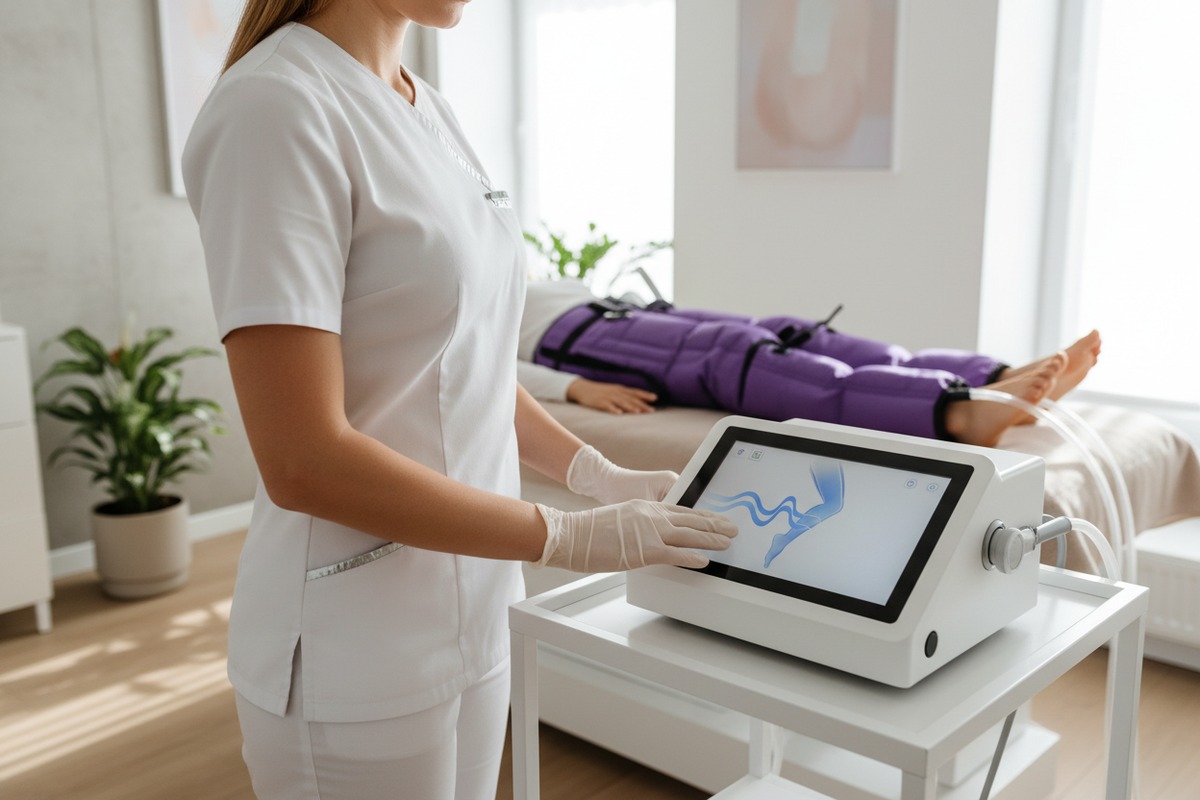
When we collaborate with salon owners to define the specifications for a new product line, the conversation often shifts quickly from aesthetics to performance metrics venous refill 1. Many buyers struggle to distinguish between a device that simply squeezes and one that effectively flushes metabolic waste 2. You need a system that delivers measurable recovery results to keep your clients returning.
To evaluate pressotherapy modes for lactic acid clearance, prioritize machines offering a sequential, distal-to-proximal inflation pattern with overlapping chambers. Look for customizable pressure settings between 70-80 mmHg and precise cycle timing that allows for adequate venous refill, ensuring the system mimics the body’s natural muscle pump mechanism rather than just applying static compression.
Understanding the mechanics behind these inflation patterns will help you select equipment that truly benefits athletic recovery.
Which inflation sequence should I prioritize for maximum lactic acid drainage in my professional machines?
Our engineering team frequently runs comparative tests on different firmware algorithms to see which patterns move fluid most efficiently peristaltic inflation sequence 3. We have found that while "wave" and "massage" modes are popular for relaxation, they often lack the directional precision required for serious athletic recovery.
You should prioritize a sequential, peristaltic inflation sequence where chambers inflate one by one from the feet upwards, holding pressure in previous chambers to prevent backflow. This specific "milking" action creates a consistent pressure gradient that mechanically pushes lactate-rich blood and lymph toward the core for filtration and elimination.

Understanding the Mechanics of Fluid Movement
When sourcing equipment for a professional setting, it is crucial to look beyond the number of modes listed on the spec sheet and examine exactly how those modes operate. Lactic acid clearance 4 is not about crushing the muscle; it is about directional flow enhancement.
The most effective sequence for this purpose is often labeled as "Sequential" or "Lymphatic" mode in professional firmware. In this mode, the air chambers (typically starting from the foot or hand) inflate individually. Crucially, as the second chamber inflates, the first chamber must maintain its pressure. This prevents the fluid that was just pushed out of the foot from flowing back down due to gravity or resistance. This creates a "graduated compression 5" effect.
The Problem with Simultaneous Mode
Many lower-cost units rely heavily on a "Simultaneous" mode, where all chambers inflate at once. While this feels intense and offers a strong squeezing sensation, our testing data suggests it is suboptimal for drainage. Simultaneous compression can trap fluid in the middle of the limb or squeeze it in both directions (distal and proximal). For lactic acid removal, the goal is strictly one-way movement toward the heart.
Chamber Overlap is Critical
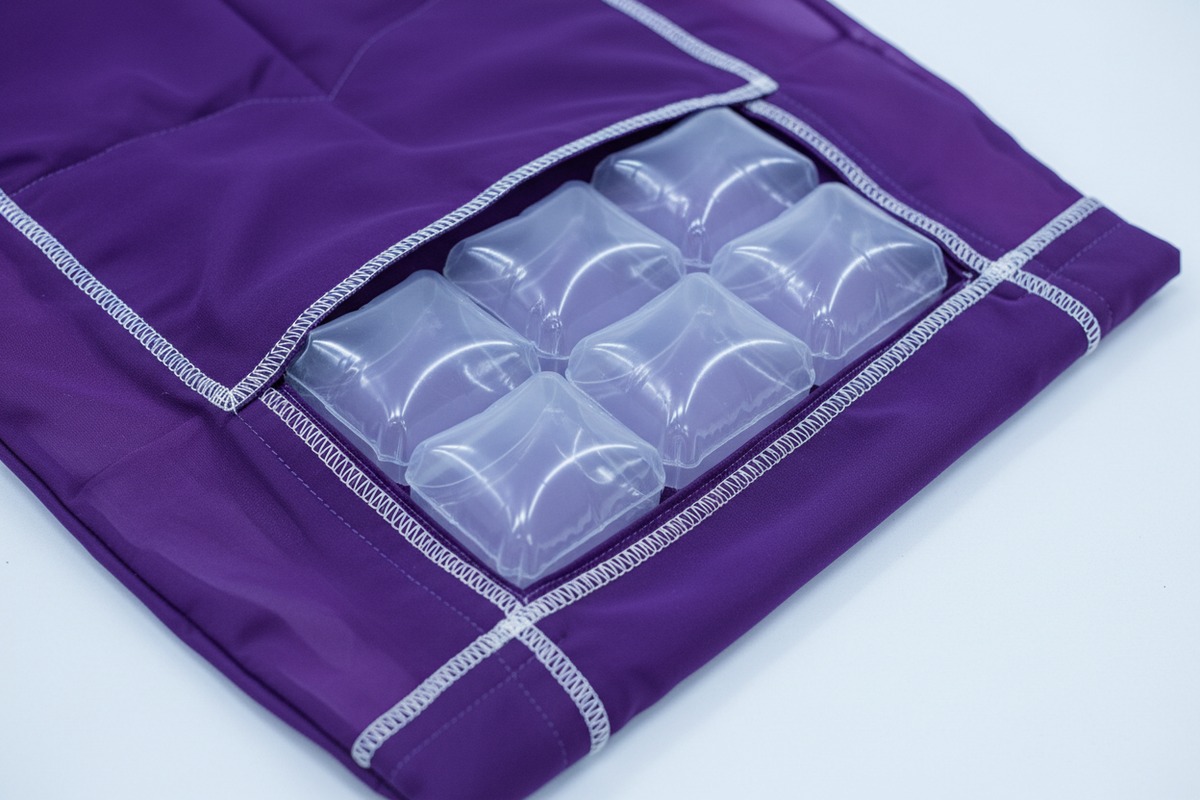
Another hardware feature that dictates the success of the inflation sequence is the design of the garment itself. We always advise our clients to choose cuffs with overlapping chambers. In non-overlapping designs, there is often a gap in pressure between air bags. Fluid can accumulate in these low-pressure zones, interrupting the drainage process.
Comparison of Common Inflation Modes
To help you decide which modes to request in your OEM specifications, we have categorized common patterns below based on their efficacy for metabolic waste removal.
| Inflation Mode | Pattern Description | Efficacy for Lactic Acid | Best Use Case |
|---|---|---|---|
| Sequential (Peristaltic) | Inflates 1, holds, inflates 2, holds, etc. Prevents backflow. | High | Post-workout recovery, heavy drainage. |
| Peristaltic Wave | Inflates 1, inflates 2, deflates 1. A moving "wave" of pressure. | Medium-High | Circulation boost, lighter recovery. |
| Simultaneous (Full Squeeze) | All chambers inflate together. | Low | intense massage sensation, not drainage. |
| Alternating | Random or specific chambers inflate (e.g., 1 & 3, then 2 & 4). | Low | Muscle relaxation, breaking up tension. |
Can I customize the pressure intervals and cycles to meet my brand's specific recovery standards?
When we develop private-label solutions for major US distributors, one of the first requests is often to unlock the software to allow for proprietary treatment protocols. Standard factory settings are often too generic for a specialized recovery clinic.
Yes, you can and should customize pressure intervals and cycles if your manufacturer offers OEM software modification. For optimal recovery, you need to adjust the "Hold Time" (duration of compression) to maximize fluid mobilization and the "Release Time" (interval between cycles) to ensure vessels completely refill with blood before the next compression starts.

The Importance of the "Release" Phase
A common misconception in the industry is that the time spent under pressure is the only metric that matters. However, our R&D observations confirm that the deflation or "release" phase is equally critical. If the release time is too short, the veins and lymphatic vessels do not have enough time to refill with fluid from the surrounding tissue.
If you simply compress an empty vessel repeatedly, you are not moving any new waste products. You are just squeezing empty tubes. By customizing the cycle to have a longer release interval (e.g., extending from a standard 5 seconds to 15 or 20 seconds), you allow the limbs to re-oxygenate and the vessels to prime themselves for the next drainage wave.
Customizing for Different Athlete Types
Different sports generate different types of fatigue. An endurance runner may need long, rhythmic flushing cycles to clear generalized metabolic waste. A powerlifter might benefit from shorter, more intense intervals focused on specific muscle groups.
If you are branding your machines for a specific niche, ask us (or your supplier) to program specific "presets." For example, we can create a "Marathon Recovery" button that defaults to a lower pressure (60 mmHg) with a slow, continuous sequential wave, or a "Sprint Flush" mode with higher pressure and faster cycles.
Recommended Cycle Settings
Below is a guide on how we typically configure customizable parameters for different treatment goals.
| Recovery Goal | Pressure Range (mmHg) | Inflation Speed | Hold Time (s) | Release/Refill Time (s) |
|---|---|---|---|---|
| Lactic Acid Flush | 70 – 90 | Medium | 4 – 6 | 10 – 15 |
| Acute Edema Relief | 30 – 50 | Slow | 8 – 10 | 15 – 20 |
| Pre-Workout Warmup | 100 – 120 | Fast | 2 – 3 | 5 |
Software Flexibility in Manufacturing
From a manufacturing standpoint, changing these intervals is usually a matter of firmware adjustment. It does not necessarily require changing the hardware pump, provided the pump is robust enough to handle the duty cycle. When negotiating your order, ask for "User-Defined Programs" in the interface. This feature allows your end-users (the salon technicians) to manually input these hold and release times, giving them the power to tailor treatments to the individual client's physiology.
How do I verify that the internal pump system is durable enough for continuous high-pressure inflation cycles?
We often see competitors cutting costs by using underpowered pumps that struggle to maintain pressure when all chambers are inflated, leading to weak treatments. To ensure your brand reputation stays intact, you must look under the hood.
To verify durability, request technical data on the pump's air flow rate (L/min) and its continuous duty cycle rating. A professional-grade system should feature a heavy-duty piston or diaphragm pump capable of at least 20-30 liters per minute airflow to ensure rapid inflation, efficient heat dissipation systems, and a rated lifespan exceeding 5,000 working hours.
Air Flow Rate: The Hidden Metric
Pressure (mmHg) is the spec everyone advertises, but Air Flow Rate 7 (L/min) is the spec that determines performance. A cheap, small pump can eventually reach 200 mmHg, but it might take 60 seconds to fill a leg sleeve. A professional pump with a high airflow rate (e.g., >25 L/min) can fill that same sleeve in 10-15 seconds.
Fast inflation is crucial for recovery because it allows for more compression cycles within a 30-minute session. If the machine is too slow, the client gets fewer "flushes," reducing the overall efficacy of lactic acid clearance.
Heat Management and Duty Cycles
In a busy salon, a pressotherapy machine might run for 6 to 8 hours a day. Cheap home-use units use plastic pumps that overheat after 45 minutes, causing the pressure to fade or the machine to shut down.
When evaluating a potential supplier, ask about the "Duty Cycle." A commercial unit should be rated for "Continuous" use. Inspect the chassis design for ventilation. We install active cooling fans and aluminum heat sinks on our professional lines to ensure the motor temperature remains stable even during back-to-back high-pressure sessions.
Pump Type: Diaphragm vs. Piston
There are generally two types of air pumps used in these devices:
- Diaphragm Pumps: Quieter and smoother, often used in medical devices. Good for durability but can sometimes lack the raw speed of piston pumps unless sized correctly.
- Piston Pumps: Often louder but provide high airflow and quick pressure buildup.
For a salon environment where noise is a factor, a high-quality, oversized diaphragm pump 8 is often the best balance. It provides the durability needed without turning the relaxation room into a construction zone.
Durability Indicators Checklist
Use this checklist when inspecting a sample unit from China or elsewhere.
| Component | Home/Entry Level Standard | Professional/Salon Standard |
|---|---|---|
| Air Flow Rate | < 10 L/min | > 20 L/min |
| Cooling System | Passive vents only | Active cooling fan + Heat sinks |
| Case Material | Thin plastic | Thick ABS or Metal Chassis |
| Weight | Very light (< 2kg) | Substantial (> 5kg indicates larger motor) |
| Connection Hoses | Thin, easily kinked | Thick, reinforced silicone/PVC |
What specific inflation mode features will help my salon customers see faster post-workout results?
In our experience exporting to sophisticated markets like New York and Los Angeles, salon owners are demanding smarter features that go beyond basic compression. They want logic in the machine that mimics the hands of a skilled therapist.
Features that accelerate results include "Pre-Therapy" cycles, which clear the proximal lymph nodes before treating the extremities, and "Zone Skipping" to bypass injured areas. Additionally, look for machines that integrate a graduated pressure drop (e.g., 100% pressure at the foot, 80% at the thigh) to naturally encourage fluid movement toward the core.
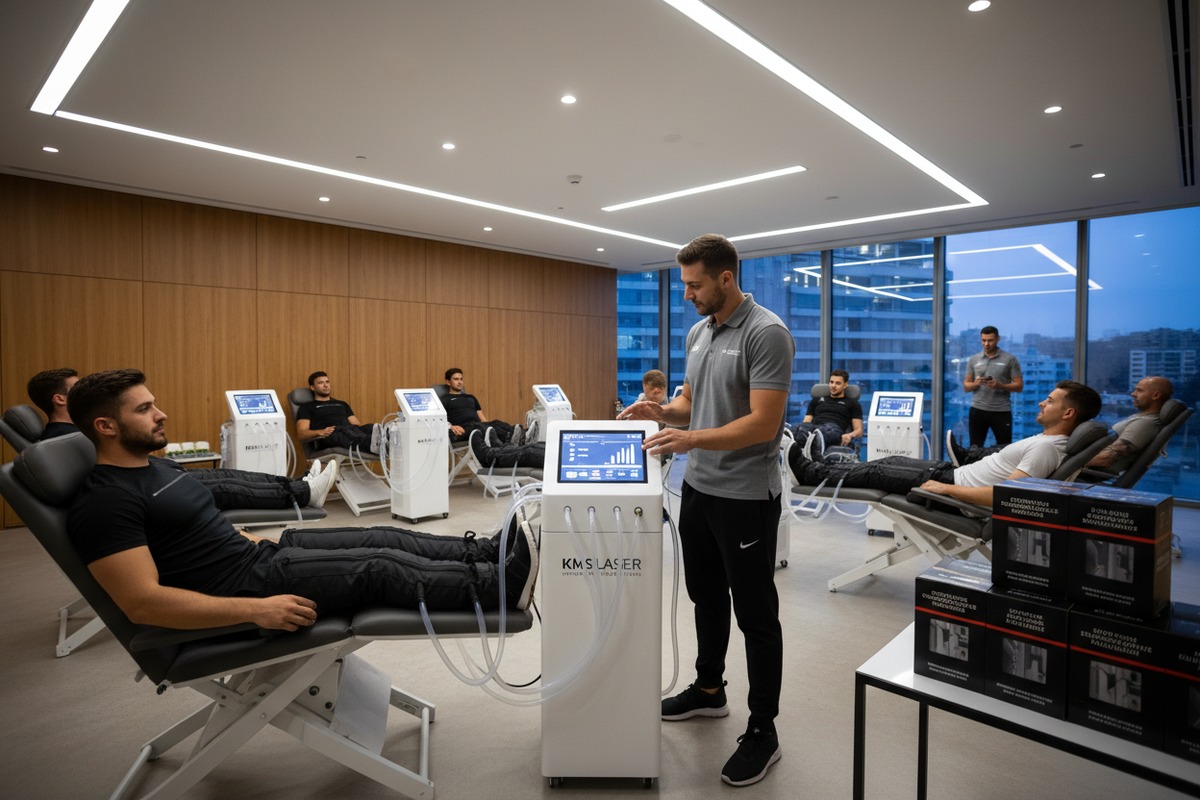
The Power of Pre-Therapy
The lymphatic system 9 is like a plumbing network. If the drain (lymph nodes) is clogged, pouring water (fluid) into the pipes will only cause a backup. "Pre-Therapy" is a specific mode or phase at the beginning of the treatment where the machine gently massages the proximal areas (top of the thighs, groin, or abdomen) before starting the leg compression.
This clears the "pathway," ensuring that when the main sequential pressure starts at the feet, the fluid has somewhere to go. This significantly speeds up the clearance of lactic acid and reduces the risk of the client feeling "heavy" after treatment.
Zone Control and Skipping
Athletes often have specific injuries—a sprained ankle, a bruised shin, or a sensitive knee. A standard machine that blindly squeezes everything can be painful or harmful.
High-end professional units allow the operator to deactivate specific chambers. If a client has a knee injury, the technician can turn off the chamber covering the knee while still applying full recovery pressure to the calf and thigh. This flexibility allows your customers to treat athletes who are in active rehab, expanding their potential client base.
Gradient Pressure Profiles
Natural physiology dictates that fluid moves from high pressure to low pressure. A smart machine will automatically adjust the pressure settings to create a gradient.
For example, if the set pressure is 80 mmHg:
- Foot (Chamber 1): 80 mmHg
- Calf (Chamber 2): 75 mmHg
- Knee (Chamber 3): 70 mmHg
- Thigh (Chamber 4): 65 mmHg
This subtle decrease ensures that fluid is never "trapped" proximally by a cuff that is tighter than the one below it. It creates a seamless highway for lactate removal.
Visualizing the Feature Set
| Feature | Function | Benefit for Athlete |
|---|---|---|
| Pre-Therapy | Clears lymph nodes first. | Prevents bottlenecks; faster overall drainage. |
| Zone Skipping | Turns off specific chambers. | Allows treatment despite local injuries. |
| Gradient Pressure | Reduces pressure proximally. | Ensures natural flow; prevents tourniquet effect. |
| Full Leg & Abdomen | Pants covering hips/belly. | Drains the core, crucial for total body recovery. |
Conclusion
Evaluating pressotherapy machines for lactic acid clearance requires looking beyond simple pressure ratings. By prioritizing sequential inflation modes with overlapping chambers, insisting on customizable hold/release cycles, verifying pump airflow durability, and demanding smart features like Pre-Therapy, you ensure your equipment delivers clinical-grade results. As you source these devices, remember that the hardware capabilities define the treatment outcome—choose a system that supports the physiology of recovery, not just one that compresses air.
Footnotes
1. Discusses venous refilling time and its significance in assessing vascular health. ↩︎
2. Explains what metabolic waste is and provides examples of its forms. ↩︎
3. Explains the working principle of peristaltic pumps, relevant to inflation patterns. ↩︎
4. Details the physiological process of lactic acid production and its removal from the body. ↩︎
5. Defines graduated compression therapy and its application in medical contexts. ↩︎
6. Explains the function and importance of lymph nodes within the immune system. ↩︎
7. Defines air flow rate and its significance in the performance of technical systems. ↩︎
8. Authoritative Wikipedia page providing a comprehensive definition, working principle, and types of diaphragm pumps. ↩︎
9. Provides an overview of the lymphatic system’s structure, functions, and importance. ↩︎

 English
  Español de México
  Deutsch
  Français
  العربية
  Русский