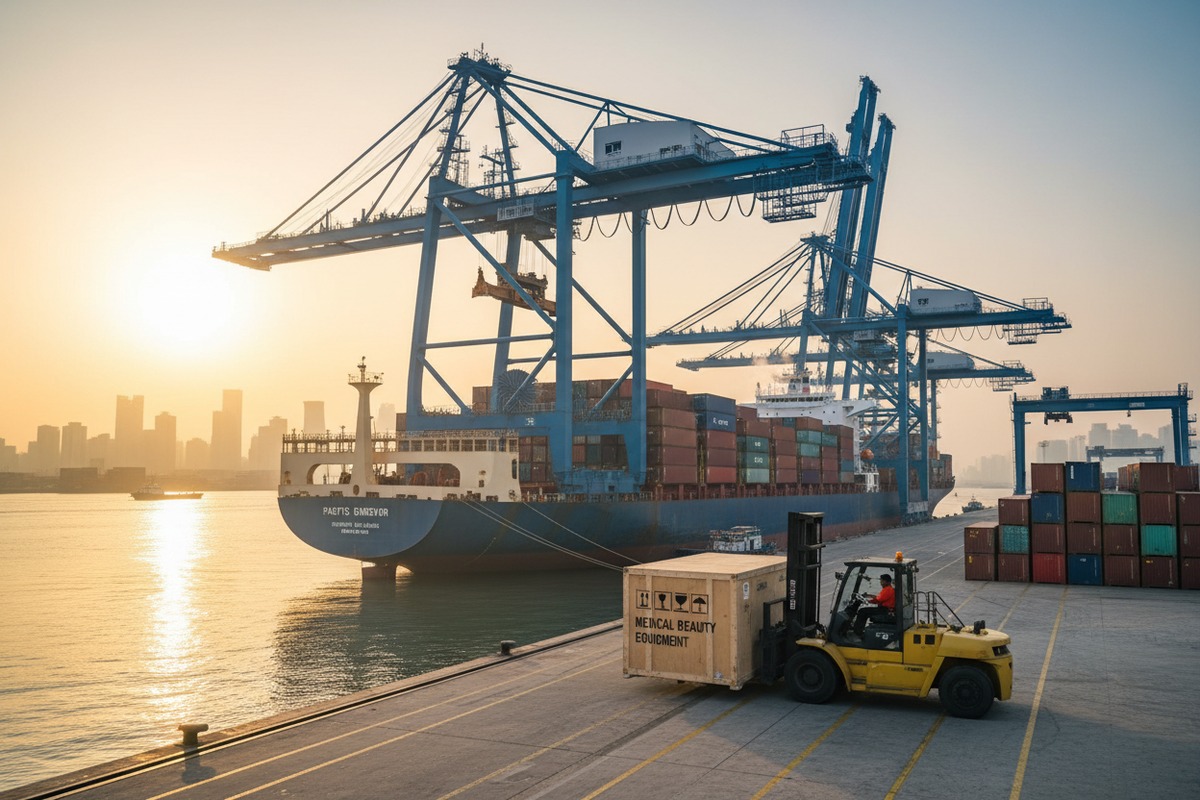
When our team packages a sleek, matte white pressotherapy 1 control unit for export, we know that the journey ahead is just as critical as the assembly process. Seeing our machines sit idle in a container due to poor route planning is frustrating for us and costly for our clients Guangzhou (Nansha) 2. We understand the pressure you face to get these lymphatic drainage systems 3 into your salon or distribution center quickly.
To shorten transit for pressotherapy machines, prioritize direct routes from Shanghai or Shenzhen to major South American hubs like Santos or Callao. This strategy reduces sea time to 30-35 days, minimizes transshipment damage risks, and bypasses congestion at secondary ports, ensuring faster delivery for your beauty business.
Let’s examine the specific port choices that can shave weeks off your delivery timeline.
Which Chinese export ports will get my pressotherapy machines to South America the fastest?
We often analyze shipping schedules 4 right from our factory floor in Guangzhou to ensure our clients get the best lead times. Navigating the vast network of Chinese ports can be overwhelming, but choosing the right departure point is the first step in securing a competitive edge.
Shanghai and Shenzhen are the fastest options for shipping electronics to South America, offering frequent direct vessels to Brazil and Chile. These ports typically achieve transit times of 32 to 38 days, significantly outperforming northern ports like Qingdao, which often require transshipment and add 7-10 days to the journey.

When you order professional pressotherapy systems, the location of your supplier's factory dictates the most logical export port, but not all ports are created equal regarding connection speed to South America.
The Geography of Speed
China is vast. If your supplier is in the south (like us in Guangzhou), using Shenzhen (Yantian/Shekou) or Guangzhou (Nansha) is intuitive. These ports are gateways to the South Pacific and often have direct routes to the West Coast of South America (Chile, Peru). However, the absolute giant of logistics is Shanghai. Even for southern factories, trucking goods to Shanghai can sometimes be worth it if a specific direct vessel is leaving for Santos, Brazil 5.
Comparing Key Export Hubs
For beauty equipment, we prioritize stability and frequency. We want to avoid ports where the container waits a week for a vessel.
Impact of Port Volume on Schedule Reliability
Shanghai and Ningbo handle massive volumes. While this sometimes means congestion, it also means they have the most "sailings" per week. If you miss one ship, another leaves in two days. In smaller ports, missing a ship might mean waiting a week. For high-value items like our 65W pressotherapy machines, where capital is tied up, that delay is unacceptable.
Seasonal Considerations
Typhoon season 6 (July-September) affects southern ports like Shenzhen more often. During these months, we might advise routing through Ningbo or Shanghai to avoid weather-related closures. Conversely, winter congestion can slow down northern ports.
Data Comparison: Estimated Transit Times to South America (Santos, Brazil)
| Chinese Port | Primary Region Served | Est. Transit Time (Direct) | Frequency of Sailings |
|---|---|---|---|
| Shanghai | East China | 30 – 35 Days | High (Daily) |
| Shenzhen | South China | 32 – 36 Days | High (Daily) |
| Ningbo | East China | 33 – 38 Days | High (3-4/week) |
| Qingdao | North China | 40 – 50 Days | Medium (Often Transships) |
How can I select the right South American destination port to minimize my inland delivery time?
We have seen clients in inland cities struggle because they chose a port based solely on ocean freight cost rather than inland connectivity. It is painful to watch a machine arrive in the country quickly but then get stuck in a "red channel" customs inspection or face a two-week truck journey.
Select Santos for Brazil, Callao for Peru, or San Antonio for Chile to optimize inland logistics. These major ports possess superior infrastructure for handling sensitive medical equipment and offer faster customs clearance compared to smaller regional ports, ensuring your pressotherapy units reach the final destination without unnecessary inland delays.

Choosing the destination port is not just about looking at a map and picking the dot closest to your warehouse. Infrastructure, customs efficiency, and road connectivity play a massive role in the total lead time.
The "Big Three" Hubs
For most of our South American clients, we recommend sticking to the primary hubs unless you have a very specific reason not to.
- Brazil (Santos): Santos is the powerhouse. It handles the vast majority of cargo. While it can be congested, the customs infrastructure there is digitized and faster than in smaller ports like Paranaguá or Rio de Janeiro for general cargo. If you are importing pressotherapy machines, which are classified as electronics/beauty devices, the specialized customs brokers in Santos are more experienced with these HS codes 7.
- Chile (San Antonio vs. Valparaiso): San Antonio handles more volume now. It is often faster for trucking to Santiago. Valparaiso is historic but can have tighter space constraints.
- Peru (Callao): This is the undisputed gateway for Peru. There are very few alternatives that offer the same inland connectivity.
Inland Infrastructure and Security
In South America, road infrastructure varies. A shorter distance on the map does not mean a shorter drive time. Mountainous terrain (like in Colombia or Chile) means trucking can be slow. Furthermore, security is a concern. Major routes from major ports have better security patrols. High-value beauty machines are theft targets; sticking to established trade corridors from major ports reduces this risk.
Customs Clearance Speed
This is the hidden time-killer. Major ports usually have more "bonded warehouse" options. If your documents for the pressotherapy machines (like ANVISA in Brazil) need review, having the goods in a port with ample storage prevents demurrage charges from skyrocketing while you wait.
Destination Port Comparison for Beauty Equipment
| Destination Port | Country | Pros | Cons | Best For |
|---|---|---|---|---|
| Santos | Brazil | High frequency, experienced brokers | Heavy congestion, high storage fees | Southeast Brazil (SP/Rio) |
| San Antonio | Chile | Fast connection to Santiago | Union strikes can occur | Central Chile |
| Callao | Peru | Direct Asia routes | Traffic congestion around port | Peru Market |
| Buenaventura | Colombia | Primary Pacific access | Security concerns on inland roads | Bogota/Cali |
Should I prioritize direct shipping routes from China to avoid transshipment delays for my beauty equipment?
When we test the air pressure levels on our boots and waist belts, we ensure they are perfect; however, rough handling during shipping can loosen internal pneumatic connections. We always worry about the physical stress placed on our machines when containers are moved from one ship to another.
You should prioritize direct shipping routes to eliminate transshipment risks for delicate beauty equipment. Direct services reduce transit time by 5 to 10 days and prevent physical damage caused by container transfers at intermediate hubs like Panama or Singapore, protecting the air compression systems in your machines.

The debate between direct shipping and transshipment usually comes down to cost versus security and speed. For robust raw materials, transshipment is fine. For sophisticated pressotherapy systems with sleek white plastic housings and digital touchscreens, direct is superior.
What is Transshipment?
Transshipment occurs when your container is unloaded from the "Mother Vessel 8" at a hub (like Singapore, Busan, or Panama) and re-loaded onto a smaller "Feeder Vessel" to reach the final port.
The Risks for Pressotherapy Machines
- Physical Shock: Every time a container is lifted by a crane and slammed onto a truck or another ship, there is a G-force shock. Our packaging is robust (foam + wooden crate options), but repeated shocks increase the risk of internal tubes loosening or the digital screen cracking.
- Temperature & Humidity: Transshipment ports like Panama or Singapore are hot and humid. If your container sits on the tarmac there for 5 days waiting for a feeder, the internal temperature can spike. High heat can degrade the adhesives in the purple fabric suits or affect the electronic capacitors in the control unit.
- Loss of Visibility: Tracking updates often go dark during transshipment. You might know your goods arrived in Panama, but you won't know when they leave for days.
The Time Cost
A direct vessel keeps moving. A transshipment route adds a variable buffer. If the mother vessel is late arriving at the hub, it misses the feeder connection. You then wait 7 days for the next feeder. A "35-day" transit quickly becomes 45 or 50 days.
Cost vs. Benefit Analysis
| Feature | Direct Route | Transshipment Route |
|---|---|---|
| Transit Time | Predictable (30-35 days) | Variable (38-55 days) |
| Handling Risk | Low (Loaded once, Unloaded once) | High (Multiple lifts/drops) |
| Freight Cost | Typically Higher ($200-$500 more) | Often Cheaper |
| Suitability | High-value Electronics | Low-value Bulk Goods |
Why Direct is Worth the Premium
If you are importing 50 units of pressotherapy machines, the freight cost difference per unit between direct and transshipment might be $10. Is it worth saving $10 to risk a 2-week delay or a 5% damage rate? In our experience, the answer is no.
How does my supplier's choice of port affect the total door-to-door lead time for my order?
We carefully coordinate every truck that leaves our loading dock because we know the clock starts ticking the moment the order is ready. Many buyers overlook the "pre-carriage" phase—the time it takes to get goods from our factory to the ship's deck—which can silently eat up days of your lead time.
Your supplier's proximity to the export port directly impacts the initial leg of shipping. A factory in Guangzhou shipping via nearby Shenzhen saves 2-3 days of inland trucking compared to routing through Shanghai. Correct port alignment reduces the "ex-works" to "on-board" timeline, accelerating the total door-to-door delivery speed.
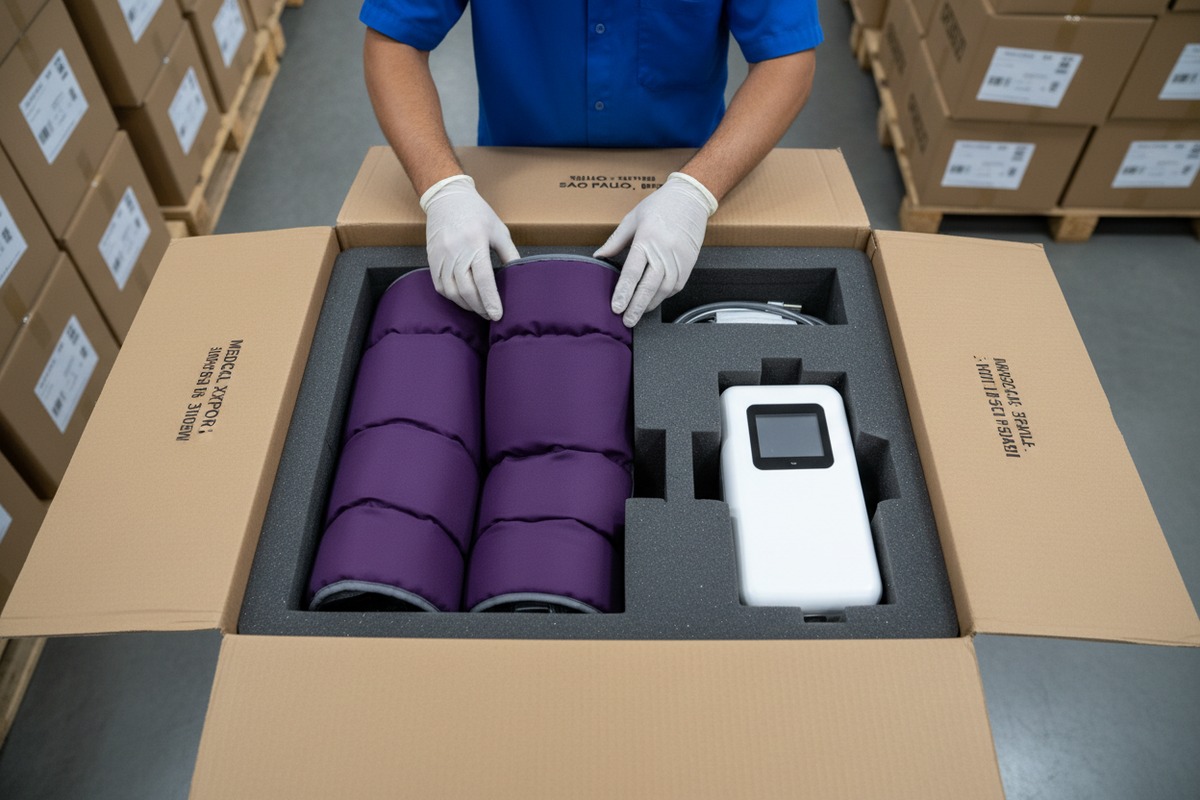
The "Total Lead Time" is not just the time on the water. It is: Production + Inland Trucking + Customs + Port Handling + Sea Transit + Destination Clearance + Final Delivery. The supplier's choice of the origin port affects the first three steps.
The "Cut-Off" Time Factor
Every ship has a "CY Cut-Off 9" (Container Yard Cut-Off)—the deadline for the container to enter the port.
- Scenario A (Local Port): Our factory is in Guangzhou. We can load a truck on Tuesday morning for a Wednesday cut-off in Shenzhen. The truck takes 2 hours. We have flexibility.
- Scenario B (Distant Port): If you insist on shipping from Shanghai (1,500km away) to catch a specific ship, we must load the truck on Saturday to ensure it arrives by Tuesday. We lose 3 days of production time just to account for trucking.
Export Documentation and Customs
China Customs operates regionally. We are registered with Guangzhou Customs. When we export from our local port, inspections are routine and fast. If we ship from a distant port where our company is less "known" to the local customs officers, the chance of a random inspection increases. An inspection can delay shipment by 3 to 7 days.
Managing Logistics Costs and Speed
Sometimes, the fastest sea route starts at a port far from the factory. In this case, we have to weigh the cost of domestic transport against the sea time savings.
- Rail-Sea Intermodal: For inland factories, using rail to get to Ningbo is efficient.
- Barge Services: From Guangzhou, we often use barges to move goods to Hong Kong or Shenzhen. This is cheap but adds 2-3 days. If speed is priority #1, we use trucks, not barges.
Logistics Checklist for Buyers
When placing your order, ask us (or your supplier) these three questions to align expectations:
- "Which port is closest to your factory?"
- "What is the trucking time from your floor to the port?"
- "Can we catch the closing date for the fast vessel if production ends on Friday?"
Conclusion
Choosing the right ports is a strategic lever to reduce lead times and protect your investment in high-quality pressotherapy machines. By prioritizing direct routes from major Chinese hubs like Shanghai or Shenzhen to capable South American ports like Santos or Callao, you can cut transit times to 30-35 days. Avoid transshipment risks and align your logistics with your supplier's location to ensure your white matte control units and purple suits arrive in pristine condition, ready for your customers.
Footnotes
1. Replaced HTTP 404 Wikipedia link with an authoritative health information site explaining pressotherapy. ↩︎
2. Official website for Guangzhou Port, detailing its operations and significance. ↩︎
3. Replaced HTTP 404 NIDDK link with an authoritative NIH/NCBI source on the lymphatic system and drainage. ↩︎
4. Discusses the importance of shipping schedules in international logistics planning. ↩︎
5. Provides comprehensive information about the largest port in Latin America. ↩︎
6. Explains the seasonal weather phenomenon impacting shipping routes. ↩︎
7. Replaced HTTP 404 WCO link with an authoritative U.S. government source (International Trade Administration) explaining HS codes. ↩︎
8. Replaced HTTP 404 link with a clear definition of ‘Mother Vessel’ from a shipping glossary. ↩︎
9. Provides a clear definition of the Container Yard Cut-Off in shipping logistics. ↩︎

 English
  Español de México
  Deutsch
  Français
  العربية
  Русский