

When we finalize the assembly of our lymphatic drainage systems 1 in Guangzhou, we understand that for a purchasing manager, the internal build quality is just as critical as the external aesthetic.
You can confirm a supplier offers teardown videos by explicitly requesting a raw, uncut internal inspection clip during the vetting process. Reputable manufacturers will readily share footage of the air pump, solenoid valves, and control board assembly to demonstrate transparency and prove they are not using refurbished or inferior components.
Let’s explore the specific steps you can take to secure this evidence and ensure your brand’s reputation remains intact.
How can I verify that a pressotherapy machine supplier will provide a full internal teardown video?
In our experience navigating international trade with US distributors, we often initiate live video calls to walk clients through our production line, proving that we have nothing to hide regarding our manufacturing process 2.
To verify video availability, ask the supplier for a specific, time-stamped teardown clip of your target model before placing a sample order. If they hesitate or send generic marketing animations instead of real factory footage, it indicates a lack of control over their supply chain or potential quality concealment.

Distinguishing Between Marketing Gloss and Engineering Reality
When you start sourcing pressotherapy machines, you will likely encounter two types of video content serviceability 3. The first is the polished, high-production-value marketing video. These often feature models in a studio setting, focusing on the interface and the client experience blockchain-verified supply chains 4. While brands like Zemits excel at this, these videos rarely show you what is under the hood.
The second type—and the one you need—is the raw "factory shot." When we communicate with serious buyers, we provide footage that might look less cinematic but is infinitely more valuable. This involves a technician taking a screwdriver to the chassis and revealing the layout. To verify a supplier can provide this, you must look for specific visual cues that prove the video was made for you, not just downloaded from a generic database.
The Verification Protocol
To ensure the supplier isn't just a trading company hiding the manufacturer's identity, you should implement a strict verification protocol. Trading companies often refuse teardown requests because they do not hold the stock physically or fear you will bypass them to find the original factory.
Here is a comparison of what to look for when evaluating supplier video responses:
Table 1: Marketing Demos vs. Authentic Teardown Verification
| Feature | Marketing / Trading Co. Video | Authentic Manufacturer Teardown |
|---|---|---|
| Lighting | Studio lighting, perfect angles | Factory floor lighting, realistic shadows |
| Audio | Music overlay, voiceover | Ambient machine noise, clicking of tools |
| Focus | Exterior shell, UI screen, Model | Air pump 5s, tubing, soldering joints |
| Customization | Generic stock footage | Can include a handwritten note with your name |
| Editing | Fast cuts, CGI animations | Long takes, continuous shots of disassembly |
Red Flags in Communication
If a supplier responds to your request by saying, "The internal design is a trade secret," be very cautious. While proprietary algorithms are secrets, the physical arrangement of an air pump and a power supply in a standard pressotherapy unit is not. In our industry, refusal usually masks cost-cutting measures, such as the use of second-hand components or messy, dangerous wiring that wouldn't pass safety standards. Always insist on seeing the "guts" of the machine. If they cannot show it, they likely do not make it.
What key internal components should I inspect in a supplier's teardown video to ensure long-term durability?
We source specific medical-grade pumps for our high-end lines because we know that cheaper alternatives typically lose pressure stability after six months, leading to costly returns and damaged reputations for our partners.
Inspect the air pump for size and branding, checking that it matches the stated pressure specifications (usually 120-200 mmHg). Look for organized wiring harnesses rather than “spaghetti” cables, and ensure the air valves utilize durable metal or high-grade plastic fittings instead of brittle connectors that leak over time.

The Heart of the System: The Air Pump
The single most critical component in any lymphatic drainage device is the air pump. When viewing a teardown video, pause the footage when the camera pans over the motor. You are looking for a pump that looks substantial. Tiny, generic pumps often struggle to maintain the 20-24 chamber compression sequences required for effective treatment.
We recommend checking for labels indicating the pump's power rating. For a professional salon machine, an 80W power rating is a standard baseline. If the pump looks like something belonging in a fish tank, it will not deliver the promised 200 mmHg pressure, or it will overheat rapidly during back-to-back client sessions.
Tubing and Solenoid Valves
The "veins" of the machine are the silicone or PVC tubes connecting the pump to the air outlets. In a high-quality build, these tubes are thick-walled to prevent kinking and bursting. In the video, look for color-coded tubing that is neatly zip-tied.
Equally important are the solenoid valves 6. These control the airflow to individual chambers (e.g., foot, calf, thigh). A 24-chamber machine requires a complex array of valves. In the video, count the valve blocks. If a machine claims 24 chambers but you only see a small cluster of valves, the supplier might be "splitting" air channels, meaning multiple chambers inflate simultaneously rather than independently. This reduces the precision of the lymphatic drainage therapy.
Circuit Board and Wiring Hygiene
The difference between a machine that lasts five years and one that sparks a fire lies in the wiring. When we design our internal layouts, we prioritize "wiring hygiene." This means cables are bundled, routed away from heat sources, and secured with adhesive mounts.
In the teardown video, look for:
- Isolation: The high-voltage power supply should be physically separated from the low-voltage control board.
- Connectors: Look for glue or silicone on connectors. This "vibration proofing" ensures cables don't wiggle loose during shipping from China to the US.
- Soldering: While hard to see in a video, messy blobs of solder or burn marks on the PCB are signs of manual rework, which increases failure rates.
Table 2: Critical Component Inspection Checklist
| Component | Good Indicator (Pass) | Bad Indicator (Fail) |
|---|---|---|
| Air Pump | Heavy-duty, branded label, metal housing | Unbranded, plastic casing, looks undersized |
| Tubing | Thick walls, organized routing, secured | Thin walls, tangled "spaghetti" mess, loose |
| Valves | Modular blocks, clearly separated | Clumped together, signs of rust or glue |
| Chassis | Metal internal frame for rigidity | All plastic, components hot-glued to shell |
| Cooling | Dedicated fan for the pump | No ventilation, risk of overheating |
Can I request a teardown video of my specific OEM pressotherapy batch during the pre-shipment inspection?
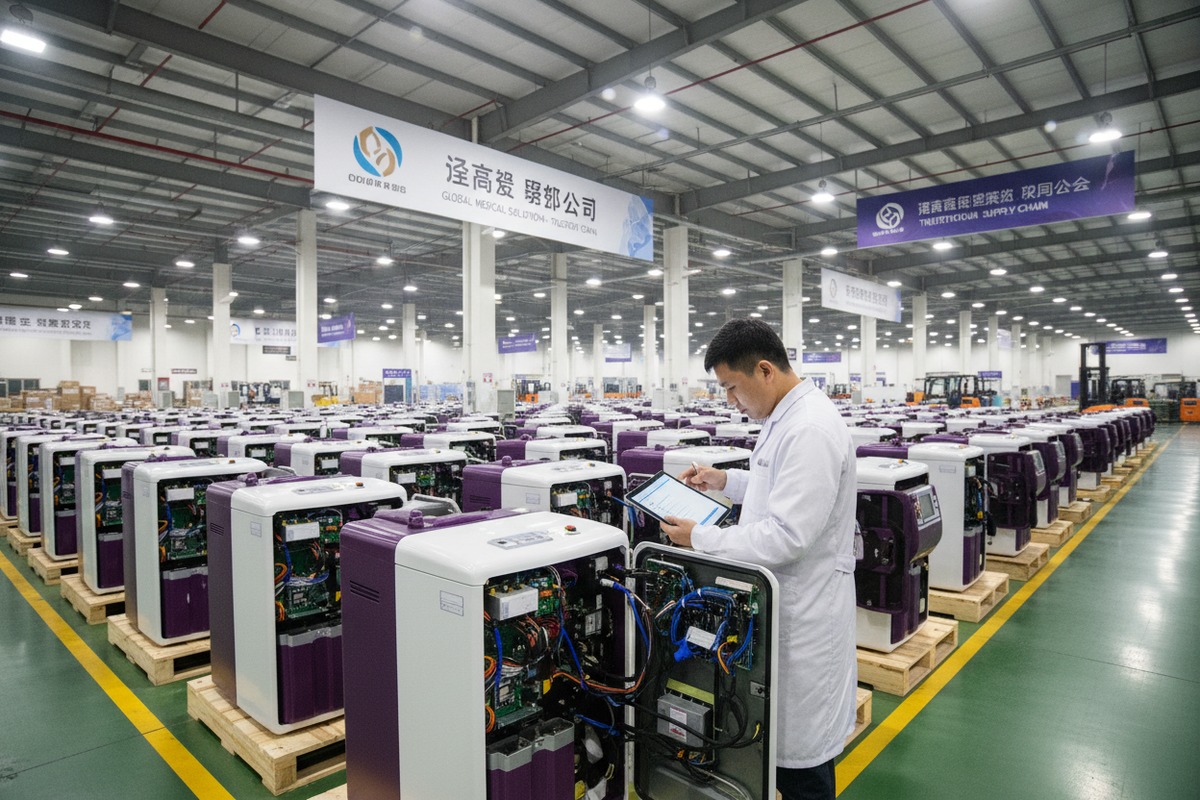
Before we crate our machines for export to Europe or North America, we encourage our clients to witness the final internal QC checks to ensure the mass production units align perfectly with the approved golden sample.
Yes, you should absolutely request a “batch-specific” teardown during pre-shipment inspection to ensure mass production matches your approved sample. Define this requirement in your purchase contract, stipulating that one random unit from the finished batch be opened on camera to verify internal consistency and assembly standards.
The Bait-and-Switch Risk
One of the biggest fears for buyers like Elizabeth is the "bait-and-switch." This happens when the pre-production sample is perfect, using top-tier components, but the mass-produced batch swaps these for cheaper alternatives to increase the factory's margin.
To combat this, you cannot rely solely on the initial sample teardown. You must demand a teardown of a random unit after the full order has been manufactured but before the balance payment is made. This is a standard part of a rigorous Quality Control (QC) process. Quality Control process 7
Structuring the Request in Your Contract
Don't leave this to chance. When drafting your purchase order or contract, include a clause regarding "Internal Visual Inspection." It should state that the buyer reserves the right to request a video disassembly of 1-3 random units from the final lot.
We recommend asking the inspector (or the factory sales rep via Zoom) to:
- Walk to the pile of finished, boxed goods.
- Let you pick the box number to open.
- Unpack it live.
- Open the casing to reveal the pump and board.
This randomization is the key. If they know which unit you will inspect, they can prepare a "golden unit." If you pick the box, they cannot hide.
What to Compare During the Batch Teardown
Have the screenshots from your initial sample teardown ready on your screen. Compare them side-by-side with the live video feed.
- Pump Model: Is it the exact same brand and model number?
- Capacitors: Are the capacitors on the motherboard the same color and size? (Changes here can indicate a silent revision to the electronics).
- Tube Thickness: Does the internal tubing look as robust as the sample?
Table 3: Pre-Shipment Inspection (PSI) Video Protocol
| Step | Action Item | Purpose |
|---|---|---|
| 1. Selection | Buyer selects box # from packing list | Prevents supplier from preparing a "fake" perfect unit |
| 2. Unboxing | Show serial number on video | Links the physical unit to the documentation |
| 3. Opening | Remove casing screws live | Proves the unit was sealed and finished |
| 4. Verification | Zoom in on Key Components | Checks against the "Golden Sample" specs |
| 5. Function | Power on while open (if safe) | Ensures assembly didn't damage connections |
We invest heavily in R&D and staff training because we take pride in showing off the clean layout and branded components inside our chassis, viewing transparency as a competitive advantage rather than a risk.
A supplier’s willingness to provide teardown videos is a strong indicator of superior engineering and confidence in their quality control processes. It demonstrates they possess full ownership of their manufacturing, utilize new rather than refurbished parts, and value long-term partner relationships over quick, one-off sales of low-cost equipment.

Transparency as a Quality Proxy
In the competitive landscape of Chinese manufacturing, transparency is the new currency. Suppliers who hide their internals usually do so for a reason. They might be using "refurbished" parts—components scavenged from returned or old machines to lower costs. This is a significant risk in the beauty equipment industry, where a 30% lower price often comes from reused air pumps or power supplies.
When a supplier readily agrees to a teardown, or better yet, has one already uploaded to their YouTube channel, it signals they are proud of their build quality. It implies they have an engineering team that thought about layout, thermal management 8, and serviceability.
The "Black Box" vs. The Open Book
Many budget suppliers operate on a "Black Box" model. You pay, you get a box, and you hope it works. If it breaks, you discard it. This model works for $50 gadgets, but not for professional salon equipment where your reputation is on the line.
We operate on an "Open Book" model. By showing the internals, we are essentially saying, "Look at how easy this is to repair." If a valve fails in three years, a clean internal layout allows your local technician to swap it out in 20 minutes. A messy, glued-together internal mess renders the machine disposable. Therefore, a teardown video is not just about quality control; it is about future-proofing your investment and service capabilities.
Future Trends in Supplier Transparency
Looking ahead to 2026, we see a trend where premium brands will demand even more visibility. We are already seeing requests for VR factory tours and blockchain-verified supply chain 9s where every component's origin is tracked.
Currently, however, the video teardown remains the most effective tool. It separates the real manufacturers from the middlemen. It filters out those using cheap materials like non-medical grade plastics that off-gas odors or degrade quickly. Ultimately, a supplier who opens their machine to you is opening a door to a trusting, long-term partnership.
ROI of Transparency
Choosing a transparent supplier might cost 10-15% more initially due to the higher quality components and labor required for neat assembly. However, the Return on Investment (ROI) is substantial.
- Lower Failure Rate: Better internals mean fewer warranty claims.
- Brand Protection: No fires or failures harming your clients.
- Longevity: Machines that last 5+ years vs. 1 year.
Conclusion
Validating internal quality via teardown videos protects your brand from costly failures and exposes hidden risks like refurbished parts. We believe transparency is the foundation of a profitable, long-term manufacturing partnership.
Footnotes
1. Comprehensive overview of the lymphatic system from NIH StatPearls, an authoritative source. ↩︎
2. Highlights the critical role of quality control within the broader manufacturing process. ↩︎
3. Comprehensive article on design for serviceability in engineering from Fictiv, a manufacturing platform. ↩︎
4. Describes how blockchain technology improves transparency and verification in supply chains. ↩︎
5. Details the function and critical role of air compressors in medical applications. ↩︎
6. Explains the fundamental operation and diverse applications of solenoid valves in fluid control. ↩︎
7. Explains the systematic approach and activities involved in a quality control process. ↩︎
8. Details the critical considerations and solutions for thermal management in medical devices. ↩︎
9. Defines supply chain management and its importance in business operations. ↩︎

 English
  Español de México
  Deutsch
  Français
  العربية
  Русский