
When we analyze the influx of orders from our South American distributors, particularly from Brazil and Mexico, a clear pattern emerges heavy leg syndrome 1. The local market is flooded with basic lymphatic drainage devices 2, but clinics are struggling with equipment that lacks the pressure consistency needed for effective body contouring 3. In our production facility, we often discuss how simply importing a standard machine is no longer enough to compete with established regional players who use European technology. You need a strategic edge.
To outperform South American competitors, you must select pressotherapy machines that offer higher chamber density (24 to 48 overlapping cells) and customizable pressure zones. We recommend partnering with suppliers who can integrate 4-channel output for high-volume clinics and prove rigorous quality control to avoid the air leakage issues common in generic imports.
Let’s dive into the specific technical features and design choices that will set your brand apart in this demanding market.
How can I customize pressotherapy machine features to outperform my South American competitors?
In our engineering meetings, we often compare the technical specifications of generic devices against the specific needs of the Latin American aesthetic market Electrical Muscle Stimulation (EMS) 4. We have found that the standard "squeeze and release" modes are insufficient for the high-demand treatments like post-liposuction recovery 5 and heavy leg syndrome relief that define this region. By tweaking the airflow protocols in our software, we create a much more effective therapy session Thermoplastic Polyurethane (TPU) 6.
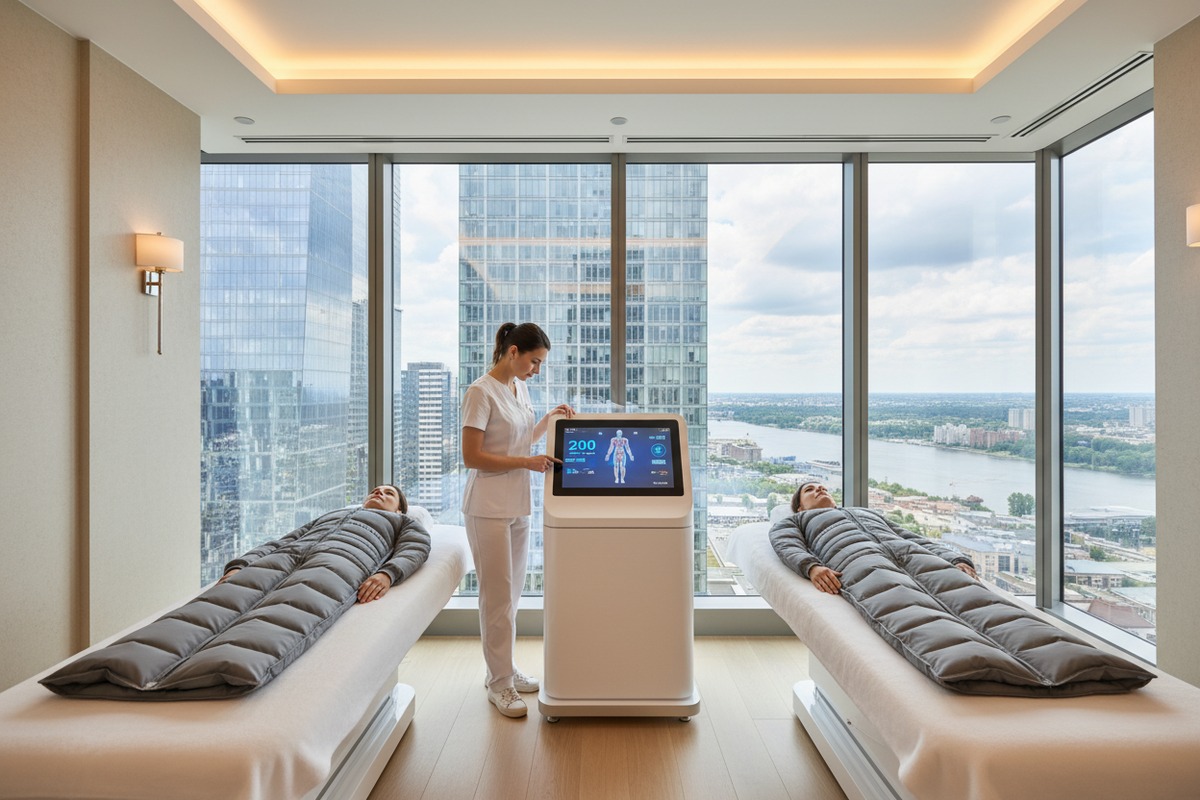
To truly dominate the market, you should customize your machines with independent channel controls that allow simultaneous treatment of two patients or multiple body areas. We advise specifying a pressure range that reaches at least 200 mmHg with precise regulation, and incorporating overlapping chamber technology to ensure a continuous, gap-free massage wave that generic competitors lack.
The Power of Overlapping Chambers
The most significant differentiator we see in high-end equipment versus the budget models flooding the South American market is the chamber configuration. Standard machines usually feature 8 to 16 air bags that sit side-by-side. When these inflate, gaps often form between the bags, creating "dead zones" where lymph fluid can stagnate rather than being flushed upward.
For your private label equipment, we strongly suggest opting for "overlapping technology." This means the air chambers are stacked like fish scales. When we assemble these suits, the distal chamber inflates and remains pressurized while the next proximal chamber begins to inflate. This ensures a seamless, retrograde wave of compression. In markets like Brazil, where body sculpting is a primary service, this continuous pressure is non-negotiable for results.
Pressure Range and Multi-Functionality
Regional competitors often use European imports (like those from Spain or Italy) which are excellent but expensive. Lower-end Asian imports often cap out at 120-140 mmHg effective pressure. To bridge this gap, you need a machine that offers medical-grade pressure (up to 200 mmHg or approx 26 kPa) but with delicate control for sensitive post-op patients.
Furthermore, space is often at a premium in urban clinics. We have seen a surge in requests for "3-in-1" systems. Instead of a standalone pressotherapy unit, consider a customization that adds Far Infrared (FIR) heat 7 or Electrical Muscle Stimulation (EMS) into the same suit. This allows the clinic to offer "Slimming + Drainage" packages, effectively doubling their ROI per hour.
Feature Comparison Matrix
Below is a breakdown of how you can spec your machine against the typical competitor found in South America.
| Feature | Standard Competitor Model | Your Differentiated Model | Clinical Benefit |
|---|---|---|---|
| Chamber Count | 16-20 Chambers (Non-overlapping) | 24-48 Chambers (Overlapping) | No dead zones; smoother lymphatic flow. |
| Channels | 2 Channels (1 patient/area) | 4 Channels (2 patients/areas) | Higher clinic throughput; faster ROI. |
| Suit Material | Standard PVC | Medical-grade TPU (High density) | Bacteria resistant; easier to clean; durable. |
| Pressure Modes | 3-4 Basic Modes | 5-8 Customizable Modes | Tailored treatments for cellulite vs. sports recovery. |
By locking in these specifications, you move your product out of the price war and into the "professional medical aesthetics" category, which commands a higher margin.
When we exhibit at international trade shows, we immediately notice which booths attract high-paying distributors and which ones attract bargain hunters. The visual language of your machine speaks before the client even tests the pressure. In our design lab, we have moved away from the bulky, industrial "medical box" look toward sleek, consumer-friendly aesthetics that fit modern med-spas.
Premium perception is achieved by choosing a sleek, slanted-screen desktop design with a matte white finish rather than glossy plastic which scratches easily. We recommend upgrading to a high-resolution touchscreen interface that visualizes the active chambers in real-time, giving the operator a sense of high-tech control that outdated analog knob systems cannot provide.

The Shift to "Apple-Esque" Aesthetics
The South American beauty market is highly visual. Clinics in Rio or Mexico City want equipment that looks good on Instagram. We have phased out the old square metal boxes with protruding buttons. The current trend—and our recommendation for your brand—is a "console" style design.
Imagine a control unit that sits on the table with a slight upward slope (a slanted viewing angle). This is ergonomic for the therapist. We use high-quality ABS plastics with a matte or satin finish. Why matte? In our experience, glossy finishes look spectacular out of the box but collect fingerprints and micro-scratches within a week of clinic use, making the machine look worn. A matte white finish retains a clean, clinical, and premium look for years.
User Interface (UI) as a Differentiator
Your competitors likely use machines with membrane buttons and small LED number displays. This feels dated. To differentiate, we can implement a 5.7-inch to 10-inch color touchscreen. But the hardware is only half the battle; the software interface matters too.
A premium UI should show a human body diagram. When chamber #4 on the leg inflates, the corresponding area on the screen should light up. This provides visual feedback to the therapist and reassures the patient that the sophisticated technology is working. This "visual confirmation" adds perceived value to the treatment.
Connector and Hose Management
One detail that screams "cheap" is messy hoses. Standard machines often have individual tubes plugging directly into the front of the machine, looking like a plate of spaghetti.
For a high-end look, we use a "Quick-Connect" integrated plug system. All air tubes are bundled into a single, thick, durable cable with one multi-pin connector that snaps into the machine. This not only looks cleaner but also reduces the risk of therapists plugging tubes into the wrong ports. It transforms the setup process from a chore into a professional click.
Design Element Upgrade Checklist
| Design Element | Budget / Competitor Look | Premium / Private Label Look |
|---|---|---|
| Casing Shape | Boxy, vertical metal box | Low-profile, slanted console |
| Finish | Glossy plastic or painted metal | Matte ABS or Soft-touch finish |
| Interface | Physical knobs/buttons | Capacitive Touchscreen |
| Hose Connection | Individual color-coded tubes | Single "Umbilical" Quick-Connector |
| Branding | Sticker label | Digital boot-up logo & Silk-screen print |
How do I ensure my supplier's quality control prevents the common malfunctions seen in competitor machines?
In our years of exporting to rigorous markets like the US and Europe, we have learned that the most expensive part of a machine is not the component cost—it is the cost of after-sales support when things break. We have seen competitors' machines fail because they skipped basic stress testing. A single air leak in a suit can render the entire system useless and damage your reputation.
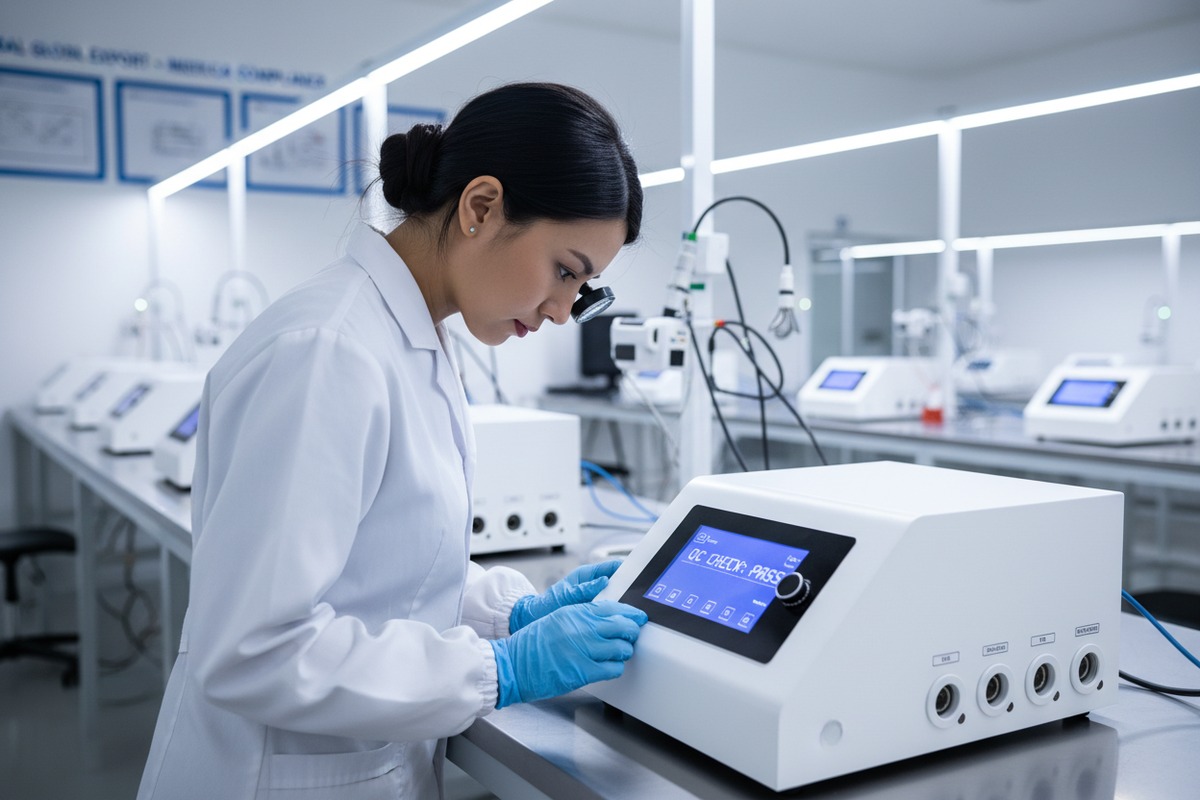
You must require your supplier to perform a mandatory 48-hour aging test on the main control unit and a 100% inflation test on every single air chamber before shipment. We also advise specifying branded, high-cycle air pumps and solenoid valves, as these internal components are the first to fail in high-traffic clinics due to overheating and wear.

The Critical "Aging Test"
Many factories operate on a "assemble and ship" model. This is dangerous. Electronic components, especially air pumps and power supplies, often have a high "infant mortality" rate—meaning if they are going to fail, they usually fail in the first 24 hours of operation.
We implement a strict aging protocol. Every machine is left running continuously for 48 hours before it is even packed. This simulates a busy week at a spa. If a pump is going to overheat or a valve is going to stick, we want it to happen on our factory floor, not in your customer's clinic in Sao Paulo. You should ask your supplier for video evidence or reports of this aging process for your specific batch.
Suit Integrity and Welding
The suit is the consumable part of the system and takes the most physical abuse. Competitor machines often use suits made of standard PVC sewn together. The needle holes from sewing are weak points where air eventually leaks.
To prevent this, you should demand High-Frequency (HF) welding 8 technology. This fuses the TPU (Thermoplastic Polyurethane) layers together without needles/thread, creating an airtight seal that is incredibly resistant to bursting. Furthermore, quality control must involve inflating every suit to maximum pressure and leaving it for a set period to check for pressure drops. If a chamber loses pressure, it is rejected.
Internal Components: The Pump
The heart of the machine is the air pump. Low-cost competitors use diaphragm pumps that are noisy and vibrate heavily. Over time, this vibration loosens internal screws and leads to failure.
We recommend specifying "piston pumps" or high-quality diaphragm pumps mounted on shock-absorbing silicone buffers. This reduces noise—a key factor for a relaxing spa treatment—and extends the lifespan of the motor.
QC Checklist for Buyers
| Component | Common Defect | Required QC Protocol |
|---|---|---|
| Air Pump | Overheating / Failure | 48-Hour Continuous Aging Test |
| Suit Chambers | Air Leaks at Seams | 100% Inflation & Hold Test (20 mins) |
| Valves | Stuck / inconsistent airflow | Cycle testing (Open/Close 1000x) |
| Touchscreen | Unresponsive / Ghost touch | Calibration & Sensitivity Test |
Can I collaborate on a custom pressotherapy development to fill the technical gaps in the South American market?
When we receive inquiries from brand owners, we often find they are hesitant to ask for deep customization, assuming it is too expensive or complex. However, in our experience, the most successful brands are those that co-develop unique protocols. The South American market has very specific aesthetic preferences, and standard software often misses the mark.
Yes, you can and should collaborate on custom development to create proprietary treatment modes, such as specialized "Brazilian Lift" gluteal programs or heavy-duty lymphatic drainage cycles. We can modify the software source code to adjust inflation sequences, hold times, and pressure gradients, giving you a unique selling proposition that off-the-shelf competitors cannot match.

Software Customization: The Low-Hanging Fruit
Developing a new physical plastic shell (mold) is expensive (often $10,000+), but customizing software is relatively cheap and highly effective.
In South America, there is a massive focus on buttock aesthetics and cellulite reduction on the thighs. Standard machines usually have a generic "Legs" mode.
We can work with you to program a specific "Gluteal Boost" mode where the pressure holds longer in the upper thigh and buttock chambers while pulsating. We can also rename these modes on the touchscreen to match local marketing terms (e.g., "Drenagem Linfática" or "Pós-Operatório"). This makes the machine feel native to the market and easier for local therapists to sell to their clients.
Hardware Hybridization
Another gap in the market is the need for efficiency. Clinics want to do more in less time. We have collaborated with clients to integrate EMS (Electrical Muscle Stimulation) pads inside the pressotherapy suit.
This is a complex engineering challenge because of the wiring, but it allows for muscle toning (EMS) while simultaneously draining fluids (Pressotherapy). Offering a machine that does "Gym + Detox" in 30 minutes is a powerful narrative for your sales team.
The ODM Process
If you decide to go this route, here is what the collaboration typically looks like:
- Requirement Gathering: You tell us the treatment protocols you admire (e.g., "Make it feel like the manual massage technique used in Brazil").
- Logic Programming: Our engineers adjust the solenoid valve timing to replicate that sensation.
- UI Branding: We upload your logo and translate the interface into Portuguese or Spanish.
- Prototyping: We send a video or a sample unit for you to test the "feel" of the pressure.
Customization Tier Table
| Level | Description | Cost / MOQ Implications | Impact on Market |
|---|---|---|---|
| Basic (OEM) | Logo on screen & casing; Box design. | Low Cost; Low MOQ. | Builds Brand Awareness. |
| Intermediate | Custom Modes (Software); Local Language. | Moderate Cost; Medium MOQ. | High – Solves specific clinical needs. |
| Advanced (ODM) | New Case Design; Integrated EMS/IR; Custom PCB. | High Cost; High MOQ. | Very High – Creates a unique monopoly. |
Conclusion
Choosing the right pressotherapy machine for the South American market requires looking beyond the basic specifications of generic imports. By prioritizing 4-channel systems with overlapping chamber technology 9, demanding medical-grade TPU materials, and insisting on rigorous aging tests, you safeguard your brand’s reputation. Furthermore, leveraging software customization to create region-specific treatment modes offers a strategic advantage that allows you to outperform local competitors. Success lies in the details of pressure accuracy, design aesthetics, and the durability of the supply chain behind the equipment.
Footnotes
1. Replaced 410 link with a medical article explaining causes of heavy legs. ↩︎
2. Explains what lymphatic drainage machines are and their clinical applications. ↩︎
3. Provides an authoritative overview of non-invasive body contouring technologies and their effects. ↩︎
4. Provides a comprehensive explanation of Functional Electrical Stimulation (FES) and its medical uses. ↩︎
5. Offers a comprehensive guide on what to expect and how to promote healing after liposuction. ↩︎
6. Provides a general overview of Thermoplastic Polyurethane, its properties, and common applications. ↩︎
7. Explains what Far Infrared Therapy is and its various health benefits and applications. ↩︎
8. Describes High-Frequency welding as a technique for joining thermoplastic materials to create strong, airtight welds. ↩︎
9. Describes how overlapping chambers in pressotherapy devices prevent lymphatic retraction and ensure effective massage. ↩︎

 English
  Español de México
  Deutsch
  Français
  العربية
  Русский