
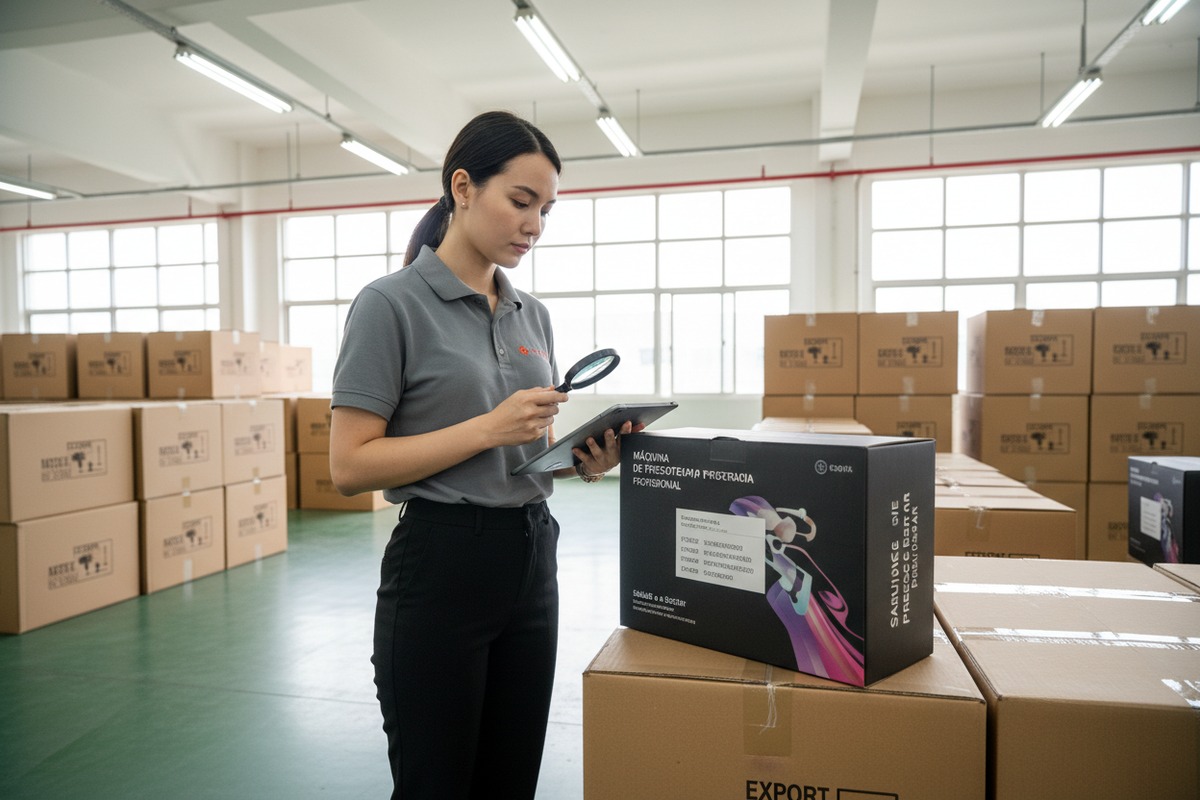
Navigating the logistics of South American exports often feels like a puzzle, especially when we are fine-tuning our production lines to meet strict medical device standards for Brazil or Argentina medical device registration 1.
To verify pressotherapy machine packaging for South America, you must confirm medical device registration (ANVISA/ANMAT), ensure all labeling is in Portuguese or Spanish, include local importer details, and validate that materials withstand high humidity and rough transit to remain retail-ready upon arrival.
The following guide breaks down the specific verification steps to ensure your shipment clears customs and looks professional on the shelf ISTA 3A drop tests 2.
How do I verify that my pressotherapy machine packaging is durable enough for South American transit?
When we test our new 24-airbag compression suits for long-haul shipping, we simulate the high-humidity environments typical of sea freight routes to ports like Santos or Buenos Aires AQL (Acceptable Quality Limit) inspection 3.
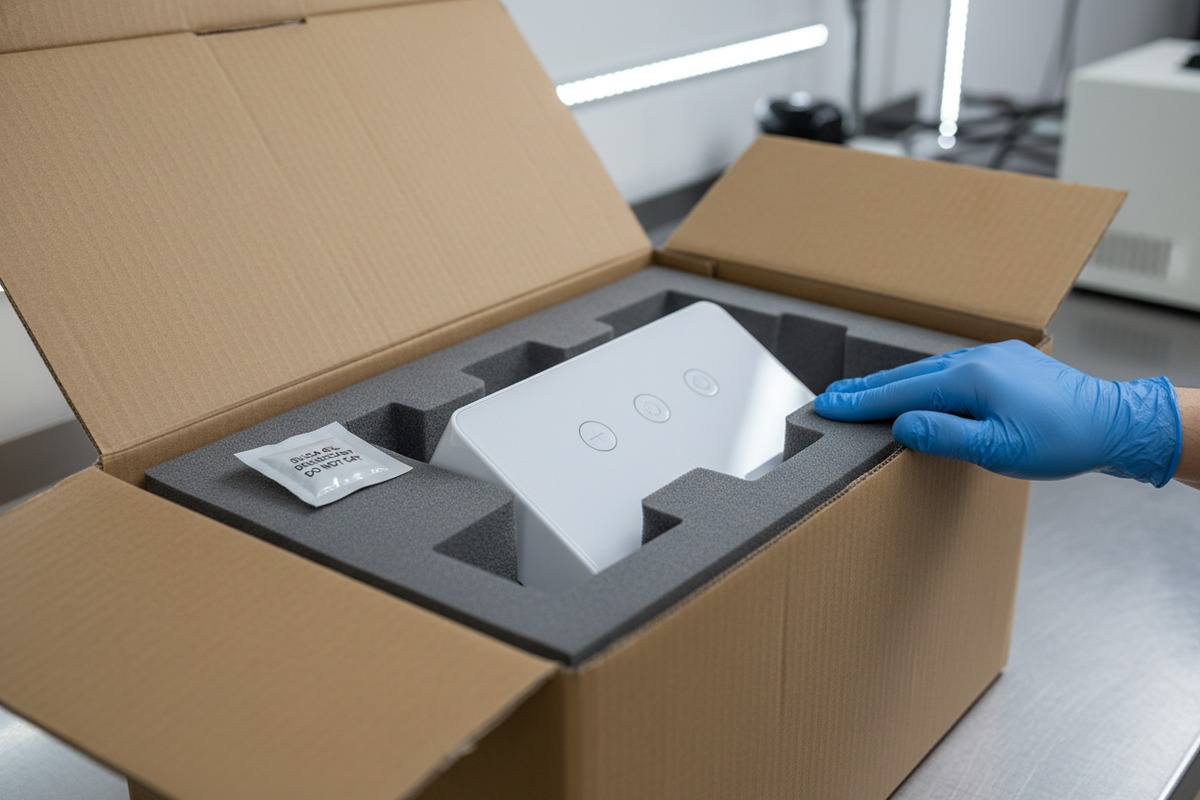
Verify durability by performing ISTA 3A drop tests, checking for double-walled corrugated cardboard, and ensuring internal foam inserts prevent movement; additionally, use moisture-absorbing silica packets and waterproof film to protect electronic control units from tropical humidity and condensation.
Engineering for Long-Distance Resilience
Shipping from China to South America often takes 30 to 45 days by sea. During this time, your cargo faces extreme temperature fluctuations and stacking pressures. At our factory, we use a "double-box" system. The inner retail box is designed for aesthetics, while the outer shipping carton provides structural integrity. We verify this by checking the Bursting Strength and Edge Crush Test (ECT) ratings 4 of the cardboard. For a machine weighing over 10kg, an ECT rating of at least 42 is essential.
Humidity and Environmental Factors
South American climates, particularly in Brazil and Colombia, are notorious for high humidity. Standard cardboard absorbs moisture, which weakens its structure and leads to collapsed stacks. We solve this by applying a thin plastic lamination to the retail boxes. Furthermore, we inspect the sealing tape. It must be reinforced and water-resistant to prevent the box from popping open during the humid journey through the Panama Canal.
Internal Protection Protocols
The control unit is the most sensitive part of the pressotherapy system. We use custom-molded EPE (Expanded Polyethylene) foam 5 rather than cheap EPS (Styrofoam). EPE is more resilient and does not crumble into messy bits that can clog the air valves of the machine.
| Packaging Component | Standard Requirement | South American Export Recommendation |
|---|---|---|
| Outer Carton | Single Wall B-Flute | Double Wall BC-Flute (Heavy Duty) |
| Internal Cushioning | Bubble Wrap | Custom-molded EPE Foam |
| Moisture Protection | None | 50g Silica Gel + PE Sealed Bag |
| Corner Protection | None | Hardboard Edge Protectors |
What specific labeling requirements must I check to ensure my packaging is retail-ready for South America?
Our regulatory team frequently reviews the latest ANVISA updates to ensure that every label on our high-end beauty machines complies with the specific legal mandates of the destination country.
Check for full Portuguese translations for Brazil or Spanish for Argentina, ensuring labels include the health registration number, importer's TAX ID (CNPJ/RUT), batch number, manufacturing date, and clear therapeutic claims that match approved medical device registrations.

Language and Legal Compliance
Language is the biggest hurdle for retail readiness. Brazil is the most strict, requiring every word on the retail box and the user manual to be in Portuguese. In Argentina or Chile, Spanish is mandatory. We have seen shipments seized because they only had English or Chinese labels. When we manufacture for these markets, we cross-reference the text against the local sanitary registration documents.
Essential Label Elements
A retail-ready box must act as a legal document. You must verify that the label contains the "Registro de Producto" (Product Registration) number issued by agencies like ANMAT or INVIMA. Without this number, the product cannot be legally displayed in a spa or retail showroom. The label must also identify the local authorized representative 6 who is responsible for the product's safety in that country.
Supplementary Stickers vs. Original Print
If you are using a standard global design, you might use supplementary stickers. We recommend that these stickers be "tamper-evident" and printed on high-quality vinyl rather than paper. Paper stickers often peel off in tropical heat. The sticker must not cover any safety warnings or the original serial number of the machine.
| Required Information | Brazil (ANVISA) | Argentina (ANMAT) | Colombia (INVIMA) |
|---|---|---|---|
| Primary Language | Portuguese | Spanish | Spanish |
| Importer Info | Name, Address, CNPJ | Name, Address, CUIT | Name, Address, NIT |
| Health Reg. No. | Mandatory | Mandatory | Mandatory |
| Manual | Inside Box (Portuguese) | Inside Box (Spanish) | Inside Box (Spanish) |
How can I confirm that my custom OEM packaging design matches my brand’s high-end retail standards?
Whenever we collaborate with US-based brands on private-label projects, we provide digital die-lines and physical mockups to ensure the gold-foiling or matte finishes align perfectly with their luxury positioning.
Confirm high-end standards by requesting a physical "Golden Sample" of the packaging, verifying color accuracy using Pantone codes, checking for premium finishes like spot UV or soft-touch lamination, and ensuring the typography is legible and professionally aligned.

Visual and Tactile Quality
Luxury beauty equipment, like our professional pressotherapy systems, must feel expensive from the moment the customer touches the box. We use 1200g greyboard for the inner gift boxes to give them a "weighty" and solid feel. When you verify your design, check the "opening experience." A high-end box should have a smooth, slow-release vacuum feel when the lid is lifted.
Color Consistency and Branding
Brand identity is easily lost with poor printing. We use the Pantone Matching System (PMS) 7 to ensure that the "KMSLASER White" or your brand's specific blue remains consistent across different production batches. During the verification phase, you should compare the printed box under different light sources (Daylight, LED, and Fluorescent) to check for metamerism—where colors look different under different lights.
Functional Aesthetics
A premium box is not just pretty; it is functional. For pressotherapy machines, which include bulky leg cuffs and hoses, the packaging must have designated compartments. We design these using die-cut foam or cardboard dividers. This prevents the "jumbled" look when a customer opens the box for the first time. We also suggest adding a magnetic closure for that extra touch of retail sophistication.
| Premium Feature | Purpose | Verification Method |
|---|---|---|
| Soft-Touch Lamination | Velvet-like feel | Tactile inspection |
| Spot UV Coating | Highlights logos/features | Visual tilt test for shine |
| Magnetic Closure | Secure, high-end closing | "Click" sound and pull force |
| Custom Foam Inserts | Organized presentation | Shake test for noise/movement |
What inspection methods should I use to validate the packaging quality before my shipment leaves China?
In our Guangzhou facility, we implement a strict three-stage inspection process for every order, ensuring that no box is taped shut until every component and label has been double-checked against the client’s specifications.
Validate packaging quality by conducting a random AQL (Acceptable Quality Limit) inspection, performing a 1.2-meter drop test on sealed cartons, verifying the quantity and language of manuals, and using a barcode scanner to ensure all QR codes and retail tags are functional.
The AQL Inspection Framework
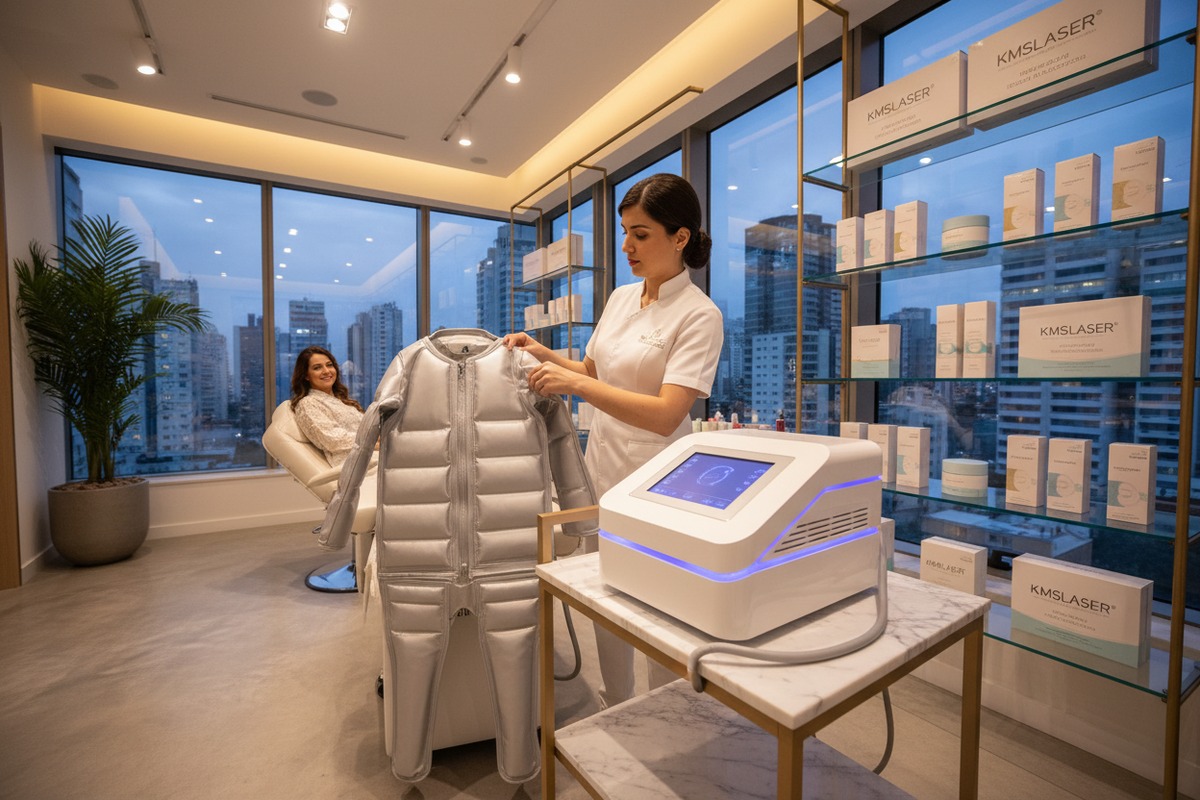
We typically use the AQL 2.5/4.0 standard for our beauty machine exports. This means we inspect a statistically significant number of boxes for "Critical," "Major," and "Minor" defects. A critical defect would be an incorrect health registration number on the label, which could lead to a total shipment rejection in South America. A minor defect might be a small scratch on the outer shipping carton.
Practical Field Tests
Before the goods leave China, your inspection team (or a third party) should perform a "Carton Drop Test." We drop the loaded carton from a height of 1.2 meters on its corners, edges, and faces. Afterward, we open the box to ensure the pressotherapy machine's plastic casing hasn't cracked and the internal retail box remains pristine. If the retail box is crushed inside, the cushioning is insufficient.
Digital and Documentation Verification
Modern retail in South America is increasingly digital. Many distributors now require QR codes on the packaging that link to digital warranty registration or instructional videos in Portuguese/Spanish. During inspection, we use a smartphone to scan every unique barcode and QR code to ensure they point to the correct URLs. We also weigh each box to ensure that no accessories—like the waist belt or power cord—are missing.
| Inspection Step | Tool/Method | Goal |
|---|---|---|
| Visual Check | Master Sample Comparison | Verify printing and finish quality |
| Drop Test | ISTA Standard | Ensure product survives rough handling |
| Barcode Scan | Handheld Scanner/Phone | Confirm retail scanning compatibility |
| Content Audit | Checklist / Scale | Verify all parts and manuals are inside |
Conclusion
Verifying pressotherapy machine packaging for South America requires a balance of structural durability, strict linguistic compliance, and high-end aesthetic appeal to pass both customs and consumer scrutiny.
Footnotes
1. Provides a comprehensive overview of medical device registration requirements. ↩︎
2. Details the ISTA 3A standard for simulating parcel delivery conditions. ↩︎
3. Explains AQL as a standard for determining acceptable quality in product batches. ↩︎
4. Defines the Edge Crush Test (ECT) for assessing corrugated material strength. ↩︎
5. Authoritative Wikipedia entry providing a detailed overview of Expanded Polyethylene foam. ↩︎
6. Clarifies the role of a local authorized representative in medical device compliance. ↩︎
7. Official source explaining the Pantone Matching System for consistent color reproduction. ↩︎

 English
  Español de México
  Deutsch
  Français
  العربية
  Русский