

When we analyze the returns and repair logs in our factory, nearly 80% of pressotherapy machine failures stem from cost-cutting measures during the initial sourcing phase air pump’s duty cycle rating 1. We see brand owners struggle with reputation damage because they prioritized a lower unit price over internal build quality, only to face massive recall costs later. It is painful to watch a promising beauty brand stumble because their OEM partner skipped critical durability tests or used inferior pneumatic components.
To avoid common quality pitfalls when sourcing pressotherapy machines, you must prioritize internal component durability over exterior aesthetics, audit the manufacturer’s aging test protocols, ensure packaging meets international drop-test standards, and verify consistent pressure calibration across all chambers to prevent client injury and brand liability.
Before you sign your next purchase order, consider these critical technical aspects that separate professional-grade equipment from disposable toys.
How can I identify if a pressotherapy machine's internal components will hold up under heavy salon use?
In our engineering department, we often tear down competitor units to understand why they failed after just a few months of salon use Incoming Quality Control 2. We frequently find that while the plastic shell looks sleek, the pneumatic heart inside is built with consumer-grade parts unable to withstand the 8-hour daily duty cycles required by busy clinics.
You can identify durable internal components by requesting a bill of materials that specifies industrial-grade solenoid valves instead of cheap rotary valves, verifying the air pump's duty cycle rating for continuous operation, and checking for adequate heat dissipation systems like heavy-duty heatsinks or cooling fans.
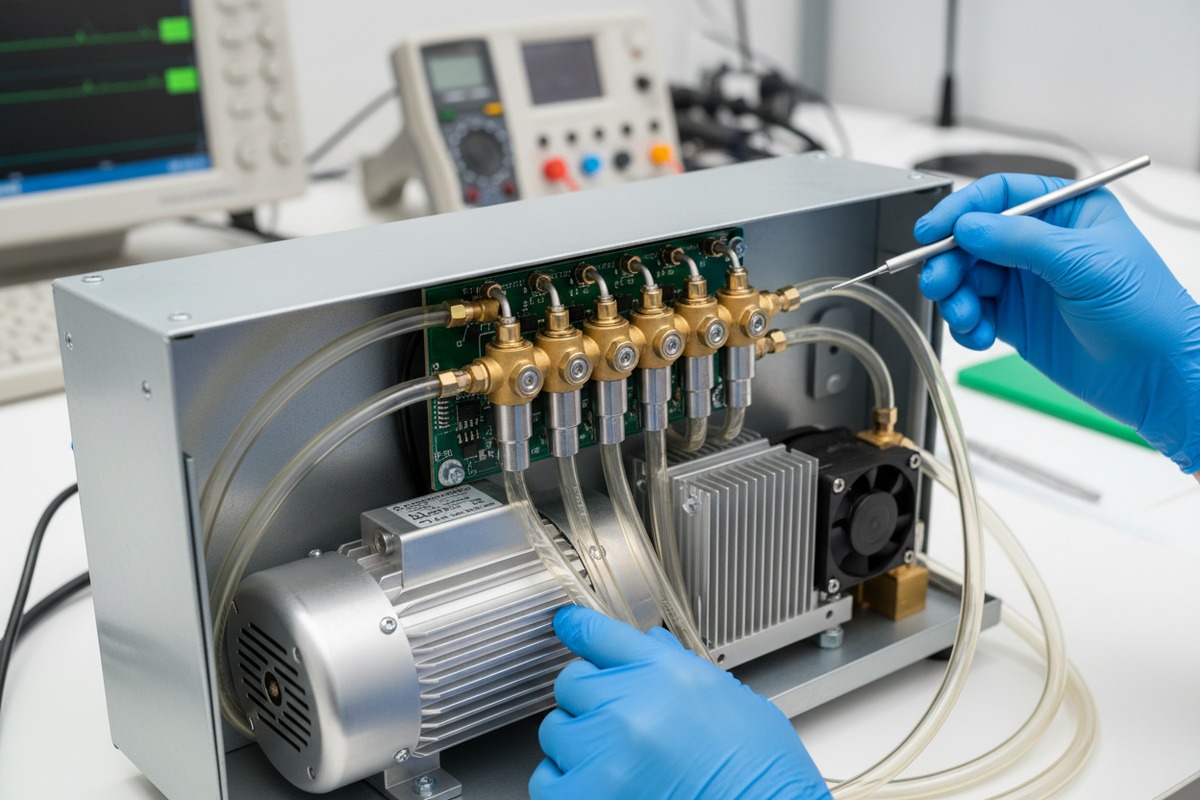
When you evaluate a sample, you need to look past the touchscreen interface and listen to the machine high-density EPE foam 3. A high-quality professional pressotherapy unit relies heavily on its air control system. The most common point of failure in cheaper units is the valve mechanism.
The Valve System: Solenoid vs. Rotary
In our production, we use independent solenoid valves 4 for each air chamber. When you run the machine, you might hear distinct clicking sounds. This is actually a good sign. It means individual valves are opening and closing precisely to control airflow. Budget manufacturers often use a "rotary distributor" or a mechanical cam system. These are silent but wear out physically due to friction. Once the seal inside a rotary valve wears down, the machine loses pressure, and cross-contamination of air pressure between chambers occurs, ruining the treatment effect.
The Air Pump Capacity
A salon-grade machine must generate consistent pressure (usually up to 200-240 mmHg) quickly. Weak pumps take too long to inflate large 24-chamber suits, reducing the total effective treatment time. Ask your supplier for the pump's flow rate (L/min). A robust system should offer high airflow to inflate the suit rapidly, ensuring the compression rhythm is maintained.
Heat Management
Electronics are the enemy of heat. During our R&D stress tests, we run machines for 48 hours straight. If a machine lacks proper internal ventilation or high-quality heatsinks on the power supply and pump motor, the pressure output will drop as the machine heats up.
Component Comparison Table
Here is a quick reference guide to help you distinguish between a hobbyist unit and a professional workhorse:
| Component | Professional Salon Grade | Budget/Home Grade |
|---|---|---|
| Air Control | Independent Solenoid Valves (high precision, long life) | Rotary/Mechanical Valves (wear out quickly, leak air) |
| Pump Type | Heavy-duty Piston or Diaphragm Pump | Small Membrane Pump (low flow, overheats) |
| Cooling | Active fan cooling + Aluminum heatsinks | Passive cooling (vent holes only) |
| Mainboard | Industrial PCB with isolated power supply | All-in-one generic board (prone to interference) |
| Tubing | Thick-walled silicone (anti-kink) | Thin PVC (cracks over time) |
What quality control red flags should I look for when auditing a Chinese manufacturer's production line?
When we host international buyers at our facility in Guangzhou, we encourage them to look at the "boring" parts of the factory, not just the showroom. Many suppliers will show you a pristine assembly line, but the real truth of quality control lies in the testing stations and the rejection bins.
Red flags during a production line audit include the absence of a dedicated "aging room" where machines run for 24–48 hours, a lack of individualized pressure calibration stations for every single unit, and no visible "Incoming Quality Control" (IQC) area for inspecting raw materials before assembly.
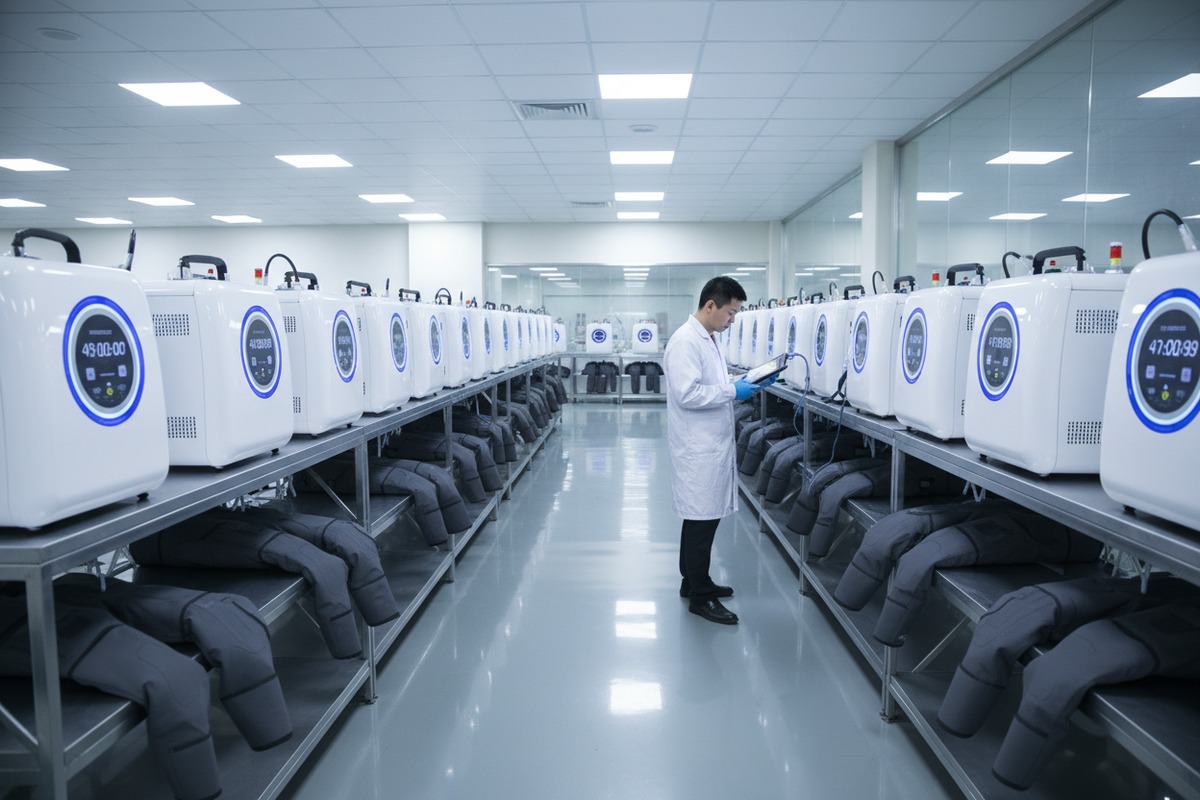
Auditing a factory requires a detective's mindset. You are not just looking for cleanliness; you are looking for process discipline. If you cannot visit in person, demand a video call tour of these specific areas.
The Missing "Burn-In" Room
The most critical red flag is the absence of an aging test 5 (burn-in) area. Electronic components and pumps often fail within the first 24 hours of operation if there is a manufacturing defect. In our factory, no machine leaves without undergoing a minimum 24-hour continuous run cycle. If you see finished machines being packed immediately after assembly without a day-long stop in a testing room, that is a major risk. Those machines will fail in your customer's hands, not the factory floor.
Lack of Individual Calibration
Pressotherapy machines 6 rely on sensors to stop inflation at the exact set pressure. If you see workers assembling units but don't see them hooking each one up to a master pressure gauge for calibration, be wary. Some factories batch-test (testing 1 out of 50). This is unacceptable for medical-aesthetic devices. Every single sensor has a tolerance variance; each machine must be software-calibrated to match its specific sensor.
Disorganized Incoming Quality Control (IQC)
Ask to see the warehouse where parts are stored. Are the motors and circuit boards sitting in open boxes on the floor? Or are they on shelves, labeled, and marked with "QC PASS" stickers? If the manufacturer doesn't check the raw materials before they start building, they are building your machines on a foundation of sand.
Supplier Audit Checklist
Use this table to score your potential manufacturer during a video or physical audit:
| Audit Checkpoint | Green Flag (Good) | Red Flag (Warning) |
|---|---|---|
| Aging Test | Dedicated room with machines running; logs attached to each unit. | No dedicated room; "we test it for 10 minutes" response. |
| Pressure Testing | Digital master gauges used to calibrate every port. | No calibration equipment visible; reliance on factory default settings. |
| Work Instructions | SOPs (Standard Operating Procedures) posted at every station. | Workers assembling from memory; no visual guides. |
| Rejection Bin | Clearly marked red bins for defective parts. | No rejection bins; defective parts mixed with good ones. |
| Suit Testing | Air-tightness test on every suit/garment. | Visual inspection of sewing only; no inflation test. |
How do I protect my shipment from the common packaging failures that lead to cosmetic defects during transit?
Our logistics team has learned the hard way that the journey from China to a US warehouse is incredibly violent. We have seen photos of crushed boxes and cracked screens simply because the packaging was designed for a static shelf, not a tossing ocean freighter or a careless forklift driver.
To protect your shipment, insist on double-wall corrugated cartons (K=K standard), replace brittle Styrofoam with high-density EPE foam that absorbs shock without cracking, and require corner guards and palletization for LCL shipments to prevent crushing during stacking and handling.
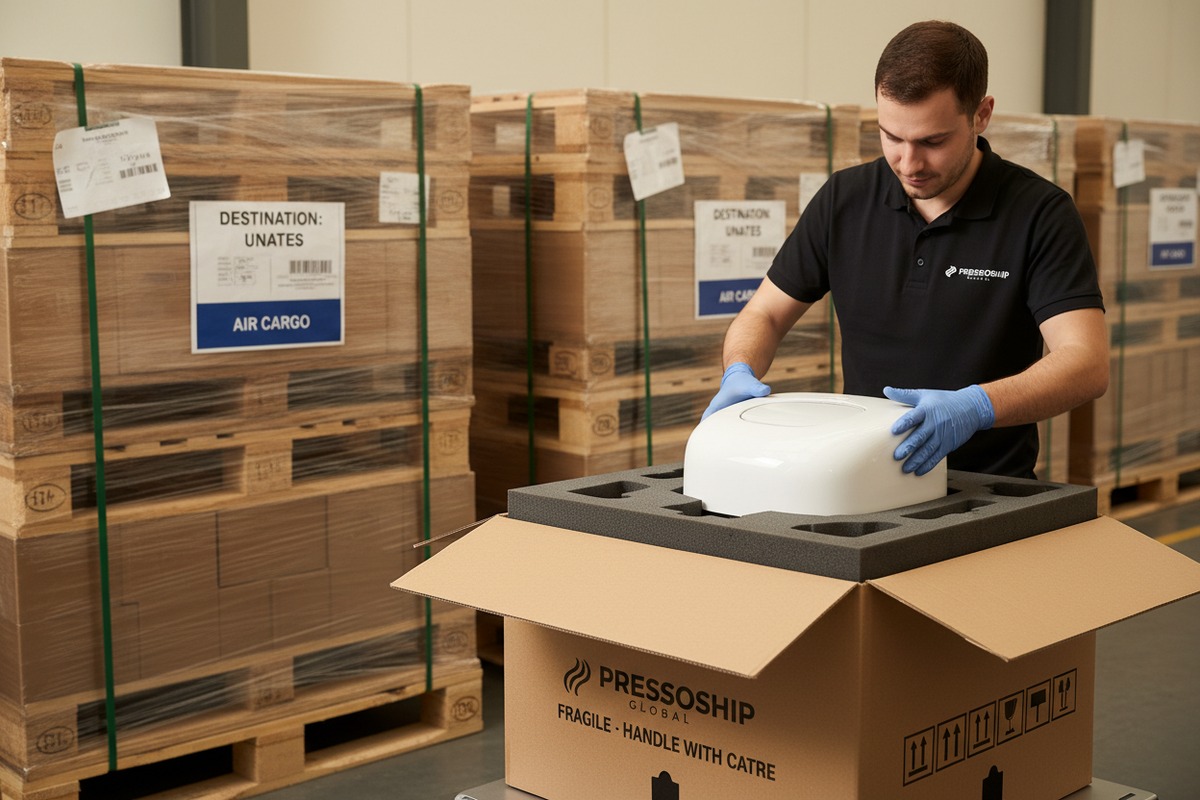
Packaging is often an afterthought for buyers, yet it is the only thing standing between your investment and a dumpster. A "broken on arrival" machine is not just a financial loss; it is a logistical nightmare involving insurance claims and angry customers waiting for replacements.
The Problem with Styrofoam (EPS)
Many budget manufacturers use white Styrofoam (EPS). While cheap, EPS is brittle. If a box is dropped, the Styrofoam often cracks or crumbles, leaving the heavy machine creates free to bounce around inside the box. Once the machine starts moving inside the packaging, cosmetic damage (scratches, dents) is inevitable.
We strictly use EPE foam (Expanded Polyethylene). It is the white, slightly spongy foam that has "memory." It absorbs impact and rebounds. It costs slightly more, but it virtually eliminates impact damage.
Carton Strength Matters
Cardboard comes in different grades. Standard "A=B" or "A=A" boxes are fine for clothes, but for heavy machinery, you need "K=K" (double-wall, high-hardness) cartons. You can test this yourself: if you can easily dent the edge of the box with your thumb, it is not strong enough.
The Palletization Rule
If you are shipping LCL (Less than Container Load), your boxes will be stacked with random cargo from other companies. Heavy items might be placed on top of yours. Always require your supplier to palletize the goods and use plastic wrap and strapping bands. This turns individual boxes into a single, solid unit that forklifts must handle from the bottom, preventing individual boxes from being thrown around.
Drop Test Standards
Ask your supplier if they perform an ISTA-series drop test 7. This involves dropping the packed box on a corner, an edge, and a flat face from a specific height. If they don't have a protocol for this, they are guessing.
We constantly remind our OEM clients that they are selling a result, not just a machine. If a salon client pays for lymphatic drainage 8 but receives uneven pressure due to poor calibration, they won't blame the factory in China; they will blame your brand. The feedback loop is brutal and immediate in the age of online reviews.
Inconsistent pressure calibration risks causing physical harm such as bruising or capillary damage to clients, leads to ineffective treatments that damage your brand's credibility, and can result in significant legal liability if the device fails to release pressure during a malfunction.
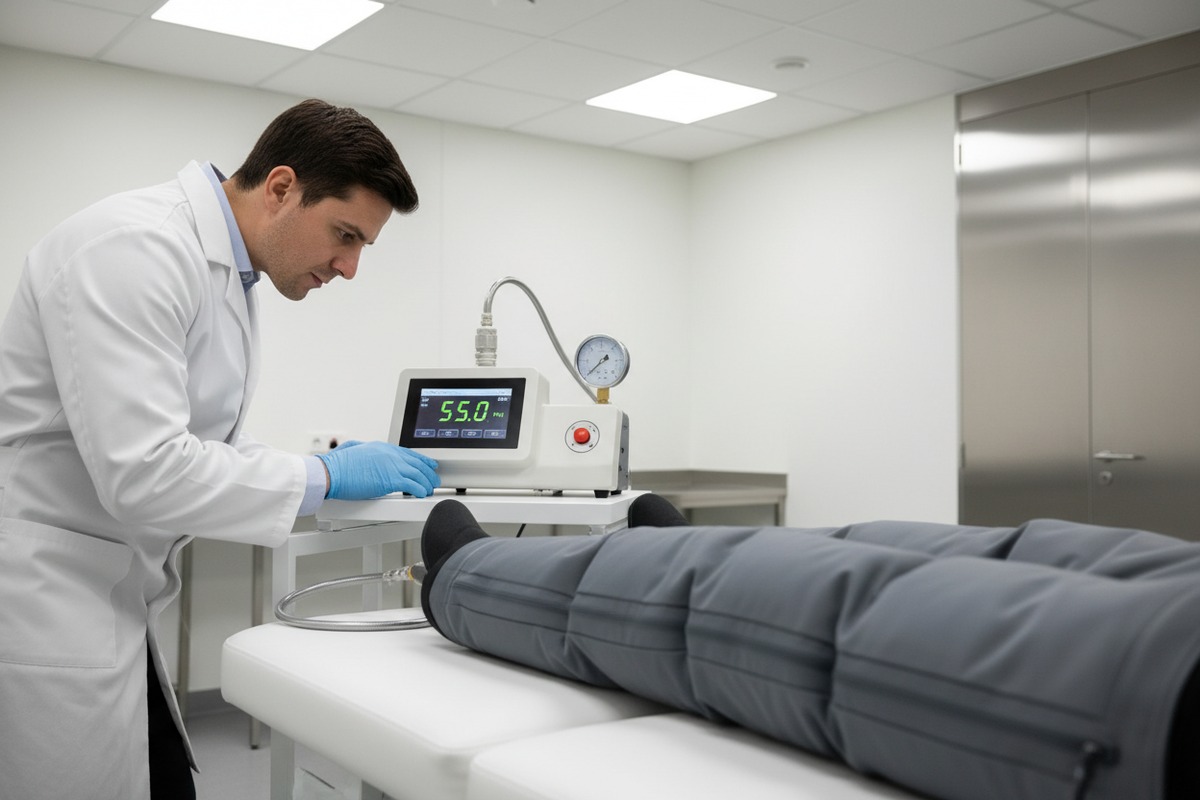
Pressotherapy is a mechanical force applied to the human body. Unlike an LED light, it physically squeezes tissue. This carries inherent biological risks that must be managed through precise engineering.
Safety Risks: Bruising and Pain
If a machine is set to 40 mmHg but delivers 80 mmHg due to a faulty sensor or poor calibration, the client will experience pain. In elderly clients or those with fragile veins, this can cause significant bruising or even damage to the lymphatic vessels. Your brand cannot afford the liability of a machine that hurts people.
Efficacy Risks: The Uneven Squeeze
Effective lymphatic drainage requires a "gradient" pressure—higher at the foot, slightly lower at the calf, and lower still at the thigh. This pushes fluid up toward the lymph nodes.
If the machine lacks calibration, Chamber 1 (foot) might be 30 mmHg while Chamber 2 (calf) is accidentally 50 mmHg. This creates a "tourniquet effect," trapping fluid in the foot rather than moving it up. The treatment becomes useless, and therapists will notice the lack of results immediately.
The 24-Chamber Challenge
The more chambers a suit has (e.g., 16 or 24 channels), the harder it is to calibrate. A cheap 24-chamber machine often lacks the processing power to manage pressure in 24 individual zones simultaneously. This results in "pressure lag," where the machine struggles to keep up with the sequence. Sourcing a complex machine requires verifying that the manufacturer has the software algorithms to handle the complexity.
Consequences of Poor Calibration
The impact on your business is measurable:
| Consequence | Impact on Business |
|---|---|
| Ineffective Treatment | Therapists cancel subscriptions/leases; negative word-of-mouth. |
| Client Injury | Lawsuits, insurance claims, and potential FDA/regulatory recall. |
| Technical Support Overload | Your support team is flooded with calls about "weird noises" or "painful cuffs." |
| Brand Erosion | Your logo becomes associated with "cheap" and "unsafe" equipment. |
Conclusion
Sourcing pressotherapy machines is not just about finding the lowest price on Alibaba; it is about ensuring the safety and efficacy of a medical-aesthetic device. By auditing the internal components (valves and pumps), verifying production line testing protocols, insisting on impact-resistant packaging, and prioritizing pressure calibration, you protect your brand from disaster. A reliable OEM partner should be open to these discussions and transparent about their processes. Don't compromise on the "invisible" quality—that is where your reputation lives.
Footnotes
1. Defines air compressor duty cycle as the ratio of run time to total cycle time. ↩︎
2. Explains IQC as the initial inspection of raw materials to prevent production defects. ↩︎
3. Outlines the properties and advantages of EPE foam for protective packaging. ↩︎
4. Details the working principle and function of solenoid valves in controlling fluid flow. ↩︎
5. Describes burn-in testing, a type of aging test for electronics to identify early failures. ↩︎
6. Explains what pressotherapy is and its benefits for health and aesthetics. ↩︎
7. Provides an overview of ISTA standards for packaging, including various test series. ↩︎
8. Defines lymphatic drainage massage and its benefits for reducing swelling and lymphedema. ↩︎

 English
 Español de México
 Deutsch
 Français
 العربية
 Русский
