

In our years of exporting beauty equipment to the US and Europe, we have seen shipments held at borders simply because the buyer failed to ask the right questions about intellectual property 1. When we develop a new pressotherapy casing or update our air compression software, we prioritize patent clearance, but we know that not every factory follows these strict protocols. The fear of having your investment seized by customs is valid, but with the right due diligence, you can mitigate these risks effectively.
To avoid seizures, you must rigorously verify your supplier’s patent ownership via the CNIPA database and conduct a Freedom-to-Operate search for your target market. Secure a manufacturing agreement with strong indemnity clauses and require specific IP authorization documents for customs to prove you have the legal right to import the specific technology.
Navigating the complex world of international IP laws requires a proactive approach, starting with confirming who actually owns the design you intend to buy.
How can I verify that my Chinese manufacturer actually owns the design patents for my pressotherapy machines?
We often encounter clients who are surprised to learn that the “factory” they found online is actually a trading company with no legal rights to the products they sell CNIPA database 2. When our engineering team registers a new utility model for a compression pump, we receive specific documentation that proves our ownership, and this is exactly what you should demand from your potential partners to ensure they aren’t selling you a liability.
You can verify ownership by requesting the original patent certificate and cross-referencing the patent number on the official CNIPA database. Ensure the registrant name matches your supplier’s business license exactly, and check the legal status to confirm the patent has not expired or been invalidated due to non-payment of annual fees.
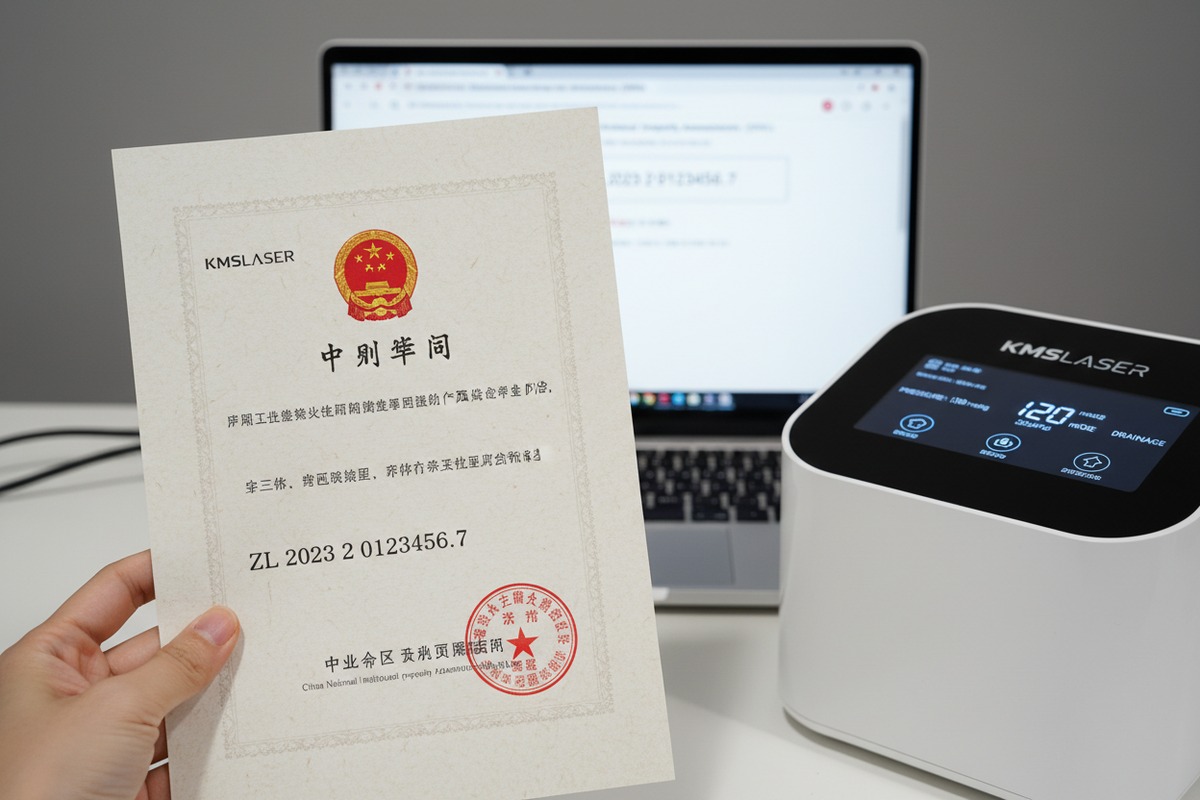
Understanding the Chinese Patent Landscape
In China, the patent system operates differently than in the West, and understanding these nuances is critical for verified sourcing Freedom-to-Operate (FTO) analysis 3. There are three main types of patents we deal with in the manufacturing sector: Invention Patents, Utility Model Patents 4, and Design Patents.
For pressotherapy machines, Utility Model Patents are the most common risk factor. These are often called "mini-patents" because they are granted quickly (usually within 6-12 months) without a rigorous substantive examination USPTO's TESS database 5. This means a factory can easily file a patent for a technology that already exists. However, just because they hold the certificate doesn't mean the patent is stable or valid if challenged FDA 510(k) clearance 6.
Step-by-Step Verification Process
To ensure we are compliant, or when we check competitors, we follow a strict verification protocol that you should also adopt:
- Request the Certificate Number: Ask your supplier for the specific patent number (e.g., ZL 2021 2 XXXXXX.X). If they hesitate, it is a red flag.
- Use the CNIPA Database: The China National Intellectual Property Administration (CNIPA) is the official source. While the interface is in Chinese, you can use translation tools or third-party portals like Espacenet (European Patent Office) which indexes Chinese patents.
- Match the Owner: The "Patentee" listed on the document must match the company name on the Proforma Invoice and Business License. If the patent belongs to "Wenzhou X Factory" but you are paying "Guangzhou Y Trading," you have no protection.
- Check Legal Status: A certificate is just a piece of paper. You must verify the "Legal Status" online to ensure the annual fees have been paid. In China, if the fee isn't paid, the patent rights lapse immediately, making the design public domain—or worse, someone else might have patented it.
The "Utility Model" Trap
Many suppliers claim they have "patented technology." In reality, they often hold a Utility Model for a minor internal bracket or a specific air valve connection, not the entire machine. You need to read the Claims section of the patent. If they claim to patent the whole machine but the document only covers the "connector mechanism," you are not protected against design infringement claims regarding the machine's casing or interface.
Comparison of Chinese Patent Types
| Patent Type | Protection Scope | Grant Time | Examination Rigor | Relevance to Pressotherapy |
|---|---|---|---|---|
| Invention Patent | New technical solutions (e.g., a new lymphatic drainage algorithm). | 2-3 Years | High (Substantive Exam) | Rare in generic machines; high value. |
| Utility Model | Shape or structure (e.g., the specific layout of the air pump internal chambers). | 6-12 Months | Low (No Substantive Exam) | Most Common. High risk of invalidity. |
| Design Patent | Aesthetic appearance (e.g., the white slanted casing shape). | 4-6 Months | Low (No Substantive Exam) | Critical for avoiding "copycat" seizures. |
What steps should I take to ensure my private-label pressotherapy machine design doesn't infringe on US trademarks?
When we work on OEM projects for big brands, we meticulously check that the logos and housing colors don’t mimic established market leaders, as we know this can trigger immediate legal action. Even if our machine functions perfectly, using a font or color scheme that resembles a competitor’s “trade dress 7” can cause your goods to be flagged as counterfeits upon arrival in the US.
Conduct a comprehensive search using the USPTO’s TESS database for both word marks and design marks similar to your machine’s appearance. Avoid mimicking the specific color schemes or trade dress of major competitors, as visual similarities in device shape can trigger infringement claims even if the logo is different.

Visual Similarity and Trade Dress
In the beauty industry, intellectual property goes beyond just the brand name. It extends to Trade Dress—the visual appearance of a product that signifies its source to consumers. For pressotherapy machines, this could be the specific slope of the control unit, a unique color combination (like a specific medical grey and blue), or the layout of the buttons.
If you source a machine that looks "inspired by" a market leader like Tactile Medical or other major US brands, you are at risk. US Customs and Border Protection (CBP) 8 can seize goods that are "confusingly similar" to registered trademarks.
Conducting a Thorough Clearance Search
Before confirming your order with us or any manufacturer, you should perform a multi-layered check:
- USPTO TESS Search: Search for the brand name you intend to use. Also, search for the model names your supplier uses. Sometimes suppliers put names like "LymphoPress" on the casing, which might be trademarked by someone else in the US.
- Reverse Image Search: Take the marketing photos of the machine provided by the supplier and run them through Google Lens. If the results show a major US or European brand with the exact same machine, abort. The supplier is likely selling a knock-off of a protected design.
- Design Patent Check: While this overlaps with patents, design patents 9 function similarly to trademarks in protecting the "look." If a competitor has a design patent on a "square white console with a 45-degree screen," you cannot import a generic version of that shape.
The Danger of Generic Branding
We often see suppliers applying generic names like "Doctor Life" or "Air Relax" to machines. These may be registered trademarks in the US. If you import a machine with these logos, even if you bought it legally in China, it is considered a counterfeit in the US.
Best Practice: Always private label. Create your own unique brand name, register it, and have the factory print your logo. Never import machines with the factory's generic branding or no branding at all if the shape is recognizable.
Risk Assessment Table: Branding & Design
| Design Element | High Risk Scenario | Low Risk Scenario |
|---|---|---|
| Casing Shape | Identical to a famous brand (e.g., exact copy of a Normatec unit). | Custom mold or a generic public-domain shape used for 10+ years. |
| Logo/Name | "Pressotherapy Pro" (Generic but risky) or Supplier's Brand. | Your registered trademark applied at the factory. |
| Color Scheme | Distinctive color combos (e.g., Tiffany Blue) used by competitors. | Standard medical white or neutral greys. |
| Interface | Copying the exact software UI of a competitor. | Custom UI designed for your specific brand identity. |
How do I check if the pressotherapy technology I'm sourcing is legally cleared for the North American market?
Our regulatory team spends considerable time clarifying to clients that having FDA clearance does not mean you have the right to use the technology inside the machine. While we ensure our circuits and air pumps meet safety standards, we also advise you to look deeper into the mechanisms, as patent holders in the US are increasingly using the ITC to block imports of infringing compression technology.
Legal clearance requires a Freedom-to-Operate (FTO) analysis conducted by an IP attorney to ensure specific features like air compression cycles do not infringe active US patents. Do not assume FDA 510(k) clearance equates to IP rights, as regulatory approval and intellectual property ownership are completely separate legal frameworks.

The Difference Between FDA and IP Clearance
This is the single most common misconception we face. A 510(k) clearance from the FDA simply means the device is safe and effective and substantially equivalent to a device already on the market. It does not check for patent infringement. In fact, you can legally get FDA clearance for a device that infringes ten different patents.
If you import that FDA-cleared device, the patent holder can sue you or block your import.
Freedom-to-Operate (FTO) Search
For pressotherapy, the technology risks usually lie in the pneumatic compression sequence. Specific patterns of inflation and deflation (e.g., "peristaltic pulse dynamic") might be patented by companies like Tactile Medical or Bio Compression Systems.
To check clearance:
- Hire an IP Attorney: Before placing a large OEM order, have a US-based attorney conduct an FTO search. They will look at the specific claims of valid US patents (e.g., "A method of sequential compression comprising steps A, B, and C").
- Analyze the Technical Manual: Send us (the manufacturer) a request for the technical detailed operation of the compression cycles. We can provide the timing and pressure sequence data. Your attorney compares this against the patent claims.
Section 337 Investigations
The US International Trade Commission (ITC) conducts Section 337 investigations to ban unfair imports. This is faster and more powerful than a standard lawsuit. Recently, we have seen this used in the massage gun industry, and it is spreading to other recovery devices. If a patent holder files a Section 337 complaint, they can get a General Exclusion Order (GEO). This bans all infringing products from entering the US, regardless of who the manufacturer is.
Specific Pressotherapy Tech Risks
When sourcing, pay attention to these high-risk features:
- Overlapping Chambers: Some patents cover the specific way air chambers overlap to prevent backflow.
- Smart Sensing: Technology that detects the limb size and auto-adjusts pressure is often heavily patented.
- Connectivity: Apps that control the device via Bluetooth. The software and the communication method may be protected.
If your supplier offers "Proprietary Smart Auto-Calibration," ask for proof that they developed it or that it doesn't infringe on major US patents. If they can't answer, stick to standard, simpler analog or basic digital controls which are safer from an IP perspective.
What IP documentation do I need from my supplier to prevent my shipment from being seized by customs?
Before we ship any order to North America, our logistics team prepares a comprehensive document packet to accompany the commercial invoice, knowing that missing paperwork is the fastest way to trigger a customs hold. We proactively provide certifications, but you must demand a specific set of authorization letters and legal agreements to protect your company if questions arise at the port of entry.
Your supplier must provide a signed Letter of Authorization granting you rights to sell the product, along with valid patent certificates and a manufacturing agreement containing IP indemnification clauses. These documents prove to customs that you have the legal right to import and distribute the specific pressotherapy technology.

The Customs Defense Package
Customs officers are not patent judges, but they are enforcers. When they flag a shipment, they are looking for evidence of legitimacy. If you cannot produce a paper trail linking the product to a legitimate rights holder, they will seize it.
You need to compile an "IP Dossier" for every shipment. Here is what it must contain:
1. Letter of Authorization (LOA)
This is a document from the factory (us) to you. It should state:
- We are the manufacturer.
- We own the design (citing the Chinese patent number).
- We authorize [Your Company Name] to import, distribute, and sell this product in the [USA/Canada].
- It should be signed and stamped with the company chop.
2. The NNN Agreement (Non-Disclosure, Non-Use, Non-Circumvention)
This is vital for private labeling. If you customized the design, the NNN agreement 10 proves that you own the IP, and the factory is just manufacturing it for you. If customs questions why a US brand is coming from a Chinese factory, this contract clarifies the relationship.
3. Indemnification Clause
In your Purchase Order or Manufacturing Agreement, you must have an indemnity clause. This states that if the products are found to infringe on any third-party IP, the supplier agrees to pay for the legal costs and damages.
- Note: Enforcing this against a Chinese factory can be hard, but having it makes the factory more cautious about what they sell you. It also shows "good faith" to US authorities that you attempted to mitigate risk.
4. Patent Certificates (Translated)
Include copies of the Chinese patent certificates for the machine, translated into English. While a Chinese patent doesn't apply in the US, it helps prove the product isn't a cheap counterfeit of a US product but has its own registered design history in the country of origin.
Recording IP with Customs
If you develop your own brand or unique design:
- US Customs (CBP): Record your trademarks and copyrights with CBP. This turns customs into your ally, helping them identify and stop other people from importing counterfeits of your brand.
- China Customs (GACC): We also recommend recording your IP with Chinese customs. This prevents other unauthorized factories from exporting copies of your design out of China.
Essential Document Checklist
| Document | Purpose | Who Provides It? |
|---|---|---|
| Letter of Authorization | Proves you are an authorized distributor/importer. | Manufacturer |
| Patent Certificates | Evidence of design origin and ownership. | Manufacturer |
| Trademark Registration | Proof that you own the brand name on the box. | You (Buyer) |
| Indemnity Agreement | Liability shift in case of lawsuits. | Both (Contract) |
| BOM (Bill of Materials) | Sometimes requested to prove components aren't sourced from banned entities. | Manufacturer |
Conclusion
Sourcing pressotherapy machines from China offers immense opportunity, but it requires navigating a minefield of intellectual property risks. By moving beyond simple Alibaba searches and conducting deep due diligence—verifying CNIPA patents, ensuring FTO in the US, and securing robust indemnity agreements—you protect your business from catastrophic seizures. Remember, in international trade, paperwork is as important as the product itself. Ensure your supplier is a true partner who provides the transparency and documentation necessary to clear customs smoothly.
Footnotes
1. Explains the fundamental concept of intellectual property and its various forms. ↩︎
2. Provides access to the official Chinese intellectual property database for patent verification. ↩︎
3. Defines Freedom-to-Operate analysis and its importance in avoiding patent infringement risks. ↩︎
4. Explains the nature and characteristics of utility model patents, common in China. ↩︎
5. Provided the direct official link to the USPTO’s Trademark Electronic Search System (TESS) database. ↩︎
6. Explains the FDA’s premarket notification process for medical devices and its scope. ↩︎
7. Clarifies the concept of trade dress as a form of intellectual property protecting product appearance. ↩︎
8. Links to the official government agency responsible for border security and trade enforcement. ↩︎
9. Describes what design patents protect and their role in intellectual property for product appearance. ↩︎
10. Defines the NNN agreement and its importance in protecting IP when working with Chinese partners. ↩︎

 English
 Español de México
 Deutsch
 Français
 العربية
 Русский
