

When we assemble our pressotherapy air compression suits, we see how one weak component can ruin a shipment. An unprotected contract can drain your budget and leave you without inventory.
Protecting pressotherapy contracts requires a dual-jurisdiction approach: use NNN agreements and CIETAC arbitration for China-side enforcement, while ensuring FDA 510(k) compliance and UCC-aligned quality terms for US market entry. This hybrid strategy effectively mitigates delivery delays and technical non-compliance risks.
Navigating international trade law is complex, but these specific steps will keep your business safe and your supply chain moving.
How do I ensure my pressotherapy machine contract is enforceable under both Chinese and US law?
Shipping units to New York or Los Angeles reveals a common fear: legal loopholes. We have found that a contract perfectly valid in the US might be useless in China.
To ensure dual enforceability, draft a bilingual contract with Chinese as the prevailing language for local disputes. Use CIETAC for arbitration in China to allow for asset seizure, while including US choice-of-law clauses for litigation regarding domestic distribution and FDA liability issues.

The Power of the Bilingual Contract
A common mistake is using an English-only document. While it looks professional, Chinese courts often require certified translations. This wastes time and money. At our facility, we always recommend bilingual contracts. This ensures both our engineers and your legal team understand the exact same terms. If a dispute happens in China, the Chinese version usually takes precedence. This makes the legal process much faster.
Jurisdiction and the "Company Chop"
In the United States, a signature is king. In China, the "Company Chop" or official seal is the only thing that truly matters. A contract without the official red stamp of the Chinese entity is often not worth the paper it is on. You must verify that the name on the seal matches the business license. We suggest including a clause that names CIETAC 1 (China International Economic and Trade Arbitration Commission) as the arbitration body. China is a member of the New York Convention. This means CIETAC awards are enforceable in the US, and US arbitration awards can be enforced in China.
Balancing PRC Law and the UCC
For US buyers, the Uniform Commercial Code 2 (UCC) Article 2 governs the sale of goods. However, if your supplier is in Guangzhou, PRC Contract Law applies to the production phase. Your contract should be a "hybrid." It must cover the production and export rules of China and the import and safety rules of the US.
| Feature | Chinese Law Focus | US Law (UCC) Focus |
|---|---|---|
| Validity | Official Company Chop | Authorized Signature |
| Language | Prevailing Chinese | English |
| Dispute Body | CIETAC / Local Courts | AAA / Federal Courts |
| Penalty Cap | Often 30% of value | Based on "Reasonableness" |
Why Arbitration Beats Litigation
Litigating in a foreign court is expensive. If you sue a Chinese supplier in a US court, you may win a judgment. But if that supplier has no assets in the US, you cannot collect your money. Arbitration through CIETAC is often faster. It is also more likely to be respected by Chinese banks and local authorities.
What quality assurance terms should I include to protect my brand from substandard equipment?
We maintain strict standards on our production floor because one faulty valve ruins your reputation. Substandard equipment is a nightmare for your distribution chain and leads to costly returns.
Include detailed technical specifications, a 30/70 payment split tied to third-party inspections (SGS/TUV), and "Right to Reject" clauses. Explicitly define acceptable defect rates and warranty periods for internal pumps and sleeve materials to ensure consistent high-end output.
Defining Technical Specifications
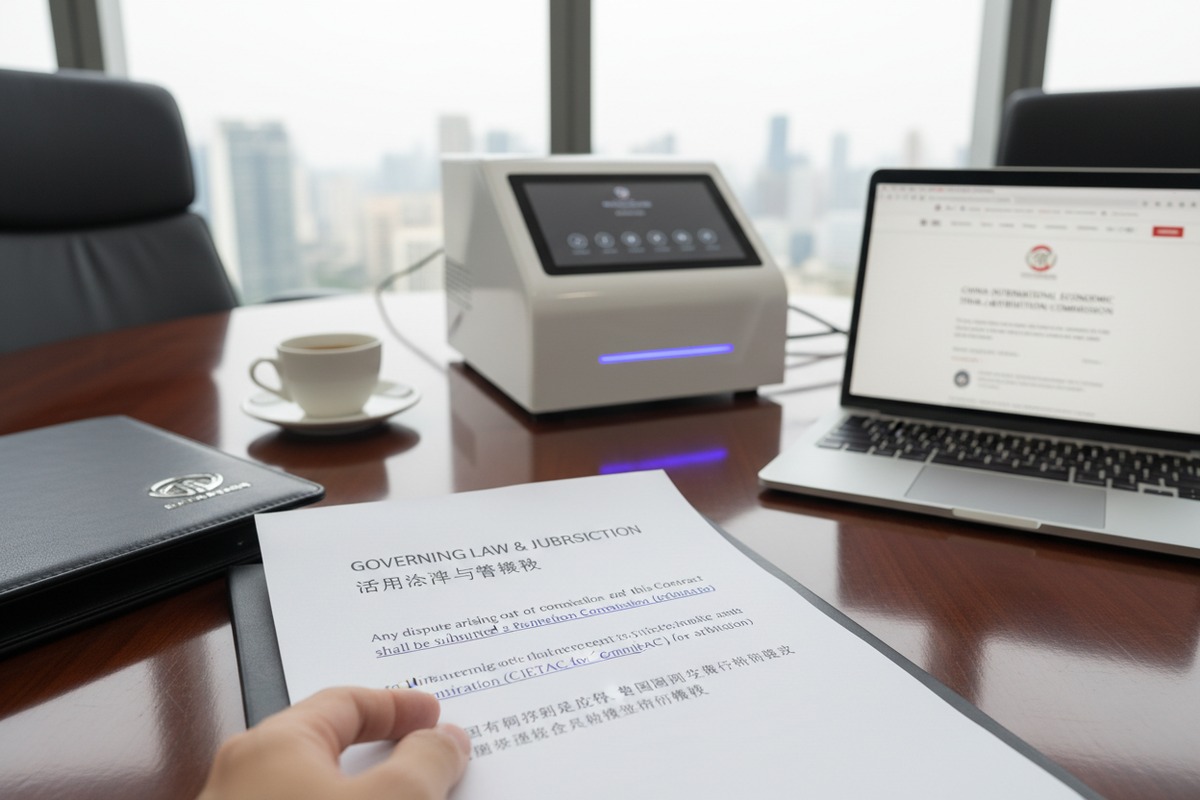
Vague terms like "high quality" have no legal meaning. You need to list the exact components. For pressotherapy machines, focus on the pump pressure (mmHg), the material of the compression suit (e.g., medical-grade TPU), and the durability of the connectors. If the machine does not meet these specific numbers, it is a breach of contract. We often include the technical spec sheet as an "Annex" to the main contract so there is no confusion.
Third-Party Inspections
Never pay the final balance until an independent inspector visits the factory. Companies like SGS or V-Trust can check the machines for you. They will run the air pumps for hours to ensure they do not overheat. In our experience, knowing an inspection is coming keeps the production team focused on quality. Your contract should state that if the inspection fails, the supplier pays for the second inspection.
The "Right to Reject" and FDA Compliance
Pressotherapy machines are often classified as medical devices 3 by the FDA. If the machines arrive and do not match the FDA 510(k) filing 4 or have cosmetic defects, you need the right to reject the entire batch. Substandard equipment can lead to "Import Alerts," where the FDA detains your goods without examination.
| Component | Standard Requirement | Buyer's Protection Clause |
|---|---|---|
| Air Pump | 10,000+ hours lifespan | 2-year replacement warranty |
| Suit Material | TPU / Anti-bacterial | 0% leakage tolerance upon arrival |
| Voltage | 110V (US Standard) | Rejection if non-standard |
| Noise Level | Under 50dB | Performance-based penalty |
Warranty and Replacement Parts
Shipping a 20kg machine back to China for repair is not realistic. It costs too much. Instead, negotiate for "Spare Parts Units." Your contract should require the supplier to include 2-3% extra valves, hoses, and motherboards for free. This allows you to provide immediate service to your US customers without waiting for international shipping.
How can I safeguard my intellectual property and private label rights during the OEM process?
While developing new designs, we prioritize IP security. If you do not lock down your trademarks and designs in China, a competitor might register them before you do.
Safeguard IP by registering trademarks in China via the "First-to-File" system and signing a China-centric NNN agreement. Include clauses that clearly state the buyer owns all custom molds, software code, and logo designs developed during OEM production.

The NNN Agreement vs. The NDA
A standard US Non-Disclosure Agreement (NDA) is often useless in China. You need an NNN agreement 5: Non-disclosure, Non-use, and Non-circumvention.
- Non-use: The factory cannot use your design to make products for other customers.
- Non-circumvention: The factory cannot sell directly to your customers.
- Non-disclosure: They cannot share your secrets with third parties.
This agreement must be governed by Chinese law to be effective.
China's "First-to-File" Trademark System
In the US, the first person to use a logo owns it. In China, the first person to register it owns it. We have seen "trademark squatters" register a US brand's logo in China and then block that brand from exporting its own goods! You must register your trademark with the China National Intellectual Property Administration 6 (CNIPA) before you even start negotiations.
Ownership of Molds and Tooling
If you pay for a custom mold to make a unique pressotherapy control unit, you must own that mold. A common trick is for factories to keep the mold and use it for other clients. Your contract should state that the buyer owns the mold and can move it to another factory at any time.
| IP Asset | Protection Method | Essential Contract Clause |
|---|---|---|
| Brand Logo | CNIPA Registration | "Seller acknowledges Buyer's sole ownership." |
| Product Design | Design Patent | "Molds remain the property of Buyer." |
| Software UI | NNN Agreement | "No reverse engineering permitted." |
| Client List | Non-Circumvention | "Penalty of 3x order value for direct sales." |
Software and Firmware IP
Modern pressotherapy machines use touchscreens and custom software. Ensure your contract specifies that the "Object Code" and "Source Code" for any custom user interface belong to you. This prevents the supplier from selling your specific operating system to your competitors.
Which dispute resolution and payment terms will best mitigate my risk of delivery delays?
We track every shipment to avoid logistics bottlenecks. However, without liquidated damages and smart payment structures, you have no leverage when a factory falls behind schedule.
Mitigate risks using a 30% deposit and 70% balance payment after inspection. Include liquidated damages of 0.5%–1% of the order value per day of delay. Opt for CIETAC arbitration to ensure faster, enforceable resolutions within China.
The 30/70 Payment Rule
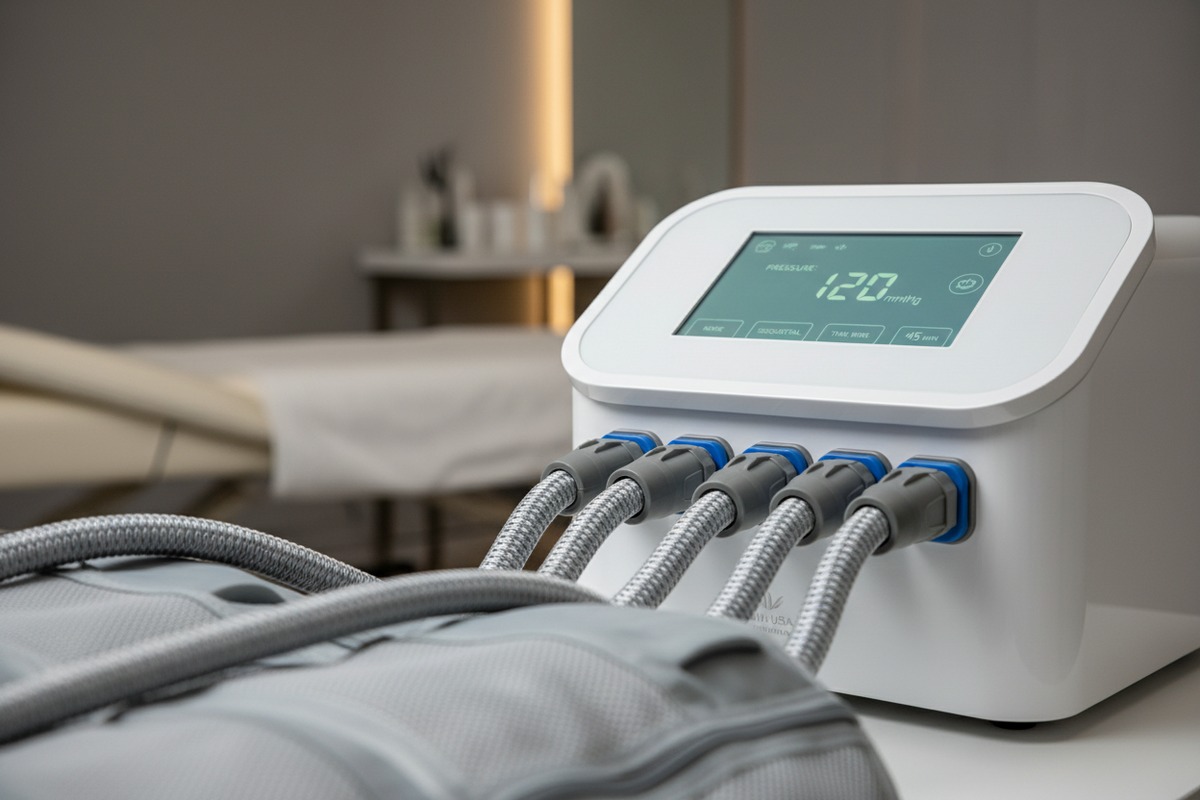
The most secure way to source from China is the 30% deposit and 70% balance structure. The 30% covers the supplier's raw material costs. The 70% is your "stick." You only pay it after the goods pass inspection and are ready to be loaded onto the ship. Never pay 100% upfront. Once the money is gone, you lose all your leverage.
Liquidated Damages for Delays
Delayed deliveries mean empty shelves and unhappy customers in the US. You should include a "Liquidated Damages" clause. A standard rate is 0.5% to 1% of the total order value for every day the shipment is late. Under Chinese law, these penalties are enforceable as long as they do not exceed 30% of the total contract value. This gives the factory a strong financial reason to prioritize your order.
Force Majeure in the Post-COVID Era
Many suppliers now try to use "Force Majeure" to excuse any delay, including power outages or labor shortages. You must define Force Majeure strictly. It should only cover truly unavoidable events like natural disasters. It should not cover "market fluctuations" or "general supply chain issues."
Managing Risk Transfer (Incoterms)
When does the risk pass from the factory to you? Most China sourcing is done via FOB (Free on Board). This means the supplier is responsible until the goods are on the ship. We suggest using a freight forwarder that you control. This gives you more visibility into where your pressotherapy machines are during transit.
Resolving Disputes via CIETAC
If a dispute arises over a delay, CIETAC arbitration is usually the best path. It is private, faster than a court case, and the arbitrators often have more experience with international trade. Make sure your contract specifies the city for arbitration (like Guangzhou or Shanghai) to keep costs manageable for your legal team.
Conclusion
Secure your sourcing by combining local Chinese legal protections with US regulatory compliance to build a resilient and profitable beauty machine brand today.
Footnotes
1. Official website of the China International Economic and Trade Arbitration Commission. ↩︎
2. Provides information on Uniform Commercial Code Article 2 governing the sale of goods. ↩︎
3. Explains the FDA’s definition and classification criteria for medical devices. ↩︎
4. HTTP 404 ↩︎
5. Explains the purpose and components of NNN agreements for China manufacturing. ↩︎
6. Official website of the Chinese government body responsible for intellectual property. ↩︎
7. Defines liquidated damages and their enforceability in contract law. ↩︎

 English
 Español de México
 Deutsch
 Français
 العربية
 Русский
