
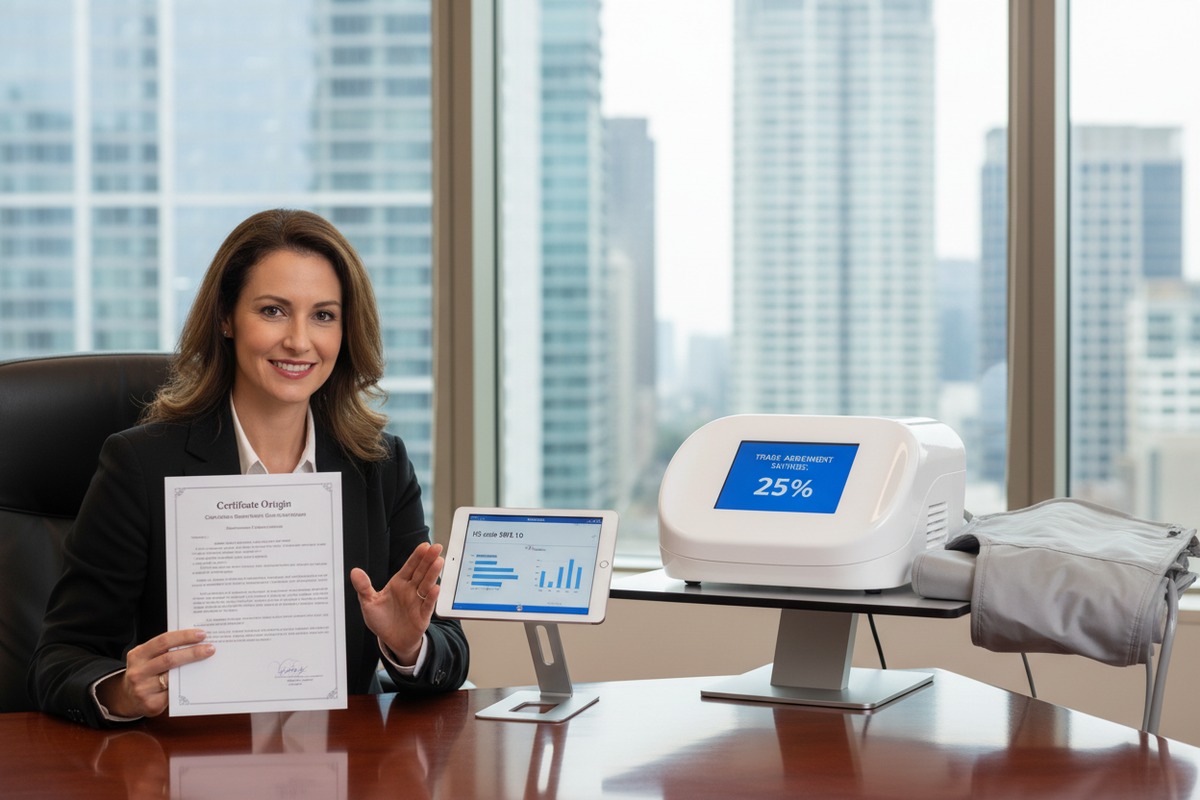
In our manufacturing facility in Guangzhou, we ship hundreds of pressotherapy machines 2 to distributors worldwide. The question that comes up most often? Tariffs. Importers are paying thousands more than they need to simply because they don’t understand how trade agreements work. That’s money leaving their margins—and yours.
To lower pressotherapy machine import costs from China, importers should leverage applicable Free Trade Agreements by obtaining proper Certificates of Origin, accurately classifying goods under HS code 9019.10, and working closely with their Chinese supplier to ensure compliance with Rules of Origin requirements for reduced or zero tariff treatment.
This guide will walk you through every step. From determining your regional eligibility to getting the right paperwork from your supplier, you’ll learn exactly how to cut your landed costs on bulk beauty equipment orders.
How do I determine if my specific region qualifies for duty-free imports of pressotherapy machines from China?
Our export team handles shipments to over 50 countries each year. One thing we've learned is that eligibility for duty-free treatment varies wildly depending on where you're located. What works for a buyer in Singapore won't work for someone in the United States.
To determine if your region qualifies for duty-free pressotherapy imports, check whether your country has a signed Free Trade Agreement with China. As of 2025, China has signed 23 FTAs with 30 countries and regions. If an FTA exists, verify that HS code 9019.10 (covering massage and mechanotherapy apparatus) is included in the tariff reduction schedule.

Understanding China's FTA Network
As of 1 January 2025, China has signed 23 free trade agreements 3 with 30 countries and regions. The following are some of the major ones: Asia – ASEAN (Thailand, Vietnam, Indonesia, Malaysia, the Philippines, Myanmar, Laos, Singapore, Cambodia). This means if you're importing to Southeast Asia, you likely have access to preferential rates.
As of the end of 2025, China had signed 23 FTAs covering around 30 partner countries and regions, and continues to expand and upgrade this network. In addition, China has another 10 FTAs currently in the negotiation process and 8 more under consideration.
Key FTA Partners and Their Benefits
| Region/Country | FTA Status | Key Benefit for Pressotherapy Imports |
|---|---|---|
| ASEAN Countries | Active since 2002 | Reduced or zero tariffs on medical equipment |
| Australia | Active since 2015 | Gradual tariff elimination |
| New Zealand | Active since 2008 | Preferential treatment on manufactured goods |
| South Korea | Active under RCEP | Regional supply chain benefits |
| Singapore | Upgraded 2024 | Negative list approach for services |
The US-China Situation
For US importers, the situation is more complex. In May, the US and China reached an agreement to lower their reciprocal tariff rates to 10 percent, a major reduction from the previous peak of 145 percent. Following a meeting between Trump and Chinese President Xi Jinping at the end of October 2025, the two sides agreed to extend this lowered tariff rate for one year until November 10, 2026.
The United States will lower the tariffs on Chinese imports imposed to curb fentanyl flows by removing 10 percentage points of the cumulative rate, effective November 10, 2025, and will maintain its suspension of heightened reciprocal tariffs on Chinese imports until November 10, 2026. The current 10% reciprocal tariff will remain in effect during this suspension period.
HS Code Classification for Pressotherapy Machines
The HS code for therapy and massage equipment falls under Chapter 90 of the Harmonized System 4. This system standardizes classification for international trade. For pressotherapy machines specifically, they typically fall under:
- HS 9019.10 – Mechanotherapy appliances and massage apparatus
- HS 9019.10.20 – Electrically operated massage apparatus
Mechano-Therapy Appliances: HS Code 9019 includes any massage devices and chiropractic instruments. Your customs broker should confirm the exact subheading based on your product specifications.
What documentation should I ask my supplier to provide to ensure I get the lowest possible tariff rate?
When we prepare export documents for our clients, we often see importers miss out on savings because they didn't request the right paperwork. A single missing form can cost you thousands in duties that could have been avoided.
Request a preferential Certificate of Origin (COO) matching your destination's FTA with China, a detailed commercial invoice with accurate HS codes, and a packing list with precise product descriptions. In China, only China Customs and the China Council for the Promotion of International Trade (CCPIT) are authorized to issue valid certificates.
Essential Documents for FTA Benefits
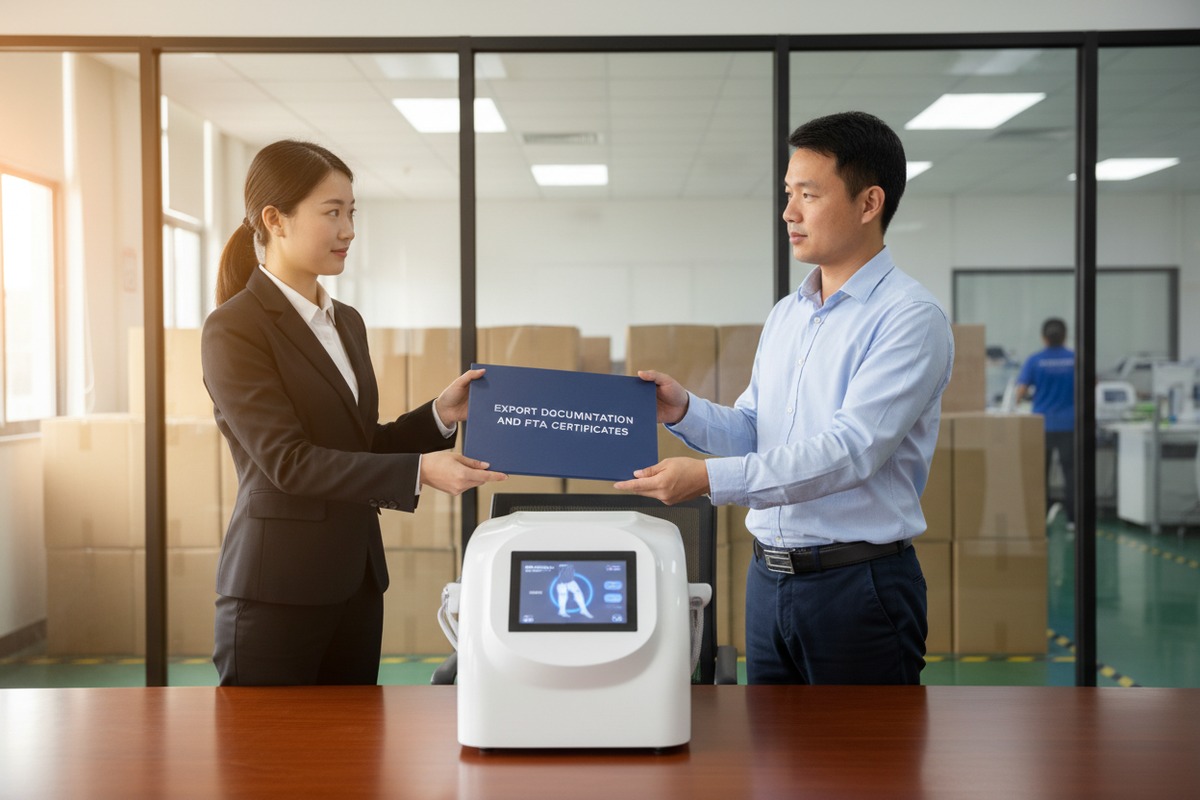
There are mainly two bodies helping you get certificates of origin 5 in China. These include China Customs and the China Council for the Promotion of International Trade 6 (CCPIT). These are the only two authorized offices for issuing the certificate in China. Other agents have no authority.
Types of Certificates of Origin
Different destinations require different certificate forms. Here's what you need:
| Destination | Required Form | Issuing Authority |
|---|---|---|
| ASEAN Countries | Form E | CCPIT or China Customs |
| Australia | Form A or CHAFTA COO | CCPIT |
| South Korea | Form K or RCEP COO | China Customs |
| Chile | Form F | CCPIT |
| Pakistan | Form P | CCPIT or China Customs |
| New Zealand | CNFTA COO | CCPIT |
As of 2025, China has signed 23 free trade agreements with 30 countries and regions, and the trade volume with free trade partners accounts for about one-third of China's foreign trade volume.
Documentation Checklist
When ordering pressotherapy machines from your Chinese supplier, ensure they provide:
-
Preferential Certificate of Origin – FTA certificates or declarations should only be issued if your good qualifies for the FTA. Not all FTA agreements require specific forms. Most FTA partners can accept declarative statements that contain specific data elements including information stating how the product qualifies for an FTA.
-
Commercial Invoice – Must include:
- Complete HS code (at least 6 digits, preferably 10)
- Unit price and total value
- Country of origin statement
- Incoterms
-
Packing List – Detailed breakdown of quantities and measurements
-
Bill of Lading – Transport document showing shipment route
Rules of Origin Compliance
Detailed FTA certification requirements for claims of preferential tariff treatment under the FTA are usually found in its rules of origin 7 (ROO) chapter. Your supplier must demonstrate that the pressotherapy machines meet the origin criteria.
For most FTAs, products must either be:
- Wholly obtained or produced in China
- Substantially transformed in China (meeting Regional Value Content 8 thresholds)
Although satisfying rules of origin in principle means that a product has qualified for the originating status, and is thus entitled to preferential tariffs, in most cases, a claim for preferences must be accompanied by a certificate of origin presented to the customs authority at the port of entry. Unlike the exporter or manufacturer, who is responsible for proving to the issuing authority the origin of the product, the importer often has little knowledge of how the product meets the origin criteria.
Timing Requirements for Certificate Applications
Certificate of Origin for China-ASEAN Free Trade Area: Applications submitted within 3 days after shipment are not considered retroactive issuance. Retroactive issuance is permitted from 3 days to 12 months following the shipment date.
How will utilizing free trade agreements impact the overall landed cost of my private-label beauty equipment?
We've helped countless brand owners calculate their true import costs. Many are shocked when they see how much they're overpaying. A single 20-foot container of pressotherapy machines can see savings of $5,000 to $15,000 just from proper FTA utilization.
FTA utilization can reduce your landed cost by 10-35% depending on your destination country. For US importers, the current 10% reciprocal tariff (extended through November 2026) plus potential Section 301 exclusions can significantly lower costs compared to the peak 145% tariff rates seen during trade war escalations.
Breaking Down Landed Cost Components
Your total landed cost includes multiple factors beyond the product price:
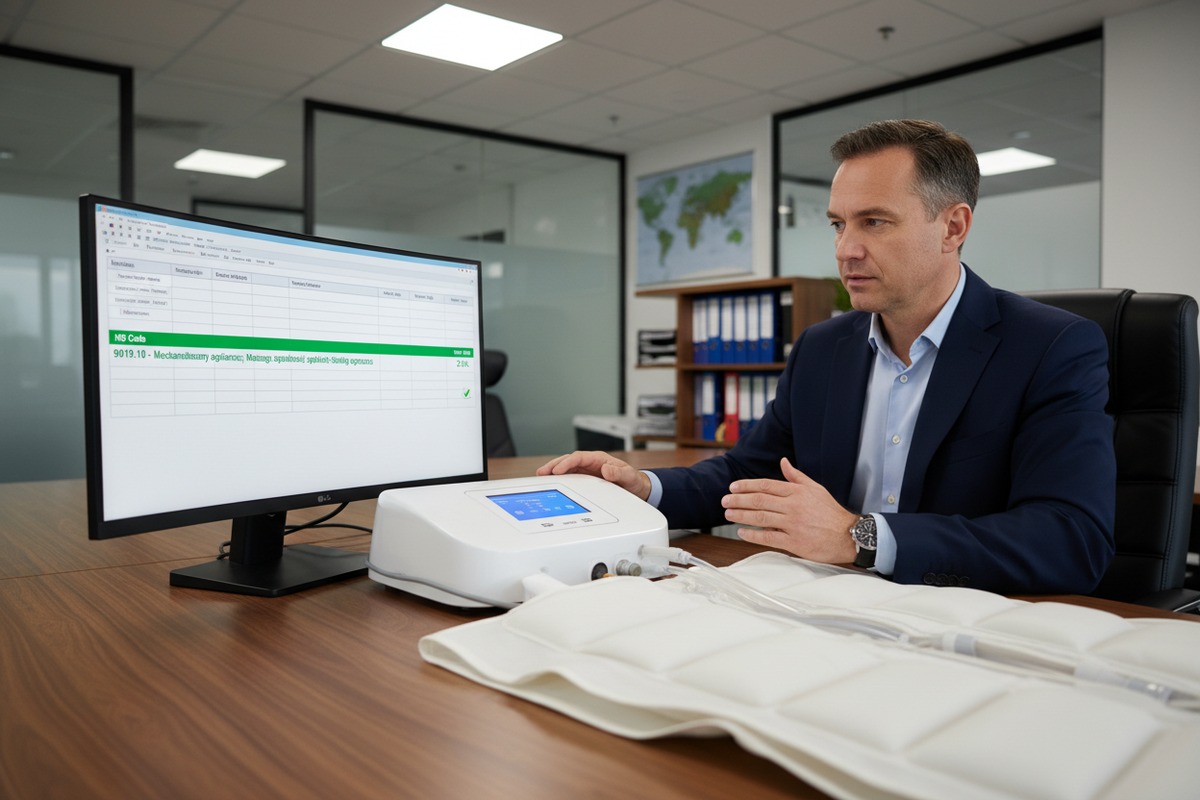
| Cost Component | Without FTA | With FTA | Potential Savings |
|---|---|---|---|
| FOB Price | $5,000 | $5,000 | $0 |
| Shipping (Sea Freight) | $800 | $800 | $0 |
| Insurance | $50 | $50 | $0 |
| Import Duties | $1,700 (34%) | $500 (10%) | $1,200 |
| Customs Processing | $150 | $150 | $0 |
| Total Landed Cost | $7,700 | $6,500 | $1,200 per unit |
Current US-China Tariff Landscape
Among major trading partners, China faces the highest effective rate of 34.7 percent in November 2025. The average effective tariff rate stands at 10.5 percent as of November, up from 2.3 percent in January. Among major trading partners, China faces the highest tariffs, with effective rates reaching 34.7 percent in November.
However, the tariff situation has improved significantly. On May 12, 2025, the United States and China announced a 90-day reduction in bilateral tariffs—after a months-long, tit-for-tat escalation in tariff rates. Under the agreement, the United States and China reduced the tariffs imposed in April 2025 from 125% to 10% on each other's goods.
VAT Considerations
Beyond tariffs, you must account for Value-Added Tax (VAT) in many countries. For goods entering China or transiting through Chinese free trade zones:
- Manufactured goods: 13% VAT
- Agricultural goods: 9% VAT
- Services: 6% VAT
Section 301 Tariff Exclusions
Meanwhile, the U.S. will maintain certain Section 301 tariff exclusions 9 until Nov. 10, 2026. Check if your pressotherapy machines qualify for any existing exclusions. Medical and therapeutic devices may have specific carve-outs.
Cost Comparison: Different Import Scenarios
For a bulk order of 50 pressotherapy machines (unit value $5,000):
| Scenario | Tariff Rate | Total Duties | Per-Unit Impact |
|---|---|---|---|
| Peak Trade War (2025) | 145% | $362,500 | $7,250 |
| Current US Rate | 34.7% | $86,750 | $1,735 |
| With Exclusions | ~10% | $25,000 | $500 |
| ASEAN FTA Countries | 0-5% | $0-$12,500 | $0-$250 |
One of the most immediate benefits of FTAs is tariff reduction or elimination, which lowers the cost of exporting goods to China. For example, under the China-Chile FTA, Chilean wine and cherries have gained widespread popularity in China, with bilateral trade increasing 7.5 times since the agreement took effect.
Strategic Timing for Orders
August 12, 2025: 10% reciprocal tariff rate extended for another 90 days following agreement. October 30, 2025: 10% reciprocal tariff rate extended for one year until November 10, 2026, following the Xi-Trump meeting.
This extension creates a window of opportunity. Lock in orders before November 2026 when rates may change again.
At our facility, we consider trade compliance as important as product quality. When our clients succeed at customs, they order again. That's why our export team includes specialists who handle documentation and classification for every shipment.
Yes, experienced Chinese manufacturers can provide critical compliance support including HS code verification, Certificate of Origin application, accurate commercial documentation, and guidance on Rules of Origin requirements. Look for suppliers registered with CCPIT and familiar with your destination country's FTA provisions.

What Your Supplier Should Handle
A qualified manufacturing partner should provide:
-
HS Code Classification
- Accurate 10-digit classification for pressotherapy machines
- Verification against your destination country's tariff schedule
- Documentation supporting the classification decision
-
Certificate of Origin Application
- Application Submission: The exporter submits an application to a recognized issuing authority in China. Common authorities include the China Council for the Promotion of International Trade (CCPIT), chambers of commerce, and other relevant trade organizations. Verification: The issuing authority reviews the documents to ensure they meet the requirements for origin determination. Issuance of the Certificate: Once approved, the Certificate of Origin is issued. The exporter then includes the CO with other shipping documents for the importer.
-
Documentation Preparation
- Commercial invoice 10 with correct value declaration
- Packing list with detailed specifications
- Bill of Materials (if needed for Rules of Origin)
Evaluating Supplier Compliance Capabilities
| Capability | Questions to Ask | Red Flags |
|---|---|---|
| COO Experience | "How many COOs do you issue monthly?" | Cannot provide examples |
| HS Code Knowledge | "What HS code do you use for pressotherapy?" | Unsure or inconsistent answers |
| FTA Familiarity | "Which FTA forms have you prepared before?" | Only general COO experience |
| Documentation Systems | "Can you show sample export documents?" | Handwritten or incomplete forms |
| CCPIT Registration | "Are you registered for direct COO application?" | Must use third-party agents |
Working with Your Supplier on Rules of Origin
Generally, this is the exporter of the product. The exporter may or may not be the producer. The producer, however, is in the best position to have the necessary knowledge about how a product qualifies under the rules of origin (ROO), as highlighted in the FTA Rules of Origin article. For this reason, a producer may be asked for an FTA certificate or declaration even if they are not the exporter.
Your manufacturing partner should be able to demonstrate:
- Where components are sourced
- What percentage of value is added in China
- Manufacturing processes performed in their facility
Regional Value Content Requirements
Most FTAs require a minimum Regional Value Content (RVC) for products to qualify. For pressotherapy machines, this typically means:
- 40-60% of the FOB value must originate in the FTA region
- Specific components may have their own origin requirements
- Assembly operations must constitute "substantial transformation"
Building a Long-Term Compliance Partnership
To deepen international economic and trade cooperation and promote regional integration and development, China will continue to implement agreed tariff rates on some imported goods from 34 trade partners in 2026 in accordance with 24 free trade agreements and preferential trade arrangements concluded between China and these trade partners.
Ask your supplier to:
- Provide regular updates on FTA changes affecting your products
- Maintain records supporting origin claims for customs audits
- Coordinate with your customs broker on documentation requirements
- Flag any potential compliance issues before shipment
Using Digital Trade Compliance Tools
Avalara Cross-Border delivers real-time customs duty and import tax calculation using AI-driven 10-digit tariff classification codes for consumer products across more than 180 countries. Many manufacturers now use digital platforms to automate classification and documentation.
Communication Framework with Your Supplier
Establish clear expectations:
| Order Phase | Supplier Responsibility | Your Responsibility |
|---|---|---|
| Pre-Order | Confirm HS code and FTA eligibility | Provide destination country and volume |
| Production | Maintain origin documentation | Confirm final product specifications |
| Pre-Shipment | Apply for COO, prepare documents | Review all paperwork for accuracy |
| Shipment | Include all documents with cargo | Coordinate with customs broker |
| Post-Arrival | Provide support for any customs queries | File claims and maintain records |
Conclusion
Free Trade Agreements offer real savings on pressotherapy machine imports—if you know how to use them. Start by confirming your region's FTA status with China, demand proper documentation from your supplier, and work with a manufacturer who understands trade compliance. The current tariff landscape, with rates extended through November 2026, creates a strategic window for bulk purchasing.
## Footnotes

<span id="footnote-1">
1. Found a relevant and detailed article explaining HS code 9019.10 for mechanical therapy equipment, from the same domain as the original failed link. <a href="#ref-1" class="footnote-backref">↩︎</a>
</span>

<span id="footnote-2">
2. Provides a comprehensive definition and applications of pressotherapy machines. <a href="#ref-2" class="footnote-backref">↩︎</a>
</span>

<span id="footnote-3">
3. Explains the purpose and benefits of Free Trade Agreements. <a href="#ref-3" class="footnote-backref">↩︎</a>
</span>

<span id="footnote-4">
4. Explains the international system for classifying traded goods. <a href="#ref-4" class="footnote-backref">↩︎</a>
</span>

<span id="footnote-5">
5. Replaced with an authoritative Wikipedia page providing a general overview of Certificates of Origin. <a href="#ref-5" class="footnote-backref">↩︎</a>
</span>

<span id="footnote-6">
6. Provides an overview of CCPIT's role in promoting international trade. <a href="#ref-6" class="footnote-backref">↩︎</a>
</span>

<span id="footnote-7">
7. Defines and explains the criteria for determining product origin in international trade. <a href="#ref-7" class="footnote-backref">↩︎</a>
</span>

<span id="footnote-8">
8. Explains how RVC is calculated and its importance in Free Trade Agreements. <a href="#ref-8" class="footnote-backref">↩︎</a>
</span>

<span id="footnote-9">
9. Provides official information on the extension of Section 301 tariff exclusions. <a href="#ref-9" class="footnote-backref">↩︎</a>
</span>

<span id="footnote-10">
10. Describes the essential details and function of a commercial invoice in international shipping. <a href="#ref-10" class="footnote-backref">↩︎</a>
</span>

 English
 Español de México
 Deutsch
 Français
 العربية
 Русский
