
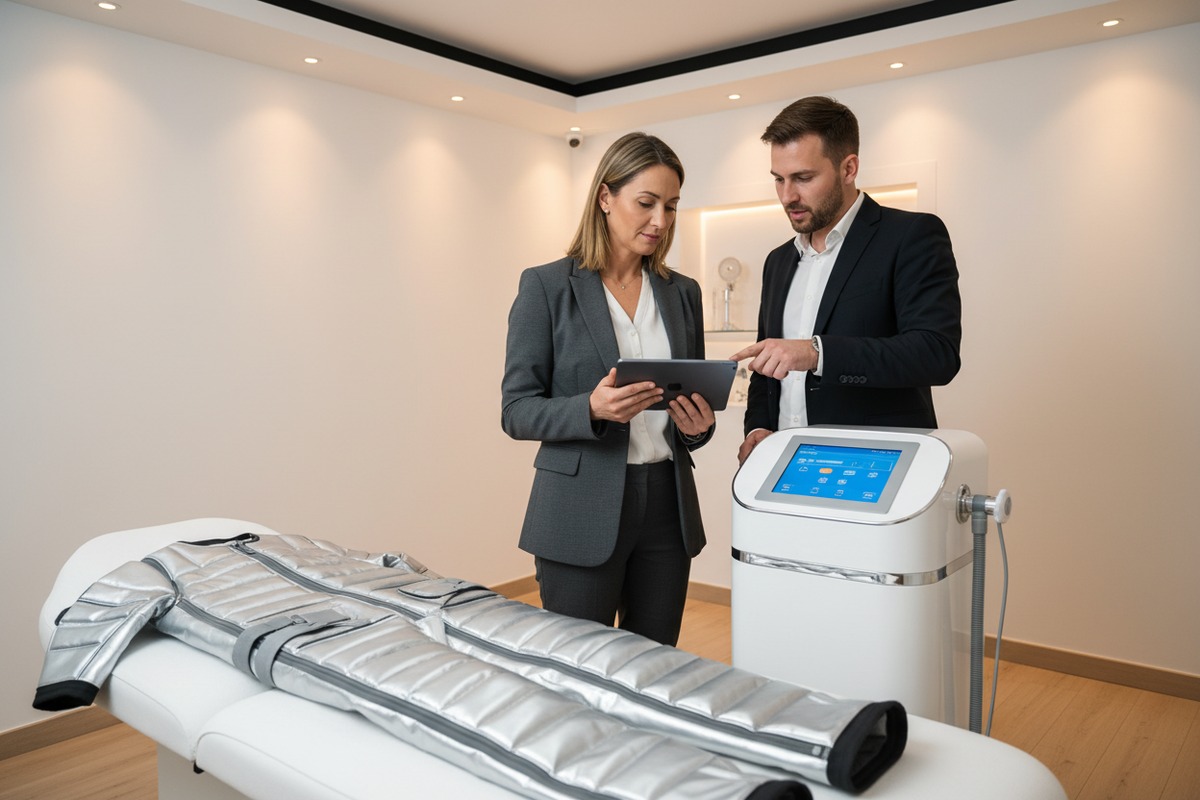
Years of developing pressotherapy systems 1 on our factory floor taught me one hard lesson. Many brand owners struggle to ask the right questions when sourcing these machines pressure ranges in mmHg 2. They get confusing spec sheets. They miss critical details about pump durability and pulse modes. Later, their salons face breakdowns and client complaints.
To ask suppliers about pressotherapy machine technical details and pulse modes, request documented pressure ranges in mmHg, chamber configurations, sequential inflation patterns, air pump duty cycle ratings, CE or FDA certifications, and customization options for software interfaces and pressure sequences. These specifications determine treatment effectiveness and machine longevity for professional salon use.
This guide walks you through every question you need to ask air pump duty cycle 3. You will learn what specifications actually matter. You will understand how to evaluate pulse modes for your client base CE or FDA certifications 4. Let’s dive into the details that separate reliable machines from costly disappointments.
What technical specifications should I request to verify the air pump's durability and pressure range?
When our engineers test new pump designs, they focus on one thing above all else lymphedema management 5. That thing is consistent pressure delivery over thousands of cycles. Many suppliers hide weak pump specs behind marketing language. This leads to machines that fail right when your salon gets busy.
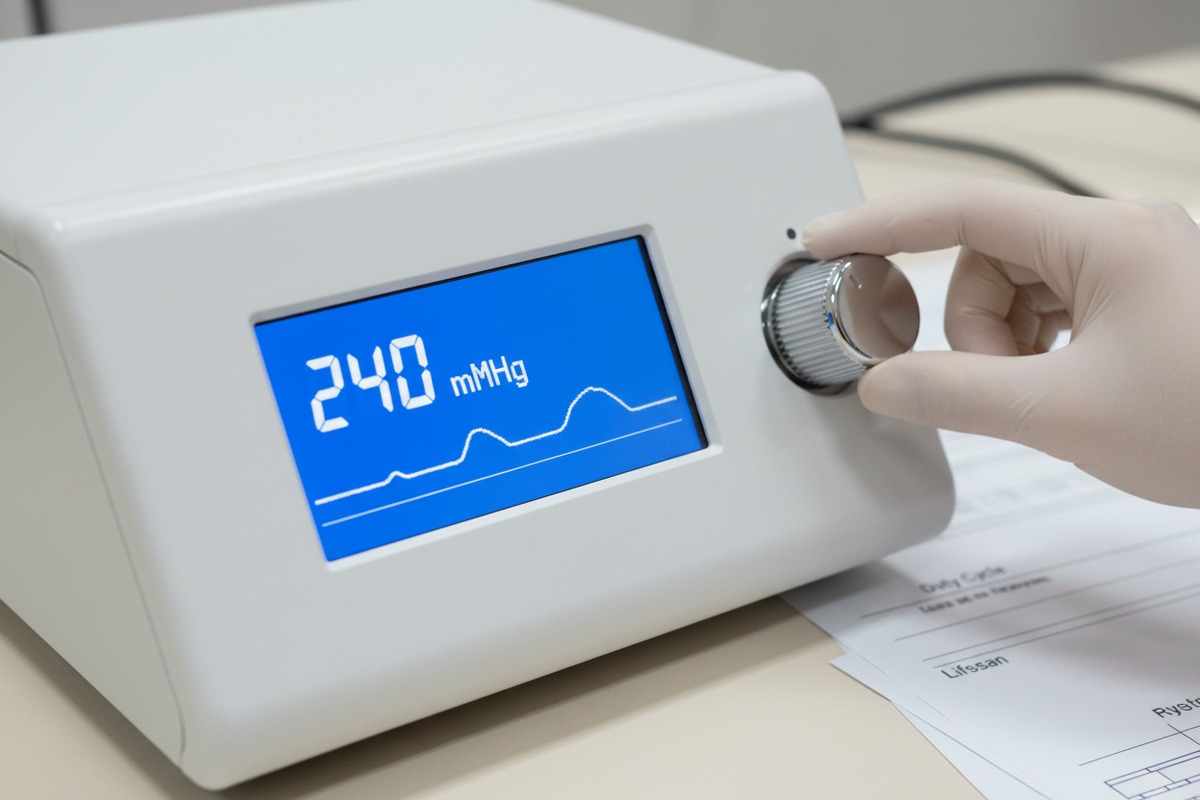
Request air pump specifications including pressure range (typically 20-240 mmHg for professional units), duty cycle percentage, expected lifespan in hours, power consumption in watts, and real-time pressure monitoring capability. These metrics directly predict how long the machine will perform under high-volume salon conditions.
Understanding Pressure Range and Measurement
Pressure specifications form the foundation of any pressotherapy machine evaluation. Professional devices typically operate within specific ranges that determine treatment versatility.
| Specification | Home-Use Devices | Mid-Range Systems | Professional Units |
|---|---|---|---|
| Pressure Range | 20-120 mmHg | 37-187 mmHg | 20-240 mmHg |
| Measurement Units | mmHg only | mmHg or kPa | mmHg with real-time display |
| Adjustment Increments | 10-20 mmHg steps | 5-10 mmHg steps | 1-5 mmHg steps |
| Per-Chamber Control | No | Limited | Full individual control |
Ask your supplier whether pressure ranges are adjustable per treatment program. Some advanced devices allow setting individual pressure for each chamber. This feature enables precise treatment customization for different client conditions.
Air Pump Duty Cycle and Lifespan
The duty cycle tells you how long the pump can run continuously without overheating. A 100% duty cycle means non-stop operation. Most professional machines need at least 80% duty cycle for salon environments.
Request these specific pump metrics:
- Continuous operation time before cooling required
- Expected total lifespan in operational hours
- Warranty coverage for pump replacement
- Noise level in decibels during operation
Power Consumption Considerations
Power specifications vary significantly across the market. Basic units consume around 30W. Full-featured professional systems may reach 500W maximum. Higher wattage does not always mean better performance. It often indicates inefficient pump design.
Request dual-voltage capability (110V/220V) if you distribute to multiple markets. Frequency specifications (50Hz/60Hz) matter for international installations. This flexibility saves costs when expanding to new regions.
Real-Time Pressure Monitoring
Advanced machines provide real-time pressure measurement during operation. This feature ensures consistent treatment delivery. It also helps identify air leaks or garment connection issues immediately. Ask whether the display shows actual pressure versus preset values. The difference reveals system accuracy and reliability.
How can I evaluate if the available pulse modes meet my salon clients' professional treatment standards?
Our product development team spent months studying how different pulse patterns affect treatment outcomes. We found that many machines offer numerous modes without explaining their clinical applications. Salon owners end up with features they cannot effectively use or explain to clients.
Evaluate pulse modes by examining sequential inflation patterns, program variety (5-47 presets across market offerings), timing parameters including speed, interval, and hold duration, plus gradient settings measured in mmHg. Match these capabilities to your specific treatment goals: lymphedema management, post-surgical recovery, or cosmetic enhancement.
Types of Pulse Modes Available
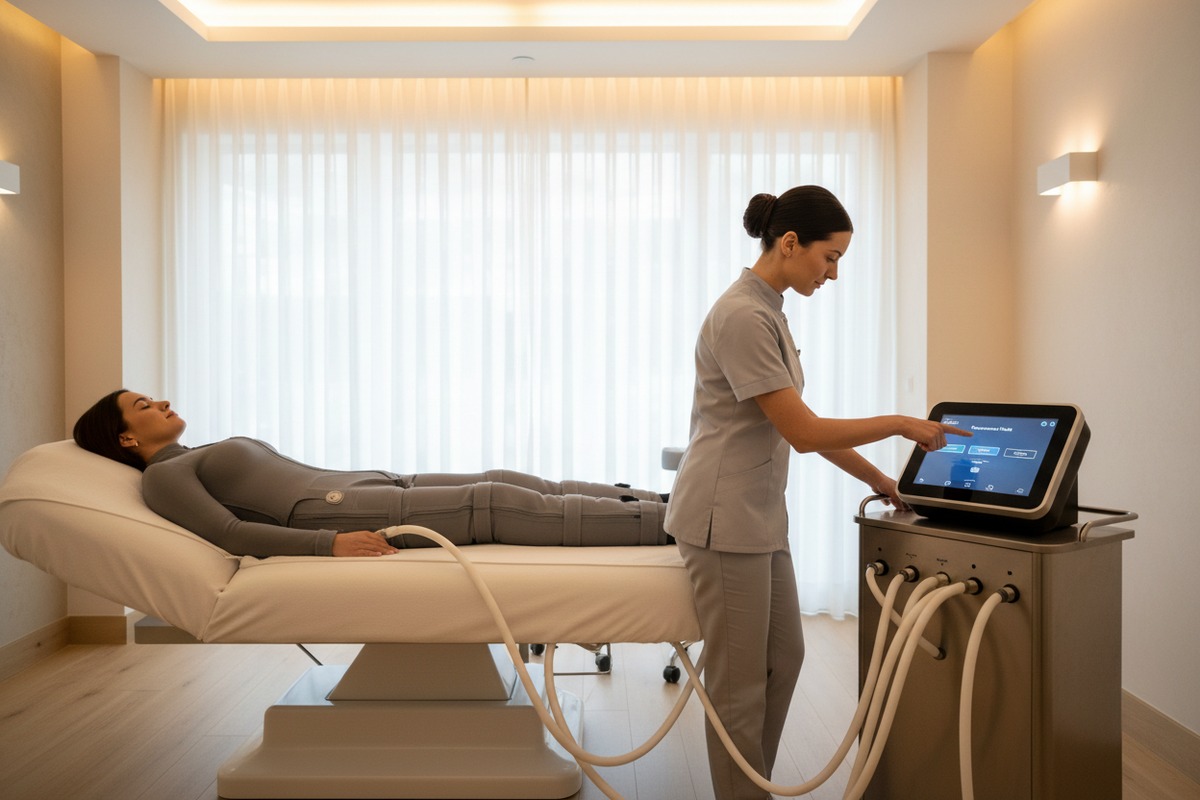
Modern pressotherapy machines offer various compression patterns. Each serves different therapeutic purposes. Understanding these differences helps you select equipment that matches your service menu.
| Pulse Mode Type | How It Works | Best Application |
|---|---|---|
| Sequential | Chambers inflate one after another in order | General lymphatic drainage |
| Wave | Smooth rolling compression from distal to proximal | Post-exercise recovery |
| Gradient | Pressure increases progressively toward body center | Edema reduction |
| Cyclic | Alternating inflation patterns | Cellulite treatment |
| Pulsatile | Rhythmic intermittent pressure on specific areas | Localized swelling |
Program Quantity and Customization Options
Program variety differs dramatically between manufacturers. Basic systems provide 5 preset programs. Mid-range devices offer 8 pre-programmed compression modes. Advanced units feature 10 different programs or more. Some professional systems include 37 preset programs plus 10 customizable options.
Ask suppliers these questions:
- Are programs fixed or customizable?
- Can you create and save custom treatment protocols?
- Do programs address specific clinical needs?
- What training materials explain each program's purpose?
Sequential Inflation Patterns Explained
The most effective pulse modes use sequential chamber inflation to mimic natural lymphatic flow. One common pattern maintains continuous pressure. While one chamber deflates, two others keep pressure. The sequence repeats across consecutive chambers.
Another pattern maintains single-chamber pressure. As one chamber deflates, the middle one keeps pressure while the sequence continues. Request supplier explanation of their specific inflation sequence. Ask how it mimics physiological lymphatic movement. This detail separates marketing claims from genuine therapeutic design.
Timing Parameters That Matter
Advanced devices allow adjustment of multiple timing variables. These include:
- Speed settings: Typically numbered scales from 1-10
- Interval timing: Seconds between chamber inflations
- Hold duration: How long pressure is maintained
- Gradient settings: Pressure increase between chambers in mmHg
These parameters allow clinicians to customize treatment intensity and duration. Different client conditions require different approaches. Flexibility here indicates professional-grade equipment.
Treatment Duration Ranges
Time ranges vary by device. Professional systems offer 1-99 minute treatment windows. Some devices support up to 120 minutes. Request whether time increments are adjustable. Ask about preset treatment durations for specific conditions. Your service menu pricing depends on session length flexibility.
What questions should I ask about the internal engineering to ensure the machine won't fail during high-volume use?
When we test machines for export to busy US salons, durability becomes the deciding factor. A machine that works perfectly for occasional home use may fail within months in a professional setting. Internal engineering quality determines whether your investment pays off or becomes an expensive paperweight.
Ask suppliers about chamber quantity and configuration (6-48 chambers depending on application), garment material composition (nylon outer with polyurethane lining), connection system durability, tube welding quality to prevent leaks, operating temperature and humidity ranges, and expected lifespan for accessories and replacement costs.

Chamber Configuration and Coverage
The number and distribution of air chambers directly affects treatment capability. Devices vary significantly in this area. Understanding these differences helps you match equipment to your treatment goals.
| Chamber Count | Typical Application | Body Coverage | Simultaneous Treatment |
|---|---|---|---|
| 6 chambers | Home use | Single area | One person only |
| 20 chambers | Professional suits | Full body | One person |
| 24 chambers | Comprehensive professional | Full body with segments | One or two persons |
| 44-48 chambers | Advanced medical | Complete lymphatic targeting | Multiple areas |
Suppliers should specify chamber location. Chambers may cover arms, legs, waist, or feet. Ask whether the device can treat multiple body areas or multiple patients simultaneously. Four-channel designs enable treating two people or two different areas at once. This capability affects clinic productivity and return on investment.
Garment Material Quality Assessment
Garment durability determines ongoing operating costs. Standard materials include nylon outer fabric with polyurethane inner lining. Welded parts prevent leaks that cause pressure inconsistency.
Request information on:
- Fabric breathability and client comfort
- Expected garment lifespan in treatment cycles
- Cleaning and disinfection protocols
- Availability of replacement garments
- Cost per replacement set
High-quality fabrics should be lightweight and carefully stitched. Ask about seam construction methods. Double-stitched seams last longer than single-thread construction.
Connection Systems and Reliability
Connection systems affect daily operation ease and long-term reliability. Some devices feature two 7-connection levels enabling inflation of two accessories simultaneously. Others use numbered connectors for easy identification.
Ask these specific questions:
- Are tubes permanently attached or removable?
- What is the expected tube lifespan?
- How difficult is connector replacement?
- Do connections have anti-leak mechanisms?
Operating and Storage Conditions
Environmental specifications matter for equipment longevity. Operating relative humidity ranges from 30-80% in most specifications. Storage atmospheric pressure typically ranges from 70-106 kPa.
Request information on temperature ranges for both operation and storage. Machines shipped internationally face varied climates. Units destined for humid coastal areas need different specifications than those for dry inland regions. These details affect device reliability and lifespan.
Regulatory Certifications to Verify
Pressotherapy machines are regulated as medical devices 8. Classification varies by jurisdiction. Devices may be classified as Class I, IIA, or II depending on region.
Verify these certifications:
- CE certification for European Union markets
- FDA registration for United States distribution
- IEC 60601-1 compliance 9 for electrical safety
- Local certifications for your specific target markets
Request documentation of compliance. Legitimate suppliers provide certificates readily. Hesitation or excuses indicate potential compliance issues.
Can I customize the pressure sequences and software interface to align with my brand's unique requirements?
Our OEM customers often ask about customization depth. They want machines that look and function as their own branded products. The ability to customize pressure sequences and software interfaces varies dramatically between suppliers. Knowing what to ask prevents disappointment after production begins.
Ask suppliers about logo integration on startup screens and machine bodies, custom program development based on your treatment protocols, software interface modifications including language options and color schemes, data logging capabilities for client tracking, and potential integration with existing clinic management systems.
Brand Customization Options
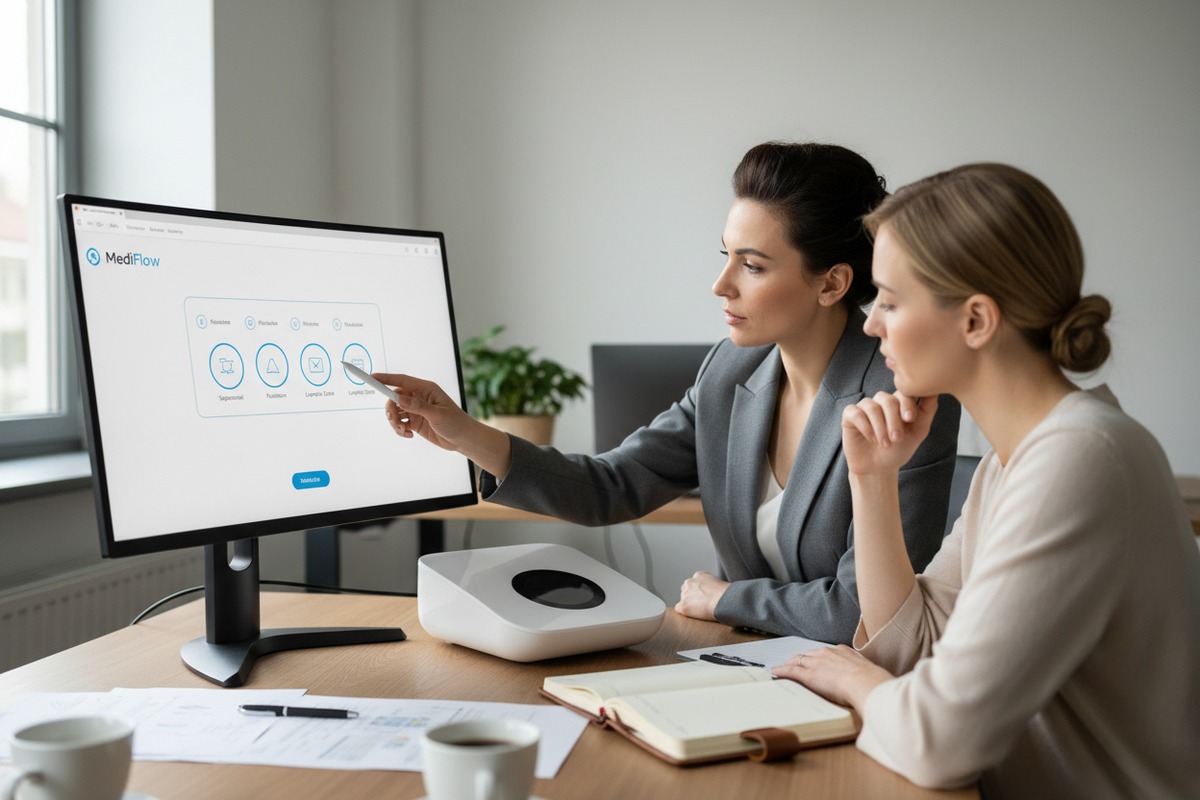
Professional customization extends beyond surface-level branding. Comprehensive OEM services include multiple touchpoints that reinforce your brand identity.
| Customization Level | What's Included | Typical MOQ | Lead Time |
|---|---|---|---|
| Basic Branding | Logo on machine body | 10-20 units | 2-3 weeks |
| Interface Customization | Startup screen, color scheme | 50-100 units | 4-6 weeks |
| Protocol Development | Custom treatment programs | 100+ units | 8-12 weeks |
| Full OEM | Hardware and software redesign | 200+ units | 16-24 weeks |
Ask whether your logo can be elegantly integrated into the device's startup screen. Request options for etching branding onto the machine body. These details create professional presentation that justifies premium service pricing.
Software Interface Modifications
The user interface affects daily operation efficiency and staff training requirements. Key customization questions include:
- Can screen language be changed to match your market?
- Are color schemes adjustable to match brand identity?
- Can button labels be renamed for your terminology?
- Is the interface available in multiple languages?
Some suppliers offer touchscreen interfaces ranging from 5.7 to 7 inches. Larger screens improve visibility but increase unit cost. Balance screen size against your operational needs.
Data Logging and Client Tracking
Advanced machines include data logging capabilities for tracking client treatment parameters and progress. This feature supports several business objectives:
- Document treatment history for client records
- Track protocol effectiveness over time
- Support staff training and quality control
- Enable personalized treatment adjustments
Ask whether logged data can be exported. Integration with existing clinic management software streamlines operations. Some systems allow direct connection to patient record systems. This reduces administrative burden and improves service consistency.
Custom Protocol Development
If your brand offers signature treatment programs, ask about custom protocol development. Suppliers with strong engineering teams can translate your treatment concepts into machine programs.
Prepare these details before requesting custom development:
- Specific pressure sequences you want to achieve
- Timing patterns for different treatment types
- Body area targeting requirements
- Desired treatment duration options
Custom protocols become competitive advantages. They prevent competitors from exactly replicating your service experience. This differentiation justifies higher service prices and builds client loyalty.
Technical Support and Training
Customization means little without proper support. Ask suppliers about:
- Training programs for your staff on customized features
- Technical support availability for custom software
- Documentation provided in your preferred language
- Update procedures for custom firmware
Strong suppliers provide comprehensive operation instructions with useful tips and suggestions. Certified beauticians should offer personalized training for each device. Upon request, free certification can often be provided after training completion.
Conclusion
Asking the right questions about pressotherapy machine specifications protects your investment and ensures client satisfaction. Focus on documented pressure ranges, pulse mode clinical rationale, internal engineering quality, and customization capabilities. These details determine whether your equipment performs reliably for years or becomes a source of constant problems. Partner with suppliers who answer technical questions clearly and provide comprehensive documentation.
Footnotes
1. Explains what pressotherapy is and its benefits. ↩︎
2. Defines mmHg as a standard unit for pressure measurement in medical contexts. ↩︎
3. Explains the concept of duty cycle for air compressors. ↩︎
4. Provides an overview of regulatory requirements for medical devices in the EU (CE) and USA (FDA). ↩︎
5. Details how pressotherapy is used in the management of lymphedema. ↩︎
6. Explains the purpose and benefits of lymphatic drainage. ↩︎
7. Describes how sequential inflation patterns work in pressotherapy. ↩︎
8. Explains the classification and regulation of medical devices. ↩︎
9. Explains the importance and scope of the IEC 60601-1 standard for medical electrical equipment. ↩︎

 English
 Español de México
 Deutsch
 Français
 العربية
 Русский
